
Nasi Lemak: Malaysia's Unofficial National Dish
foodddd

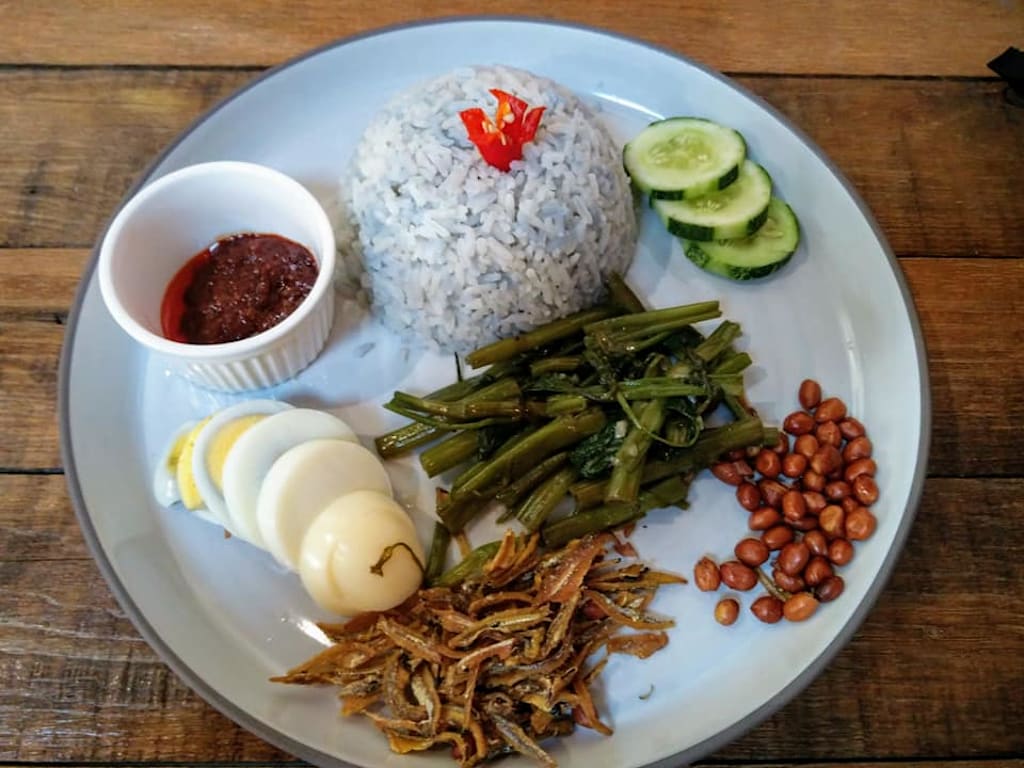
If there is one dish that unites Malaysia, it is nasi lemak. Not the country's official national dish that honour belongs to different claimants depending on who you ask but the unofficial one, the one that appears at roadside stalls, hawker centres, kopitiams, and five-star hotel buffets with equal confidence. It is breakfast for some, lunch for others, and a midnight craving for many. It is, in every meaningful sense, the taste of Malaysia.
Gosia, a recent visitor to the country, tried it for the first time on her second day in Kuala Lumpur. She liked it a lot. Understatement, perhaps, given that she has ordered it every morning since . "It's the sambal," she explains. "I didn't expect the sambal."
What Is Nasi Lemak?
The name translates literally to "rice cooked in coconut milk." That is the foundation: fragrant, creamy, slightly sweet rice that absorbs the richness of coconut cream without becoming cloying. The rice is typically steamed with pandan leaves, ginger, and sometimes a pinch of salt, infusing it with a subtle aroma that distinguishes it from plain steamed rice .
The rice is the canvas. The accompaniments are the painting. A traditional nasi lemak plate includes:
1. Hard-boiled egg (sometimes fried, sometimes soft-boiled)
2. Roasted peanuts (crunchy, salty, essential)
3. Cucumber slices (cool, refreshing, a counterpoint to the heat)
4. Ikan bilis (anchovies, crispy and salty, providing umami depth)
5. Sambal (the star of the dish a spicy, sweet, savoury chili paste that varies from stall to stall)
6. A protein (rendang chicken, curry chicken, fried chicken, squid, cockles, or beef the options are endless)
The sambal is the soul of nasi lemak. It can be tomato-based, chili-based, or a combination. It can be sweet, spicy, or both. It can be chunky or smooth. Every stall has its own recipe, passed down through generations or guarded like a trade secret. The best sambal is the one that balances heat with sweetness, that lingers on the tongue without overwhelming, that makes you reach for more rice to temper the fire .
Regional Variations
Nasi lemak is not monolithic. In the east coast states of Kelantan and Terengganu, the rice is often tinted blue with bunga telang (butterfly pea flower), a natural dye that adds visual drama without affecting flavour. In the south, near the border with Singapore, the sambal tends to be sweeter, influenced by Hainanese and Peranakan palates. In the north, near Penang and Kedah, the sambal is fiercer, with more dried chilies and less sugar.
Some stalls offer nasi lemak bungkus wrapped in banana leaf and brown paper, the traditional takeaway packaging that keeps the rice warm and imparts a faint, grassy aroma. The act of unwrapping a nasi lemak bungkus, peeling back the banana leaf to reveal the rice and its accompaniments, is a small ritual that connects the eater to generations who have done the same .
Why Gosia Liked It
Gosia's introduction to nasi lemak was at a modest stall in Brickfields, recommended by her Airbnb host. She ordered the fried chicken version, a safe choice for a first-timer. The chicken was crispy on the outside, juicy within. The rice was fragrant and creamy. The cucumber provided a crisp, cool counterpoint. The peanuts and anchovies added crunch and salt.
But it was the sambal that won her over. "I was not expecting it to be so complex," she says. "It's spicy, yes, but also sweet, and there's a depth to it like it's been cooked for hours. I asked the stall owner how she made it, and she just smiled and said, 'Family recipe.' I respect that."
Gosia has since tried nasi lemak at half a dozen other stalls, comparing sambals the way sommeliers compare wines. She has developed preferences: more anchovies, less cucumber, a runny egg rather than hard-boiled. She has learned that the best nasi lemak is often found in the most unassuming places a cart on a street corner, a stall in a wet market, a kedai kopi with plastic chairs and no air conditioning .
Nasi Lemak as National Identity
Nasi lemak transcends ethnicity and religion. Malays, Chinese, Indians, and foreigners alike claim it as their own. It is served at weddings, funerals, and community gatherings. It is the food of kings and the food of labourers. It is democracy in a bowl.
The dish also reflects Malaysia's multicultural heritage. The rice is Malay. The anchovies and peanuts are humble pantry staples. The sambal is a fusion of Malay and Chinese influences. The fried chicken is Hainanese. The curry is Indian. Nasi lemak is not merely a meal; it is a story of convergence, of different cultures finding common ground on a single plate .
How to Eat Nasi Lemak
There is no prescribed method, but there is a conventional wisdom. First, mix the sambal into the rice. Do not merely dab it on top; incorporate it thoroughly, ensuring every grain carries a hint of heat. Next, break the egg and let the yolk mingle with the rice. Then, add a piece of protein chicken, rendang, whatever you have chosen and take a bite.
Eat with your right hand if you are feeling traditional. Use a spoon and fork if you are not. There are no judges here. The only rule is to enjoy. Nasi lemak is not a dish that asks for formality. It asks for appetite .
Nasi lemak is not the most complex dish in Malaysian cuisine. It is not the most refined or the most expensive. It is, however, the most beloved. It is the meal that Malaysians crave when they are far from home. It is the meal that visitors remember long after they have left. It is the meal that, in a single plate, captures the essence of a nation.
Gosia liked it a lot. She is not alone. Millions of Malaysians eat nasi lemak every day, and they will continue to do so for generations. The sambal will evolve. The recipes will adapt. But the dish the fragrant rice, the spicy paste, the simple accompaniments will endure. It is, after all, the unofficial national dish. And it earns that title with every bite .
About the Creator
Mark Lim
Hi I am mark an automotive student and a car, tech and food enthusiast ! Im gonna try and post daily & hope you enjoy what I write and do share my page with people you know. I would gladly appreciate it! Cheers
Enjoyed the story? Support the Creator.
Subscribe for free to receive all their stories in your feed. You could also become a paid subscriber, letting them know you appreciate their work.
Comments
There are no comments for this story
Be the first to respond and start the conversation.