
More Than a Meal: How Asian Rice Pot Restaurant Has Nourished a Kelana Jaya Community for Two Decades
Rooted in the original French meaning of the word “restaurant” to restore this charmingly dated South Indian eatery in Petaling Jaya has spent 20 years serving not just exceptional clay-pot curries, but a profound sense of belonging.

At its most basic level, a restaurant is a commercial enterprise that serves food and beverages. But beyond the balance sheets and profit margins, the true function of a restaurant varies wildly. It can be a purely transactional fast-food outlet or a high-concept luxury establishment where dessert is served with a side of philosophical discourse. Yet, the oldest and perhaps most essential purpose of a restaurant can be gleaned from its very etymology: the French word restaurer, meaning “to restore.”
Restaurants feed us physically, yes, but the best of them also nourish us emotionally. They become pillars of their communities, nurturing the public and providing a consistent, comforting rhythm to daily life. On a recent weekday morning, the Asian Rice Pot Restaurant in Kelana Jaya struck me as the very embodiment of this ideal.
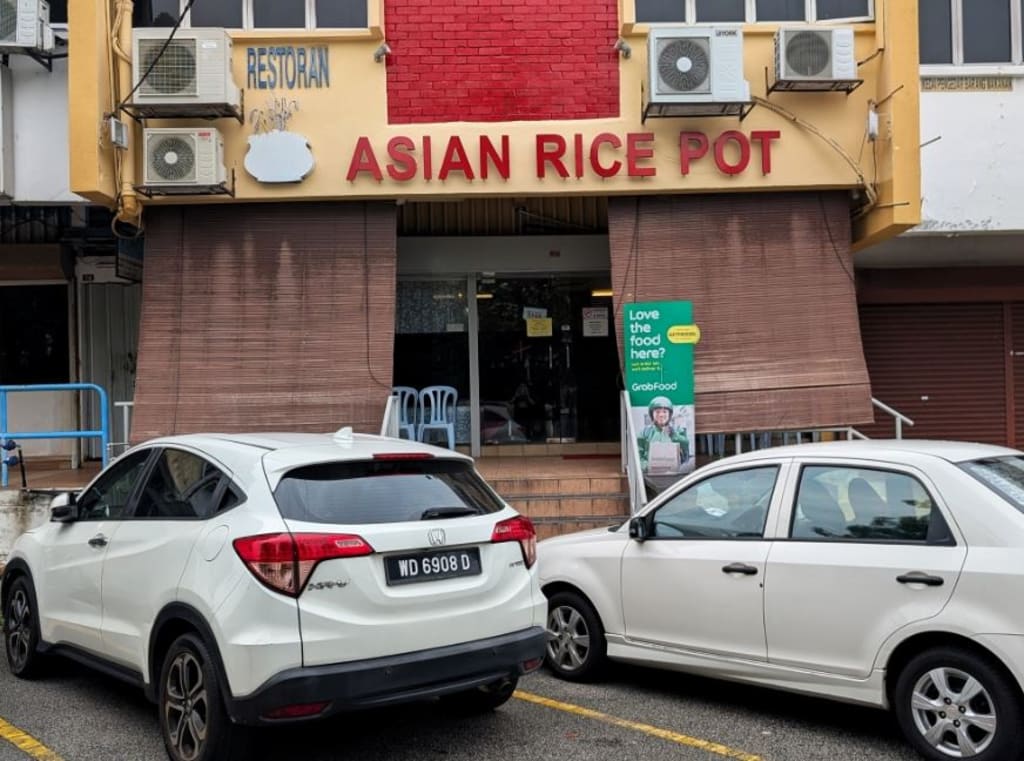
Tucked away on a quiet row of shops beside Wisma FAM since 2006, the eatery looks every bit its 20 years: cosy, unpretentious, and charmingly dated. I arrived at 10:00 AM to find a room filled mostly with diners at least twice my age, leisurely sipping cups of Bru coffee or fragrant masala chai as they waited.
With the body language of a helpless newcomer, I moseyed around the room, scanning the vibrant trays of curry, dal, and varuval, letting my nose guide me as much as my eyes. Sensing my aimless wandering, an attentive staff member correctly deduced my confusion. He gently explained the unspoken ritual of the room: everyone else was already seated, waiting for the rice and the "big-ticket" items like mutton to emerge from the kitchen, a process that takes about half an hour. He gestured me to a table and advised me to order a drink first while I waited.
As the clock ticked toward the half-hour mark, the kitchen came alive. Clay pots and serving trays flew out with practiced efficiency. Then, like a well-rehearsed ballet, the rest of the restaurant began shuffling over to form an orderly queue at the starting point: massive pots of fragrant white and brown rice, alongside the heavy, heat-retaining clay pots of chicken, mutton, crab, fish, and vegetable curries that give the restaurant its name.
The next station offered a bountiful non-vegetarian selection: egg masala, fried chicken, prawn sambal, and mutton varuval followed by an equally generous vegetarian spread.
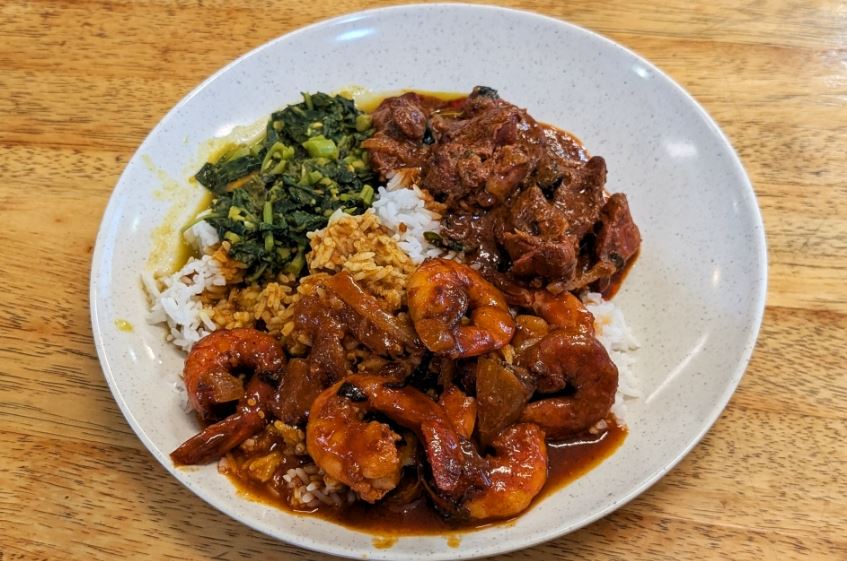
I eventually sat down with a heaping plate of rice laden with fish curry, prawn sambal, chicken liver curry, and keerai (a spinach and lentil curry), totaling a remarkably reasonable RM16.80. The prawns were firm and meaty, slipping out of their shells with ease, while the sambal packed a fiery heat beautifully balanced by the surprising, aromatic sweetness of a generous heap of fried onions. The chicken livers were creamy and coated in a rich, addictive gravy. As expected, the metallic notes began to compound after the third piece, but this was exactly where the keerai stepped in to save the day: the mild, mellow blend of spinach and lentils tempered the robust heat perfectly, cleansing the palate.
To round out the meal, I added a portion of mutton varuval (RM20). At first glance, the price seemed steep, but I quickly realized the generous portion was completely boneless. Mutton is traditionally the priciest item at such establishments, and diners often feel slightly swindled when more than half the plate is devoted to bone. This was the absolute opposite. Each bite of the bouncy, tender mutton was doubly satisfying, and the thick masala clinging to each cube was boldly spiced, nutty, and evocative of perfectly caramelized toast.
What struck me most, however, was not just the food, but the atmosphere. Nobody else in the room needed to be told when the rice was ready; they simply knew. Every single diner was recognized by the staff. I stood out not because I was a young Chinese man in a predominantly older crowd, but because I had clearly never been there before. Yet, it didn’t matter. I was welcomed all the same.
Avilin Rose opened the restaurant about 20 years ago, her son later told me via text. They call it a family business not just because the children grew up working in it, but because of the deep, enduring relationships they have built with their customers, many of whom are now families themselves.
“When Mum opened this place, this row was much quieter,” he reflected. “Much has changed since.”
Indeed, much has changed in Petaling Jaya over two decades. But Asian Rice Pot has remained a constant. It has been around long enough to transcend being merely a place to eat; it is a communal dining room where family is celebrated, routines are honored, and lives are lived. The diners twice my age certainly aren’t there for the novelty of a new food trend. They are there because, 20 years on, this is still exactly where they come to be restored.
Asian Rice Pot Restaurant
📍 11, Jalan SS 5A/11, SS 3, Petaling Jaya, Selangor (Beside Wisma FAM)
🕒 Open daily, 7:30 AM – 9:00 PM
📞 Tel: 03-7874 6911
🌐 Facebook: Asian Rice Pot | Instagram: @asianricepot
About the Creator
Mark Lim
Hi I am mark an automotive student and a car, tech and food enthusiast ! Im gonna try and post daily & hope you enjoy what I write and do share my page with people you know. I would gladly appreciate it! Cheers
Enjoyed the story? Support the Creator.
Subscribe for free to receive all their stories in your feed.
Comments
There are no comments for this story
Be the first to respond and start the conversation.