
Laksa: Malaysia's Beloved Soup, in All Its Fiery Glory
Asam laksa

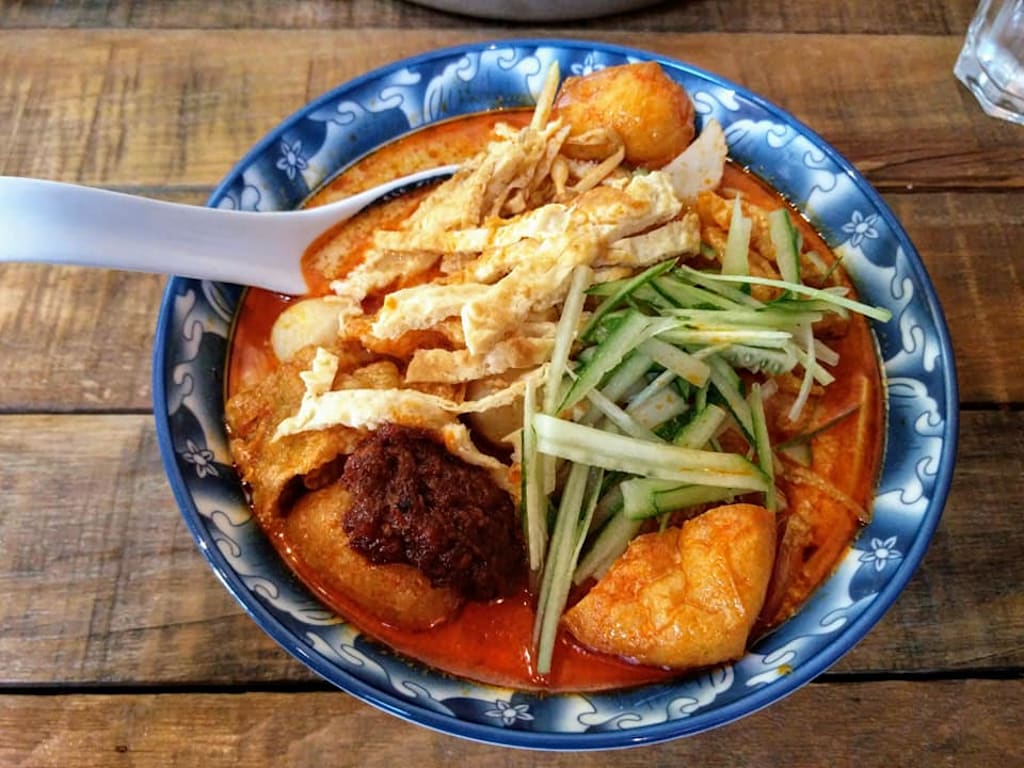
If there is a dish that could claim to be the heart of Malaysian cuisine, laksa would be a strong contender. It is not one dish but many a sprawling family of spicy noodle soups that varies from state to state, town to town, even family to family. Yet for all its diversity, laksa is unmistakably Malaysian: complex, aromatic, unapologetically bold, and deeply comforting.
The variations are endless, but they fall into two broad categories: asam laksa , which is tamarind-based, and curry laksa , which is coconut-based. Within these categories, regional interpretations flourish. Penang's asam laksa is famous for its sour, fish-forward broth. Sarawak's laksa is infused with a spice paste that includes sambal belacan, lemongrass, and galangal. Johor's laksa incorporates coconut milk and is often served with spaghetti instead of rice noodles a legacy of Portuguese influence.
But the version that has captured the heart of Michal, a self-described laksa enthusiast, is the tamarind-based asam laksa. She loves it, even though or perhaps because it is usually very hot and spicy .
Asam Laksa: A Symphony of Sour and Heat
Asam laksa is a tamarind-based broth, and tamarind (asam) is the star. It provides a sour, tangy backbone that cuts through the richness of the flaky white fish typically mackerel that is simmered into the broth until it falls apart. The fish infuses the soup with savoury depth, while the tamarind keeps it bright and refreshing .
The noodles are thick rice noodles, similar to those used in penang curry mee, which provide a chewy counterpoint to the broth. The toppings are what make asam laksa visually striking and texturally complex: shredded cucumber, fresh pineapple chunks, sliced red onions, mint leaves, and a sliver of bitter ginger flower (bunga kantan) , which adds a floral, slightly astringent note that balances the heat .
The spice paste is the soul of the dish. It typically includes dried chilies, fresh chilies, shallots, garlic, lemongrass, galangal, and belacan (shrimp paste), all pounded into a fragrant, fiery base. The broth is then ladled over the noodles and toppings, and the eater is expected to mix everything together, ensuring every spoonful contains a bit of sour, a bit of spicy, a bit of sweet from the pineapple, and a bit of crunch from the cucumber and onion .
Why Michal Loves It
Michal's affection for asam laksa is, by her own admission, slightly illogical. "It's usually very hot and spicy," she says, acknowledging that the dish challenges her palate. Yet she keeps coming back. The reason, she explains, is the balance. The sourness of the tamarind and the sweetness of the pineapple temper the heat, making each spoonful a negotiation between discomfort and delight.
"There's nothing else like it," she says. "The broth is thin but full of flavor. The fish melts into it. The pineapple is unexpected but perfect. And the bunga kantan it's so strange, that bitter note, but it works. It makes you pay attention."
For Michal, laksa is not just food. It is an experience. It demands that you slow down, that you pay attention, that you accept a little pain for a lot of pleasure. In a world of convenience and predictability, laksa is a reminder that the best things are often the most complicated .
The Cultural Significance
Laksa is not merely a dish; it is a point of pride and a source of gentle rivalry. Ask a Penangite where to find the best asam laksa, and they will send you to a specific stall in Air Itam. Ask a Sarawakian about their laksa, and they will insist that no other version compares. These debates are not arguments; they are affirmations of belonging. Laksa is a way of saying: this is where I am from. This is what we do.
The dish has also travelled. In Australia, laksa is a staple of food courts and suburban takeaway shops, often adapted to local palates with less spice and more coconut. In the United States, it is less common but gaining recognition as part of the broader appreciation for Southeast Asian cuisines. Yet the best laksa, by common consent, remains the one you eat in Malaysia, sweating under a fan, the humid air matching the steam rising from your bowl .
How to Eat Laksa
There is a technique to eating asam laksa, though it is not often discussed. First, you mix. The toppings are arranged artfully on top of the noodles, but they are not meant to stay there. Use your chopsticks and spoon to incorporate everything into the broth. The pineapple should be distributed throughout, not clustered. The mint should wilt slightly into the heat.
Next, you taste. Do not add any condiments before you have tried the broth as it is. The cook has balanced the flavors already. To add more chili or more sugar before tasting is to second-guess a craftsperson who has been making this dish for years.
Finally, you eat. Slurp the noodles. Drink the broth from the spoon. Do not be afraid to sweat. The heat is part of the experience. It is cleansing, invigorating, and, according to local wisdom, good for the digestion .
Laksa is Malaysia's beloved soup for good reason. It is adaptable, regional, and endlessly debated. It is sour, spicy, rich, and refreshing sometimes all at once. It is a dish that rewards attention and punishes indifference.
For Michal, and for millions of Malaysians, laksa is more than sustenance. It is memory, identity, and pleasure, all in a bowl. The heat is not a barrier; it is a feature. The complexity is not confusion; it is depth. And the best laksa is not the one with the most awards or the longest queue. It is the one that tastes like home.
About the Creator
Mark Lim
Hi I am mark an automotive student and a car, tech and food enthusiast ! Im gonna try and post daily & hope you enjoy what I write and do share my page with people you know. I would gladly appreciate it! Cheers
Enjoyed the story? Support the Creator.
Subscribe for free to receive all their stories in your feed. You could also become a paid subscriber, letting them know you appreciate their work.
Comments
There are no comments for this story
Be the first to respond and start the conversation.