
Kueh Dadar: The Sweet, Green, and Coconutty Delight You Can't Resist
Pandan and coconut come together in this dangerously sweet dessert a tiny sponge cake filled with palm sugar and coconut that's as beautiful as it is delicious.

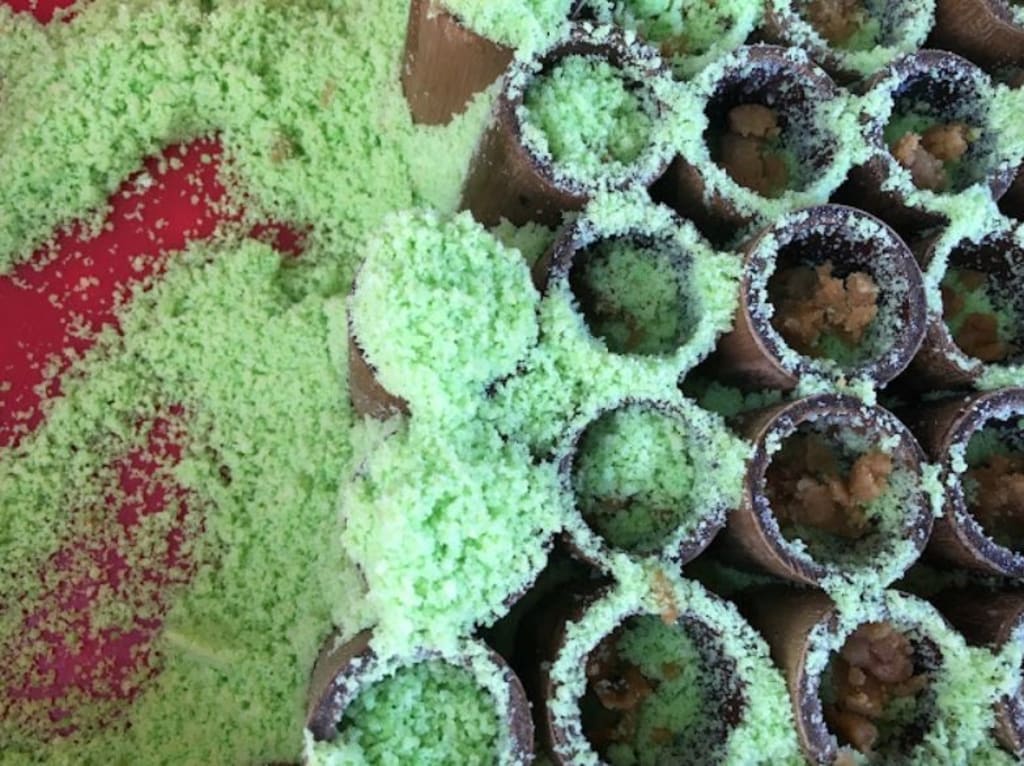
Pandan and coconut go together in Malaysia like peanut butter and jelly. Kueh Dadar is a dangerously sweet dessert that has to be tried at least once. The tiny sponge cake gets its green color from pandan leaves. Inside you'll find palm sugar and coconut. Typically, these are served warm, but I prefer them once they've cooled down a bit.
What Is Kueh Dadar?
Kueh Dadar is a traditional Southeast Asian dessert that is popular in Malaysia, Singapore, and Indonesia. It's a type of kuih a category of bite-sized snacks and desserts that are an integral part of Malaysian cuisine.
The dessert consists of a thin, green pancake made from pandan-infused batter, which is filled with a sweet mixture of grated coconut and palm sugar (gula melaka). The pancake is then folded into a neat little roll or parcel, creating a beautiful, vibrant green treat that is as visually appealing as it is delicious.
The name "Kueh Dadar" is derived from the Malay word for "pancake" or "crepe," and it's a dish that is often associated with festive occasions and celebrations.
The Magic of Pandan
Pandan leaves are one of the most beloved ingredients in Southeast Asian cuisine. The leaves are used to impart a sweet, floral fragrance to a wide range of dishes, from rice to cakes to curries.
For Kueh Dadar, the pandan leaves are blended with water to extract their vibrant green colour and their signature aroma. The pandan juice is then mixed into the batter, giving the pancake its distinctive green hue and its sweet, floral fragrance.
The pandan flavour is subtle and aromatic, and it pairs perfectly with the rich, sweet filling of palm sugar and coconut.
The Filling: Palm Sugar and Coconut
The filling is the heart of Kueh Dadar. The grated coconut is mixed with palm sugar (gula melaka), which is a type of sugar made from the sap of coconut palm trees. Gula melaka has a rich, caramel-like flavour that is deeply satisfying, and it's a staple in Malaysian desserts.
The coconut is toasted until it's fragrant and slightly crispy, which adds texture to the filling. The palm sugar melts into the coconut, creating a sweet, sticky, and slightly gooey filling that is absolutely irresistible.
The combination of the fragrant pandan pancake and the sweet, coconutty filling is a match made in culinary heaven.
The Cooking Process
The process of making Kueh Dadar is a labour of love. The batter is made from flour, eggs, coconut milk, and pandan juice, and it's cooked on a griddle in thin, delicate pancakes. The pancakes are then filled with the palm sugar and coconut mixture and folded into neat little rolls.
The pancakes must be cooked to the perfect consistency: thin enough to be delicate, but sturdy enough to hold the filling without tearing. It's a skill that takes practice to master, and it's one that is passed down from generation to generation.
Variations
While the classic version is the pandan and coconut combination, there are many variations of Kueh Dadar:
Kueh Dadar with Banana – The filling includes mashed banana, which adds a fruity sweetness.
Kueh Dadar with Chocolate – A more modern twist, with the filling including chocolate chips or chocolate spread.
Kueh Dadar with Cream Cheese – A fusion version that includes a cream cheese filling.
Kueh Dadar with Gula Melaka Sauce – The rolled pancakes are served with an extra drizzle of palm sugar syrup.
Serving and Eating
Kueh Dadar is typically served as a dessert or a snack. The pancakes are rolled into neat little parcels, and they're often placed on a banana leaf for a beautiful presentation.
Traditionally, they are served warm, straight from the griddle. However, I prefer them once they've cooled down a bit. When they're cool, the coconut filling becomes slightly firmer, and the pandan flavour becomes more pronounced.
Kueh Dadar is the perfect accompaniment to a cup of local coffee or tea. The sweetness of the dessert pairs beautifully with the bitter, rich flavours of the coffee or tea.
Where to Get Your Mouth Around It
Hawker Stalls and Night Markets
You can find Kueh Dadar at hawker stalls and night markets throughout Malaysia. It's a popular snack, and it's often sold alongside other traditional kuih.
Kopitiams
Kopitiams often serve Kueh Dadar as a snack or dessert. It's a popular choice for afternoon tea, and it's often served with a cup of local coffee or tea.
Specialist Kuih Shops
Some shops specialise in kuih and offer a wide range of traditional desserts. These shops are often run by families who have been making the desserts for generations, and their recipes are closely guarded secrets.
Kueh Dadar is a quintessential Malaysian dessert. It's sweet, fragrant, and satisfying the kind of food that makes you feel warm and happy from the inside out.
If you're visiting Malaysia, make sure you try Kueh Dadar. Whether you're enjoying it as a snack, a dessert, or a treat with your afternoon tea, it's a dish that will leave you craving more.
About the Creator
Mark Lim
Hi I am mark an automotive student and a car, tech and food enthusiast ! Im gonna try and post daily & hope you enjoy what I write and do share my page with people you know. I would gladly appreciate it! Cheers
Enjoyed the story? Support the Creator.
Subscribe for free to receive all their stories in your feed.
Comments
There are no comments for this story
Be the first to respond and start the conversation.