
I Ran Three Robot Vacuums Through Six Messy Family Tests. One Needed Zero Rescues.
Yunjing Xiaoyao 003, Ecovacs X12S Pro, and Roborock G30S Ultra cleaned pet hair, cereal, soy sauce, grease, edges, and thresholds. The intervention count told the story: 0, 10, and 5.
Does your robot vacuum clean for an hour while you spend twenty minutes babysitting it?
You pick up socks and charging cables before it starts. It gets stuck at a threshold or under the sofa while it runs. After it finishes, you remove the roller brush, cut hair off the ends, and scrub the dirty-water tank. You paid flagship money, but the machine still needs a human on standby.
For families with pets and small children, those interruptions add up. A vacuum can drag pet waste across the floor, leave corners dirty, or wrap hair around the roller and side brushes until you need scissors. A cleaning cycle ends with less work done and more worries collected.
I ran six tests on three flagship robot vacuums: Yunjing Xiaoyao 003, Ecovacs X12S Pro, and Roborock G30S Ultra. I recorded every time a human had to step in. The test floor included toys, socks, pet bowls, cat litter, cereal, soy sauce, chili oil, wall edges, a low TV cabinet, and a 4cm threshold.
The results were clear. Yunjing Xiaoyao 003 needed no manual interventions. Roborock G30S Ultra needed five. Ecovacs X12S Pro needed ten.
The three machines use different approaches
Yunjing Xiaoyao 003 uses two RGB cameras with line structured light and a VLM vision-language model. The dual cameras provide two viewpoints and help judge distance and spatial relationships. The vision model identifies objects and passes that information to the cleaning strategy. Hair should be vacuumed. Cables should be avoided. Suspected pet waste should not be run over. The machine also learns the home over time.
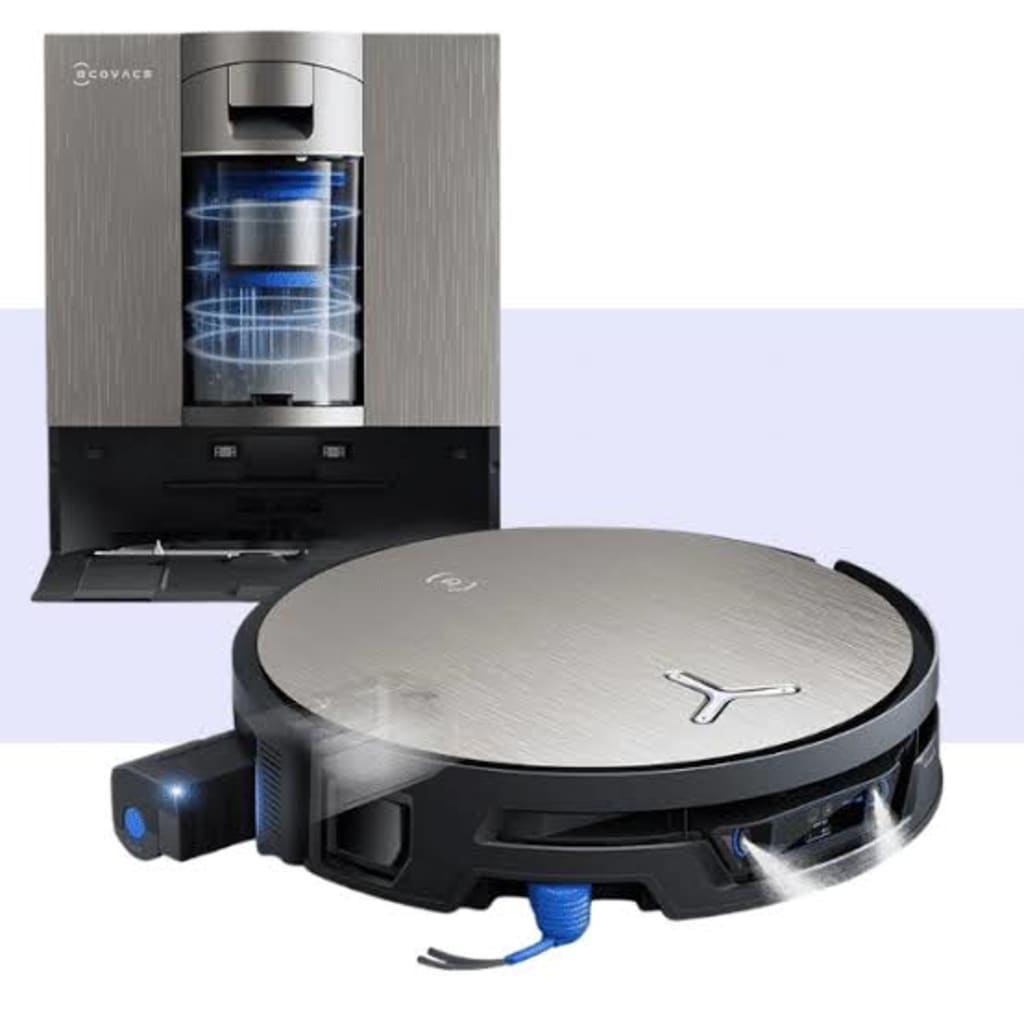
Ecovacs X12S Pro uses an AI camera plus bi-directional 3D structured light. Roborock G30S Ultra uses monocular vision plus structured-light distance measurement. One camera sees less than two.
All three wash the mop and recover dirty water while mopping. Yunjing uses a wide track mop. Ecovacs and Roborock use rollers. Yunjing’s track makes continuous contact with the floor. The other two scrub through roller rotation. All three extend the mop for edges. Yunjing’s side brush reverses and extends. Roborock and Ecovacs use conventional side-brush extension. Roborock also has dual side brushes and a self-lifting roller cover for carpets.
Yunjing Xiaoyao 003 has a 7000mAh battery and charges while washing the mop. It uses base-station washing time to add charge, so cleaning and recharging overlap.
All three have anti-tangle designs. Yunjing uses a cyclone-guided roller brush and an anti-tangle side brush. Roborock uses counter-rotating brushes and dual side brushes. Ecovacs also has anti-tangle designs for the roller and side brush. Yunjing extends self-cleaning to the onboard dirty-water tank and squeegee. The tank stirs and flushes its interior. The squeegee is washed during self-cleaning. Roborock’s dirty-water tank can be removed for manual washing. Ecovacs’s tank cannot be removed and cannot self-clean; it only drains.
Test 1: toys, socks, and clutter
I placed common household obstacles and simulated pet waste on the floor, then added cat litter and hair between them. All three used their daily smart modes. I restored the starting positions and debris before each run.
None of the machines collided. The objects did not shift much. The difference was cleaning around the obstacles.
Yunjing Xiaoyao 003 balanced avoidance and cleaning best. Cat food and hair around the obstacles were collected. Ecovacs X12S Pro avoided obstacles but left a small amount of particles. Roborock G30S Ultra also avoided obstacles but left several scattered particles.
Recognition labels showed a wider gap. Yunjing labeled each object clearly and accurately. Ecovacs recognized only particulate matter. Roborock’s recognition range was limited.
I then moved a toy into the cleaning path from the side. Yunjing and Ecovacs stopped in time and avoided it. Yunjing had the fastest stop and the smoothest detour. Roborock avoided the toy but reacted slightly later.
Interventions: Yunjing 0; Ecovacs 1 for particle spot cleaning; Roborock 1 for scattered particle spot cleaning.
Test 2: dry crumbs, soy sauce, and grease
I placed cat food, soy sauce, and dried ketchup on the same floor section. All three used daily smart modes. I watched how they switched between dry and wet waste.
Cat food is large enough for a fast side brush to flick away. Yunjing slowed down, stopped the side brush, and raised suction when it recognized cat food. It collected the pellets without scattering them. Roborock cleaned the test area but flicked some pellets aside. Ecovacs left four pellets for manual pickup.
Soy sauce requires a different response. A fast side brush and a rolling brush can spread liquid. Yunjing stopped the side brush, lifted the roller, and switched to track mopping. The track took over the liquid cleaning. The soy sauce was removed with no visible spread. Ecovacs used a live-water roller and cleaned the area without obvious water marks. Roborock also used a live-water roller; the floor looked clean, but a paper towel still picked up a small amount of liquid.
Dried ketchup adhered to the floor. All three removed it. Yunjing left the floor dry. Ecovacs and Roborock left some water marks.
Interventions after the dry-wet round: Yunjing 0; Ecovacs 1 for remaining cat food; Roborock 1 for flicked cat food and soy sauce residue.
I then applied equal amounts of chili oil to the floor. Yunjing removed most of the grease on the first pass and repeated mopping in a small area. It returned to the base, washed the mop, came back, and continued. After the full task, a paper towel picked up no visible oil color. Roborock left a large grease area after the first pass and spread it over a wider area. Repeated cleaning removed most of it. Ecovacs still needed manual re-mopping.
All three claim hot live-water washing. Ecovacs and Roborock claim 75°C. Yunjing claims 60°C. The claimed number refers to the heating element’s maximum temperature, and heat is lost in a home. A thermal imager showed Yunjing’s mop surface at the highest temperature in this test. Hotter water softens grease, and continuous scrubbing plus dirty-water recovery carries it away.
The mop structure also matters. Yunjing’s wide track has a large contact area and applies 12N of constant pressure. It works like a warm, damp cloth pressed against the floor. A track makes continuous contact and washes while it wipes, so a clean surface keeps meeting the floor. A roller makes local contact and washes while rolling. The same small cloth section presses the stain again and again. Dirt that cannot be washed away keeps rotating with the roller. Roborock and Ecovacs mops still showed grease after heavy stains. Yunjing’s track showed little residue.
Roborock has the highest claimed downward pressure and cleaned the chili oil after multiple passes. Yunjing uses 16-hole hot live-water spray to wet and wash the track, then a squeegee presses out dirty water into the onboard tank. Dirt is separated and carried away as the track circulates. After heavy cleaning and before base washing, Yunjing’s track had little grease and the squeegee area had no visible buildup. The floor it crossed afterward showed no grease tracking. Ecovacs and Roborock mops still showed stains.
Interventions after the grease round: Yunjing 0; Ecovacs 2 for grease spot mopping and re-wiping the spread area; Roborock 1 for spot mopping the spread area.
Test 3: wall edges, corners, low spaces, and thresholds
I drew equal marker stains near the wall. Yunjing removed the wall-edge scribble in one pass. Roborock left a lighter mark. Ecovacs left a clear mark and needed re-mopping.
Yunjing’s track extends without steps and adjusts to the distance from the wall. It keeps 12N of pressure after extension. The wide track scrubs the edge and reduces repeat work.
I scattered cat food near cabinet and wall corners. Yunjing left no visible residue. Its side brush reversed and extended, pulling pellets from both sides of the cabinet and the wall edge toward the suction inlet. Roborock left one pellet near the wall. Ecovacs left several pellets on the cabinet side.
The three machines measure 95mm for Yunjing, 98mm for Ecovacs, and 89.8mm for Roborock. I tested a 10cm space under a TV cabinet and spread tea leaves at the entrance and deep inside. All three entered without trouble. The difference was residue.
Yunjing left no visible tea leaves inside or at the entrance. Its hidden dToF radar, dual-camera vision, and line structured light handled the dim, low space. Roborock and Ecovacs cleaned the inside but left tea leaves outside the cabinet. Some debris was carried out and not collected.
I built a 4cm obstacle to simulate a threshold. Yunjing and Roborock crossed after two attempts without help. Ecovacs tried several times and failed.
Interventions: Yunjing 0; Ecovacs 3 for wall scribble re-mopping, cabinet-side cat food spot cleaning, and manual carrying over the threshold; Roborock 1 for wall-edge particles and tea leaves.
Test 4: pet areas and baby areas
I placed a pet bowl and litter box with equal amounts of hair and cat litter around them. I enabled each machine’s pet function and set the area.
Yunjing slowed down, adjusted suction, and reduced side-brush speed in dense particle areas. Hair and litter were collected with less scattering. Pet Mode 2.0 and visual recognition let it reuse the cleaning strategy after the area was set. Ecovacs and Roborock removed most debris but left scattered residue.
I checked the roller brush, side brush, and shaft ends. Yunjing and Roborock were clean, with no hair tangling and no stuck particles. Ecovacs had no stuck particles, but hair tangled on the roller mop and in the roller brush grooves.
Yunjing’s roller brush is tapered, larger at one end and smaller at the other. It uses cyclone guidance and airflow to move hair toward the suction inlet. The side brush extends and untangles dynamically. Roborock uses counter-rotating anti-tangle brushes and semi-arc side brushes that guide hair to the inlet. Ecovacs’s side brush also has a semi-arc design and did not tangle, but the roller and shaft end did.
For the baby area, Yunjing lets you set a quiet room in the app. When it enters, it switches to a lower-noise mode. The fan noise dropped, cleaning continued, and small debris was still picked up. Ecovacs and Roborock have no baby-specific quiet scene and clean the area with the regular strategy.
Interventions: Yunjing 0; Ecovacs 1 for hair-tangle cleaning; Roborock 0.
Test 5: voice control when your hands are busy
Simple commands worked on all three. Compound commands worked on Yunjing and Roborock. Ecovacs could not execute the compound command directly and needed phone adjustment.
Yunjing uses NarGPT 3.0 to understand rooms and sequence. It confirms, then executes in order. If you say not to clean the bedroom yet, it adjusts the task. You can state a cleaning need in normal speech without opening the app. Roborock also understood and executed the compound command. Ecovacs handled simple commands only.
Interventions: Yunjing 0; Ecovacs 1 for phone adjustment; Roborock 0.
Test 6: mop, base station, and dirty-water tank
I applied grease to each mop, ran normal self-cleaning and drying, then checked the mop, dirty-water parts, and base station.
All three support hot-water mop washing. Yunjing uses 45–100°C dynamic hot water and adjusts temperature by stain type. Grease needs high heat. Egg white and starch can clump at high heat and need lower-temperature rinsing. Ecovacs and Roborock reach 100°C but do not adjust by stain type.
After self-cleaning, Yunjing’s track was free of visible grease and the edges had no buildup. The mop felt dry and did not need hand scrubbing. The dynamic wash adjusted water temperature, and track rotation, squeegee washing, and dirty-water discharge handled the dirt. During floor cleaning, the track already receives live-water washing. At the base, it gets another wash and dry cycle.
Ecovacs and Roborock removed most grease, but both left a small amount and needed a second wash.
Yunjing also self-cleans the onboard dirty-water tank and squeegee. The tank stirs and flushes to reduce sediment and wall adhesion. The squeegee is flushed during cleaning. After self-cleaning, there was no visible grease on the squeegee or drain area. Roborock’s dirty-water tank can be removed and washed by hand. Ecovacs’s tank has a drain at the bottom; it cannot self-clean and cannot be removed for washing.
I used all three for a week without base-station maintenance. All three base stations stayed clean. All three base plates can be removed and rinsed under a tap. Yunjing also has a replaceable cleaning filter 2.0 that catches hair fragments and debris.
All three support hot-water mop washing, hot-air drying, and automatic cleaning-liquid dosing. Yunjing covers more self-cleaning steps: onboard dirty-water tank stirring, squeegee cleaning, base self-cleaning, and a replaceable filter. Ecovacs uses a maintenance-free cleaning trough. Roborock uses a removable water guide trough and has a 2.7L dust bag, slightly larger than Yunjing’s 2.4L.
Interventions: Yunjing 0; Ecovacs 1 for a second mop wash; Roborock 1 for a second mop wash and dirty-water tank removal.
The intervention count
Across six tests, Yunjing Xiaoyao 003 needed zero manual interventions. Roborock G30S Ultra needed five. Ecovacs X12S Pro needed ten.
Test 1: Yunjing 0, Ecovacs 1, Roborock 1.
Test 2: Yunjing 0, Ecovacs 3, Roborock 2.
Test 3: Yunjing 0, Ecovacs 3, Roborock 1.
Test 4: Yunjing 0, Ecovacs 1, Roborock 0.
Test 5: Yunjing 0, Ecovacs 1, Roborock 0.
Test 6: Yunjing 0, Ecovacs 1, Roborock 1.
Test 2 includes the dry-wet round and the grease round, so its numbers combine both.
Which one to choose
Yunjing Xiaoyao 003 fits pet-owning and child-raising families who do not want to watch the machine. It collected debris between obstacles, cat food in cabinet corners, and tea leaves under the TV cabinet. It changed actions for dry and wet waste. It returned to wash and came back for tough grease. The pet area cleaned well, the quiet room reduced noise, and the roller brush, side brush, and shaft end showed no obvious tangling. Set up the pet area and quiet room once, and daily cleaning needs less attention.
Roborock G30S Ultra is worth a look if your furniture clearance is low. Its 89.8mm body is the lowest of the three, and it crossed the 4cm threshold by itself. It handled daily dust, debris, and ordinary sauces. It left a small amount of particles in corners and in front of furniture, and its side brush can flick particles. Downward pressure is high, and repeated passes cleaned stubborn stains. If low-clearance passage matters more than spotless corners, it can work, with occasional touch-ups.
Ecovacs X12S Pro fits flat floors and daily maintenance. Basic avoidance, low-space cleaning, and simple voice commands worked. It removed most ordinary debris. It missed corners, left heavy grease, needed hair removed from the roller and roller brush, and failed the 4cm threshold. If your home has few thresholds and you clean daily, it can work. If you often deal with heavy grease or height differences between rooms, expect to take over more often.
About the Creator
Jin
Writer of reamstories
https://reamstories.com/jin
Enjoyed the story? Support the Creator.
Subscribe for free to receive all their stories in your feed. You could also become a paid subscriber, letting them know you appreciate their work.
Comments
There are no comments for this story
Be the first to respond and start the conversation.