
I made cornmeal cake on a cold day and my family reached for seconds
Five bowls, a five-year-old mold, and the breakfast that kept us inside
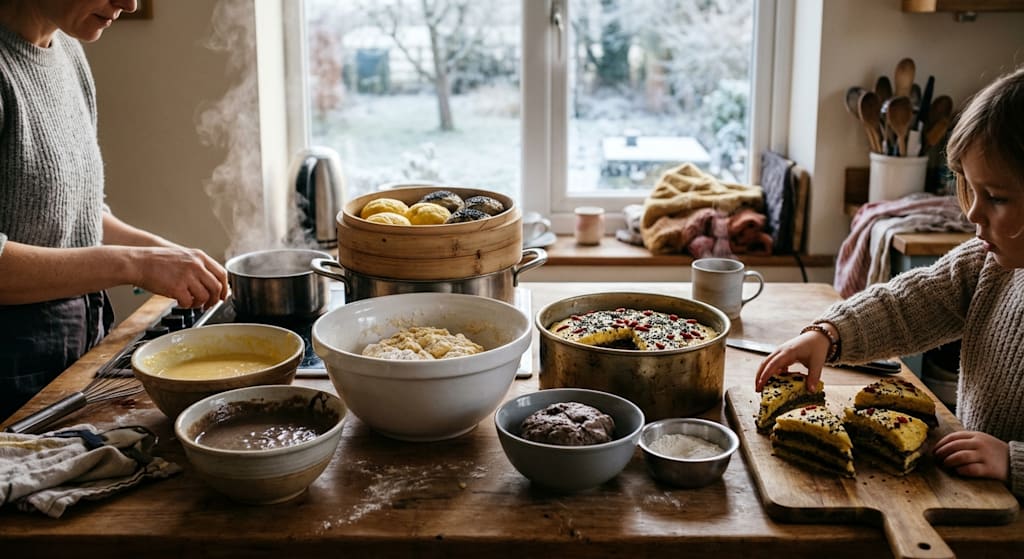
Yesterday I stayed in. My shoes stayed by the door. I cleared the kitchen counter and made white-flour, cornmeal, and buckwheat buns and steamed cakes for breakfast. Coarse grains look plain, but with a good ferment and a balanced mix they come out soft. Older people can chew them, and children ask for another piece.
Cornmeal works for more than one food. This time I made steamed cornmeal cake, black-sesame rolls, cornmeal buns, and small buckwheat buns. Cornmeal also works for nests, pan-fried cakes, savory pancakes, vegetable dumplings, flatbreads, and porridge. Pure cornmeal is coarse and does not hold together well, so I mix it with white flour. This batch used cornmeal, buckwheat flour, and white flour.
I scalded the coarse grains first. I put cornmeal and buckwheat flour in a bowl and poured boiling water over them. I stirred fast with chopsticks until the mixture formed a slightly dry, crumbly paste. Scalding removes the raw taste and brings out a warmer aroma.
I did not add yeast right away. I touched the outside of the bowl with the back of my hand. When it was no longer hot, I moved on. Too much heat kills yeast.
After the mixture cooled, I added white flour at a one-to-one ratio. For every 500 grams of combined cornmeal and white flour, I used 5 grams of yeast. I poured in warm water at about 30 degrees Celsius, a little at a time, and stirred. Then I added 5 grams of sugar and one egg. The final mixture was a thick batter. When I lifted the scraper, it ran down slowly.
I used five bowls. The large bowl held white flour and cornmeal. I made that dough firmer. When I pressed it, the dent stayed and came back slowly. That dough was for steamed buns and black-sesame rolls. Three smaller bowls sat outside. Two held thinner batters. When I shook the bowl, the surface lines took two or three seconds to smooth out. Those were for steamed cakes. The last small bowl held a firmer dough for small buckwheat buns.
I covered the bowls and left them in a warm place until doubled.
The night temperature here in the north is about 15 to 20 degrees Celsius. I mixed the dough around midnight, and by about seven the next morning it had risen. During the night I got up to drink water. On my way past the kitchen, I glanced at the bowls. One lid had been pushed up a little. I lifted it and saw a honeycomb structure inside.
After breakfast, I started shaping and steaming.
I found the steamed-cake mold I had not used for five years. I brushed oil inside, running my finger around the edge and into the corners. First I poured in half the cornmeal batter and scraped the bowl with a scraper. Then I poured in half the buckwheat batter. I scattered black sesame seeds and goji berries on top. One goji berry rolled onto the stove. I picked it up, rinsed it, and pressed it back into the batter.
I covered the mold with a plate and let it rise a second time.
While the cake was rising, I made the buns and rolls. I brushed oil on the steamer rack and placed the buns and rolls with space between them so they would have room to expand.
In less than an hour, the cake batter had risen to the edge of the mold. The plate sat slightly tilted. When I lifted it, a little batter stuck to the bottom of the plate.
I put the steamer on the stove with cold water and set the timer for 40 minutes. The cake mold was thick, so it needed a longer steaming time. The buns and rolls in the same pot were not affected. While it steamed, I wiped the counter and washed the bowls. Five bowls, one scraper, and one whisk were piled in the sink.
When the timer went off, I turned off the heat and let the pot sit for a few minutes before opening the lid.
I turned the mold over to release the cake. The mold was hot against my hand, so I used a cloth. The edge of the cake had pulled away from the mold a little. It came out without sticking. Steam rose onto my glasses, and I leaned my head back.
After the cake cooled for a moment, I cut it into pieces. The knife made a sandy sound as it went through. The cut surface showed fine air holes. A child took one piece, said nothing, and reached for a second.
The cake can be eaten for breakfast or served with dishes at a main meal. For storage, I cut the rest into pieces, put them in a sealed bag, wrote the date and "corn and buckwheat steamed cake" on the bag, and put it in the freezer. When someone wants a piece, steam it for about five minutes. Lift the lid, and it puffs back up.
Practical notes. Scald the cornmeal and buckwheat flour with boiling water, and let the mixture cool before adding yeast. Mix coarse grains with white flour at one-to-one or one-to-two. Pure coarse grains do not rise well. Use about 5 grams of yeast for 500 grams of mixed flour; in cold weather, a little more is fine. Keep the steamed-cake batter thinner and the bun dough firmer. Judge the first rise by the dough, not only by the clock: doubled size and a honeycomb structure are the signs. Do not skip the second rise for the cake. Let it rise until it nearly reaches the edge of the mold. Oil the mold so the cake releases cleanly. Start with cold water, steam a thick mold for 40 to 50 minutes, and let it sit for a few minutes after turning off the heat. Freeze leftover cake in a sealed bag and re-steam it for about five minutes.
That day, the kitchen counter held five bowls, a mold, a steamer, and a cutting board. The buns and rolls went into a basket. The cake was cut into triangles and left to cool. The house smelled of cornmeal, buckwheat, and black sesame. Breakfast was ready, and the cold weather stayed outside the window.
About the Creator
Jin
Writer of reamstories
https://reamstories.com/jin
Enjoyed the story? Support the Creator.
Subscribe for free to receive all their stories in your feed. You could also become a paid subscriber, letting them know you appreciate their work.
Comments
There are no comments for this story
Be the first to respond and start the conversation.