
Global Oats Market Expands as Health-Conscious Consumers Drive Demand for Nutritious and Plant-Based Foods
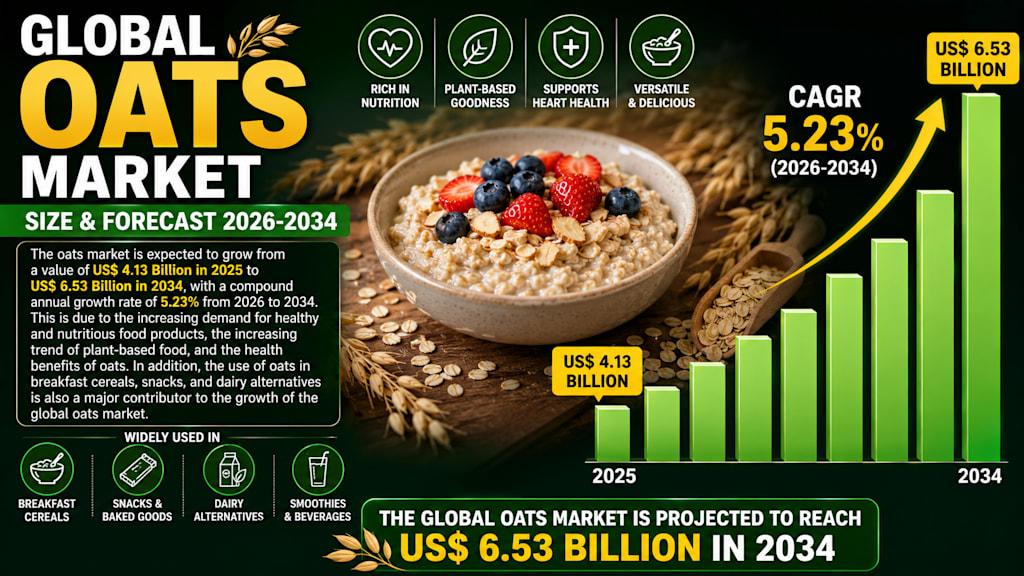
Renub Research forecasts the global oats market to grow from US$ 4.13 billion in 2025 to US$ 6.53 billion by 2034, fueled by rising health awareness, plant-based diets, and demand for convenient healthy foods.

Oats Are Becoming One of the World’s Most Popular Health Foods
The global food industry is undergoing a major transformation as consumers increasingly prioritize health, wellness, and clean eating habits. Across supermarkets, cafes, restaurants, and online grocery platforms, demand for nutritious and plant-based foods continues to rise. Among the many products benefiting from this shift, oats have emerged as one of the strongest-performing categories in the global health food market.
According to Renub Research, the global oats market is projected to increase from US$ 4.13 billion in 2025 to US$ 6.53 billion by 2034, growing at a compound annual growth rate (CAGR) of 5.23% during 2026–2034. The market’s expansion is being supported by growing awareness about nutrition, rising demand for plant-based foods, and the increasing popularity of convenient healthy meals.
Oats are no longer limited to traditional breakfast porridge. They are now widely used in cereals, granola bars, smoothies, bakery products, dairy alternatives, sports nutrition products, and even skincare formulations. As consumers become more health-conscious and environmentally aware, oats are increasingly viewed as a versatile ingredient that supports both personal wellness and sustainable food consumption.
Why Oats Have Become a Global Nutrition Trend
Oats, scientifically known as Avena sativa, are whole-grain cereals recognized for their high nutritional value and health benefits. They are rich in dietary fiber, particularly beta-glucan, which is known for supporting heart health and helping reduce cholesterol levels. Oats also contain essential vitamins, minerals, antioxidants, and plant-based protein, making them one of the most nutritionally balanced grains available today.
Consumers increasingly choose oats because they align perfectly with modern dietary preferences. They are filling, versatile, easy to prepare, and suitable for a wide range of eating habits, including vegetarian, vegan, and gluten-conscious diets. Oats are also available in multiple forms such as rolled oats, steel-cut oats, instant oats, and oat flour, allowing manufacturers to create a wide variety of food products.
Their popularity has expanded far beyond traditional oatmeal breakfasts. Oats are now common ingredients in granola, cookies, bread, energy bars, protein snacks, smoothies, and dairy-free beverages such as oat milk. This diversification has significantly expanded the market’s growth potential across multiple food and beverage categories.
Health Awareness Is the Biggest Driver of Market Growth
One of the strongest forces behind the growth of the oats market is the increasing consumer focus on health and nutrition. Around the world, people are becoming more aware of the relationship between diet and long-term health. Concerns about obesity, diabetes, heart disease, and digestive disorders are encouraging consumers to adopt healthier eating habits and incorporate nutrient-rich foods into their daily diets.
Oats fit perfectly into this trend because they are widely recognized as a heart-healthy and fiber-rich food. Nutritionists and healthcare professionals often recommend oats for maintaining cholesterol levels, improving digestion, and supporting weight management. The beta-glucan fiber found in oats is particularly valued for its role in cardiovascular health.
The file references data from the Oldways Whole Grains Council showing that 61% of American consumers now prefer whole-grain foods at least half the time. This growing preference for whole grains is creating strong momentum for oats and oat-based products globally.
Preventive healthcare trends are also influencing food choices. Consumers increasingly want foods that offer functional health benefits rather than simply satisfying hunger. Oats are viewed as one of the most accessible and affordable functional foods available in the market today.
Plant-Based Diets Are Transforming the Oats Industry
The rapid growth of plant-based and vegan diets is another major catalyst for the oats market. Oats have become a key ingredient in many plant-based food categories, particularly dairy alternatives such as oat milk, vegan yogurt, and non-dairy desserts.
Oat milk has emerged as one of the fastest-growing plant-based beverage categories globally. Consumers increasingly choose oat milk because of its creamy texture, nutritional benefits, and suitability for lactose-intolerant individuals. Compared to some other plant-based milk alternatives, oat milk is also viewed as environmentally sustainable because oats generally require fewer resources to cultivate.
The rise of environmentally conscious eating habits is further boosting demand. Consumers are increasingly seeking foods that not only support personal health but also reduce environmental impact. Oats align well with these sustainability goals, strengthening their appeal among younger and environmentally aware consumers.
Major food companies are responding quickly to this trend. The file highlights strategic moves by companies such as Kellogg’s and Nestlé to expand oat-based product portfolios and strengthen their presence in the plant-based segment. These investments demonstrate how important oats have become within the broader evolution of the global food industry.
Convenience Foods Are Expanding Oat Consumption
Modern lifestyles are increasingly fast-paced, especially in urban areas where consumers often prioritize convenience alongside nutrition. This has created significant opportunities for oats in processed and ready-to-eat food categories. Oats are now widely used in instant breakfast products, snack bars, cereals, baked goods, smoothies, and meal replacement products.
Food manufacturers view oats as a highly versatile ingredient because they improve texture, nutritional value, and satiety while appealing to health-conscious consumers. Oats are especially popular in breakfast foods because they provide long-lasting energy and are relatively easy to prepare.
The demand for healthy convenience foods is particularly strong among working professionals, students, fitness-focused consumers, and urban households. This shift in eating behavior is encouraging companies to launch innovative oat-based products with different flavors, protein content, and functional health benefits.
The growing use of oats in gluten-free and clean-label products is also expanding their relevance across multiple dietary segments. As consumers continue prioritizing healthy convenience, oats are expected to remain a preferred ingredient within the processed food industry.
Rolled Oats Continue to Dominate Consumer Preferences
Among the various product types, rolled oats remain one of the most popular and widely consumed forms of oats globally. Rolled oats are produced by steaming and flattening oat groats, creating a product that cooks relatively quickly while retaining strong nutritional value.
Rolled oats are highly versatile and are commonly used in oatmeal, granola, muesli, cookies, breads, bars, and smoothies. Their texture, ease of preparation, and nutritional profile make them attractive to consumers seeking quick and healthy meal options.
Food manufacturers are also increasingly incorporating rolled oats into innovative functional food products designed for energy, fitness, and wellness applications. As whole-grain consumption trends continue rising, rolled oats are expected to maintain a strong market position globally.
Instant Oats Are Winning Urban Consumers
Instant oats are experiencing rapid growth because they address one of the biggest consumer priorities in modern food consumption: convenience. Instant oats are pre-cooked and processed into finer textures, allowing them to be prepared quickly by simply adding water or milk.
Urban consumers with busy lifestyles increasingly favor instant oats because they offer a healthy breakfast solution without requiring significant preparation time. Instant oats are especially popular among students, office workers, and young professionals living in cities.
Manufacturers are also expanding product variety by introducing flavored instant oats featuring fruits, chocolate, spices, and protein-enhanced formulations. These innovations are helping brands attract broader consumer groups while strengthening the overall market for convenient health foods.
Food and Beverage Industry Remains the Largest Consumer Segment
The food and beverage sector represents the largest application segment for oats due to the ingredient’s versatility and nutritional value. Oats are widely used across cereals, energy bars, bakery products, smoothies, dairy-free beverages, and meal replacement products.
The rapid expansion of plant-based beverages has been particularly important. Oat milk and oat-based dairy alternatives have become major growth drivers within the food and beverage industry. At the same time, fitness-oriented products such as protein bars and functional snacks increasingly rely on oats for their natural fiber and nutritional benefits.
As consumers continue demanding healthier, organic, and minimally processed foods, oats are expected to remain a highly attractive ingredient for food manufacturers seeking to align with wellness-focused consumer preferences.
Oats Are Expanding Beyond Food Into Personal Care
Interestingly, oats are also gaining popularity in the personal care and cosmetics industry. Oat extracts and colloidal oatmeal are increasingly used in skincare products because of their soothing, moisturizing, and anti-inflammatory properties.
Products such as lotions, face masks, creams, cleansers, and bath products now commonly incorporate oats to support sensitive skin and conditions like eczema or dermatitis. The growing demand for natural and clean-label beauty products is helping expand this application segment further.
This diversification beyond food applications highlights how oats are evolving into a broader wellness ingredient rather than simply an agricultural commodity.
Regional Markets Continue to Expand Rapidly
The United States remains one of the most developed oats markets globally due to high consumer awareness regarding healthy eating and plant-based diets. Products such as oatmeal, granola bars, and oat milk have become mainstream in the country.
The United Kingdom continues to benefit from strong traditional oat consumption combined with growing demand for healthier and plant-based products. Supermarkets increasingly offer wide ranges of oat-based convenience foods and dairy alternatives.
India represents one of the fastest-growing oats markets due to rising health awareness, urbanization, and increasing concerns about obesity and diabetes. Consumers are rapidly adopting oats as convenient and nutritious breakfast options.
Saudi Arabia is also witnessing growth as consumers become more health-conscious and increasingly adopt healthy breakfast and snack habits. These regional trends indicate that oats are becoming globally relevant across both developed and emerging food markets.
Supply Chain and Competition Challenges Still Exist
Despite strong growth prospects, the oats market still faces important challenges. Oat cultivation is highly dependent on weather conditions such as rainfall, temperature, and climate stability. Droughts, floods, and extreme weather events can impact yields and create supply chain disruptions or price volatility.
Competition from alternative grains and breakfast products also remains intense. Oats compete with wheat, rice, corn, barley, cereals, bread products, and other convenient breakfast options. Manufacturers must continuously innovate to differentiate oat-based products and maintain consumer interest.
However, the strong alignment between oats and modern wellness trends continues to provide significant long-term growth opportunities for the industry.
Final Thoughts
The global oats market is benefiting from some of the most important consumer trends shaping the modern food industry: health consciousness, plant-based eating, convenience, and clean-label nutrition. Oats have evolved from a traditional breakfast staple into a versatile ingredient used across food, beverages, wellness products, and personal care applications.
Renub Research’s projection of the market growing from US$ 4.13 billion in 2025 to US$ 6.53 billion by 2034 highlights the growing importance of oats within the global nutrition and wellness economy. As consumers continue prioritizing healthier lifestyles and sustainable food choices, oats are expected to remain one of the strongest-performing categories in the global health food market for years to come.
About the Creator
Enjoyed the story? Support the Creator.
Subscribe for free to receive all their stories in your feed.
Comments
There are no comments for this story
Be the first to respond and start the conversation.