
Dairy Alternative Market to Reach US$ 77.59 Billion by 2034 as Plant-Based Nutrition Goes Mainstream
Health Trends, Sustainability Concerns, and Product Innovation Accelerate Global Demand for Dairy-Free Alternatives

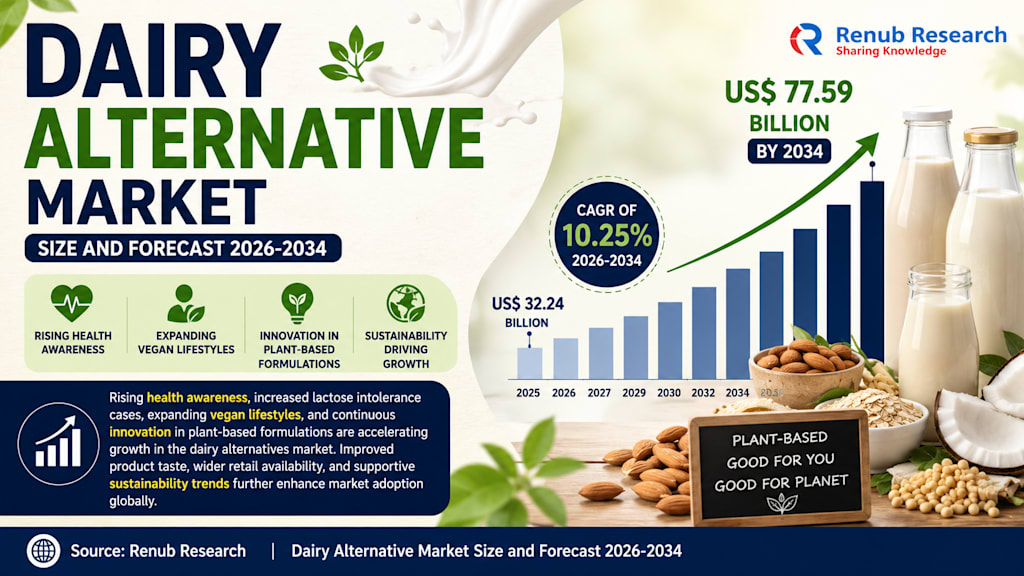
Dairy Alternatives Are Reshaping Consumer Habits Worldwide
Dairy alternatives are plant-based substitutes designed to replace conventional dairy products such as milk, yogurt, cheese, creamers, and ice cream. These products are commonly made from almonds, oats, soy, rice, coconut, and other plant sources.
Over time, the category has evolved significantly. Earlier products often struggled with taste and texture, but advances in formulation technology have improved creaminess, nutritional balance, and versatility. Today’s dairy-free beverages are often fortified with calcium, vitamins, probiotics, and protein, making them more competitive with traditional dairy.
Consumers are also becoming more ingredient-conscious. Clean-label formulations, low sugar content, and functional benefits are now key purchasing factors. Younger consumers, especially millennials and Gen Z, are leading adoption trends as they prioritize wellness and sustainability in everyday food choices.
Beyond households, dairy alternatives are growing rapidly across cafés, restaurants, and quick-service chains. Barista-grade oat milk and almond beverages are now widely used in premium coffee applications, increasing category visibility and acceptance.
Health Awareness Continues to Fuel Market Expansion
One of the strongest drivers of dairy alternative adoption is rising health consciousness. Increasing rates of lactose intolerance and dairy sensitivity are pushing consumers toward plant-based substitutes that are easier to digest.
Many consumers also associate dairy alternatives with broader wellness goals such as weight management, cholesterol reduction, and heart health. Products with added protein, vitamins, minerals, and immune-support ingredients are gaining strong attention.
The market is moving beyond simple dairy replacement and into functional nutrition. Consumers now expect both taste and health benefits.
A clear example of this trend came in May 2024, when Lactalis Canada launched its Enjoy plant-based milk range made from oat, almond, and hazelnut bases. Each serving contains 8 grams of pea protein, showing the growing demand for high-protein dairy alternatives.
As wellness-driven purchasing behavior becomes more dominant, manufacturers are investing heavily in nutritional innovation to strengthen product differentiation.
Sustainability and Ethical Consumption Strengthen Demand
Environmental concerns are playing a major role in shaping the dairy alternatives market. Consumers are increasingly aware of the ecological impact of conventional dairy farming, including greenhouse gas emissions, land use, and water consumption.
Plant-based beverages are widely viewed as more sustainable, especially oat and almond-based products. This perception strongly influences younger and environmentally conscious consumers.
Animal welfare is also contributing to growth. Vegan lifestyles continue to expand globally, supported by social media awareness, celebrity influence, and the growing availability of plant-based food options.
Brands are responding with sustainability-focused messaging, recyclable packaging, and transparent sourcing practices. Many companies are positioning dairy alternatives not just as healthy products, but also as responsible lifestyle choices.
Innovation in Plant Bases Is Creating New Growth Opportunities
While soy, almond, and oat milk remain the most popular bases, companies are increasingly exploring alternative ingredients to diversify product offerings and target specialized nutrition needs.
Manufacturers are experimenting with quinoa, chickpeas, peas, cashews, flaxseeds, and hazelnuts to create products with higher protein content and unique flavor profiles.
In August 2024, NIÚKE Foods introduced QMILQ, a quinoa-based milk alternative aimed at consumers seeking nutrient-dense and protein-rich dairy substitutes.
These innovations help brands stand out in a highly competitive market while appealing to consumers looking for allergen-friendly and customized nutrition options.
Advanced processing technologies are also improving product stability and functionality. This is especially important for baking, frothing, cooking, and specialty coffee preparation, where texture and consistency matter significantly.
Global Expansion of Wellness Brands Boosts Accessibility
International expansion is accelerating dairy alternative adoption across emerging markets. Wellness-oriented brands are entering new regions with products tailored to local tastes and dietary habits.
Asia-Pacific is emerging as a major growth hotspot due to urbanization, rising disposable income, and stronger awareness of plant-based nutrition.
In September 2024, Glico expanded its Almond Koka almond milk brand into Singapore as part of its Southeast Asian wellness portfolio strategy.
This wider international presence is helping normalize dairy alternatives as everyday beverages rather than specialty products. Increased supermarket availability, digital marketing, influencer promotions, and e-commerce growth are further supporting global market penetration.
Challenges Continue to Impact Market Growth
Despite strong momentum, the dairy alternative market still faces several challenges.
Higher Production Costs
Plant-based dairy products often require expensive raw materials, specialized processing methods, and advanced fortification technologies. Ingredient price fluctuations, especially for nuts and premium grains, can significantly affect manufacturing costs.
As a result, dairy alternatives are often priced higher than traditional dairy products, limiting accessibility in price-sensitive markets.
Taste and Texture Limitations
Although product quality has improved substantially, some consumers still find dairy alternatives less creamy or less suitable for cooking than conventional dairy.
Cheese and yogurt substitutes remain particularly difficult to perfect because replicating dairy’s texture and fermentation characteristics requires sophisticated ingredient blending and processing.
Manufacturers are therefore investing in food science, fermentation technology, and ingredient optimization to close the sensory gap and improve consumer satisfaction.
United States Dairy Alternative Market
The United States remains one of the most influential dairy alternative markets in the world. Strong café culture, advanced retail infrastructure, and high consumer awareness around health and sustainability continue to drive growth.
Oat milk and almond beverages are especially popular in urban areas. The rising demand for protein-enriched formulations and clean-label beverages is further strengthening the U.S. market.
Germany Dairy Alternative Market
Germany is a major European growth market for dairy alternatives due to environmental awareness, vegan lifestyles, and strong demand for sustainable food products.
Oat-based beverages are especially popular because of their mild flavor and sustainability appeal. Retailers across Germany continue to expand plant-based product ranges, including dairy-free yogurts and cheese alternatives.
China Dairy Alternative Market
China’s dairy alternative market is expanding rapidly as lactose intolerance remains highly prevalent and younger consumers increasingly embrace plant-based beverages as part of modern lifestyle trends.
Oat and soy beverages are especially popular in cafés and tea shops. The expansion of e-commerce platforms is also improving product visibility and accessibility.
Saudi Arabia Dairy Alternative Market
Saudi Arabia is emerging as a promising market due to rising health awareness and greater exposure to global dietary trends.
Urban consumers are increasingly choosing almond, oat, and soy-based beverages as healthier lifestyle alternatives. Government-led wellness initiatives and rising disposable incomes are expected to support long-term growth.
Recent Developments from Major Companies
Danone S.A. continues expanding its global plant-based portfolio through oat, almond, and soy beverage brands while also investing in sustainable packaging initiatives.
SunOpta Inc. has strengthened its plant-based manufacturing capabilities to meet rising North American demand for dairy-free beverages and nutritional drinks.
Blue Diamond Growers Inc. has expanded flavored almond milk offerings while focusing on improved texture and protein-enhanced formulations.
Noumi Limited is accelerating innovation in dairy-free nutrition products targeting Asia-Pacific markets and café applications.
Vitasoy International Holdings Limited has introduced fortified soy beverages focused on immunity, protein, and clean-label ingredients.
Oatly Group AB has expanded café partnerships globally and launched new barista-focused oat milk formulations for specialty coffee chains.
The Hain Celestial Group Inc. has increased investment in organic plant-based dairy alternatives and functional nutrition beverages.
Archer-Daniels-Midland Company has enhanced ingredient solutions for plant-based manufacturers, focusing on texture optimization and protein fortification.
Eclipse Foods introduced a whole-milk alternative made from purified pea and chickpea proteins to mimic traditional dairy texture and flavor more closely.
Yeo Hiap Seng launched Yeo’s Immuno Soy Milk fortified with vitamin B6 and zinc to support immune health in Singapore and Malaysia.
Product Segmentation Highlights
The dairy alternatives market covers a broad range of products including plant-based milk, yogurt alternatives, dairy-free cheese, ice cream substitutes, creamers, and other functional beverages.
Among these, oat, almond, soy, and coconut remain the leading categories. However, quinoa, pea, and mixed-grain formulations are emerging quickly due to their nutritional value and innovation potential.
Distribution channels are also expanding beyond supermarkets into convenience stores, online retail, cafés, and specialty wellness outlets.
Final Thoughts
The dairy alternative industry is entering a powerful new growth phase driven by changing dietary habits, sustainability awareness, and rapid innovation in plant-based nutrition. What began as a niche category for lactose-intolerant consumers has evolved into a mainstream global movement influencing retail shelves, café menus, and household consumption patterns worldwide.
As companies continue improving taste, functionality, and nutritional performance, dairy alternatives are expected to become increasingly competitive with conventional dairy products across multiple applications.
With strong momentum across North America, Europe, Asia-Pacific, and the Middle East, the global dairy alternative market is well positioned for long-term expansion. The next decade is likely to bring even more innovation, ingredient diversification, and consumer adoption as plant-based nutrition becomes central to the future of food.
About the Creator
Enjoyed the story? Support the Creator.
Subscribe for free to receive all their stories in your feed.
Comments
There are no comments for this story
Be the first to respond and start the conversation.