
Beyond Ginger: The Quiet Revolution in My Thai Kitchen
How a humble pouch of galangal powder made me rethink heritage, convenience, and the way the world tastes Thai food.
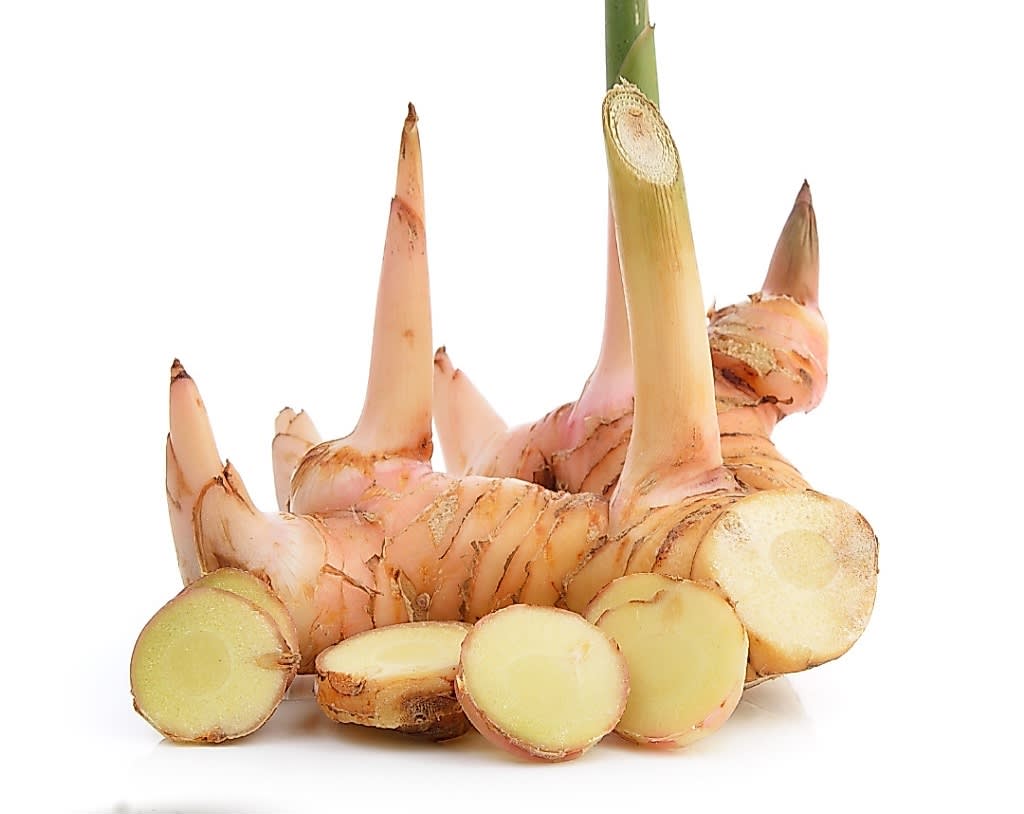
There is a running joke among those of us who grew up cooking in Thailand: ginger gets all the global fame, while galangal does all the heavy lifting in our most iconic dishes. If you ask most international food lovers about Thai aromatics, they will eagerly mention ginger. But if you show them a whole, fresh root of galangal—with its pale, woody skin and pinkish shoots—they usually stare at it with complete confusion. To the untrained eye, it looks like a tough, fibrous cousin of ginger. To a Thai home cook, however, it is the soul of Tom Kha soup and the fragrant backbone of authentic curry pastes.
For years, my relationship with fresh galangal was a mix of love and sheer frustration. Cooking an authentic meal at home meant making a deliberate trip to the wet market or searching through the refrigerated produce section at a local supermarket. Once you bring that fresh root home, the real struggle begins. Galangal is notoriously tough. Slicing through a mature root feels like trying to carve a piece of hardwood. And unless you plan on making giant pots of herbal soup every single day, that beautiful root inevitably sits in the crisp drawer of your refrigerator, slowly shrinking, turning brown, and drying out until it ends up in the trash. It always felt like such a wasteful cycle for an ingredient so central to our culinary heritage.
That was until I stumbled upon a modern iteration of this ancient spice: pure galangal powder in a simple, resealable pouch.
I admit I was skeptical at first. In Thai cooking, we are taught to revere absolute freshness. The idea of using a dehydrated, finely ground powder sounded almost like a compromise. But the first time I tore open the seal, my doubts vanished. A sharp, warm, resinous aroma filled the kitchen—instantly recognizable as pure galangal, without any artificial fillers or dampness.
The true magic, however, came during the cooking process. Instead of dragging out a heavy cutting board, wrestling with a dull knife, and carefully fishing out tough, unchewbale slices of galangal from a boiling pot later on, I simply scooped a teaspoon of the beige powder directly into the broth. It dissolved effortlessly. The flavor was remarkably vibrant, carrying that distinct piney, citrusy heat that defines a true Thai soup.
This small change in my kitchen made me reflect on how traditional food evolves. For people living fast-paced lives in modern Thai cities, or for foreigners living abroad who want to recreate authentic Thai dishes without hunting down rare, perishable roots at specialized Asian grocers, this isn't a compromise—it is a liberation.
When international travelers visit Thailand, they often fall in love with the complex, aromatic balance of our food, but they rarely understand why it tastes the way it does. They recognize the heat of chilies and the tang of lime, but the subtle, earthy depth provided by galangal remains a mystery—largely because the root itself is so inaccessible to cook with outside of Southeast Asia.
Holding this simple package of galangal powder, I realized that modern food innovations aren't about erasing traditions; they are about keeping them alive and accessible. Whether you are a busy local trying to whip up a quick weeknight curry without wasting ingredients, or someone halfway across the world curious about real Thai flavors, a little spoonful of powder bridges a centuries-old culinary gap. It takes an intimidating, easily spoiled root and turns it into an everyday staple. In the end, it proves that preserving tradition doesn't mean standing still—it means finding new ways to share it with the world.
About the Creator
Enjoyed the story? Support the Creator.
Subscribe for free to receive all their stories in your feed.
Comments
There are no comments for this story
Be the first to respond and start the conversation.