
BBQ Grilling on a Boat: What You Need to Know Before You Buy
Everything You Need to Know Before Buying a Boat Grill

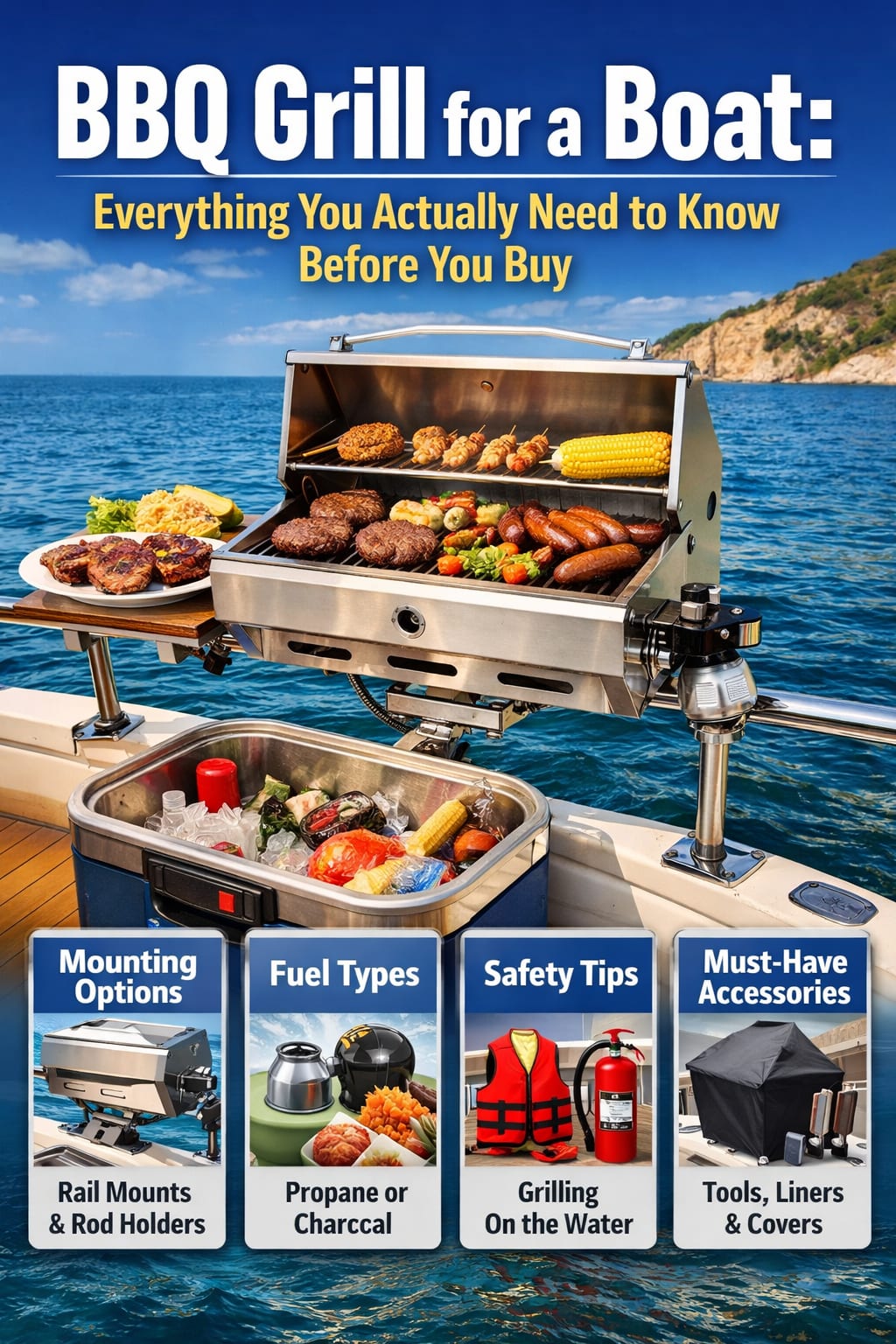
There's something genuinely satisfying about cooking a fresh meal out on the water. Whether you're anchored in a quiet cove or docked at the marina for the weekend, having a grill on board opens up a whole different kind of experience. But buying a grill for your boat isn't the same as picking one up for your backyard.
After researching what actually works on the water, here's a straightforward breakdown of what to consider, which types of grills make the most sense, and how to stay safe while doing it.
Propane, Charcoal, or Electric — What Works Best?
Propane is what most boaters end up choosing, and it makes a lot of sense. It heats up quickly, you can control the temperature easily, and there's no ash to deal with on a moving deck. Brands like Magma and Kuuma have been making marine propane grills for a long time and are consistently well-regarded by boating communities.
Charcoal gives you better flavor — that part is hard to argue. The tradeoff is that it takes more planning. You need to manage the coals on a stable surface, dispose of ash properly (never overboard), and ideally you want calm conditions. Charcoal makes more sense if you tend to anchor in one spot for hours rather than moving around.
Electric grills are probably the most underrated option, especially if you spend a lot of time at a marina or your boat has access to shore power. No open flame, no fuel canisters, easy to clean up, and they're considered the safest option when ventilation is uncertain. The main limitation is that you're tied to a power source, so they don't work well out at anchor. For dock-side cooking, though, they're genuinely hard to beat.
What to Look For When Comparing Options
Material matters most. Saltwater is harsh on metal, and a grill that looks great in a store can start rusting by the end of your first season if it's not built for marine conditions. Look for 304 or 316 stainless steel. Avoid painted carbon steel or anything that isn't clearly labeled as marine-grade. Always check the spec sheet before you buy.
The mounting system is just as important. A grill needs to be properly secured to the boat, not just balanced on a surface. The most popular option is a rail mount — it clamps onto the boat's railing without drilling and works on most pontoon boats, sailboats, and cruisers. Stern rail mounts are common on sailboats and cruisers. Swivel mounts are a nice upgrade if you cook often, since you can rotate the grill out of the way when you're not using it. Pedestal mounts are the most stable option but require drilling into the deck and committing to a fixed spot.
Think honestly about cooking surface size. If it's just two or three people, a compact grill is fine. If you're regularly hosting a group on a pontoon on a summer weekend, a small cooking surface will slow everything down and frustrate people waiting to eat.
Grills Worth Considering
Magma Marine Kettle Grill — One of the most respected names in marine grilling. The kettle shape holds heat well even in windy conditions, and it's available in both propane and charcoal versions. The rail mount system is solid and well-designed. It costs more than budget options, but it's the kind of purchase you make once.
Kuuma Grills — A close alternative to Magma, and worth a look if you prefer a rectangular cooking surface. Kuuma grills heat very evenly, which matters especially when you're cooking fish. They come in a range of sizes, which is helpful for larger boats where a compact kettle-style doesn't quite work.
Budget options (Cuisinart portable, Weber Go-Anywhere) — These aren't built for marine use specifically, but they can work if you're new to boating and not ready to invest in a dedicated marine grill. If you go this route, rinse and dry the grill thoroughly after every use and store it inside when you're not cooking. Expect to replace it sooner than a proper marine model.
Safety Rules Worth Taking Seriously
Grilling on a boat comes with real fire risk. A few habits can make a big difference.
Anchor before you cook. Don't try to grill while the boat is drifting or moving. Stop, anchor properly, and then start cooking.
Use marine-rated propane equipment throughout. The hose, regulator, and all connections should be rated for marine conditions — standard residential gear isn't designed for the moisture and vibration of life on the water. Before lighting up, do a quick leak check with soapy water on all the connections. If you see bubbles, stop and fix it before doing anything else.
Keep the grill away from anything flammable — upholstery, canvas covers, and especially fuel caps. Never cook in an enclosed space or under a canopy. Keep a marine fire extinguisher within easy reach, not buried in a compartment. If you're using charcoal, wait until the ash is completely cool before disposing of it — hot ash overboard is both a fire hazard and an environmental issue.
Simple Meals That Work Well on a Boat
Fresh fish right off the line, simply seasoned and cooked over direct heat, is hard to improve on. Shrimp skewers are almost as popular and cook in about four minutes, which is useful when people are hungry and the boat is moving.
Foil packet meals are worth knowing about if you're working with a small grill or a larger group. Put your protein, vegetables, and seasonings into foil, seal it up, and let it cook. You can prep everything before leaving the dock, and cleanup is almost nothing. For a special occasion, lobster tails or crab legs on the grill with cold drinks is a combination that's hard to argue with.
A Few Accessories That Are Actually Useful
A grill cover — UV and saltwater will degrade your grill quickly without one. Don't skip this.
Long-handled tools — more useful on a boat than in a backyard because you have less room to maneuver.
A grill thermometer — wind affects cooking temperature more than people expect on the water.
A stainless steel grill brush kept on the boat — if it's there, you'll actually use it after every session.
Heat-resistant gloves — handy when working a hot grill on a surface that may be rocking.
Common Questions
Can I just bring a regular backyard grill onto my boat?
Technically yes, but it's not a good idea. Standard household grills aren't built for salt air and will corrode much faster. They also don't have the mounting systems needed to stay safely in place on a moving boat. A budget marine grill is a better investment than a non-marine one that falls apart after a season.
What's the best setup for a pontoon boat?
A rail-mounted propane grill is typically the best fit. Both Magma and Kuuma make models designed for pontoon rail mounting that clamp on without drilling. If you regularly have larger groups on board, Kuuma's wider cooking surface models are worth looking at.
Is grilling on a boat legal?
Generally yes, though it varies by location. Many marinas restrict open-flame grilling while docked, which means you'll need to anchor out before cooking. Some waterways have additional rules. It's worth checking local regulations before your first cookout.
How do I maintain a marine grill so it lasts?
Rinse it with fresh water after every use — especially the exterior. Scrub the grates while still warm, then store it covered once it's cooled and dried. At the end of the season, do a thorough clean and apply a stainless steel protectant. A few minutes of care after each use goes a long way.
Final Thoughts
Getting a grill for your boat doesn't need to be complicated. The main things to get right: proper marine-grade stainless construction, a secure mounting system that fits your boat, and the right propane setup if you go that route. Magma and Kuuma are the most consistently recommended options among boaters, and for good reason.
Budget a bit extra for a proper mount and a cover, and you're set up for the long term. Once you're out there cooking a real meal on the water, it's easy to understand why so many boaters consider it one of the best additions they've made to their setup.
About the Creator
Armands Discount
Armands Discount offers premium fireplaces, BBQ grills, patio heaters, and outdoor living solutions. Family-owned and trusted since 1947. Visit :https://armandsdiscount.com/
Enjoyed the story? Support the Creator.
Subscribe for free to receive all their stories in your feed.
Comments
There are no comments for this story
Be the first to respond and start the conversation.