short story
Threats to Octopus Populations.
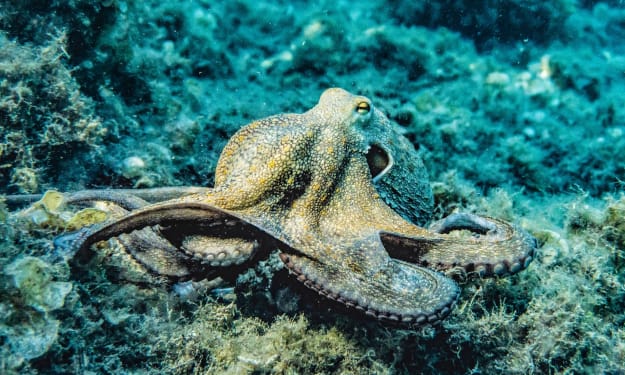
Title: Threats to Octopus Populations: Conservation Challenges in the Oceans Octopuses are fascinating creatures that inhabit oceans around the world. They are known for their intelligence, camouflage abilities, and unique physical characteristics. However, the future of octopus populations is uncertain, as they face a range of threats from human activities and environmental changes. In this article, we will explore the conservation challenges facing octopus populations in the oceans.
By Mr Royal Honey 3 years ago in Earth
Incredible Octopus.
The octopus is a fascinating creature that has captured the imagination of people for centuries. With its eight arms, suction cups, and chameleon-like ability to change color, the octopus is truly one of the most incredible creatures in the underwater world. Octopuses are found in every ocean of the world, from the shallow coral reefs to the deep-sea trenches. They are mollusks, related to clams and snails, but they have evolved in a completely different direction. They have no shell, and instead of a rigid skeleton, they have a soft, flexible body that can squeeze through tight spaces and change shape as needed. The octopus, with its mesmerizing appearance and remarkable abilities, is truly one of the marvels of the underwater world. From its incredible intelligence to its astonishing adaptability, the octopus has captivated scientists and enthusiasts alike. In this article, we will delve into the fascinating world of these extraordinary creatures. One of the most striking features of the octopus is its appearance. With its soft body and eight flexible arms, adorned with suction cups, it is a creature of elegance and grace. Its ability to change color and texture is truly awe-inspiring. Whether blending seamlessly with its surroundings or flashing vivid hues to communicate, the octopus is a master of disguise and communication. But it is the octopus's intelligence that truly sets it apart. With a highly developed nervous system and a complex brain, the octopus exhibits an astonishing level of problem-solving skills. It has been observed using tools, such as coconut shells, to build shelters or protect itself from predators. The octopus is also known for its ability to learn and remember, making it a formidable predator in the depths of the ocean. One of the most impressive features of the octopus is its ability to change color and texture to blend in with its surroundings. They do this using specialized cells in their skin called chromatophores, which can expand or contract to reveal different colors or patterns. This makes the octopus an expert at camouflage, able to hide from predators or sneak up on prey. Octopuses are also known for their intelligence. They have a well-developed nervous system and can learn from experience. In fact, they have been known to solve puzzles, use tools, and even play games. Some scientists believe that octopuses are the most intelligent invertebrates on the planet, rivaling some of the most intelligent mammals like dolphins and chimpanzees. Another remarkable ability of the octopus is its ability to regenerate its limbs. If an octopus loses an arm in an attack, it can grow it back over time. The new arm will be slightly smaller than the original, but it will be fully functional. Octopuses are also masters of escape. They can squeeze through incredibly small spaces, including the openings in a clamshell or a drainpipe. They can also create distractions or release clouds of ink to confuse predators while they make their getaway. Despite their impressive abilities, octopuses are not invincible. They have many natural predators, including sharks, dolphins, and larger octopuses. They are also often caught by humans for food or for aquariums. This is a concern because octopuses are known to be highly intelligent and social creatures, and some scientists believe they may even experience emotions like pleasure and pain. In recent years, octopuses have become the subject of more scientific study and public interest. This has led to some surprising discoveries about their behavior and biology. For example, researchers have found that octopuses can recognize individual humans and even seem to have preferences for certain people. They have also observed octopuses engaging in complex courtship rituals and caring for their young. There is still much to learn about these incredible creatures, but it is clear that they are more than just strange, otherworldly beings. They are intelligent, curious, and adaptable creatures that have much to teach us about the mysteries of the ocean and the nature of intelligence itself. Whether they are gliding gracefully through the reefs or hiding in a crevice waiting for their next meal, octopuses will continue to captivate and amaze us for years to come.
By Mr Royal Honey 3 years ago in Earth
The Fascinating Life Cycle of Penguins.
Penguins are one of the most beloved and fascinating creatures in the animal kingdom. These flightless birds are well adapted to the harsh environments of Antarctica and the surrounding southern oceans. They are known for their striking black and white plumage, their waddling gait, and their endearing personalities. However, perhaps the most intriguing aspect of penguins is their life cycle, from egg to adulthood. Penguins are one of the most beloved and fascinating creatures in the animal kingdom. These flightless birds are well adapted to the harsh environments of Antarctica and the surrounding southern oceans. They are known for their striking black and white plumage, their waddling gait, and their endearing personalities. However, perhaps the most intriguing aspect of penguins is their life cycle, from egg to adulthood. Egg-Laying The breeding season for penguins typically begins in the austral winter, between March and September. During this time, penguins migrate to their breeding grounds and engage in elaborate courtship displays to find a mate. Once a pair has formed, they begin the process of building a nest using rocks, pebbles, and other materials. Female penguins will lay one or two eggs, depending on the species, and both parents will take turns incubating them. The eggs are kept warm by the parent's brood patch, which is a featherless patch of skin on their abdomen. Incubation typically lasts between 30 and 60 days, depending on the species. Hatching When the eggs hatch, the chicks are covered in a thick layer of down feathers to keep them warm. They are also completely dependent on their parents for food and protection. The parent who was not incubating the egg will go out to sea to hunt for food, while the other stays with the chick. The chick's diet consists of regurgitated fish and krill, which the parents bring back to the nest. As the chick grows, it will become more mobile and develop its own unique personality. Some chicks are more adventurous than others and may explore their surroundings, while others prefer to stay close to the safety of the nest. Fledging As the chicks grow and develop, they will eventually reach a stage where they are ready to leave the nest. This process is called fledging and typically occurs between 60 and 130 days after hatching, depending on the species. Before they leave the nest, the chicks will shed their down feathers and develop their juvenile plumage. During the fledging process, the chicks will spend time on the shoreline, learning to swim and catch fish. They will also learn important social skills, such as how to interact with other penguins and how to avoid predators. As they become more proficient in these skills, they will gradually spend more time at sea and less time on land. Adulthood Once penguins reach adulthood, they will return to their breeding grounds to find a mate and start the process all over again. Depending on the species, penguins may breed every year or every other year. During the breeding season, they will engage in courtship displays and build a nest with their mate. The cycle of egg-laying, hatching, and fledging will repeat itself, with the adult penguins taking turns incubating the eggs and caring for the chicks. As the chicks grow and develop, they will eventually fledge and begin their own journey to adulthood. Conclusion The life cycle of penguins is a fascinating and complex process, from the courtship displays to the fledging of the chicks. It is a testament to their resilience and adaptability that they are able to survive and thrive in some of the harshest environments on Earth. Penguins are truly remarkable creatures that capture the hearts and imaginations of people around the world. Egg-Laying The breeding season for penguins typically begins in the austral winter, between March and September. During this time, penguins migrate to their breeding grounds and engage in elaborate courtship displays to find a mate. Once a pair has formed, they begin the process of building a nest using rocks, pebbles, and other materials. Female penguins will lay one or two eggs, depending on the species, and both parents will take turns incubating them. The eggs are kept warm by the parent's brood patch, which is a featherless patch of skin on their abdomen. Incubation typically lasts between 30 and 60 days, depending on the species. Hatching When the eggs hatch, the chicks are covered in a thick layer of down feathers to keep them warm. They are also completely dependent on their parents for food and protection. The parent who was not incubating the egg will go out to sea to hunt for food, while the other stays with the chick. The chick's diet consists of regurgitated fish and krill, which the parents bring back to the nest. As the chick grows, it will become more mobile and develop its own unique personality. Some chicks are more adventurous than others and may explore their surroundings, while others prefer to stay close to the safety of the nest. Fledging As the chicks grow and develop, they will eventually reach a stage where they are ready to leave the nest. This process is called fledging and typically occurs between 60 and 130 days after hatching, depending on the species. Before they leave the nest, the chicks will shed their down feathers and develop their juvenile plumage. During the fledging process, the chicks will spend time on the shoreline, learning to swim and catch fish. They will also learn important social skills, such as how to interact with other penguins and how to avoid predators. As they become more proficient in these skills, they will gradually spend more time at sea and less time on land. Adulthood Once penguins reach adulthood, they will return to their breeding grounds to find a mate and start the process all over again. Depending on the species, penguins may breed every year or every other year. During the breeding season, they will engage in courtship displays and build a nest with their mate. The cycle of egg-laying, hatching, and fledging will repeat itself, with the adult penguins taking turns incubating the eggs and caring for the chicks. As the chicks grow and develop, they will eventually fledge and begin their own journey to adulthood. Conclusion The life cycle of penguins is a fascinating and complex process, from the courtship displays to the fledging of the chicks. It is a testament to their resilience and adaptability that they are able to survive and thrive in some of the harshest environments on Earth. Penguins are truly remarkable creatures that capture the hearts and imaginations of people around the world.
By Mr Royal Honey 3 years ago in Earth
The Benefits of Outdoor Education
In today's digital age, children are increasingly becoming disconnected from nature. With the rise of technology, many children spend their free time indoors, glued to screens. This is why outdoor education has become more important than ever before. Outdoor education is a form of experiential learning that involves exploring the natural environment, and it offers numerous benefits to students. In this article, we will explore the benefits of outdoor education and why it is a crucial component of a well-rounded education. Developing Environmental Awareness One of the most significant benefits of outdoor education is that it helps students develop a deep appreciation and understanding of the natural environment. When students spend time in nature, they learn about the ecosystem and the importance of protecting the environment. They become more aware of the impact of human activities on the environment and the need for sustainable practices. Outdoor education teaches students to become responsible environmental stewards, and this can have a significant impact on the future of our planet. Improving Physical Health Outdoor education is also an excellent way to promote physical activity and improve students' health. Children who spend time outdoors are more active, which can help them maintain a healthy weight, improve cardiovascular health, and reduce the risk of chronic diseases. Outdoor education also helps children develop gross motor skills, such as balance, coordination, and agility. Enhancing Social Skills Outdoor education provides an excellent opportunity for students to develop their social skills. When children engage in outdoor activities, they learn to work collaboratively with others, communicate effectively, and solve problems together. These skills are crucial for success in life, and outdoor education helps students develop them in a fun and engaging way. Boosting Cognitive Development Outdoor education has been shown to boost cognitive development in children. When children explore the natural environment, they use all of their senses, which stimulates their brains and enhances their cognitive abilities. Outdoor education has also been linked to improved memory, creativity, and problem-solving skills. Reducing Stress and Anxiety Studies have shown that spending time in nature can reduce stress and anxiety levels in both children and adults. Outdoor education provides a relaxing and calming environment where children can take a break from the pressures of academic and social demands. Outdoor activities such as hiking, camping, and gardening can help students unwind and feel more relaxed, which can improve their mental health and well-being. Fostering a Love for Learning Outdoor education is a fun and engaging way to learn, and it can help students develop a love for learning that will stay with them for a lifetime. When students explore the natural environment, they discover new things, ask questions, and develop a curiosity about the world around them. This curiosity can lead to a lifelong love of learning and a desire to explore and discover new things. Creating Memorable Experiences Outdoor education provides students with memorable experiences that they will cherish for a lifetime. Whether it's camping under the stars, exploring a new hiking trail, or planting a garden, outdoor education creates lasting memories that students will remember for years to come. These experiences can help students develop a sense of self, build confidence, and develop a positive self-image. Incorporating Outdoor Education in the Classroom Incorporating outdoor education into the classroom can be a challenge, but it's not impossible. Here are some ways that teachers can incorporate outdoor education into their lesson plans: - Take students on field trips to local parks, nature reserves, or farms. - Use outdoor spaces, such as school gardens, as a learning environment. - Incorporate outdoor activities, such as hiking, camping, or canoeing, into physical education classes. - Use nature-based activities, such as bird watching or tree identification, as part of science lessons. - Use outdoor spaces as a place for quiet reflection or mindfulness exercises. Conclusion Outdoor education is a valuable component of a well-rounded education. It
By Balamurugan3 years ago in Earth
Exploring the Frozen Beauty
Antarctica is a place of wonder, a land of extremes where the beauty of nature is at its most raw and powerful. It is a place where the landscape is dominated by ice, where temperatures can plummet to -70°C, and where the only sounds are the howling winds and the cracking of ice. Antarctica's ice is a unique and fascinating feature of the continent, one that has captivated explorers, scientists, and adventurers for centuries. In this article, we will explore the mysteries of Antarctica's ice, from its history to the wildlife that calls it home, and the dangers and rewards of exploring this frozen wilderness.
By Kathryn Dickman3 years ago in Earth