Nature
This Island Is Visible Every 7 Years But Still Cannot Be Reached
There may be an island off the coast of ireland that constantly seem on maps, however which no person has ever been capable of attain. Some agree with it is only a figment of creativeness, while others swear they've seen it with their very own eyes. In keeping with historical statistics, the island has diverse names and has been spotted on maps courting lower back to the 1400s. Two explorers claimed to have discovered the island on separate voyages in 2016, but their descriptions of the island have been nearly equal. The island is said to be a really perfect circle with a channel through its middle. Captain John Nesbitt and his team reached the island in 1674 at the same time as exploring waters near ireland. They spent an entire day there and taken lower back silver and gold as gifts from an vintage man who they claimed lived there.
By Ntivuguruzwa Philemon3 years ago in Earth
Ocean's
The world's oceans are vast bodies of saltwater that cover over 70% of the Earth's surface, making them the largest and most important ecosystems on the planet. They play a crucial role in regulating the global climate, supporting a wide range of marine life, and providing resources such as food, energy, and minerals.
By Hamza Mustafa3 years ago in Earth
There Was An Idea To Save The World
How does it all come to this? Well, there once was an idea so fantastic and scary that it might help to save the world. At the same time, it also sounds like something The Red Skull or some other arch-villain might do to dominate the world. Yet, it is a real idea and not something that Tony Stark and the Avengers are going to have to combat. I think we'd all feel a little better about it if Ironman was the one that pushed the idea.
By Jason Morton3 years ago in Earth
Global warming effect
WHAT IS CLIMATE CHANGE? Widespread improvements in the quality of life of many of the world’s populations have gone hand-in-hand with increased demands on natural resources. The planet is struggling to keep up, with increases in the average global temperature and the frequency of extreme weather events transforming ecosystems around the world and threatening entire species of plants and animals. Forests are drying up, there is less rainfall and more fires, and the glaciers of both the North and South Poles are shrinking. The consequences of climate change affect all of us, but in order to react and adapt to it, we must first understand it.
By Hamza Mustafa3 years ago in Earth
Kingfisher Species.
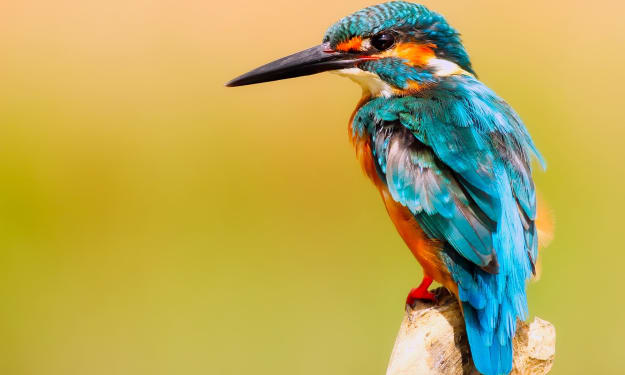
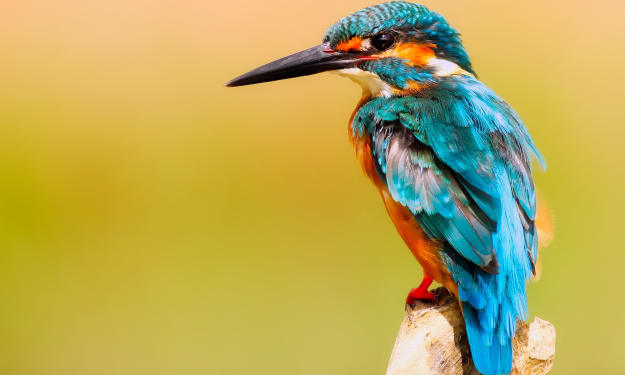
Kingfisher Species: A Look at the Different Types Kingfishers are a remarkable group of birds known for their vibrant colors, distinctive calls, and exceptional fishing skills. With over 90 species spread across the globe, they inhabit a wide range of habitats, from dense forests to open waterways. In this article, we will explore some of the fascinating kingfisher species and their unique characteristics.Kingfishers are a diverse group of birds known for their vibrant colors and remarkable fishing skills. With over 90 species found across the globe, each type of kingfisher exhibits unique characteristics and adaptations. In this article, we will explore some of the fascinating species of kingfishers. 1. Common Kingfisher (Alcedo atthis): The Common Kingfisher is one of the most well-known species and can be found across Europe, Asia, and North Africa. With its striking blue and orange plumage, it is a delight to behold. These birds are often seen perched near freshwater bodies, patiently waiting for their prey. Once spotted, they dive into the water with incredible speed and accuracy to catch small fish. 2. Belted Kingfisher (Megaceryle alcyon): The Belted Kingfisher is a common sight in North America, known for its distinctive blue-gray plumage and shaggy crest. It prefers habitats near lakes, rivers, and coastlines. These kingfishers have a loud rattling call that echoes over the water as they search for fish. Interestingly, they excavate burrows in earthen banks for nesting, creating impressive tunnels. 3. Pied Kingfisher (Ceryle rudis): The Pied Kingfisher is native to Africa and parts of Asia. It stands out with its black and white plumage, sharp beak, and long crest. These birds are known for their aerial hunting skills. Hovering over the water, they dive headfirst to catch their prey. They are not limited to fish alone and will also feed on crustaceans, frogs, and insects. 4. Sacred Kingfisher (Todiramphus sanctus): The Sacred Kingfisher is found in Australia, New Zealand, and some Pacific islands. It displays a beautiful combination of turquoise, green, and rust-colored plumage. These birds inhabit various habitats, including forests, woodlands, and coastal areas. They have a piercing call and are skilled hunters, catching insects, small reptiles, and fish. 5. White-throated Kingfisher (Halcyon smyrnensis): The White-throated Kingfisher is a widespread species found in parts of Asia, including the Indian subcontinent and Southeast Asia. Its bright blue plumage, contrasting with a white throat and chest, makes it easily identifiable. These kingfishers often perch on exposed branches near water bodies, plunging into the water when they spot their prey. They feed on fish, crustaceans, and even small snakes. 6. Malachite Kingfisher (Corythornis cristatus): The Malachite Kingfisher is a small, jewel-like bird found in sub-Saharan Africa. Its stunning emerald-green and orange plumage, along with its red beak, makes it a favorite among birdwatchers. These birds prefer habitats with slow-moving water or wetlands. They have a hovering flight pattern, allowing them to spot fish and aquatic insects from above before diving in. 7. Green Kingfisher (Chloroceryle americana): The Green Kingfisher is native to the Americas and can be found from the southern United States to Argentina. It has a predominantly green plumage, with a white belly and a distinctive red bill. These kingfishers are typically found near streams, rivers, and ponds. They perch low to the ground and make short flights to catch small fish, tadpoles, and insects. These are just a few examples of the remarkable diversity within the kingfisher family. Each species has adapted to its specific environment and developed unique hunting techniques. Whether it's the vibrant colors, acrobatic flights, or precision fishing skills, kingfishers continue to captivate bird enthusiasts worldwide. In conclusion, kingfishers are a fascinating group of birds with a wide range of species spread across the globe. Each species has its own distinctive characteristics, from their plumage colors to their hunting behaviors. Exploring the world of kingfishers offers a glimpse into the wonders of avian diversity and the beauty of the natural world.
By Mr Royal Honey 3 years ago in Earth
Kingfisher.
Kingfisher: A Colorful and Agile Bird of Waterways Kingfishers are a fascinating group of birds known for their vibrant colors and remarkable agility. With their striking appearance and incredible hunting skills, they have captivated the imagination of people around the world. In this article, we will explore the fascinating world of kingfishers and learn more about these beautiful creatures. Kingfishers belong to the Alcedinidae family, which is comprised of over 90 species distributed across various parts of the world. They are commonly found near water bodies such as rivers, lakes, and coastal areas. These birds are well adapted to their aquatic habitat and are excellent fishermen. One of the most striking features of kingfishers is their vibrant plumage. Most species exhibit a combination of bright blues, greens, and oranges, making them a true marvel to behold. These vivid colors are not only aesthetically pleasing but also serve important functions in their lives. The vibrant hues act as a form of camouflage, helping them blend in with the surrounding foliage and water as they wait for their prey. Additionally, the vivid colors are also used for signaling and courtship displays during the breeding season. Apart from their stunning appearance, kingfishers are renowned for their remarkable agility in flight. They possess a unique body shape that is perfectly adapted for hunting underwater. With their long, sharp beaks and streamlined bodies, they are built for speed and precision. Kingfishers are capable of diving into the water from perches above, using their powerful wings to propel themselves beneath the surface. Their beaks are specially designed for catching fish, their primary source of food. These beaks are long, pointed, and equipped with sharp teeth-like edges that enable them to grasp and hold onto slippery prey. Kingfishers are skilled hunters and have developed various techniques to catch their prey. They have incredibly sharp eyesight and can detect the slightest movement of fish beneath the water's surface. Once they have spotted their prey, they dive headfirst into the water, often with a splash, and emerge with a fish clasped in their beak. They then return to a nearby perch to consume their catch, beating it against the branch to break it into smaller, more manageable pieces. Despite their small size, kingfishers have a powerful voice. They are known for their loud, distinctive calls that echo across their territories. These vocalizations serve several purposes, including territorial defense, mate attraction, and communication between individuals. Each species has its own unique call, allowing them to recognize and differentiate themselves from others. The breeding behavior of kingfishers varies among different species. Some species are monogamous and form long-term pair bonds, while others engage in elaborate courtship displays to attract a mate. The breeding season typically coincides with the availability of food, as a sufficient supply of fish is crucial for raising their young. Kingfishers excavate nesting burrows in the banks of rivers or in the soft earth near water bodies. These burrows provide a safe and secure environment for incubating eggs and raising chicks. Sadly, kingfishers face several threats in the modern world. Habitat loss, pollution, and water degradation have all taken a toll on their populations. Additionally, they are also vulnerable to disturbance from human activities such as boating and recreational fishing. Conservation efforts are crucial to protect these magnificent birds and ensure the survival of their diverse species. In conclusion, kingfishers are truly remarkable creatures that have adapted to a life of hunting and fishing in waterways. Their vibrant colors, exceptional agility, and unique hunting techniques make them a delight to observe. However, their survival is under threat, and it is our responsibility to protect their habitats and ensure their continued existence for future generations to admire and appreciate.
By Mr Royal Honey 3 years ago in Earth
Exploring the Rich Cultural Tapestry of Bangladesh
Nestled in the heart of South Asia, Bangladesh is a vibrant country brimming with a rich cultural heritage. Its history dates back thousands of years, and this land has witnessed the rise and fall of mighty civilizations. From its diverse ethnic groups to its captivating festivals and traditions, Bangladesh offers a tapestry of cultural experiences that captivate both locals and visitors alike.
By BUSHRA TANVIR3 years ago in Earth
Unveiling the World of Horse Racing.
Unveiling the World of Horse Racing: History, Controversies, and Legends. Introduction : Horse racing, a sport that dates back centuries, has captured the hearts of millions worldwide. With its rich history, adrenaline-fueled contests, and legendary horses, it stands as one of the oldest and most captivating forms of sporting entertainment. However, behind the glamour and excitement, the world of horse racing is not without its controversies. In this article, we delve into the fascinating history of horse racing, explore some of its controversies, and pay tribute to the unforgettable legends that have left an indelible mark on the sport.Horse racing, a thrilling and age-old sport, has captivated audiences around the world for centuries. This article delves into the rich history of horse racing, explores some of its controversies, and pays tribute to the legendary horses and jockeys that have left an indelible mark on the sport. From its ancient origins to the modern-day spectacle, horse racing continues to mesmerize enthusiasts and ignite passionate debates.
By Ayaanahamed3 years ago in Earth
Mastering Horsemanship.
Mastering Horsemanship: Essential Riding Techniques and Skills. Introduction : Mastering horsemanship is a rewarding journey that requires a solid foundation of essential riding techniques and skills. Whether you are a beginner or an experienced rider, honing these fundamentals will enhance your communication and connection with your horse. In this article, we will explore some key riding techniques and skills that are crucial for every equestrian enthusiast.
By Ayaanahamed3 years ago in Earth