Play
Practice vs Performance
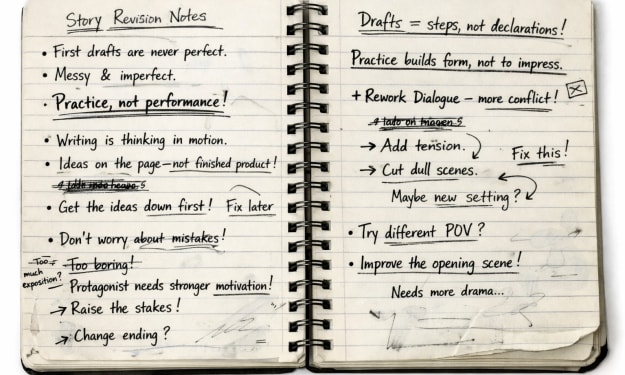
One of the quiet pressures shaping modern communication is the assumption that anything written should be immediately shareable. Drafts blur into declarations, and exploration is mistaken for conclusion. Under this pressure, writing becomes performative by default. The moment words are placed on a page, they are treated as finished statements rather than steps in a process. This expectation distorts both how writing is produced and how it is received, collapsing practice into performance and leaving little room for genuine development.
By Peter Thwing - Host of the FST Podcast8 months ago in Critique
AI as a Reflective Surface
Much of the confusion surrounding artificial intelligence comes from treating it as an agent rather than a surface. When people speak about AI “doing the thinking,” “creating the ideas,” or “speaking for someone,” they are often projecting agency onto a system that does not possess intention, belief, or understanding. This projection obscures what is actually happening in many real-world uses. In those cases, AI is not acting as a source of meaning, but as a surface that reflects, redirects, and reshapes what is already present.
By Peter Thwing - Host of the FST Podcast9 months ago in Critique
When Is a Move Final?
The Commitment Problem in Modern Chess Modern chess operates under a fractured commitment model that no longer aligns with how players think, how turns function in most games, or how chess itself is actually played across physical and digital formats. At the heart of the problem is that chess treats physical contact with a piece as binding commitment while simultaneously relying on a separate explicit action to end a player’s turn. This creates a logical contradiction: a move becomes final before the turn is over. In most turn-based games, interaction with game components is provisional until the player explicitly signals the end of their turn. Chess is an anomaly in this respect, and the inconsistency becomes increasingly visible in modern play.
By Peter Thwing - Host of the FST Podcast9 months ago in Critique
3 TV Shows and 10 Truths: From Background Hummus to Main Course
For decades, Hollywood treated Arab women like background hummus, flat, decorative, and just there to make someone else look exotic. Veiled, silent, or sighing theatrically, they were reduced to one-note caricatures. Finally, that’s changing.
By Sara Yahiaabout a year ago in Critique
Tunisian Man Sentenced to Six Months in Jail for Refusing to Listen to President's Speech
In a development that has sparked serious concerns among human rights activists and international observers, a Tunisian citizen has been sentenced to six months in prison for refusing to listen to a televised speech by President Kais Saied. The unusual and controversial sentence, handed down by a local court, has once again brought Tunisia's declining state of freedom of expression under the spotlight. According to the citizen’s lawyer, Adel Saghir, the case began when the man, already incarcerated on a separate charge, declined to watch or listen to a presidential address broadcasted on national television. This occurred within a local prison facility, during a news bulletin that featured live coverage of President Saied's activities. The Case and the Charges The incident came to light when one of the man’s fellow inmates reported his refusal to prison authorities. An investigation followed, and the prisoner was later charged under Article 67 of the Tunisian Penal Code, which traditionally deals with offenses against the head of state. However, perhaps sensing the political sensitivity of invoking this article, the court eventually dropped the original charge and sentenced him under public decency laws instead. According to the court's reasoning, refusing to listen to the president’s speech amounted to “indecent behavior in public” and “setting a poor example for society.” The verdict, Saghir claims, was politically motivated, despite attempts to frame it as a non-political issue. The modification of charges was allegedly done to avoid labeling the case as one of political repression or a direct attack on freedom of thought. > “The authorities did not want this to be seen as a political punishment, so they shifted the charge to a vague violation of public decency,” said the lawyer. “But everyone knows the real issue was the refusal to comply with what they consider a show of loyalty to the president.” What Happened in Prison? The man was reportedly in a provincial detention facility, where he was serving time for a prior, unrelated case that had recently concluded. During the airing of the president’s speech, when asked to watch the broadcast, he refused, saying he had no interest in the president’s activities or speeches. It is also reported that he may have made disrespectful comments about the president during that time, which further fueled the legal response. Human rights NGO Tunisia League for Human Rights confirmed that the man had completed his sentence in the earlier case and was on the verge of release. His family had been preparing for his return home. However, this new charge blocked his release, resulting in yet another prison term. According to the NGO, “The man did not commit any criminal offense in a conventional sense. He merely expressed disinterest in a political figure’s speech. The decision to imprison him again is not only unjust—it is alarming.” Broader Context: Tunisia's Shrinking Civic Space Since his controversial power grab in 2021, President Kais Saied has been widely criticized for eroding democratic norms in Tunisia. He dissolved parliament, took control of the judiciary, sidelined political opponents, and passed a new constitution via referendum—moves seen by critics as steering Tunisia toward authoritarianism. Many Tunisian and international observers believe that this latest incident is emblematic of a broader pattern of silencing dissent. Journalists, civil society leaders, and now even ordinary citizens are increasingly finding themselves under threat for expressing views that do not align with the official narrative. > “This is not just about one man refusing to watch a TV broadcast,” said a regional expert on North African politics. “This is about a regime that sees any form of indifference or criticism as a threat to its legitimacy.” A Deal with Italy and Political Anger There is an additional layer to this story. The individual reportedly expressed anger toward President Saied over a recent agreement signed with Italy, which involves cooperation on the deportation of undocumented migrants. The man had previously been deported from Italy after residing there illegally. However, under the new agreement, returning to Tunisia may carry criminal consequences, further complicating the lives of many former Tunisian migrants. This agreement, hailed by some European governments as a breakthrough in controlling migration, has faced criticism inside Tunisia for being exploitative and dangerous for returning citizens. The convicted man’s comments against the president, as per his lawyer, were partly fueled by this personal frustration and political disagreement. International Reaction and Human Rights Concerns Human rights organizations in Tunisia and beyond are calling for the immediate release of the man and a re-evaluation of laws that criminalize nonconformity or dissent. They warn that such actions risk setting a dangerous precedent, where even silence or disinterest can become a punishable offense in an authoritarian system. > “Punishing someone for not watching the president’s speech is a gross violation of personal liberty,” said a representative from Amnesty International. “This is not just repression—it’s absurdity, weaponized.” So far, there has been no official response from the Tunisian presidency or the Ministry of Justice regarding the incident. --- Conclusion This case highlights the increasing crackdown on freedom of expression and political neutrality in Tunisia. What may seem like a minor act of protest—refusing to listen to a televised speech—has led to a six-month prison sentence, underlining the extent to which civic space in Tunisia has deteriorated. As international pressure builds, many are watching to see whether Tunisia will uphold basic human rights—or continue its descent into political repression cloaked under legal formalities.
By Ikram Ullahabout a year ago in Critique
🎼 Music: The Language That Speaks When Words Fail . AI-Generated.
Have you ever listened to a song and felt like it was telling your story—without a single word? Music is a universal language, but not in the way we usually think of language. It doesn’t rely on grammar or vocabulary. Instead, it uses rhythm, melody, harmony, and silence to speak directly to our emotions.
By The Yume Collectiveabout a year ago in Critique
Cardinals choosing the next pope have been offered a dossier on candidates – with a subtext. Content Warning. AI-Generated.
Cardinals Choosing the Next Pope Have Been Offered a Dossier on Candidates – With a Subtext May 7, 2025 As speculation mounts about who will succeed Pope Francis, an intriguing development has emerged behind the scenes: cardinals preparing for a future conclave are quietly being offered dossiers detailing the strengths, weaknesses, and past actions of potential papal candidates. But these documents aren’t just dry summaries – they come with a subtle subtext that could shape the future direction of the Catholic Church.
By Rasel Ahmedabout a year ago in Critique
Unpacking White Lotus Season 3: Gorgeous Scenes and Frustratingly Familiar Tropes
For the last eight weeks, my morning routine has been to get up, make coffee, and mentally get ready for the upcoming episode of HBO's The White Lotus. It has evolved into a weekly immersion in opulence, dysfunction, and mortality rather than merely a viewing experience. I was optimistic, high, caftan-clad, sun-kissed aspirations about the upcoming show.
By Hridya Sharmaabout a year ago in Critique