Novel
Mapping vs Listing
Much of what gets labeled as rambling is actually a mismatch between how ideas are structured internally and how they are expected to be presented externally. Many environments reward listing, where ideas are arranged in clean sequences, bullet points, or linear arguments that move from premise to conclusion in a predictable order. This structure works well for certain kinds of reasoning, particularly when problems are discrete and conclusions are already known. It does not work as well for reasoning that depends on relationships, causality, or pattern recognition across multiple domains. When relational thinkers speak, they are often navigating a different internal structure altogether, and that difference is frequently misunderstood.
By Peter Thwing - Host of the FST Podcast7 months ago in Critique
VEDAS, UPANISHADS AND WESTERN PHILOSOPHY - ALEXIS KARPOUZOS
The Encounter of East and West as a Philosophical Problem The encounter between Indian and Western philosophy is one of the most fascinating yet most perilous undertakings in the history of philosophy. Fascinating because the two traditions — independently developed in different historical and cultural contexts — display surprising convergences that cannot be interpreted as accidental: they seem to touch something common in the deeper structure of human thought and experience. Perilous because superficial similarity can mislead: different concepts bearing similar names, different practices aimed at analogous ends, different world-views articulated through comparable conceptual schemas. Alexis Karpouzos stands in this encounter in a particular way: he neither seeks synthesis nor establishes opposition — he moves diagonally, drawing from both traditions without belonging exclusively to either, recognising in each a fragmentary wholeness of the Wandering Truth. The analysis that follows is not a historical-philosophical survey — it is an analysis in tension: each tradition is placed in full dialogue with the other two, and the convergences and divergences reveal different aspects of the same foundational philosophical question.
By alexis karpouzos7 months ago in Critique
Chingiz Aitmatov, My Poplar in a Red Scarf
This is a book I’ve finished reading now for the second time, because I remembered how good it was. There are many spoilers here, so you can stop reading now if you’d like. I’ve swallowed the book whole today and read 107 pages of it (it’s a small book). It’s a story about Ilias, a truck driver from Tian Shen in Kyrgyzstan that tells his story to a young journalist. It’s a story about tragedy and beauty, love and heartache. Ilias meets for the first time with Asel, a young woman, in her aiyl (a kyrgyzic village).
By Maya Or Tzur7 months ago in Critique
Falling Between Every System
Modern social systems are often described as safety nets. Employment law protects workers. Healthcare programs provide treatment. Disability benefits replace lost income. Unemployment insurance bridges job loss. Each system is presented as a safeguard designed to catch people when life disrupts their ability to function normally. Yet for many people living with disability, chronic illness, or injury, the lived experience is the opposite. Rather than forming a net, these systems stack vertically, each with its own eligibility rules, thresholds, and assumptions. Instead of catching the fall, they create gaps. People do not slip through because they failed to try. They fall because the systems were never designed to align.
By Peter Thwing - Host of the FST Podcast7 months ago in Critique
The reason Hulk refused to fight Thanos
The Real Reason Hulk Refused to Fight Thanos 🚨 Most people think that in Avengers: Infinity War, Hulk refused to fight Thanos because he was scared. After all, this was the first time anyone had seen the Green Goliath genuinely overwhelmed in hand-to-hand combat. But the truth might be much deeper than simple fear.
By Literary fusion8 months ago in Critique
Why Saying Less Makes Words Feel More Valuable
There is a widely held belief that words gain value through scarcity. When someone speaks rarely, their statements are treated as weightier, more deliberate, and more worth attending to. When someone speaks often, their words are assumed to be interchangeable, disposable, or less carefully considered. This intuition is not entirely wrong, but it is frequently misapplied. Scarcity does affect perception, but perception is not the same as truth, and rarity is not the same as meaning.
By Peter Thwing - Host of the FST Podcast8 months ago in Critique
The Feminine Face and American Roots of Young Russian Literature
Toward the end of the 2010s, many new authors emerged on the Russian literary scene. It was the voices of writers in their thirties that made themselves heard most strongly. Born at the twilight of the Soviet Union, they had absorbed its painful legacy with their mother’s milk before their lives took an unexpected turn. Barbies, Transformers, Disney comics, action films on VHS, the PlayStation, and finally MTV, along with access to the endless stream of information on the Internet, entered their childhood with the fall of the Iron Curtain, overturning the rigid cultural system shaped by the Soviets.
By Anastasia Tsarkova9 months ago in Critique
Speaking to Time Instead of the Room
Much of modern communication is oriented toward immediacy. Writing is framed as something meant to be consumed quickly, reacted to instantly, and replaced just as fast by whatever comes next. Under this model, the value of a piece is measured almost entirely by its initial reception. If it does not land immediately, it is treated as a failure. This assumption narrows the purpose of writing and misunderstands how meaning actually travels through time.
By Peter Thwing - Host of the FST Podcast9 months ago in Critique
Practice vs Performance
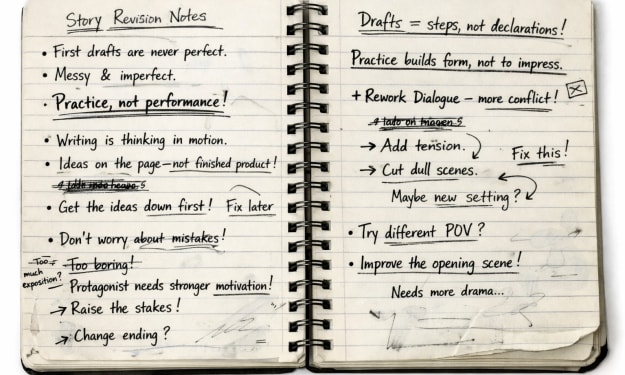
One of the quiet pressures shaping modern communication is the assumption that anything written should be immediately shareable. Drafts blur into declarations, and exploration is mistaken for conclusion. Under this pressure, writing becomes performative by default. The moment words are placed on a page, they are treated as finished statements rather than steps in a process. This expectation distorts both how writing is produced and how it is received, collapsing practice into performance and leaving little room for genuine development.
By Peter Thwing - Host of the FST Podcast9 months ago in Critique
AI as a Reflective Surface
Much of the confusion surrounding artificial intelligence comes from treating it as an agent rather than a surface. When people speak about AI “doing the thinking,” “creating the ideas,” or “speaking for someone,” they are often projecting agency onto a system that does not possess intention, belief, or understanding. This projection obscures what is actually happening in many real-world uses. In those cases, AI is not acting as a source of meaning, but as a surface that reflects, redirects, and reshapes what is already present.
By Peter Thwing - Host of the FST Podcast9 months ago in Critique
The Blue Sword
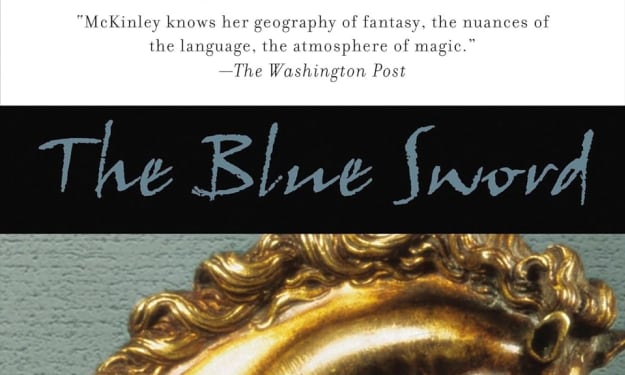
The Blue Sword by Robin McKinley Nothing says a childhood classic like white savior Mary Sue! I snagged this one after listening to an episode of Brandon Sanderson’s podcast where he said this inspired one of the stained glass windows decorating his house (because of course he has presumably awesome stained glass windows).
By Matthew J. Fromm9 months ago in Critique