Music
Céline Dion in Paris: The Leadership of Coming Back When Everything Could Have Ended
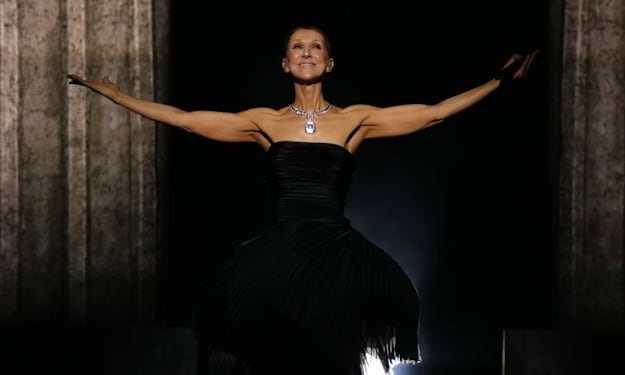
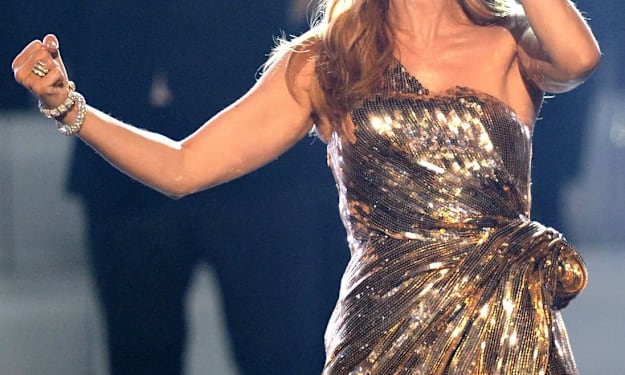
There are artists we listen to because we love them. And then there are artists who find their way back to us almost without warning — on the radio, during a car ride, or through a memory we thought we had long forgotten. For me, Céline Dion belongs to the second category. I have never considered myself a Céline Dion fan. Yet every time her voice comes through the radio, something happens. There is an immediate emotion that is difficult to explain. A few notes can be enough to open a door onto another time, another set of memories, another version of ourselves — and onto a particular idea of what popular music can mean. On September 12, 2026, in Paris, that feeling took on a new dimension. After six years away from live concerts, Céline Dion returned to a packed venue, performing for around 30,000 people in her first full concert since March 8, 2020. Over two hours and fifteen minutes, she performed 29 songs, including “On ne change pas,” “All By Myself” and “My Heart Will Go On.” The concert marked the beginning of a 26-date Paris residency, with 16 shows scheduled over five weeks and another ten planned for 2027. But the significance of that night goes far beyond the numbers. Leadership begins with accepting that you cannot control everything To be precise, Céline Dion had not completely disappeared from the stage during those six years. In July 2024, she delivered one of the most memorable moments of the Paris Olympic Games opening ceremony, performing Édith Piaf’s “L’Hymne à l’amour” from the Eiffel Tower. That appearance was already a powerful symbol of her return. But a full concert is something else entirely. It means more than two hours in front of thousands of people. It means sustaining a performance from beginning to end, meeting enormous vocal and physical demands and confronting the reality of being watched and heard at every moment. That is where I see Céline Dion’s real leadership. Not in her fame. Not in the scale of the audience. Not even in the extraordinary power of her voice. Her leadership lies in her ability to return after having to accept that she could no longer control her own body in the way she once could. In 2022, Dion revealed that she had been diagnosed with stiff-person syndrome, a rare neurological disorder that can cause severe muscle stiffness and spasms. The condition forced her to put her career on hold and cancel a number of professional commitments. For an artist whose body and voice are her essential tools, the challenge was profound. Coming back under those circumstances requires more than courage. It requires the ability to accept vulnerability without giving up on ambition. And perhaps that is the most powerful leadership lesson in her story. A leader is not necessarily the person who appears invincible. Sometimes, leadership means acknowledging that you have struggled, that you have suffered, that you have had to change the way you work — and choosing to move forward anyway. The audience is not just seeing an artist return. It is seeing a part of itself return. In Paris, Céline Dion did not appear to be trying to convince anyone that the past six years had never happened. Her emotion was visible from the opening moments. She began the concert with “On ne change pas” — “We Don’t Change” — a title that felt almost like a response to everything that had happened. Her voice, according to concert reports, sometimes carried more fragility than it once did. But that fragility did not weaken the moment. If anything, it made it more human. And then there is nostalgia. That may be what moved me most about her return. I may not know Céline Dion’s entire discography by heart but I know some of her songs intimately. They are part of a shared soundtrack. “Pour que tu m’aimes encore.” “S’il suffisait d’aimer.” “My Heart Will Go On.” These are not simply songs. They have accompanied generations of people through love stories, breakups, journeys, celebrations, difficult moments and ordinary days. They have become part of our collective memory. A real comeback is not a return to the past Perhaps that is why Céline Dion’s return is about much more than a concert. For a few hours in Paris, thousands of people were not simply reunited with a singer. They were reunited with a part of themselves. That is one of music’s rare powers: it can suspend time. A song we hear today can transport us twenty years into the past within seconds. We do not simply remember the song. We remember who we were when we first heard it. Céline Dion is returning to the stage with a different reality. Her voice sometimes has to contend with the effects of her illness. Her body can no longer be taken for granted. The conditions are different from what they were before. But she is back. And that, to me, is where the real performance is. Her leadership is not about proving that she has remained exactly the same. It is about showing that we can change without disappearing. That we can be vulnerable without being defeated. That we can start again without pretending that nothing happened. I am still not sure I would call myself a Céline Dion fan. But after Paris, I understand a little better why her voice means so much to so many people — including those who do not follow her career closely. Because ultimately, Céline Dion does not simply sing songs we know. Sometimes, she sings the person we were when we first heard them. And on that night in Paris, she reminded us of something essential: A true comeback is not about going back to the past. It is about finding the strength to believe in what comes next.
By Baptiste Monnetabout a month ago in Critique
The Most Disappointing Albums of 2026 (Part I)
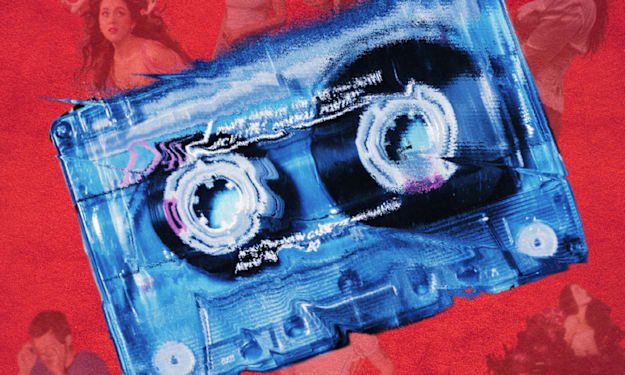
The world was once enchanted by a numb little bug . While adorable and unassuming, the bug was surgical in her self-reflection. She plainly picked apart her psyche, parsing through her unrelenting cycle of depression, disassociation, and quick repairs to cope . She mused over her existence with the upbeat nihilism of a makeshift millennial.
By DJ Nuclear Winter2 months ago in Critique
Bohemian Rhapsody. Runner-Up in The Most Overrated Challenge.
The phrase you might consider when watching a dodgy film is suspension of disbelief. It means try and get over what the story is saying and ignore anything that doesn't seem right or real. So, for example, if you don't believe aliens are real ,you can accept for the film that they are. Biographical films, known occasionally as biopics. you would hope were closely linked to reality. That is normally true in many cases, until Bohemian Rhapsody came along.
By ASHLEY SMITH3 months ago in Critique
We Go Together?. Runner-Up in The Most Overrated Challenge.
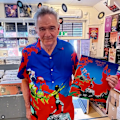
Grease is the word, but it’s overrated. Yes, I’m aware of the number of people I’m about to offend. In the fifteen years that I taught choir and theatre, students would beg me to consider Jim Jacobs and Warren Casey’s raunchy musical about working-class teenagers navigating sex, romance, rebellion, and peer pressure in 1950s Chicago for either a movie day or a mainstage production.
By Laura Roodenburg3 months ago in Critique
I Stopped Believin’
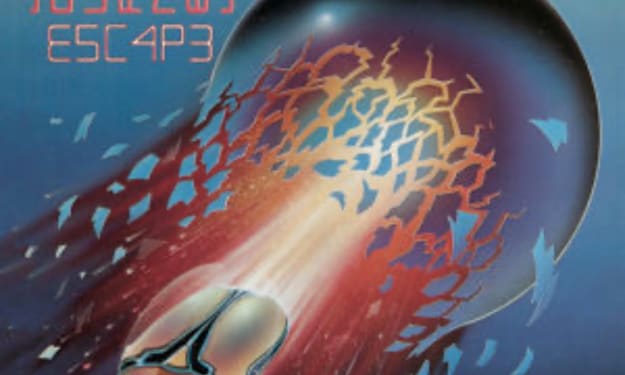
Journey's "Don't Stop Believin’" is an example of the longevity of mediocrity. I was once a young tweenager who loved Journey, but I outgrew them. I had Escape on cassette, and when I was in 8th grade chorus, "Open Arms" was one of the songs we sang at PTA meetings and nursing homes. Yeah, serious rock ‘n roll it is not.
By Harper Lewis 3 months ago in Critique