Music
When Is a Move Final?
The Commitment Problem in Modern Chess Modern chess operates under a fractured commitment model that no longer aligns with how players think, how turns function in most games, or how chess itself is actually played across physical and digital formats. At the heart of the problem is that chess treats physical contact with a piece as binding commitment while simultaneously relying on a separate explicit action to end a player’s turn. This creates a logical contradiction: a move becomes final before the turn is over. In most turn-based games, interaction with game components is provisional until the player explicitly signals the end of their turn. Chess is an anomaly in this respect, and the inconsistency becomes increasingly visible in modern play.
By Peter Thwing - Host of the FST Podcast9 months ago in Critique
Autotune Tears
Digital Tears and Ghosts in the Studio The script has become a seasonal awards-show classic: an established artist, face solemn and trophy in hand, uses their acceptance speech to denounce the latest technological heresy. Today, the monster is artificial intelligence (AI)—a soulless threat, a soul-less automaton poised to usurp human creativity and devalue artists’ livelihoods. Yet this moral panic is not new; it is merely the latest chapter in the music industry’s long, repetitive history of resisting progress—a predictable cycle of fear, rejection, and, inevitably, assimilation.
By Francisco Navarro10 months ago in Critique
The Man on Fire: A Story of Love, Sacrifice and Redemption
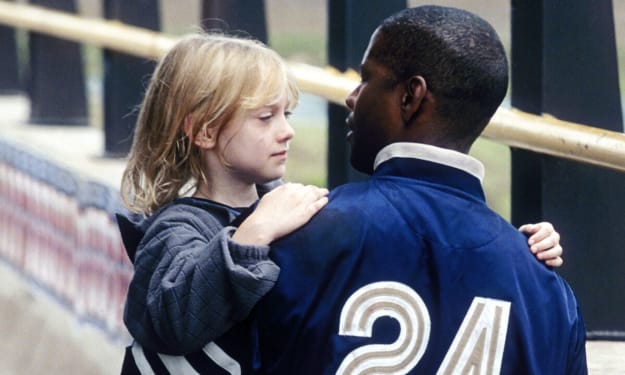
The Man on Fire, released in 2004 by Tony Scott and starring Denzel Washington, is much more than just an action film. It is a poignant dive into the twists and turns of the human soul, where violence mixes with raw emotion and redemption takes shape in the simplest gestures. But at the heart of this gripping thriller, what stands out above all is the unique relationship that develops between bodyguard Creasy and young Pita, a kidnapped girl. Creasy, this solitary character, bruised by life, is initially presented as a cold, distant, almost irreducible man. A former CIA agent, he has left behind a dark past and withdrawn into himself, like a suit of armor, with obvious resignation. His heart seems to have been destroyed by the horrors of the world and he hides it behind an apparent indifference. But Pita, this little girl full of life and innocence, will succeed where everyone else has failed: she will give him back the will to live. There is something deeply human about this relationship. At first, Pita seems like just a mission for Creasy. He is paid to protect her — it is a business. But as the days go by, a sincere, almost familial bond develops between them. Creasy begins to smile, little by little, something he has not done in a long time. Pita offers him the most precious thing: a reason to fight, a reason to feel, a reason to love again.The film beautifully plays with this contrast between Creasy's coldness and Pita's warmth. With each smile from the girl, with each burst of laughter, Creasy becomes a little more human. The moments shared between them are not only moving, they are also disarmingly simple. Creasy is not an indestructible superhero — he is a man who, through contact with Pita's innocence and joy of life, begins to rediscover his humanity. It is in this dynamic that The Man on Fire finds its strength and beauty — in showing how an encounter, however improbable, can turn a life upside down. But as is often the case in such stories, this development is doomed to inevitable tragedy. The film's end is marked by a sacrifice, the Creasy's. Faced with Pita's desperate situation, whose fate is sealed by a ruthless criminal group, Creasy, true to his role as protector, is willing to give his all. In a final act of courage, he chooses to sacrifice himself so that Pita can be reunited with her mother. His sacrifice is more than just a heroic act. It symbolizes the character's redemption, the cleansing of his sins. Creasy dies but in death, he finds peace, having done everything in his power to give this little girl a chance at a better life. This sacrifice is all the more poignant because it is motivated by love but also by the realization of the importance of life. Through Pita, Creasy realizes that life is not just about violence and revenge but about moments of grace, tenderness and hope. It was Pita who showed him what life was really about. It was she who awakened him, who pushed him to believe again that there was something beautiful in this devastated world. The final scene, where Creasy dies, his eyes full of peace, is all the more heartbreaking because he has achieved a form of redemption. He has given Pita back not only her freedom, but also a part of himself that he had lost. The richness of this film also lies in its underlying message: life, however broken, can be repaired through acts of love and sacrifice. In a world where selfishness and violence seem to dominate, The Man on Fire reminds us that hope, compassion, and the ability to sacrifice for others remain fundamental human values. Creasy, despite his violent past, becomes an example of redemption through his ultimate act of sacrifice for a person he didn't know for long but whom he learns to love deeply. Finally, Denzel Washington's masterful performance gives the film undeniable emotional power. His performance not only impresses with action but also touches the heart, revealing the many facets of a man who, through the love of a child, manages to rise from the ashes. The film reminds us that, even in the darkest moments, a spark of light can change the course of a life.The Man on Fire is not just a gripping action film — it is an emotional and human exploration of sacrifice, redemption and love. Creasy and Pita's relationship reminds us that sometimes it is the smallest things — a smile, a gesture of tenderness — that can mend a broken heart. And in a world too often marked by violence, this message of hope and reconciliation is needed more than ever.
By Baptiste Monnet12 months ago in Critique
I went back and watched Twilight: New Moon (2009)
The Sophomore Slump New Moon, the second installment in the Twilight saga, attempts something genuinely daring for a blockbuster franchise: it removes its male lead for the majority of the film's runtime. This bold narrative choice serves the story's emotional arc but simultaneously exposes the franchise's structural weaknesses. In an era where young adult adaptations were rushing to capitalize on the success of the first film, New Moon takes the unexpected route of dwelling in darkness, depression, and absence—a risky gambit that doesn't entirely pay off.
By Parsley Rose about a year ago in Critique
Finally Sat Down to Watch Midsommar (2019)
Ari Aster's 2019 film Midsommar represents an ambitious and polarizing entry in contemporary horror cinema. Following his acclaimed debut *Hereditary*, Aster crafts a folk horror experience that deliberately inverts the genre's visual conventions while exploring the dissolution of a toxic relationship against the backdrop of a Swedish pagan festival. The result is a film that is simultaneously beautiful and disturbing, meditative and visceral, earning both ardent admirers and vocal detractors.
By Parsley Rose about a year ago in Critique
8 Mile: The Sorrow of a Raunchy Dream and a Daily Battle
This 2002 film is not just a foray into the realm of rap ut a reflection of a man's battle within himself with his own personal demons. It is a raw and unflinching story that lingers long after the end credits. The weight of beginnings The opening scene of the film, where the street runs alongside 8 Mile Road, is symbolic of Detroit's richer and poorer residential areas. It is not merely a geographical divide but a cultural, social d economic one. Jimmy, who is played by Eminem, lives in Detroit, where dreams are shattered before they can even take shape. The film offers this reality untransformed and unadorned. Behind every rhyme that he spits in battles, he tells a part of his story. It is the weight of his origin, this idea of life in which opportunities are often determined by where you're born. Jimmy is not just a rapper who desires to be famous – he is a human, a son of the city, a creation of circumstances. He must fight day in and day out, not just to remain relevant in rap, but also to survive in this life in which everything seems to be denied him. Rap as catharsis One of the most powerful aspects of 8 Mile is how rap is used as catharsis. Rap is not a pastime for B-Rabbit. It is a release, a lifeline, a way of expressing what words sometimes cannot. The rap battles, the focal point of the film, are actually far more than arguments. They are a way for Jimmy to process his anger, desperation and frustrations into something tangible. Each battle, he lets off steam, frees himself and most crucially, finds his voice. The thing most amazing about 8 Mile is that the film does not glamorize rap as a shortcut to fame or riches. No, music in this film is a daily struggle, a way to prove we exist, that we matter, even if the rest of the world is opposed to us. The lyrics, often harsh, are knives thrust into the something society does not want to look at: the shattered hopes, the lives intertwined in the services of the system. The final scene: the lion's awakening The final scene, the final battle, is maybe one of the most thrilling experiences of cinema today. Not only is it a victory for Jimmy, but also a redemptive one. In his speech, he no longer battles his foes. He battles his demons, his frailties. By turning his frailties against him, he takes charge of his life, his destiny. It is this self-confrontation, in which he accuses his mistakes, his frailties, which is of a rare vigor. It is a movement towards liberty, a cry of victory over a world that has always considered him a loser. The anthem "Lose Yourself" accompanying this scene is merely the icing on the cake. The lyrics are a rallying cry to take your moment, to not let the moment get away from you, even if it feels minute. This song, now an anthem to an entire generation, rings out like a battle cry against surrender. An era, a culture 8 Mile is more than a rap movie. It is a symbol of an era. The early 2000s were the height of the rap era but also the beginning of a wild youth culture that could not be vanquished. Detroit, its abandoned factories and vacated streets, is a character in the film. It is symbolic of an era where everything seemed to be falling apart, yet where children, despite it all, fought for their dreams. It is not merely the story of an artist's ascension to greatness. It is a tapestry of struggle. It is a study of small, small wins. And while the ultimate win appears to be a triumph, the message of the film is that victory does not always rest with external triumph, but with triumph over the self. The concept that, no matter where you begin, one can retool oneself, struggle and occasionally, emerge victorious. Nostalgia for a lost dream? Throughout the length of 8 Mile, we have an overarching feeling of nostalgia. It is one of dreams, of hope, of youth fighting for something more than themselves. And it's also one for a lost time, for a time when we still believed that anything was possible. The years go by and we realize that 8 Mile is more than just a rap movie. It is one about life itself. Life as it exists, with its victories and its losses, its highs and its lows. But it is also a film about hope, of the sort that never dies, not even in the worst of times. When you watch 8 Mile, you do not merely see Eminem. You see a generation, a struggle, a search for meaning in a world that too frequently casts aside the voiceless. This film, as with the music that comes before it, is a testament to what it is to fight for your dreams, even when hope is gone. It is this that makes this film both universal and timeless.
By Baptiste Monnetabout a year ago in Critique
Beauty in Black Season 2: Power, Money, and Chaos Are Back on September 11, 2025!
Okay, friends, grab your snacks and a comfy chair, because Beauty in Black Season 2 is almost here, on September 11, on Netflix. It promises even more drama, intrigue, and jaw-dropping moves than the first season. Yes, like before, there’s plenty of time to soak in the chaos, bringing the signature mix of charm and edge.
By Sara Yahiaabout a year ago in Critique
Overcoming Writer's Block
Bruce Springsteen was frustrated and exhausted when his manager, Jon Landau, insisted he write a preeminent single for his 1984 album “Born in the U.S.A.” By that point, Springsteen had already written over 80 songs for the album, yet a standout single still eluded him. Returning to his hotel later that evening, Springsteen poured all of his pent-up angst and frustration into the song “Dancing in the Dark”, wherein he grapples with the “joke[s]” that are writer’s block and self-doubt, as well as how the external pressures of the music industry and his own audience can stifle creativity and personal growth.
By Strange Overtonesabout a year ago in Critique