Dialogue
VEDAS, UPANISHADS AND WESTERN PHILOSOPHY - ALEXIS KARPOUZOS
The Encounter of East and West as a Philosophical Problem The encounter between Indian and Western philosophy is one of the most fascinating yet most perilous undertakings in the history of philosophy. Fascinating because the two traditions — independently developed in different historical and cultural contexts — display surprising convergences that cannot be interpreted as accidental: they seem to touch something common in the deeper structure of human thought and experience. Perilous because superficial similarity can mislead: different concepts bearing similar names, different practices aimed at analogous ends, different world-views articulated through comparable conceptual schemas. Alexis Karpouzos stands in this encounter in a particular way: he neither seeks synthesis nor establishes opposition — he moves diagonally, drawing from both traditions without belonging exclusively to either, recognising in each a fragmentary wholeness of the Wandering Truth. The analysis that follows is not a historical-philosophical survey — it is an analysis in tension: each tradition is placed in full dialogue with the other two, and the convergences and divergences reveal different aspects of the same foundational philosophical question.
By alexis karpouzos6 months ago in Critique
Falling Between Every System
Modern social systems are often described as safety nets. Employment law protects workers. Healthcare programs provide treatment. Disability benefits replace lost income. Unemployment insurance bridges job loss. Each system is presented as a safeguard designed to catch people when life disrupts their ability to function normally. Yet for many people living with disability, chronic illness, or injury, the lived experience is the opposite. Rather than forming a net, these systems stack vertically, each with its own eligibility rules, thresholds, and assumptions. Instead of catching the fall, they create gaps. People do not slip through because they failed to try. They fall because the systems were never designed to align.
By Peter Thwing - Host of the FST Podcast6 months ago in Critique
Misdirection
Ahem... I know that it might seem strange that I am one of the people lifting a glass to wish a toast to the happy couple, but I have been told to do this in order to take up your time and make sure that we are all very much in our cups. They decided that they wanted to hit the road and they needed me to wish them all the best.
By Kendall Defoe 7 months ago in Critique
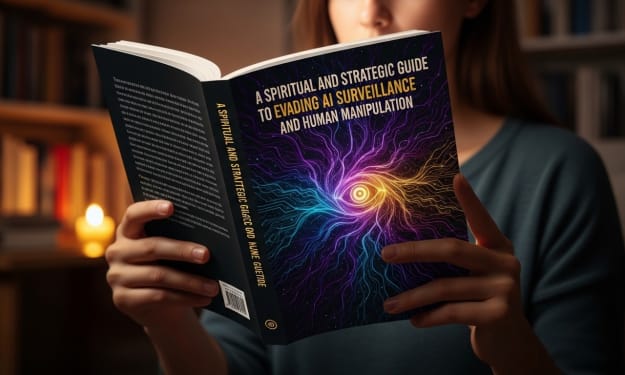
Breaking the Chains of Predictability
**A Question and Its Answer** **Question:** A simple question. How can one avoid surveillance by AI? **Answer:** Man always thinks he is free, but the chains of today's era are not made of iron; they are forged from our own known habits.
By Literary fusion7 months ago in Critique
Why Saying Less Makes Words Feel More Valuable
There is a widely held belief that words gain value through scarcity. When someone speaks rarely, their statements are treated as weightier, more deliberate, and more worth attending to. When someone speaks often, their words are assumed to be interchangeable, disposable, or less carefully considered. This intuition is not entirely wrong, but it is frequently misapplied. Scarcity does affect perception, but perception is not the same as truth, and rarity is not the same as meaning.
By Peter Thwing - Host of the FST Podcast7 months ago in Critique
The Ballad of Greenwich Village.
"The Ballad of Greenwich Village" Documentary. If you ever want to know about Greenwich Village, its history, then watch the 2005 documentary that was directed and written by Karen Kramer: "The Ballad of Greenwich Village".
By Robert M Massimi. ( Broadway Bob).8 months ago in Critique