
Top 10 Lesser Known Dangerous Prisons In The United Kingdom
Some of the Lesser known prisons in the United Kingdom include HMP Deerbolt and HMP Elmley, today we look at the top 10

10 - HMP Peterborough
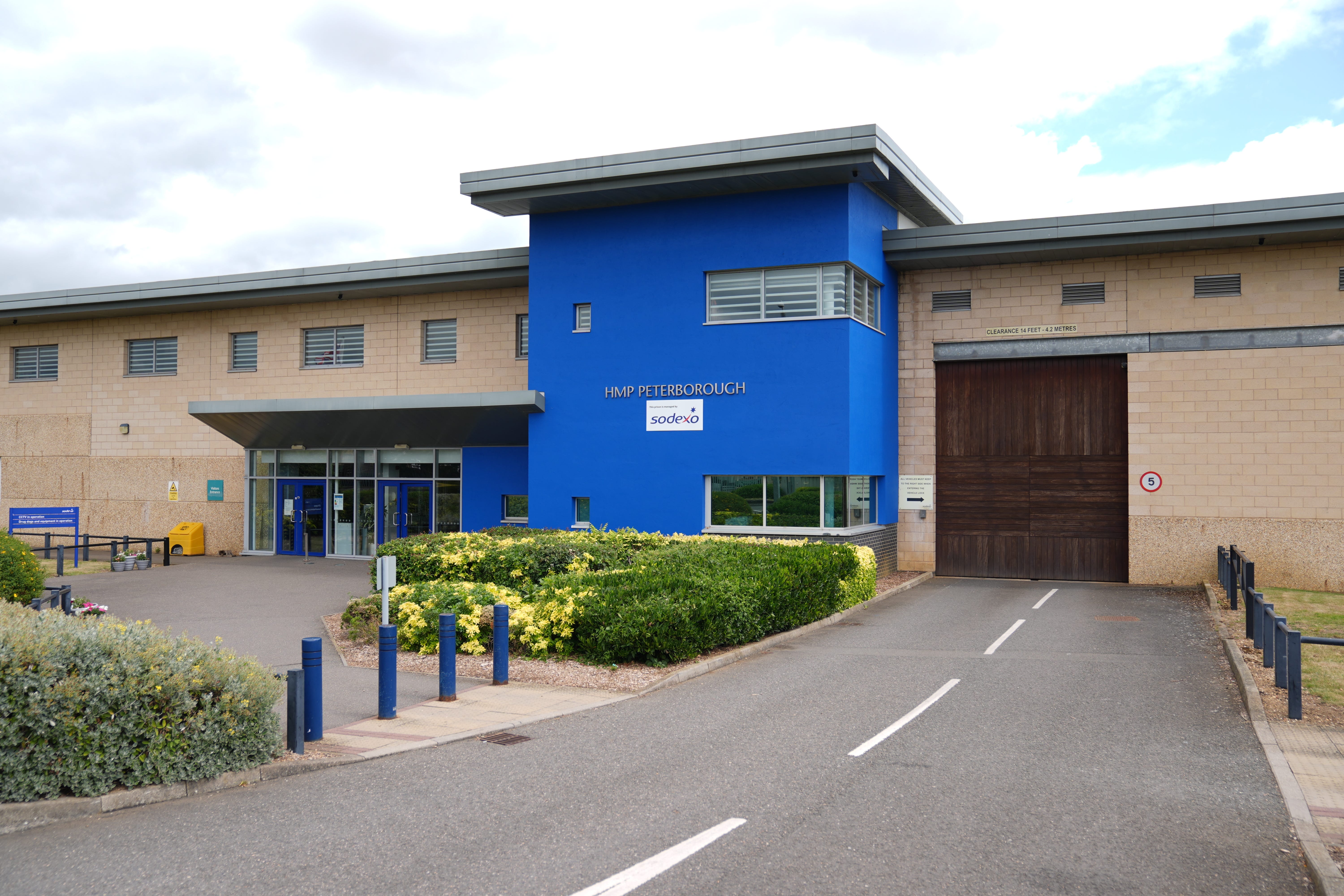
A facility that broke the traditional mold of British incarceration, HMP Peterborough opened in 2005, and remains the only "dual-purpose" prison in the UK, housing both a male and female population in entirely separate wings.
Operated by the private contractor Sodexo Justice, Peterborough is often cited as a blueprint for the modern, multi-functional jail, yet its history is marked by some of the most harrowing true crime figures and systemic controversies.
Built on the site of a former engineering works, the prison is designed to be a high-tech, efficient alternative to crumbling Victorian jails and runs as a remand prison for men and a closed prison for Women.
In 2026, security is centered on a high-tech "Digital Gate" system, using biometric scanning for all staff and contractors but as with many other prisons in the UK, is a constant battleground for drones.
Notable inmates to have spent time inside this prison include Dennis McGrory who was jailed for the murder of Jacqueline Montgomery in 1975.
Emma Tustin, convicted of murdering her step-son in June 2020 was held on remand in this prison and moved to another facility in 2021 after sentencing.
The prison has held individuals involved in some of the region's most disturbing missing person cases and domestic murders, including the killers of Bernadette Walker.
In April 2018, the prison was plunged into chaos when bomb disposal experts were called to the site after a "suspicious package" led to a massive lockdown and the evacuation of nearby buildings.
9 - HMP Lincoln
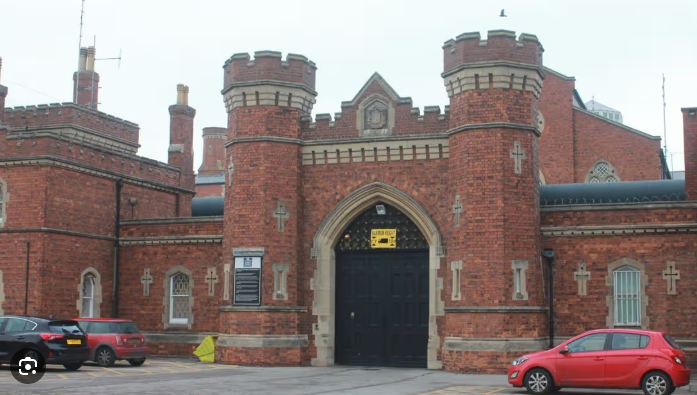
A stark reminder of the Victorian era’s obsession with discipline and design, HMP Lincoln opened in 1872 with its massive stone walls and Gothic gatehouse becoming an immovable part of the Lincolnshire landscape.
Designed by Frederick Peck using the "radial" or "star" layout that was the gold standard of 19th-century prisons, it consists of four main wings while operating as a remand prison.
The prison completed a multi-million-pound security overhaul in 2025 that included he installation of anti-climb "topping" on the perimeter walls and a new biometric entry system for staff to prevent major "key-loss" incidents.
Another hot zone for drones, mainly due to its location, the prison uses an AI-driven acoustic detection system that can triangulate the position of a drone, and its pilot, the moment it enters the prison's airspace.
This prison has held some of the 20th century’s most complex criminals and between 1900 and 1961, 18 men were executed at Lincoln with the most famous, John George Haigh, nicknamed the "Acid Bath Murderer."
Legendary escape artist of the 19th century Fred Low managed to scale the "unclimbable" walls of the newly built prison using only a sharpened spoon and a makeshift rope.
The millionaire novelist and disgraced politician Jeffrey Archer served a portion of his sentence here in 2001 for perjury and perverting the course of justice, with him including the prison in his memoir.
In October 2002, HMP Lincoln witnessed one of the most violent riots in modern British history when over one-third of the prison was hijacked by inmates who set fires, trashed wings and one prisoner died.
In a chilling moment for staff in the early 2000s, during routine maintenance, the original execution chamber was rediscovered and led to a surge in "ghost sightings" among both inmates and staff.
8 - HMP Thameside
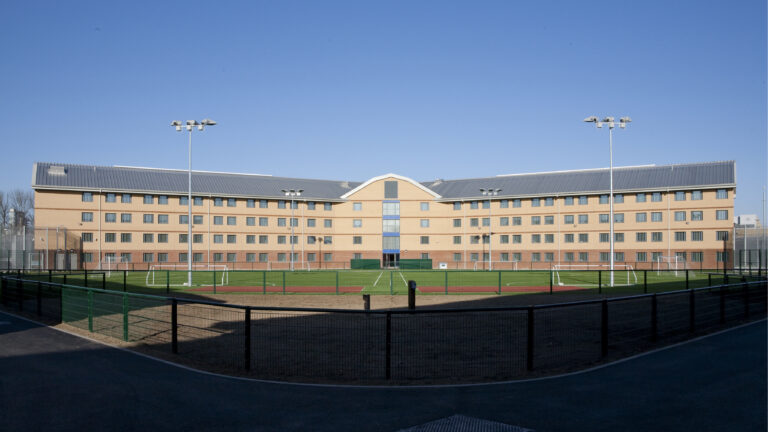
Sitting next to two other prisons in the local area, HMP Thameside completes what is known as the Thameside Trio, the biggest part of South East London’s penal landscape.
Opened in 2012 and operated by Serco, it was designed as a high-tech, "green" model for the future of British incarceration, but by a series of legal scandals have caused administrative chaos mainly thanks to high-pressure regimes.
Upon opening, Thameside was the first prison in the world to receive an "Outstanding" rating for environmental performance, with its security also focusing on biometric scanning and digital monitoring.
To mitigate the risk of escapes during transit, Thameside houses a massive Video Court Center, allowing hundreds of hearings to take place annually without the prisoner ever leaving the perimeter.
Following reports in early 2026, the prison has faced criticism for "restricted regimes," with many inmates locked in cells for up to 22 hours a day due to staffing shortages.
Several notable inmates have graced the cells of this prison, including Rayon Newby, who was mistakenly released from the prison on the 17th March 2023 while serving a sentence for assault, harassment and burglary offences.
A major investigation concluded in 2025 regarding the death of an inmate in 2023 found that synthetic cannabis, known as spice, was so prevalent that it was being used as a currency to buy "protection" from other inmates.
7 - HMP Elmley
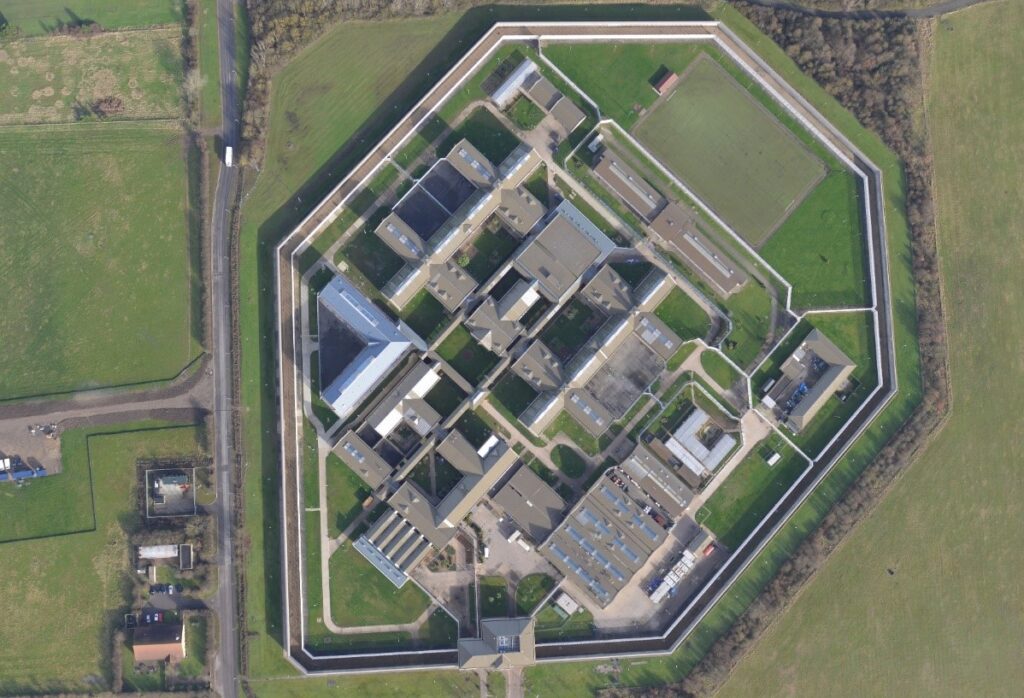
Perched on the desolate, windswept marshes of the Isle of Sheppey in Kent, HM Prison Elmley is one of the largest and busiest "local" jails in the UK, forming part of the Sheppey Cluster.
Opened in 1992, Elmley was designed to be a high-capacity prison that is defined by sprawling modern wings and an expansive perimeter that sits on what has become known as "Prison Island."
Elmley became a pilot site for automated drone-interception towers in 2026, with a system that uses electromagnetic pulses to safely ground unauthorized aircraft before they reach the exercise yards.
The prison has housed many gang affiliated prisoners, but none more high-profile than David Norris who was imprisoned for at least 14 years for the murder of black teenager Stephen Lawrence.
In 2014, a significant disturbance saw inmates take control of a landing in protest of "inhumane" lockdown conditions after being denied basic exercise and showers.
Another incident that same year saw three prison officers attacked with two receiving serious injuries, requiring hospital treatment and later that year two prisoners died in their cells.
6 - HMP Bullingdon
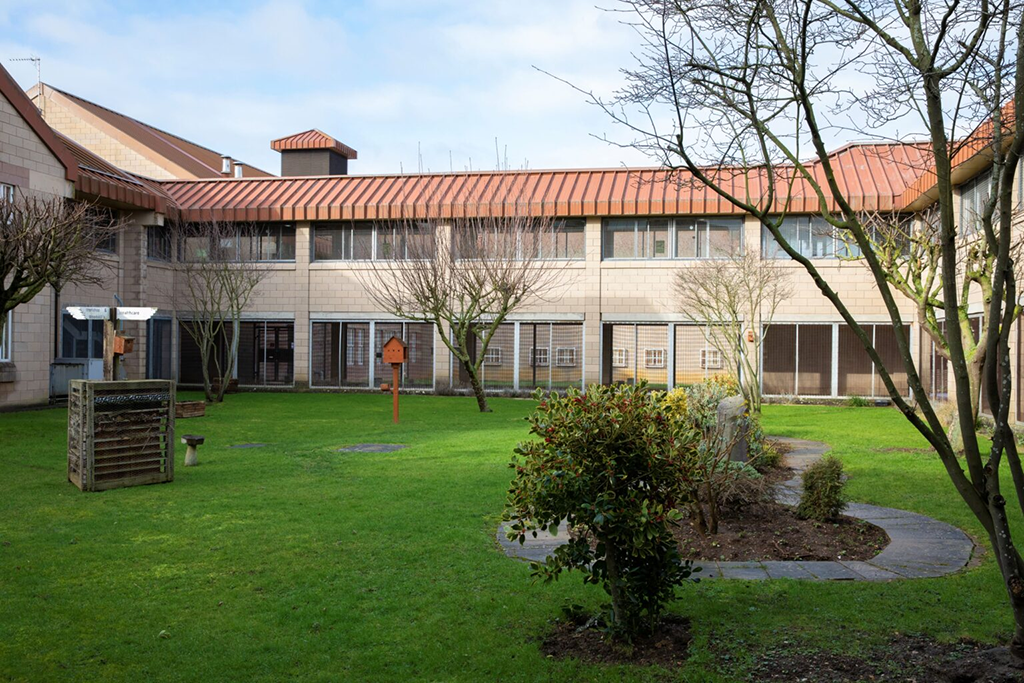
Tucked away in the Oxfordshire countryside near Bicester, HMP Bullingdon was opened in 1994 and was designed to be a high-functioning "local" prison, but violent assaults, and systemic security failures have given it a dark history.
Its layout is modern, consisting of seven residential wings all named after local villages while it was constructed on the obsolete Ministry of Defence site formally known as MoD Bicester.
In January 2003, its Deputy Governor Terence McLaren was suspended after he had been arrested and, in 2006, Governor Phil Taylor banned officers from displaying the Flag of England as he feared it may upset foreign prisoners.
There have been a few high-profile inmates who have served time at this prison, including disgraced entertainer Rolf Harris, who was famously moved to Bullingdon in 2014 following his conviction.
Another notable inmate to have passed through is Munir Hussain, a businessman who attacked a home invader and spent a month-long stint in the prison.
New leadership was appointed in 2025 to stabilize the prisons wings, but it remains overcrowded and under-resourced, yet upgrades are on-going and the "clean sweep" initiative aims to clean up the facility for good.
5 - HMP Moorland
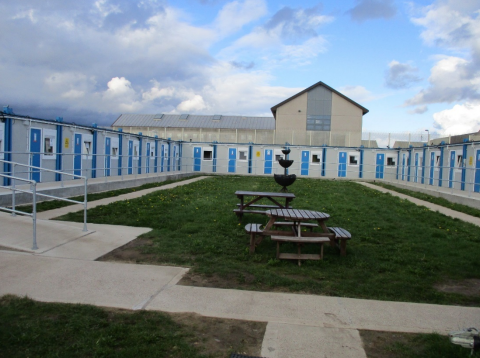
Standing as a complex, multi-functional fortress in the shadow of "Monster Mansion" nearby, Moorland Prison is located in the sprawling landscape of South Yorkshire and originally opened as a Young Offender Institution in 1985.
Moorland is a "split-site" facility, which originally included the nearby HMP Hatfield before they were administratively separated in 2011 and operates at about a 1,000 inmate capacity.
As of early 2026, Category C Moorland has been a lead site for the "Digital Wing" initiative that has seen the introduction of secure, in-cell tablets for education and administrative tasks.
Despite its Category C status, the prison has recently bolstered its defenses with 360-degree thermal CCTV and anti-drone netting, thanks to an up-tick in drones coming from the surrounding Doncaster countryside.
Legendary boxing champion Prince Naseem Hamed served a brief but sensational stint here in 2006 for dangerous driving but was released after 16 weeks of a 15-month sentence.
Juress Kika & Jake Fahri are a notable addition to the prison population and were sentenced for the murders of Ben Kinsella and Jimmy Mizen, with many attacks on them carried out on the prison landings.
Perhaps the prison’s most famous modern resident, former England and Sunderland footballer Adam Johnson, served time here following his conviction and turned the prison into a tabloid fixture.
One of the most famous incidents at this prison occurred in March 2005, when the prison erupted in violence after 40 inmates refused to return to their cells, taking over a wing and causing significant structural damage.
4 - HMP Nottingham
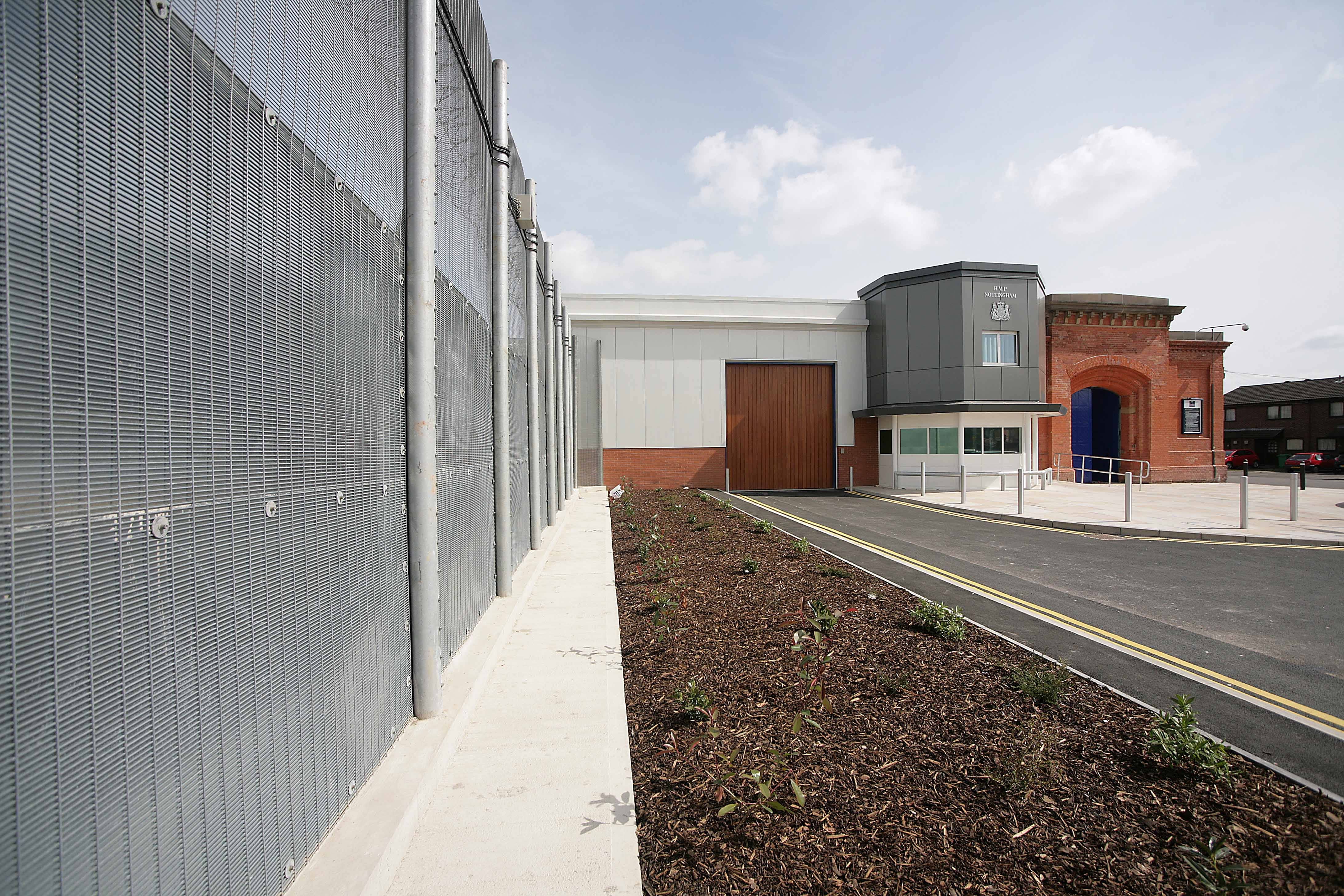
When most people think of Nottingham city, they think of its most famous outlaw, Robin Hood, but this Victorian-era prison, opened in the 19th-century, holds a far more dangerous type of prisoner.
Originally opened in 1890, the prison was largely rebuilt and expanded between 1997 and 2010 and features seven main wings with a recent report suggesting a "concerning" level of violence and self-harm.
Staff now use AI-assisted mail scanning to detect synthetic drugs that have been infused into letters and photographs, with X-ray body scanners and advanced drone detection technology also installed site-wide.
HMP Nottingham has a hall of infamy when it comes to notable inmates and includes the former leader of one of Nottinghamshire’s most feared drug cartels, John Dawes, who served 24-years and died of cancer in 2025.
Another notable inmate, Ian Paterson, was jailed for 15 years in 2017 for wounding his patients with intent by performing unnecessary surgical procedures, a sentence that was increased to 20-years soon after.
A more recent addition to the population, Alexander Braund was involved in a high-profile case involving violent robbery that saw him remanded at Nottingham during his 2026 trial.
In a rare piece of positive news from the 2025 Inspectorate report, Nottingham was praised for its "Grab Bag" initiative that saw bags containing puzzles, reading material, and games specifically designed to de-escalate prisoners in the midst of a mental health crisis.
3 - HMP Deerbolt
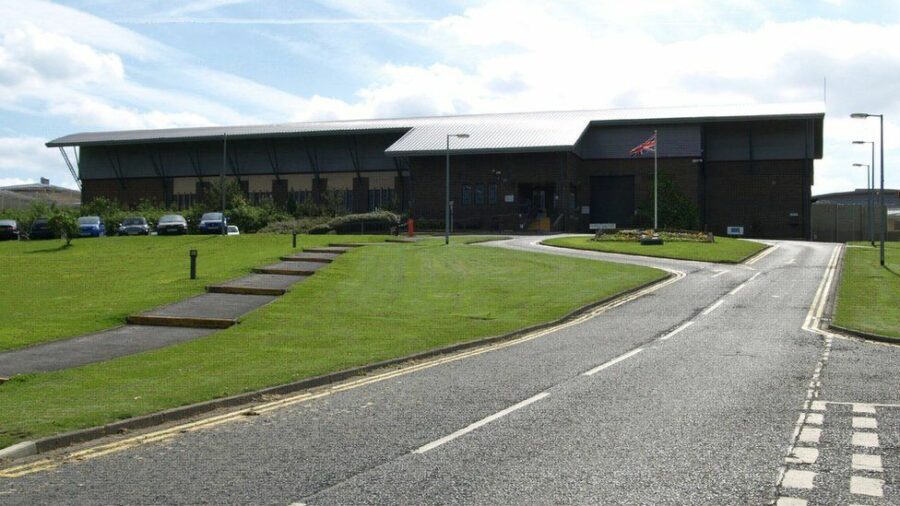
Deep in the rolling hills of County Durham, near the historic town of Barnard Castle, HMP Deerbolt looks like just another institutional complex to the passing traveler, but isolation at this facility can be a double-edged sword.
Designed as a Category-C Young Offender Institution, its rural location was intended to provide a "fresh air" environment for rehabilitation, but trouble has frequently arisen within its walls.
In February 2026, the prison was rocked by a major corruption scandal with former prison officer Ellis Eyles jailed for eight months after forming a romantic relationship with convicted murderer Mitchell Ingham.
Ingham, serving a life sentence for the 2015 murder of Dominic Doyle, manipulated the "immature" officer into providing him with an iPhone.
Most disturbingly, Eyles revealed the location of a rival inmate to Ingham, who messaged her saying he would "get him done in," and the relationship was discovered after a routine cell search found the illicit phone.
Deerbolt often acts as a release valve for violent young offenders from Manchester, Newcastle, and Teesside, frequently housing high-ranking members of organized youth gangs.
Many riots have taken place at the facility, with six inmates causing a major disturbance in the prison chapel seeing tens of thousands of pounds worth of damage and another riot happening in June 2006.
The 2007 "Five-Hour" riot saw inmates on D and F wings launching a full-scale attack that was later dealt with by the Tornado task-force and saw a vote of "no confidence" in the prison's leadership.
In January 2020, authorities "lost control" of a wing once again while four officers were hurt before an external "Tornado Team" once again re-took the prison wing and it was later revealed that inmates were being denied basic exercise.
The prison, like many other has seen a massive increase in spice infused letters, but it became such a problem here that policy where all non-legal mail is photocopied and the originals destroyed has been put into place.
2 - HMP Durham
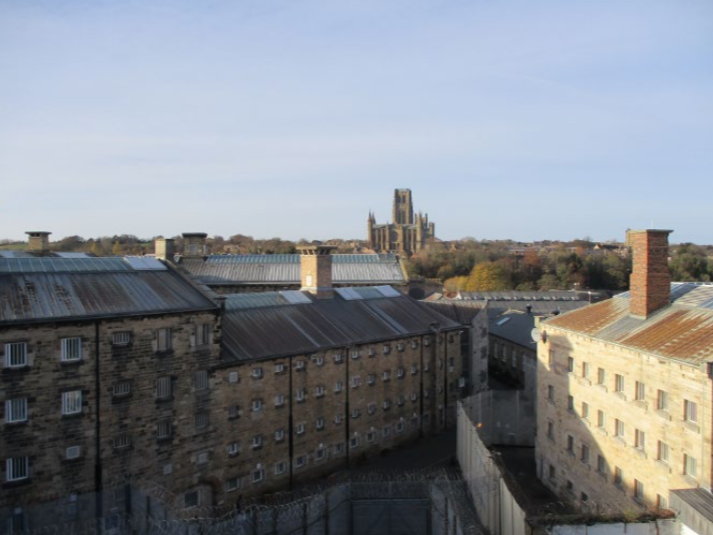
Sitting atop the dramatic sandstone cliffs of the River Wear, HMP Durham is as much a part of the city’s skyline as its famous cathedral and was built in 1819, housing the main place of execution in North East England.
Designed during the golden age of the "Separate System," it features the same radial layout as many other Victorian prisons, with wings branching out from a central "Circle."
The prison currently operates with seven wings, all roughly 200-years old and featuring 21st-century security while serving courts across County Durham, Tyne and Wear, and Teesside.
As of April 2026, the prison has completed a massive "Security Surge," with the installation of anti-drone netting across all exercise yards and the rollout of AI-driven X-ray scanners at the gatehouse.
In 2025, the prison implemented a total mail photocopying policy, meaning inmates never touch original paper, which was frequently being infused with synthetic cannabis.
Durham’s guest list is a "Who's Who" of British criminal history with many famous faces including mass murderers Myra Hindley & Ian Brady both serving time at the prison.
Rose West, another infamous serial killer has served time inside Durham’s "Category A" female unit, before her transfer to other more secure facilities.
Both Ronnie and Reggie Kray spent time in Durham’s high-security E-Wing during the 1960s, and it was here that the twins reportedly struggled with the "Northern" discipline, far from their London power base.
One of the most famous death row inmates was infamous British suspected serial killer Mary Ann Cotton, who is thought to have killed at least 13 people, was executed at the prison on the 24th March 1873.
The final inmate on the notable list is Kieran Patrick Kelly, an Irish vagrant, convicted murderer, and suspected serial killer who claimed to have murdered dozens of people in London, but was only ever convicted of killing William Boyd and Hector Fisher in 1975.
Durham’s inmates launched a "sympathy" protest after the 1990 Strangeways riot in Manchester where Prisoners took to the roof of A-Wing, leading to a tense standoff with the Tornado Team.
In the early 2020's, workers uncovered structural remnants of the old execution shed that later sparked a wave of "ghost hunter" interest, but the room is kept as a non-accessible mechanical space out of respect and it has never been photographed.
1 - HMP Lewes
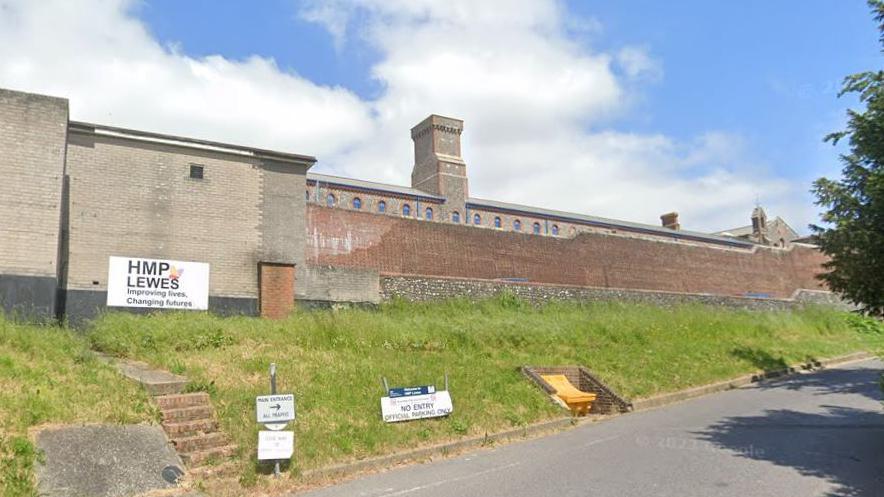
Opened in 1853 as the Sussex County Prison, HMP Lewes was built during the peak of the Victorian prison construction and was intended to force prisoners to reflect on their sins.
Tucked away in the rolling hills of the South Downs, the flint-walled towers of HMP Lewes look more like a medieval fortress than a modern correctional facility.
Originally designed to hold both men and women, today, it serves as a local resettlement prison, primarily housing adult men on remand from the Sussex courts or those at the beginning of their sentences.
Many famous prisoners have spent time here, including Rolling Stones frontman Mick Jagger, who was briefly held here following the famous "Redlands" drug bust, but his stay was short-lived.
Khalid Masood, the perpetrator of the 2017 Westminster Bridge terror attack, served time in Lewes for a series of violent assaults in the local area and for both GBH and possession of an offensive weapon.
Reginald Kray, one half of the legendary East End firm, spent time here and the prison having a close proximity to London, made it a frequent stop for major gangland figures.
One of the most notorious prisoners held at Lewes was Richard Huckle, arrested by Britain's National Crime Agency in 2014 after a tip-off from a highly specialised branch of Australia's Queensland Police Service.
In October 2016, a six-hour riot broke out on one of the wings where inmates took control of the landing, reportedly frustrated by "lockdown" conditions caused by staff shortages.
In 1852, Sarah Ann French became the last woman executed at the prison and was known as the "Onion Pie Murderer," after she poisoned her husband with arsenic hidden in his dinner.
Thanks for watching, don't forget to check out the most dangerous Category B prisons in the United Kingdom on the left or the 20 most Dangerous Supermax-style Prisons in the UK on the right and we will see you in the next video
About the Creator
Vidello Productions
My name is William Jackson, a YouTube content creator and crypto enthusiast with over 167,000 subscribers and I make videos that are focused on the billionaire lifestyle and crime.
I make top list videos in true crime and lifestyles.
Enjoyed the story? Support the Creator.
Subscribe for free to receive all their stories in your feed.
Comments
There are no comments for this story
Be the first to respond and start the conversation.