
The Year America Stopped Killing Itself: Inside the Most Stunning Crime Collapse in a Century
Something extraordinary happened on the streets of America — and almost nobody noticed.
M Mehran
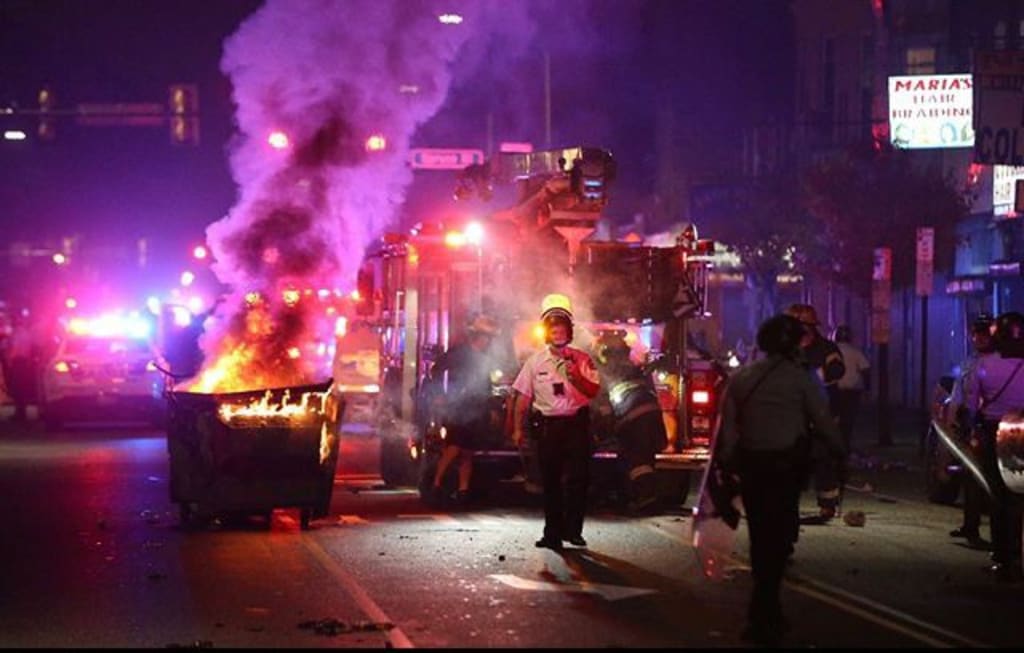
There's a particular kind of silence that falls over a city when the violence stops. It doesn't announce itself. There's no ceremony, no headline that reads: Things Are Getting Better Now. It just settles in, quietly, the way dawn arrives — you don't see it coming, and then suddenly it's here. That silence has been spreading across the United States. By the close of 2025, something remarkable had taken shape — something criminologists, law enforcement veterans, and social researchers are still struggling to fully explain. America's homicide rate had fallen to what may be its lowest point in more than a hundred years. Not a small dip. Not a statistical blip. A historic, sweeping, jaw-dropping collapse in the country's most serious crime. And yet, ask most Americans how safe they feel, and the answer will likely shock you. The Peak That Changed Everything To understand where we are, you have to go back to where we were. 2021 was a brutal year. The country was still reeling from the pandemic — locked down, economically shattered, emotionally fractured. And violence surged. Homicides climbed at a rate not seen in decades, concentrated in urban centers but spreading outward, touching communities that had never imagined they'd be part of this story. Families buried sons. Mothers buried daughters. City councils held emergency meetings. And politicians on every side of the aisle reached for the same blunt instrument: fear. Crime became the defining narrative of an era. It was real. The pain was real. The grief was absolutely real. But what happened next — almost nobody predicted. The Collapse Nobody Saw Coming Starting in 2022, and accelerating with each passing year, the numbers began to shift. Slowly at first, then with gathering momentum, homicides started falling. By 2024, violent crime nationwide had dropped 5.8%. Significant, but perhaps not shocking on its own. Then came the 2025 data. Homicides fell 21% compared to the year before. Twenty-one percent — in a single year. That's not a trend. That's a transformation. Researchers began reaching for historical comparisons and finding that they had to go back over a century to find a homicide rate this low in the United States. Think about what a century means. Two World Wars. The Great Depression. The crack epidemic. The crack-era violence of the late 1980s. The gang wars. The opioid crisis. Through all of it, the homicide rate in America never fell to where it stands today. That is the story of this moment. And it's almost invisible. Why Aren't We Celebrating? Here is where the story gets complicated — and deeply human. Crime didn't disappear from American consciousness. It deepened. News cycles still lead with shootings. Social media amplifies every act of violence into a national event. Politicians campaign on fear because fear, historically, works. The human brain is wired to remember the murder it heard about, not the thousand murders that didn't happen. We feel threat more acutely than safety. We process danger faster than we process relief. So even as the data tells one story — things are genuinely getting better — the felt experience of millions of Americans tells another. And that gap between reality and perception has enormous consequences: for policy, for policing, for how communities invest in themselves, for whether a family decides to stay in a neighborhood or flee. The perception of crime shapes cities just as powerfully as crime itself. The Incomplete Picture None of this means the story is simple or clean. Not every community has shared equally in the decline. Some cities still struggle with pockets of persistent violence. Drug offenses have trended upward in certain regions, bringing with them their own cascading harms. The fentanyl crisis continues to carve its own lethal path through communities the homicide statistics don't fully capture. And the causes of the decline remain genuinely contested. Was it changing demographics? Improved economic conditions post-pandemic? Shifts in policing strategy? The expansion of community violence intervention programs? Hospital trauma care that saves lives that once would have been lost? Researchers are actively debating all of it. What isn't debated is the number itself. What This Moment Deserves America has spent decades defined by its violence. True crime dominates entertainment. Crime statistics anchor political debates. The image of a dangerous, unraveling nation has calcified into something that feels almost like identity. But data has a way of disrupting narratives, if we let it. The year 2025 may well be remembered as the moment the long arc of American violence bent — sharply, historically — toward something better. That deserves to be seen clearly, discussed honestly, and understood fully, not because it means the work is done, but because knowing what's working is the only way to keep it working. The silence on those streets isn't emptiness. It's the sound of something going right, for once — and it's long past time we listened.
About the Creator
Enjoyed the story? Support the Creator.
Subscribe for free to receive all their stories in your feed.
Comments
There are no comments for this story
Be the first to respond and start the conversation.