
The forgotten victims
When crime falls, these are the people history leaves behind — and the ones who deserve to be remembered most.
M Mehran
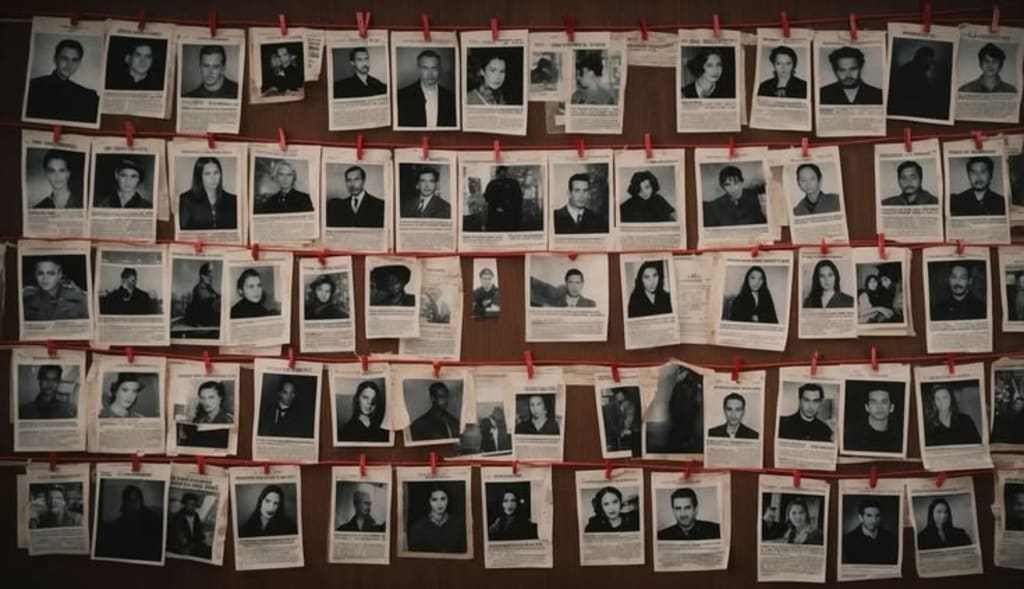
When crime falls, these are the people history leaves behind — and the ones who deserve to be remembered most. Nobody came to the press conference for Raymond. There was no press conference. There was no candlelight vigil that made the evening news, no hashtag that trended for a weekend before the internet moved on to the next outrage. There was a folding table outside a community center in a mid-sized American city, some hand-lettered signs, maybe thirty people standing in the cold because someone had to stand somewhere. Raymond was 34. He worked nights at a distribution warehouse. He had a daughter who was learning to ride a bike without training wheels and a mother who called him every Sunday without exception. He was shot walking to his car on a Tuesday evening in 2021, during the year America's homicide rate peaked at its highest point in decades. He is also, now, part of a statistic moving in the right direction. That's the part nobody tells you about historic crime declines. The numbers go down. The charts look better. Researchers publish cautiously optimistic reports. Politicians claim credit. And somewhere, a family is still sitting with a chair that nobody sits in anymore, trying to figure out how a statistic is supposed to feel. the year everything broke open 2021 arrived like a wound that wouldn't close. The pandemic had already stripped away the connective tissue of American social life — schools shuttered, community centers dark, the informal surveillance of neighbors watching out for neighbors dissolved overnight into isolation and locked doors. Unemployment surged. Mental health services buckled. The ordinary pressure valves of city life — the basketball courts, the barbershops, the corner restaurants where people knew your name — all of it gone, or diminished, or transformed beyond recognition. Into that vacuum, violence poured. Homicides climbed at a rate that alarmed even seasoned criminologists. And the victims were not randomly distributed across the American landscape. They were concentrated — in specific zip codes, specific demographics, specific communities that had already been carrying the heaviest loads long before a virus rewrote the rules of daily life. The people who died in 2021 were not abstractions. They were fathers learning their kids' homework schedules over video call. They were grandmothers who had survived every previous crisis their neighborhoods had thrown at them. They were teenagers who had done nothing more dangerous than walk outside. They died in the worst moment. And then the moment passed — for everyone except the people left behind. the long road down What happened next genuinely defied expectation. Beginning in 2022 and building steadily through the years that followed, homicides began falling. Not slightly. Not tentatively. With real momentum, real depth, real geographic breadth. By 2024, violent crime nationwide had dropped 5.8%. By the close of 2025, homicides had fallen another 21% — placing America's murder rate at what researchers believe may be its lowest point in over a century. One hundred years. Criminologists reached for explanations and found several competing ones: shifting demographics, the expansion of community violence intervention programs that put credible messengers directly into neighborhoods at risk, improved emergency trauma care that saved lives that previous decades would have lost, and economic stabilization as the worst of the pandemic's economic damage slowly healed. No single explanation owns the whole story. The truth, as it usually does, spreads itself across several causes at once. But the direction was undeniable. And for the families of those who survived — who made it through the danger years intact — the relief was quiet and enormous and largely uncelebrated. the ones the decline doesn't reach Here is the sentence that has to be said plainly: a falling average is not a universal experience. The national homicide decline is real. The century-low framing is accurate. But America's relationship with violence has always been a story about geography and race and economics — about which communities absorb the damage and which communities read about it from a comfortable distance. The neighborhoods that suffered most acutely during the 2021 surge have improved. But they have not improved equally. The distance between a low-crime suburb and a high-poverty urban corridor remains enormous — not just in raw numbers, but in the psychological weight of living somewhere that has never fully felt safe, even in the good years. For these communities, the century-low statistic floats somewhere overhead like a weather report for a city they don't live in. Technically true. Personally meaningless. Raymond's mother still calls on Sundays. She calls his old number sometimes, by accident, muscle memory overriding grief for just a moment before reality reassembles itself. She is not living in a century-low. She is living in a Sunday morning without an answer. what the numbers owe the people Statistics are not the enemy of humanity. Used honestly, they are one of the most powerful tools we have for understanding whether the things we do are actually working — whether the programs, the policies, the interventions, the resources are bending the arc in the right direction. And right now, many of them are. That matters. That deserves to be said clearly. But numbers become dangerous when they replace people rather than represent them. When the falling homicide rate becomes a reason to declare victory rather than a reason to double down. When the positive trend becomes an excuse to defund the very community programs that may have helped create it. The historic decline in American violence is not a finish line. It is, if we're paying attention, a proof of concept — evidence that something is working somewhere, for someone, and that the urgent question now is how to make it work everywhere, for everyone, until the communities that have borne the longest burden finally get to feel what the statistics have been quietly promising. Raymond deserved to see that world. The least we can do is build it.
About the Creator
Enjoyed the story? Support the Creator.
Subscribe for free to receive all their stories in your feed.
Comments
There are no comments for this story
Be the first to respond and start the conversation.