movie review
Felony-focused film reviews; fictional movies and true crime documentaries depicting real-life stories or inspired by them.
Walk the Plank. AI-Generated.
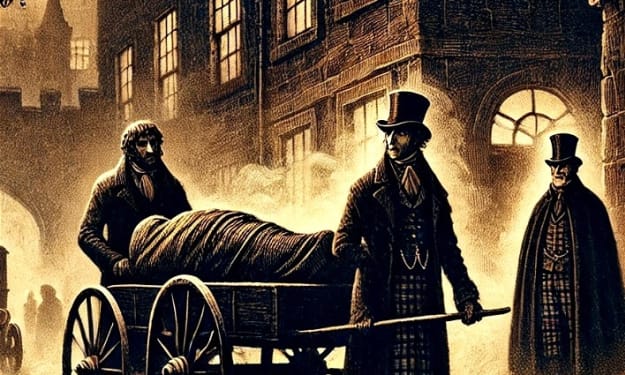
It had rained all night in the city of Fairview. The streets still shimmered under the morning haze, the scent of wet asphalt hanging in the air. At precisely 6:47 AM, the body of Terrence Hall—a respected community leader and activist—was discovered lying face-down near the old shipyard, a rotting plank from a cargo crate splintered beside him. His skull had been crushed. No signs of a struggle. No weapon in sight. Detective Nathan Boone stood over the yellow tape, sipping lukewarm coffee. He’d known Hall. Everyone had. A loud, fearless man who’d rallied youth programs, taken on corrupt councilmen, and cleaned up the notorious 9th Ward. Hall had made enemies, no doubt—but murder? Boone examined the scene with his usual sharpness. The plank wasn’t from any structure nearby—it was aged, warped, likely driftwood. There were no security cameras in that forgotten part of the city. Whoever did this had planned it well. Hall’s phone was found shattered nearby, but his watch and wallet were untouched. Not a robbery, then. Boone made note of the time and left the scene. His first stop: Hall’s office. It was a modest space filled with protest posters, community flyers, and photos of youth events. His assistant, Carla, was already crying when Boone entered. “Terrence got a threat two nights ago,” she whispered. “Someone slipped a note under the door. It said, ‘Keep pushing, and you’ll fall off the plank.’ He thought it was a joke.” Boone stared at her. “Did he mention any names?” She shook her head. “He just said some people didn’t want him to testify next week.” Boone’s brow furrowed. He remembered reading about a pending court case. Hall was scheduled to testify against Fairview’s largest private contractor, Larkridge Development, accused of fraud and bribery. Hall had proof—documents tying Larkridge to falsified safety reports and kickbacks to city officials. It was supposed to be his biggest stand. Boone drove to City Hall. He knew Councilman Briggs would be there—one of Hall’s loudest critics and a known supporter of Larkridge. The man greeted Boone with a practiced smile. “Terrible news,” Briggs said, voice hollow. “A real loss for the city.” “Tell me about your last interaction with Hall,” Boone asked casually. Briggs leaned back in his leather chair. “We disagreed often, but I respected the man. We had a heated meeting last week, but that’s nothing new.” Boone nodded. “Do you know anything about a threat he received?” Briggs raised an eyebrow. “I don’t traffic in threats, detective.” Boone left with a gnawing feeling. Briggs was lying, but he couldn’t prove it—yet. By evening, Boone met with forensics. The plank had traces of industrial oil and sea barnacles—likely from a shipping container, not the local docks. It had one clue: a faded serial number burned into the wood’s underside. The team traced it back to a closed Larkridge site on the east pier. Boone drove there under the cover of dusk. The pier was silent, rusted, and half-sunk in tidewater. Inside the main warehouse, dust and old tools littered the floor. And then he saw them—planks identical to the one used in the murder, stacked by a wall. The match was perfect. Someone had brought Hall here. Killed him. Dumped him feet away from the riverbank like a warning. As Boone turned to leave, he heard a sound behind him. Footsteps. He drew his weapon. “Fairview PD. Step out!” A man in coveralls emerged from the shadows—thin, pale, trembling. “Don’t shoot! I—I used to work here.” Boone lowered his gun slightly. “Did you see anything?” The man hesitated. “I was here two nights ago, just sleeping. I—I saw a black SUV pull in. Three men dragged someone out. One hit him with something—it sounded like wood. They were yelling about ‘shutting him up.’ Then they left him there. I was too scared to move.” Boone took a statement, recorded the witness’s ID, and rushed back to headquarters. By morning, surveillance logs from nearby traffic lights confirmed the SUV. It was registered to a shell company—one later traced back to Larkridge’s legal department. Boone confronted Larkridge’s lawyer, Jordan Mayes, in his uptown office. “You’re in deep now,” Boone said, dropping a folder of evidence on his desk. Mayes scoffed, but his hands shook. “You don’t have anything solid.” “I’ve got a witness. Forensics. Footage. And a dead man who trusted the law more than fear. You can take the fall, or give me the men who did this.” Mayes crumbled. Within hours, three Larkridge employees—including a security chief—were arrested. The motive: Hall had refused a $500,000 bribe to withdraw his testimony. So they silenced him the only way they knew. A week later, Boone stood silently at Hall’s memorial service. Hundreds gathered. Children, families, even former enemies. The man had moved a city. In his pocket, Boone still carried a copy of the note that started it all: “Keep pushing, and you’ll fall off the plank.” They’d meant it as a threat. But Hall had walked the plank willingly—for justice. And Boone made sure he didn’t fall in vain.
By Abdurrahman Abdurrahman2 years ago in Criminal
Through the Lens of Midnight
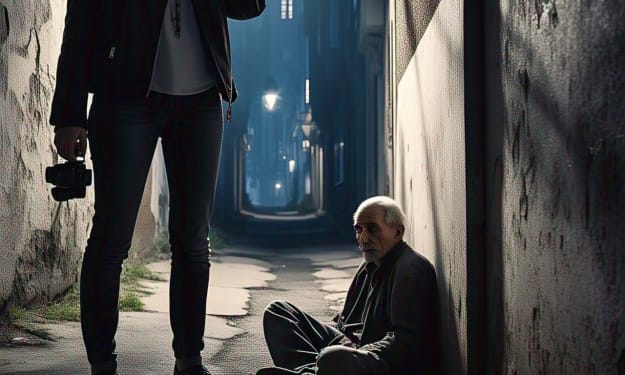
.Sophia Collins had always believed in the power of film. Growing up, she’d watched classic movies, feeling the magic of the screen as it transported her into different worlds. But now, after ten years in the business, she had begun to wonder if the movies she’d once adored were simply comforting illusions—constructed realities made to hide the truth. She was a documentary filmmaker. Her job was to show the world as it was, raw and unfiltered. Or so she had thought. The world she had been capturing for the last few years—the lives of everyday people struggling with the realities of modern life—seemed to blur the lines between truth and fiction more and more. She could no longer distinguish whether the stories she told were real or simply narratives her subjects had created for themselves. It was this question, this nagging doubt about the reality she was capturing, that led her to “The Midnight Project”—her most ambitious and personal film yet. --- Chapter One: The Start of the Midnight Project It all began one rainy evening when Sophia was at a local café, editing footage of a family she’d been documenting for months. The mother, a single parent struggling to raise two children, had been incredibly open and honest with her about their daily life. But the more Sophia watched the footage, the more she felt like she wasn’t seeing the full picture. What was behind those smiles? What were the secrets being hidden in the shadows? Then, as she sat in the café, a conversation with an old mentor, Jacob Turner, took a turn that set her on this new path. “I think you’re missing the heart of what you do, Sophia,” Jacob said, sipping his coffee. “You want to show reality, but there’s more to truth than what’s on the surface.” “What do you mean?” she asked, genuinely puzzled. “I mean, you’re only capturing what you see with your eyes. But what about what can’t be seen? The things that lie beneath, the stories people aren’t ready to tell you? Maybe you need to stop filming the illusion and start capturing the truth beneath the illusion.” His words stuck with her. For the first time, she questioned everything about her work. Had she been simply documenting reality, or was she merely recreating illusions? How much of what she captured was truly “real,” and how much was shaped by her own lens, her own perspective? Jacob’s words didn’t leave her mind, and so she decided to embark on a project that would challenge everything she knew about filmmaking. She called it “The Midnight Project”—a film where she would capture the hidden truths of those around her, focusing on their dreams, their fears, and the things they couldn’t, or wouldn’t, say in the light of day. --- Chapter Two: Unveiling the Illusion Sophia began her project with no clear idea of where it would go. She spent weeks filming the lives of people who worked in the shadows, in places where secrets often festered: a homeless shelter, a late-night diner, a dive bar on the edge of town. She’d set up her camera in discreet corners, hoping to catch moments of vulnerability. But even in these unguarded spaces, people still performed. The waitress who wiped down tables smiled a little too brightly. The man at the bar who had clearly been drinking for hours still kept up the pretense of casual conversation. Everyone was hiding something, and Sophia began to realize that she, too, was participating in this elaborate game of illusion. She had planned for this documentary to strip away the masks people wore. But what if those masks were all anyone had left? What if the illusion they created was the only thing keeping them whole? The line between truth and illusion seemed to disappear more each day, and soon, Sophia was questioning her own role in the lives of the people she filmed. Then, one night, something unexpected happened. --- Chapter Three: A Midnight Encounter Sophia was filming at an old warehouse district when she met Tom—a man who, unlike anyone else, seemed to wear no mask at all. He was sitting in the dim light of a streetlamp, alone, scribbling in a notebook. When he saw her approaching with the camera, he didn’t shy away or offer a smile for the lens. Instead, he simply raised an eyebrow. “Do you want to film the truth?” he asked, his voice raspy but calm. “Or do you want to film what’s been told to you?” Sophia froze. She didn’t know how to answer. “I’ve been following you,” Tom continued, his eyes narrowing. “I see you, hiding behind your camera, watching these people. But you’re too afraid to ask the right questions, aren’t you?” He stood up and walked toward her, his presence unnerving. “You think you’re capturing truth, but you’re just documenting the surface. You’ve seen the illusion, but not the truth underneath it. I can show you.” Sophia felt a chill run through her, but curiosity won out. She nodded, signaling for him to continue. Tom took her to a dark alley in the same district, where the lights were dim and the air smelled of mildew and forgotten time. There, a man sat in front of an abandoned storefront, eyes hollow, staring into space. “This is real,” Tom whispered. “This is what people don’t want you to see. This is what you’re too afraid to film.” Sophia raised her camera, but something inside her told her to stop. She lowered the lens and took a step back. The illusion was all she had, and without it, what was left? --- Chapter Four: The Film That Was Never Finished The next morning, Sophia awoke with a feeling of dread. She had captured something in that alley, something raw and unsettling, but she knew she couldn’t include it in the film. It felt wrong, too invasive, too personal. She’d crossed a line, and now she wasn’t sure how to return to the world she once knew. The project, which had started as a search for truth, had morphed into a journey of self-discovery. Sophia realized that no matter how hard she tried to expose the truth, she would always be limited by her own lens, her own biases, her own understanding of what was real. In the end, she abandoned “The Midnight Project.” It was too personal, too complicated, too messy. The truth, she had learned, wasn’t something that could be captured on film. It was something you lived, something that lived inside of you. She put the camera down, not because she had failed, but because she had come to understand that sometimes, the most powerful moments were the ones you didn’t try to capture at all. --- Epilogue: Beyond the Lens Years later, Sophia would look back at “The Midnight Project” not as a failure, but as a lesson. The truth couldn’t always be captured through a lens. Sometimes, the most important moments were the ones you simply let unfold—without judgment, without a camera, without an agenda. And in that quiet, unspoken space, she realized that the real story wasn’t about exposing illusion. It was about living through it, and finding a way to see the truth hidden within the quiet spaces between. --- Would you like this adapted into a screenplay or a visual scene?
By Mujeeb Ur Rahman2 years ago in Criminal
Bullets and Bravery
The city of Grayridge was a place where the night breathed smoke, and every alley whispered secrets. For years, it had been a kingdom ruled not by mayors or laws, but by a man named Dario “Crimson” Voss—a gangster whose name struck fear in the hearts of even the toughest criminals.
By muhammad khalil2 years ago in Criminal
"The Vanishing Hour"
"The Vanishing Hour" Too peaceful was the town of Brookridge. It had always been a quiet, charming little town with few secrets and everyone knowing one another. However, a dark secret was simmering beneath the surface. Despite her ten years of service with the town's police force, Detective Lydia Moore was unprepared for the case that would come to light one chilly autumn evening.
By Rajoan Islam2 years ago in Criminal
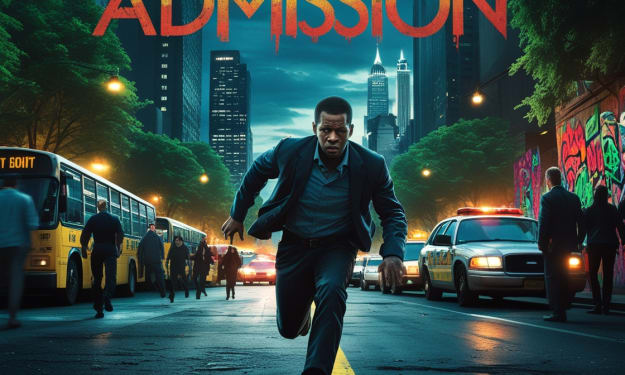
"The Final Admission"
"The Final Admission" Like a clock ticking away to something inevitable, the rain pounded the pavement as it fell in sheets. Detective Jane Harper stood looking at the dilapidated building across the street in the faint light of the streetlamp. It used to be the center of the city's criminal underworld, where dubious transactions and risky relationships occurred. Like the mysteries it contained, it now remained deserted.
By Rajoan Islam2 years ago in Criminal
Erdogan condemns Turkey protests as dozens arrested
Days after a prominent opposition figure was detained, President Recep Tayyip Erdogan has criticized the expanding protests in Turkey. In a speech on Friday, Erdogan said his government would not "surrender" to "vandalism" or "street terror" ahead of more planned protests. "We will not tolerate the disturbance of public order," they stated. On Wednesday, police detained Istanbul's mayor, Ekrem Imamoglu, one of more than 100 people held on charges of corruption and aiding terrorist groups.
By Md Mirajul Islam2 years ago in Criminal