movie review
Felony-focused film reviews; fictional movies and true crime documentaries depicting real-life stories or inspired by them.
Fourth Wing
What if your biggest fear becomes the path to your greatest destiny? In Fourth Wing, bestselling author Rebecca Yarros brings you into a thrilling world of dragons, battles, secrets, and strength a story filled with adventure, danger, love, and a heroine who refuses to back down.
By Muhammad Hayatabout a year ago in Criminal
Never Lie
Never Lie by Frieda McFadden is a psychological thriller that will keep readers on the edge of their seats from the first page to the last. With a story full of twists, secrets, and psychological tension, this book takes readers on a wild ride into the minds of its complex characters. Packed with suspense and mystery, Never Lie is the perfect choice for anyone who loves a story filled with shocking revelations and heart stopping moments.
By Muhammad Hayatabout a year ago in Criminal
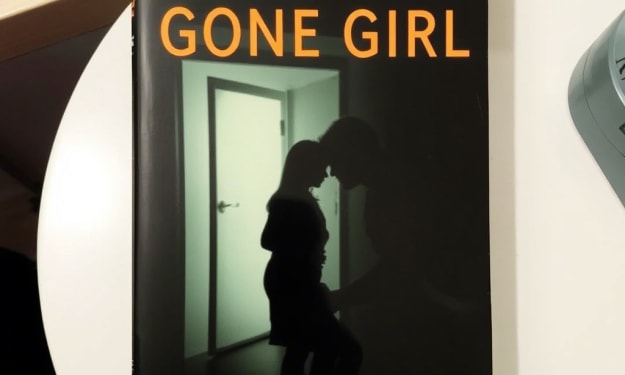
Gone Girl
🌟 Meet Nick and Amy Dunne Nick and Amy Dunne are a married couple who, on the surface, seem to have a perfect life. Nick is charming, easy going, and handsome. Amy is beautiful, intelligent, and famous for being the inspiration behind her parents' successful children’s book series, “Amazing Amy.”
By Muhammad Hayatabout a year ago in Criminal
The most mysterious criminal case: The Zodiac Killer.
The Most Mysterious Criminal Case: The Zodiac Killer One of the most mysterious and chilling criminal cases in modern history is the story of the “Zodiac Killer” . This unidentified serial killer terrorized Northern California in the late 1960s and early 1970s. His brutal crimes and cryptic messages sent to the press and police have intrigued investigators, criminologists, and conspiracy theorists for decades. Despite extensive efforts, the identity of the Zodiac Killer remains unknown, making this one of the most compelling and unsolved criminal cases in history. --- The Beginnings of the Zodiac’s Reign of Terror. The Zodiac Killer’s reign of terror began in “1968” with the murders of “Betty Lou Jensen” (16) and “David Faraday” (17) on a remote road near Vallejo, California. The couple was shot to death in Faraday’s car. The Zodiac Killer’s cryptic letters were sent to local newspapers soon after the murder, claiming responsibility for the killings. These letters were filled with taunts directed at the police and journalists, and included a symbol of a cross-circle, which became his signature. In July 1969, the Zodiac struck again, this time murdering “Darlene Ferrin” (22) and “Michael Mageau” (19) in a parked car near Blue Rock Springs. Ferrin was killed instantly, while Mageau survived the attack but was severely wounded. The Zodiac once again sent a letter to the press, claiming responsibility and boasting about the crime. In this letter, he included another “cipher” — a code he claimed would reveal his identity. --- The Infamous Ciphers and Public Fascination. The Zodiac Killer’s cryptic letters and ciphers are one of the most perplexing aspects of this case. His “Zodiac ciphers” were composed of symbols and letters that he claimed would reveal his true identity. The first cipher, which was sent to the San Francisco Chronicle in 1969, was a “408-character” code. It was a complex mix of symbols, numbers, and letters, and many experts were unable to crack it initially. It took a couple of years, but eventually, in 1970, a high school teacher and his wife cracked the first cipher, revealing a chilling message. The Zodiac had written, “I like killing people because it is so much fun.” This message sent shockwaves across the country, and the killer’s eerie personality and twisted nature became clearer. Later, the Zodiac sent two more ciphers — one a “340-character cipher” in 1970, and a third “cipher” in 1974 that has never been definitively cracked. These ciphers and the killer’s obsession with sending them to the press became his trademark. --- The Victims and the Victims Who Survived. While the Zodiac’s exact number of victims remains uncertain, it is believed that he was responsible for at least “five confirmed murders”. His first two victims, Betty Lou Jensen and David Faraday, were shot at point-blank range, and it was clear that he wanted to kill them quickly. His third victims, Darlene Ferrin and Michael Mageau, were shot in their parked car. Ferrin died instantly, but Mageau survived, despite being shot multiple times. The Zodiac’s last known murder occurred in 1969 when he killed “Bryan Hartnell” (20) and “Cecelia Ann Shepard” (22) near Lake Berryessa, California. The killer approached them while they were relaxing near the lake, tied them up, and then stabbed them both. Hartnell survived the attack and was able to provide police with a description of the killer. In 1968, there was also an attempted murder of a woman named “Darlene Ferrin”, who survived the attack, but the Zodiac killer remained a mysterious figure. --- The Police Investigation and Theories. Despite an extensive investigation, the Zodiac Killer was never caught. The police were able to gather a few clues, including the fact that the killer appeared to be well-versed in military tactics. He often wore disguises and made sure not to leave any physical evidence at the crime scenes. The Zodiac’s ability to remain elusive has led to numerous theories about his identity. Some experts believe that he was a former military man, while others think that he could have been a police officer or someone involved in the investigation. The killer’s intelligence and manipulation of the media also suggested that he was highly educated and possibly a professional. Many suspects have been proposed over the years, including “Arthur Leigh Allen”, a convicted child molester who died in 1992, and “Richard Gaikowski”, a newspaper editor who was linked to the case by some. However, none of these suspects have been definitively proven to be the Zodiac Killer. --- The Legacy of the Zodiac Killer. The case remains open, and in recent years, there has been renewed interest in solving the mystery of the Zodiac Killer’s identity. In 2020, the “FBI” announced that they had been able to decode the infamous 340-character cipher. The message revealed the killer’s chilling words, but it still did not provide any new leads to his identity. The Zodiac Killer’s ability to evade capture and his psychological games with the police and the press have made him a subject of fascination. The mystery surrounding his identity has inspired countless books, documentaries, and films. To this day, the Zodiac Killer’s story remains one of the most enduring and puzzling mysteries in criminal history. --- Conclusion The Zodiac Killer case continues to captivate the public’s imagination. His cryptic messages, taunting letters, and brutal killings have made him one of the most infamous and mysterious figures in criminal history. While some aspects of his crimes have been solved, the true identity of the Zodiac Killer remains one of the greatest unsolved criminal mysteries in the world. Until the killer is found or more evidence comes to light, the question of who he really was will continue to haunt investigators and armchair detectives alike. At
By Riya mandalabout a year ago in Criminal
The Chronicles of Narnia: The Four Siblings' Journey
The Four Siblings and the Magical World of Narnia A Journey Through a Magical Land of Courage, Friendship, and Destiny In the heart of war-ravaged England during the Second World War, four siblings—Peter, Susan, Edmund, and Lucy Pevensie—were sent away from their home in London to live with an old professor in the countryside. Their parents had hoped the safety and peace of the countryside would protect them from the terrifying air raids. The professor’s mansion, an ancient estate surrounded by woods and mystery, was a place that seemed forgotten by time. Its vast halls, echoing staircases, and rooms filled with old books and antique furniture stirred both curiosity and imagination.
By Sajjad Khanabout a year ago in Criminal
Walk the Plank. AI-Generated.
It had rained all night in the city of Fairview. The streets still shimmered under the morning haze, the scent of wet asphalt hanging in the air. At precisely 6:47 AM, the body of Terrence Hall—a respected community leader and activist—was discovered lying face-down near the old shipyard, a rotting plank from a cargo crate splintered beside him. His skull had been crushed. No signs of a struggle. No weapon in sight. Detective Nathan Boone stood over the yellow tape, sipping lukewarm coffee. He’d known Hall. Everyone had. A loud, fearless man who’d rallied youth programs, taken on corrupt councilmen, and cleaned up the notorious 9th Ward. Hall had made enemies, no doubt—but murder? Boone examined the scene with his usual sharpness. The plank wasn’t from any structure nearby—it was aged, warped, likely driftwood. There were no security cameras in that forgotten part of the city. Whoever did this had planned it well. Hall’s phone was found shattered nearby, but his watch and wallet were untouched. Not a robbery, then. Boone made note of the time and left the scene. His first stop: Hall’s office. It was a modest space filled with protest posters, community flyers, and photos of youth events. His assistant, Carla, was already crying when Boone entered. “Terrence got a threat two nights ago,” she whispered. “Someone slipped a note under the door. It said, ‘Keep pushing, and you’ll fall off the plank.’ He thought it was a joke.” Boone stared at her. “Did he mention any names?” She shook her head. “He just said some people didn’t want him to testify next week.” Boone’s brow furrowed. He remembered reading about a pending court case. Hall was scheduled to testify against Fairview’s largest private contractor, Larkridge Development, accused of fraud and bribery. Hall had proof—documents tying Larkridge to falsified safety reports and kickbacks to city officials. It was supposed to be his biggest stand. Boone drove to City Hall. He knew Councilman Briggs would be there—one of Hall’s loudest critics and a known supporter of Larkridge. The man greeted Boone with a practiced smile. “Terrible news,” Briggs said, voice hollow. “A real loss for the city.” “Tell me about your last interaction with Hall,” Boone asked casually. Briggs leaned back in his leather chair. “We disagreed often, but I respected the man. We had a heated meeting last week, but that’s nothing new.” Boone nodded. “Do you know anything about a threat he received?” Briggs raised an eyebrow. “I don’t traffic in threats, detective.” Boone left with a gnawing feeling. Briggs was lying, but he couldn’t prove it—yet. By evening, Boone met with forensics. The plank had traces of industrial oil and sea barnacles—likely from a shipping container, not the local docks. It had one clue: a faded serial number burned into the wood’s underside. The team traced it back to a closed Larkridge site on the east pier. Boone drove there under the cover of dusk. The pier was silent, rusted, and half-sunk in tidewater. Inside the main warehouse, dust and old tools littered the floor. And then he saw them—planks identical to the one used in the murder, stacked by a wall. The match was perfect. Someone had brought Hall here. Killed him. Dumped him feet away from the riverbank like a warning. As Boone turned to leave, he heard a sound behind him. Footsteps. He drew his weapon. “Fairview PD. Step out!” A man in coveralls emerged from the shadows—thin, pale, trembling. “Don’t shoot! I—I used to work here.” Boone lowered his gun slightly. “Did you see anything?” The man hesitated. “I was here two nights ago, just sleeping. I—I saw a black SUV pull in. Three men dragged someone out. One hit him with something—it sounded like wood. They were yelling about ‘shutting him up.’ Then they left him there. I was too scared to move.” Boone took a statement, recorded the witness’s ID, and rushed back to headquarters. By morning, surveillance logs from nearby traffic lights confirmed the SUV. It was registered to a shell company—one later traced back to Larkridge’s legal department. Boone confronted Larkridge’s lawyer, Jordan Mayes, in his uptown office. “You’re in deep now,” Boone said, dropping a folder of evidence on his desk. Mayes scoffed, but his hands shook. “You don’t have anything solid.” “I’ve got a witness. Forensics. Footage. And a dead man who trusted the law more than fear. You can take the fall, or give me the men who did this.” Mayes crumbled. Within hours, three Larkridge employees—including a security chief—were arrested. The motive: Hall had refused a $500,000 bribe to withdraw his testimony. So they silenced him the only way they knew. A week later, Boone stood silently at Hall’s memorial service. Hundreds gathered. Children, families, even former enemies. The man had moved a city. In his pocket, Boone still carried a copy of the note that started it all: “Keep pushing, and you’ll fall off the plank.” They’d meant it as a threat. But Hall had walked the plank willingly—for justice. And Boone made sure he didn’t fall in vain.
By Abdurrahman Abdurrahmanabout a year ago in Criminal
Through the Lens of Midnight
.Sophia Collins had always believed in the power of film. Growing up, she’d watched classic movies, feeling the magic of the screen as it transported her into different worlds. But now, after ten years in the business, she had begun to wonder if the movies she’d once adored were simply comforting illusions—constructed realities made to hide the truth. She was a documentary filmmaker. Her job was to show the world as it was, raw and unfiltered. Or so she had thought. The world she had been capturing for the last few years—the lives of everyday people struggling with the realities of modern life—seemed to blur the lines between truth and fiction more and more. She could no longer distinguish whether the stories she told were real or simply narratives her subjects had created for themselves. It was this question, this nagging doubt about the reality she was capturing, that led her to “The Midnight Project”—her most ambitious and personal film yet. --- Chapter One: The Start of the Midnight Project It all began one rainy evening when Sophia was at a local café, editing footage of a family she’d been documenting for months. The mother, a single parent struggling to raise two children, had been incredibly open and honest with her about their daily life. But the more Sophia watched the footage, the more she felt like she wasn’t seeing the full picture. What was behind those smiles? What were the secrets being hidden in the shadows? Then, as she sat in the café, a conversation with an old mentor, Jacob Turner, took a turn that set her on this new path. “I think you’re missing the heart of what you do, Sophia,” Jacob said, sipping his coffee. “You want to show reality, but there’s more to truth than what’s on the surface.” “What do you mean?” she asked, genuinely puzzled. “I mean, you’re only capturing what you see with your eyes. But what about what can’t be seen? The things that lie beneath, the stories people aren’t ready to tell you? Maybe you need to stop filming the illusion and start capturing the truth beneath the illusion.” His words stuck with her. For the first time, she questioned everything about her work. Had she been simply documenting reality, or was she merely recreating illusions? How much of what she captured was truly “real,” and how much was shaped by her own lens, her own perspective? Jacob’s words didn’t leave her mind, and so she decided to embark on a project that would challenge everything she knew about filmmaking. She called it “The Midnight Project”—a film where she would capture the hidden truths of those around her, focusing on their dreams, their fears, and the things they couldn’t, or wouldn’t, say in the light of day. --- Chapter Two: Unveiling the Illusion Sophia began her project with no clear idea of where it would go. She spent weeks filming the lives of people who worked in the shadows, in places where secrets often festered: a homeless shelter, a late-night diner, a dive bar on the edge of town. She’d set up her camera in discreet corners, hoping to catch moments of vulnerability. But even in these unguarded spaces, people still performed. The waitress who wiped down tables smiled a little too brightly. The man at the bar who had clearly been drinking for hours still kept up the pretense of casual conversation. Everyone was hiding something, and Sophia began to realize that she, too, was participating in this elaborate game of illusion. She had planned for this documentary to strip away the masks people wore. But what if those masks were all anyone had left? What if the illusion they created was the only thing keeping them whole? The line between truth and illusion seemed to disappear more each day, and soon, Sophia was questioning her own role in the lives of the people she filmed. Then, one night, something unexpected happened. --- Chapter Three: A Midnight Encounter Sophia was filming at an old warehouse district when she met Tom—a man who, unlike anyone else, seemed to wear no mask at all. He was sitting in the dim light of a streetlamp, alone, scribbling in a notebook. When he saw her approaching with the camera, he didn’t shy away or offer a smile for the lens. Instead, he simply raised an eyebrow. “Do you want to film the truth?” he asked, his voice raspy but calm. “Or do you want to film what’s been told to you?” Sophia froze. She didn’t know how to answer. “I’ve been following you,” Tom continued, his eyes narrowing. “I see you, hiding behind your camera, watching these people. But you’re too afraid to ask the right questions, aren’t you?” He stood up and walked toward her, his presence unnerving. “You think you’re capturing truth, but you’re just documenting the surface. You’ve seen the illusion, but not the truth underneath it. I can show you.” Sophia felt a chill run through her, but curiosity won out. She nodded, signaling for him to continue. Tom took her to a dark alley in the same district, where the lights were dim and the air smelled of mildew and forgotten time. There, a man sat in front of an abandoned storefront, eyes hollow, staring into space. “This is real,” Tom whispered. “This is what people don’t want you to see. This is what you’re too afraid to film.” Sophia raised her camera, but something inside her told her to stop. She lowered the lens and took a step back. The illusion was all she had, and without it, what was left? --- Chapter Four: The Film That Was Never Finished The next morning, Sophia awoke with a feeling of dread. She had captured something in that alley, something raw and unsettling, but she knew she couldn’t include it in the film. It felt wrong, too invasive, too personal. She’d crossed a line, and now she wasn’t sure how to return to the world she once knew. The project, which had started as a search for truth, had morphed into a journey of self-discovery. Sophia realized that no matter how hard she tried to expose the truth, she would always be limited by her own lens, her own biases, her own understanding of what was real. In the end, she abandoned “The Midnight Project.” It was too personal, too complicated, too messy. The truth, she had learned, wasn’t something that could be captured on film. It was something you lived, something that lived inside of you. She put the camera down, not because she had failed, but because she had come to understand that sometimes, the most powerful moments were the ones you didn’t try to capture at all. --- Epilogue: Beyond the Lens Years later, Sophia would look back at “The Midnight Project” not as a failure, but as a lesson. The truth couldn’t always be captured through a lens. Sometimes, the most important moments were the ones you simply let unfold—without judgment, without a camera, without an agenda. And in that quiet, unspoken space, she realized that the real story wasn’t about exposing illusion. It was about living through it, and finding a way to see the truth hidden within the quiet spaces between. --- Would you like this adapted into a screenplay or a visual scene?
By Mujeeb Ur Rahmanabout a year ago in Criminal