investigation
Whodunnit, and why? All about criminal investigations and the forensic methods used to search for clues and collect evidence to get to the bottom of the crime.
Russia's Threat to Rescind Nuclear Test Ban: A Dangerous Move in Troubled Times 🇷🇺 🪖 . Content Warning.
Russia's recent threat to rescind its ratification of the Comprehensive Nuclear Test Ban Treaty (CTBT) has raised global concerns about the potential consequences of such a move. This treaty, aimed at ceasing all nuclear explosions worldwide, was adopted in 1996 and has been adhered to by most nations, except for the United States. Russia's intentions to revoke its ratification appear to be driven by political motives and could have far-reaching implications on global security. In this article, we will delve into the background of the CTBT, Russia's threat, and the potential catastrophic outcomes of resuming nuclear testing. The Comprehensive Nuclear Test Ban Treaty, adopted in 1996, represents a landmark global effort to curb the testing of nuclear weapons. It imposed a suspension on all nuclear testing, whether above or below ground, with the aim of preventing the proliferation of nuclear weapons and reducing the risks associated with them. The treaty received widespread international support, and the United States and Russia were among the signatories.The United States, however, never ratified the treaty, making it more of a guideline than a legally binding obligation for signatories. Despite this, the international community, except for North Korea, has upheld the ban on nuclear testing since then. Deputy Foreign Minister Sergey Ryabkov recently announced Russia's intention to rescind its ratification of the CTBT, citing the need to mirror the United States' stance. He stated that Russia would not carry out any actual nuclear tests unless the United States did so first. This move by Russia is seen by many as a hollow threat, given the lack of credibility that Russia currently holds in the international arena. Nevertheless, the potential consequences of such a decision are alarming, especially considering the heightened nuclear tensions in the world. The CTBT was first signed by the United States, but ratification required approval from the Senate. Senate Republicans repeatedly delayed the treaty's consideration for three years, mainly due to concerns about the United States' ability to maintain a reliable nuclear arsenal without future testing and doubts about the treaty's verification mechanisms. The Senate Democrats' demand for a hearing and a vote on the CTBT in 1999 ultimately led to its consideration. The Republican majority fast-tracked the treaty, and a rushed vote was held, resulting in its defeat by a narrow margin of 51 to 48. Senate Republicans who voted against ratification had two primary concerns. First, they were uncertain if the United States could maintain a reliable nuclear arsenal without further testing. Second, they expressed doubts about the treaty's ability to detect cheating by other nations. The United States initiated a stockpile stewardship program to address the first concern, focusing on ensuring the safety and reliability of its nuclear arsenal without testing. Officials from national nuclear laboratories and the commander of Strategic Command certified the arsenal's reliability annually. Additionally, the CTBT had a global monitoring system maintained by partner nations to detect any nuclear tests. This system included nearly 300 surveillance stations worldwide and could detect tests with a yield as low as one kiloton. The National Academy of Sciences had even greater confidence in the monitoring system's capabilities. Russia's decision to rescind its ratification of the CTBT is highly destabilising, considering the current global nuclear tensions. Iran's potential nuclear advancements and the simmering tensions between India and Pakistan further complicate the situation. Russia's attempts to use nuclear provocations as a tool of deterrence and manipulation have been met with skepticism by the international community, which remains resolute in supporting Ukraine. NATO has pledged to increase support for Ukraine in response to nuclear threats or attacks. Russia's decision to backtrack on the CTBT could lead to further global support for Ukraine and increased condemnation of Russia. Russia's threats to conduct nuclear tests, whether as a show of force or for propaganda purposes, are misguided and dangerous. While such tests could be used for propaganda value, they come at a tremendous financial cost and could have catastrophic implications for global security. The financial resources needed for nuclear testing are substantial, and in a time when Russia is grappling with a fiscal deficit, pursuing a testing program would divert resources away from critical needs. Moreover, the environmental and human consequences of nuclear tests are dire. The United States is close to implementing the Scorpius project, a groundbreaking initiative that will allow for the study of nuclear weapon implosion in greater detail. By 2027, this project will provide valuable data about the reliability of aging weapons, rendering actual nuclear testing unnecessary. Russia's threat to rescind its ratification of the CTBT is a dangerous move that could have dire consequences for global security. The international community must remain steadfast in supporting nuclear non-proliferation and upholding the ban on nuclear testing. It is essential to prioritize diplomatic solutions and deterrence mechanisms to prevent any actions that could lead the world closer to an actual nuclear conflict. Nuclear testing should remain a relic of the past, and global cooperation in maintaining peace and security should be our shared goal.
By Rakindu Perera3 years ago in Criminal
The Ukrainian Offensive: Adaptations and Complex Realities 🪖 ⛑️ . Content Warning.
The ongoing Ukrainian offensive against Russian invaders has not played out as initially expected by either Ukraine or its Western allies. While it hasn't resulted in a swift and decisive victory, it would be a mistake to label it a failure. In fact, Ukraine has achieved significant victories that are crucial for setting the stage for the continuation of this war. However, it's essential to understand the current state of the offensive and how both Ukraine and Russia have adapted to the evolving conflict. As of the latest developments, Ukraine has made substantial progress in the Zaporozhia region. It successfully broke through the first two, highly fortified Russian lines of defense. Ukraine is now preparing for an assault on the third line of defense. The weakening Russian defenses in deeper territories suggest that a breakthrough may occur sooner rather than later. However, it's crucial to acknowledge that this offensive has not been without its challenges.In contrast to the rapid and successful counter-offensive last fall, the current Ukrainian offensive has been a grinding and costly endeavor for both sides. Notably, it has been confirmed that Russia is sustaining three times as many casualties and vehicle losses as Ukraine, despite being on the defensive. This raises questions about the resilience and capability of the Russian military. Ukraine's strategy diverges from the recommendations of its Western allies. Instead of concentrating its forces on one or two major axes of attack, Ukraine has chosen to maintain pressure across the entire Russian front. The logic behind this approach is apparent – Ukraine realizes it is numerically inferior to the Russian forces. To prevent catastrophic counterattacks by the Russians, Ukraine must sustain pressure along the entire front. The importance of this strategic choice is multifaceted. It denies Russia the opportunity to employ mobile reserves, composed of their best troops, to counter concentrated attacks with the goal of achieving a propaganda victory. By keeping Russian mobile reserves guessing about the location and timing of potential attacks, Ukraine disrupts Russian plans. Throughout the ongoing conflict, both Ukraine and Russia have learned valuable lessons and adapted their strategies and tactics accordingly. These adaptations reflect the ever-evolving nature of modern warfare. Early in the offensive, Russia faced a significant challenge due to the influx of western mine-clearing vehicles equipped with MICLIC mine-clearing explosive charges. Russian minefields were too shallow to counter these new vehicles effectively. In response, Russia expanded the depth of its minefields to over 500 meters to prevent Ukrainian MICLIC vehicles from quickly clearing paths. However, this led to problems related to the quality and quantity of mines available to Russia. Expanding the width of minefields increased the need for more mines, depleting Russian stockpiles. In an effort to counter Western vehicle resilience to landmines, Russia stacked multiple mines or coupled them with improvised explosive devices. Initially, Russia prepared to deliver fixed artillery fire directly onto its own trenches when under attack. This tactic was effective in causing losses among exhausted Ukrainian attackers. However, Russia soon realized that the cost of this approach was too high. Ukrainian tactics evolved to include countering Russian artillery with precision munitions, thanks to an influx of Western counter-battery radars. Russian artillery positions were increasingly vulnerable to Ukrainian counter-battery fire. The situation became so dire that Russian troops publicly complained about it on social media, leading to the dismissal of a Russian general. Russia subsequently abandoned the tactic of shelling its own positions and started using demolition charges to destroy its trenches when under threat. With the ongoing offensive and a dwindling reserve of ammunition, Russia overhauled its artillery doctrine. Traditionally, Russia's artillery doctrine had roots in World War II, with an estimated 720 rounds needed to pin down a platoon-sized force. However, Russia could no longer sustain such an ammunition expenditure. Moreover, its reliance on artillery had led to accelerated wear and tear on gun barrels. This problem was compounded by the use of precision weapons by the Ukrainians. As a result, Russia shifted towards developing laser-guided precision shells instead of traditional dumb shells. This transition has been challenging, as it requires substantial resources, and it remains to be seen whether Russia can maintain the production of expensive precision shells at the required scale. Nevertheless, the balance of artillery advantage between Russia and Ukraine is shifting, with precision artillery rounds offering significant advantages in terms of accuracy and survivability. Both sides have transitioned from large unit actions to smaller company-level actions, mirroring warfare strategies from earlier eras. Ukraine's need to apply pressure across the entire front necessitates smaller unit actions, which are less vulnerable to Russian air power and superior artillery numbers. However, coordinating large unit actions remains a challenge for both sides. Ukraine is grappling with a shortage of support staff for new units. Despite conscripting a large army, it lacks the necessary support infrastructure, such as logistics, intelligence, and training sections for individual units. Ukraine needs Western-trained staff to complement its conscripted formations. NATO's training programs for Ukrainian troops have focused excessively on individual skills, which limits the time available for company-plus training exercises. This approach doesn't adequately prepare Ukrainian units for large-scale actions on the battlefield, both at the soldier and commander levels. A lack of confidence in Ukrainian commanders and the reluctance to use smoke screens for fear of obscuring battlefield visibility have been observed. This issue results from a dearth of large-scale unit training and requires a fundamental retraining of the entire Ukrainian military. Russia has improved its ability to conduct orderly fighting withdrawals, a contrast to the disorganized retreats observed in the past. This strategic adaptation has reduced Russian casualties during defensive operations and made it challenging for Ukraine to capitalize on Russian setbacks. This adaptation is a testament to Russia's ability to evolve when pressured. The ongoing Ukrainian offensive is a complex and evolving conflict that defies easy categorisation. While it has not followed the anticipated script, Ukraine has achieved essential victories that set the stage for the continuation of the war. Simultaneously, Russia has adapted its strategies to cope with the evolving battlefield. Lessons learned from the ongoing conflict highlight the significance of resilience, adaptability, and the role of modern military technology. Western-supplied equipment, such as MICLIC mine-clearing vehicles and precision artillery rounds, has proven its worth, enhancing the survivability of soldiers and efficiency of operations. As the conflict continues, it remains a dynamic and fluid situation, with both sides learning from their experiences. The war underscores the complexities of modern warfare and the challenges of adapting to an ever-changing battlefield.
By Rakindu Perera3 years ago in Criminal
Poland's Ongoing Rapid Militarisation: From the Charge at Czantoria to Europe's Rising Underdog 🇵🇱 . Content Warning.
In an increasingly tense Europe, where the prospect of a full-scale war on the continent appears more likely with each passing day, one nation has seized the opportunity to arm itself and ensure its sovereignty cannot be challenged by the looming Russian bear to the east. This surprising dark horse in the ongoing European arms race is Poland. This article delves into Poland's journey from historical underdog to a rising military powerhouse, exploring its impressive military modernization and the factors shaping this transformation. During the early days of World War II, the German Army launched a blitzkrieg on Poland, supported by the Soviet Union and Slovak forces. In one remarkable skirmish, Polish cavalry, led by Colonel Kazimierz Mastalerz, charged at German infantry. While this cavalry charge was not against German tanks, as mythologies later suggested, it represented a brave and unconventional defense against the more advanced German forces. This myth of the charge at Czantoria became a propaganda tool for both Nazi Germany and the Soviet Union, portraying Poland as weak and resistant to modernization. Poland faced immense hardships during WWII. It was occupied by the Germans and then the Soviets, and its resistance network played a vital role in opposing these occupations. Even after the war, Poland's sovereignty was compromised at the Yalta Conference, where it was relegated to Soviet influence. This betrayal fueled a deep-seated desire for self-sufficiency and autonomy among the Polish people. The struggle didn't end with WWII. Poland experienced communist rule, but this regime was met with resistance. Organizations like the Freedom and Independence Association and the Polish Home Army emerged, and trade unions played a crucial role in achieving social justice and workers' rights. Eventually, a non-violent revolution, supported by the United States and the Catholic Church, led to the overthrow of communism in the 1990s. This period showcased Poland as a unique country, capable of achieving aims associated with both fascism and communism without the corruption seen in real-life examples of these ideologies. Poland emerged from this period with a deep commitment to self-sufficiency, particularly regarding its national defense. Situated in a region often threatened by conflict, Poland is determined to become the dominant military power in Eastern and Central Europe. Poland's military modernization is evident in its investments and acquisitions. It plans to expand its army to 300,000 personnel by 2035, making it one of the largest land forces in Europe. Poland has acquired state-of-the-art tanks, including American M1 Abrams and South Korean K2 Black Panther tanks. These acquisitions are complemented by a substantial number of High-Mobility Artillery Rocket Systems (HIMARS) and a missile defense system using Patriot missiles, purchased from the United States. Poland's military arsenal now includes a variety of advanced equipment. The M1 Abrams, with its impressive mobility and durable armor, provides a significant edge in tank-to-tank combat. The K2 Black Panther offers high mobility and advanced weaponry, including the Korean Smart Top Attack Munition (K-STAM). Additionally, the acquisition of HIMARS enhances Poland's rocket artillery capabilities, while the Patriot missile defense system bolsters its air defense. Poland's strategic importance is evident as it stands as NATO's first line of defense against potential adversaries, especially Russia. The recent inflammatory statements from Russian officials and their hostile actions in Ukraine highlight the potential threats Poland faces. Poland's geographical proximity to the Baltic states makes it a reliable defender of vulnerable NATO members in the region. Poland's economic prosperity, driven by the return of the diaspora of Polish entrepreneurs and skilled workers, has enabled the country to invest heavily in its military. This influx of wealth allows Poland to expand its defense capabilities and assert its position as a dominant military power. As Poland shores up its defenses and commits significant resources to its military, it emerges as a rising military power in Europe. Its commitment to self-sufficiency and safeguarding its sovereignty, forged through historical challenges, positions Poland as a formidable force. Poland's military modernization is not only about self-defense but also a demonstration of its determination to protect its interests and contribute to regional security, reinforcing its role as a key player in NATO's defense strategies. The story of Poland's transformation from the charge at Czantoria to a European underdog military powerhouse is a testament to the nation's resilience and commitment to a secure and independent future.
By Rakindu Perera3 years ago in Criminal
The Art Thief's Dilemma. Content Warning.
In the shadowy underworld of art theft, where stolen masterpieces exchanged hands like stolen glances, there lived a brilliant but tormented figure known as "The Maestro." He was the most renowned art thief of his generation, a connoisseur of crime who had successfully orchestrated some of the most audacious heists in history. However, his life took a dramatic turn when he found himself ensnared in a web of intrigue, double-crossings, and an art connoisseur's dilemma that would test his wit, loyalties, and principles.
By Rajesh kumar 3 years ago in Criminal
“martyrs’ kindergartens”
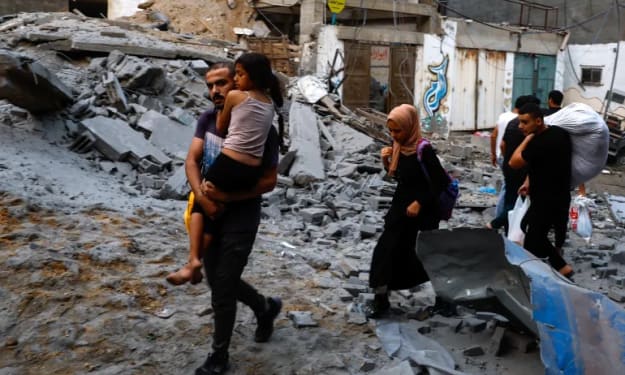
The Gaza Strip is a small piece of land located on the eastern coast of the Mediterranean Sea, and Palestinians have lived there since time immemorial. It is one of the most densely populated regions in the world, with more than two and a half million people living there.
By Mojeeb Dehwa3 years ago in Criminal
Tears in the Sand
Title: Tears in the Sand: The Heartbreaking Saga of the Israel-Palestine Conflict In a land where history was etched deep into the golden sands and whispers of ancient tales echoed through the air, two peoples, the Jews and the Arabs, once shared a common dream. This was a time when laughter transcended language and shared history painted a mural of unity. However, beneath the surface of this serene landscape, a tempest brewed—a storm born of age-old grievances, fervent faith, and the political chaos of the 20th century, propelling the Israel-Palestine conflict into existence.
By Amani Kassim3 years ago in Criminal
The Catastrophe of 1948: The Palestinian Exodus 🇵🇸 . Content Warning.
The creation of the state of Israel in 1948 led to one of the largest mass displacements in modern history. Over 750,000 Palestinian Arabs fled or were expelled from their homes during the conflict, in what Palestinians mourn as Al-Nakba, which translates to “The Catastrophe”. This mass exodus had long-lasting repercussions that still impact the region today. To understand how this came to pass, we must examine the political events and military actions that precipitated the Palestinian refugee crisis of 1948.In the late 1940s, the landscape of Palestine was in flux. Following World War II, Zionist movements pushed to establish a Jewish national homeland in the territory, while the native Arab population sought self-determination and independence from British colonial rule. Tensions rose sharply as Zionist immigration swelled the Jewish minority population in Palestine, spurring land disputes and violence. Against this turbulent backdrop, the newly formed United Nations drew up a partition plan in 1947 to divide the territory into separate Arab and Jewish states. However, the plan was bitterly opposed by Palestinians, as it would consolidate Zionist control over a disproportionate amount of land despite the Arab majority population. As a result, sectarian conflict soon escalated into open civil war between Palestinian Arab and Zionist militias. As the British mandate neared its end in May 1948, Zionists declared independence and established the state of Israel. Arab states immediately entered the fray, launching military intervention on the side of Palestinian forces in an attempt to alter the consequences of partition. In response, Zionist paramilitary groups took the opportunity to seize more territory beyond the original partition boundaries. It was during this period of hostilities known as the 1948 Arab-Israeli War that the Palestinian exodus unfolded. Through a series of military campaigns codenamed Plan Dalet, Zionist militias successfully overran Arab villages and depopulated urban centers within the territory allocated to the Jewish state by the UN. Towns like Jaffa and Haifa were emptied of the majority of their Arab residents through threats of violence, or actual massacres intended to induce panic and flight. But Zionist forces also pushed into regions outside these designated borders, capturing mixed areas and depopulating them. The village of Deir Yassin, which resisted the Haganah militia, suffered over 100 civilian deaths in one notorious atrocity that sent shockwaves across Palestine. News of mass killings and fear mongering over Zionist reprisals triggered waves of civilians to flee for their lives. Many made the exodus on foot with little more than the clothes on their backs, believing they would soon return home after a short hiatus in safety. But they found no safe haven - neighboring Arab states were quickly overwhelmed with the sheer volume of refugees pouring over their borders. By the time armistice agreements ended open warfare in 1949, over 80% of Palestinians had been displaced. Some were driven out by Zionist military campaigns like Operation Dani and Hametz. Others were expelled through direct orders or intimidation by Zionist authorities after the fact to prevent return and consolidate control over the new Jewish state of Israel. To this day, the precise number of deaths from this period is unknown due to incomplete documentation. But the human cost was undoubtedly staggering, with historians estimating it may have exceeded 15,000 Palestinian casualties lost during Al-Nakba. Over 500 villages were destroyed or de-populated, further erasing physical remnants of Arab life that had existed for centuries. For Palestinians, the catastrophe did not end with displaced persons finding temporary shelter elsewhere. They were prevented from returning to their homes despite UN resolutions upholding this right. Israel enacted laws barring entry and demolished villages to deter resettlement. As a result, the refugee crisis swelled further, with generations of Palestinians remaining stateless and in permanent exile. Their struggling descendants now number over 5 million, still seeking implementation of the right of return. Meanwhile, within Israel’s post-1967 borders, approximately 1.5 million Palestinian Arab citizens inherited a legacy of deep inequalities compared to the Jewish population. The scars of dispossession live on for Palestinians in the West Bank, Gaza and global diaspora as well. Objectively examining how and why this massive displacement unfolded is vital for understanding the roots of the Israeli-Palestinian conflict that persist today. While celebrating independence, Israelis must acknowledge how Palestinian national aspirations were denied through violence and expulsion in 1948. Palestinians too will continue struggling for redress and self-determination until justice is fulfilled for the loss of their historic homeland during the Nakba. Only byfacing this shared history of loss can the parties make progress toward a solution that respects both peoples’ collective rights.
By Rakindu Perera3 years ago in Criminal
Students Abduction
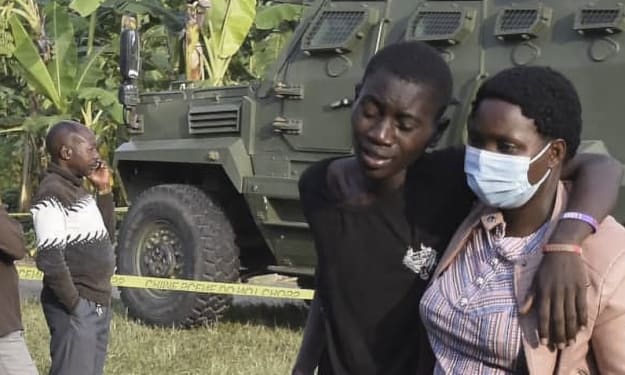
they are suspects of those having been abducted by the rebels because up to this time they haven't surfaced so it is now a matter of adding the number of four and six who are in the hospital and the 39 who are here who are dead and looking at the number that was estimated to be in the boarding school by that time of 54 and we look at the difference but it is not yet certain and confirmed because there could be others who ran into their homes and are not yet here so exact number is not yet but that is suspicion they are suspecting others to have been abducted according to those who survived legendary good evening I just returned home at Ground 9 30 PM then shortly at around 10 30 PM we heard blasts I was still awake and seated just inside the room when we heard the blasts we thought they were thieves we later realized we were under attack by the rebels and we quickly hid in the room we had nothing to do and we were all too scared we thank God that we survived but very many people were killed never again so we we just had very early in the morning yesterday that the school is rebound and some students have been taken so I was we have not yet identified whether is among the the those ones who were taken or is all is among those who were banned so we are still waiting for results from the government and from the medical from medical officials [Applause] over 40 of them there are very many unanswered questions that I need government to answer today we have thousands of UPDF officers in DRC Congo in the name of securing Uganda just last week the neighbors our neighbors were attacked and many people are killed the security here told us not to fear that because the border is secured we have very many security detaches across the border of Uganda and DRC I'm surprised that our students have been killed why was this security when these killers came to Uganda where was the security if they are telling us their borders are secured security is tight I want the security to tell us where they were when these killers came I came to kill our people people is it security within Uganda why is it that we see them scattered here where were they at night because we are told there's a guns uh people had the gunshots as early as 10 a 10 P.M and security could not come to compare the situation now this time they come in thousands where have they been [Applause] because it is very unfortunate that a mistake was made and our children have been killed there has been a lot of Peace here that is why I have been based in the DRC all the time I've been in Congo to see these kind of attacks happening back home is not a good thing security is a collaborative work why do people keep quiet when you see strangers others say the attackers are also our children right now we have deployed planes in various places to hunt them down and see if those they abducted can be rescued.
By ASIIMWE CHILDREN CARE CENTER FOUNDATION UGANDA3 years ago in Criminal
What's the Killer's Vibe. Content Warning.
What's the Killer's Vibe Alright, folks, gather 'round, because we're diving deep into the enigmatic world of killers. You've seen 'em in movies, read about 'em in books, and heard about 'em on the news. But have you ever wondered what these mysterious individuals actually look like? What's the killer vibe, you ask? Well, that's exactly what we're gonna uncover in this killer blog post. No numbers or parentheses, just a laid-back chat about the intriguing world of those who make our spines shiver.
By Muhammed ELMUHAMMED3 years ago in Criminal
The Man Who Killed Halloween. Top Story - October 2023. Content Warning.
Halloween. A time when children dress up and take to the streets to collect candy from their neighborhoods. Ghouls, ghosts, vampires and witches go door to door and say “Trick-or-Treat!” while holding bags or buckets out awaiting a handful of candy. Most parents don’t think much of the candy their kids get, doing a cursory look over the pieces looking for the obvious signs of tampering. But what happens when parents don’t? Or, what if the tampering isn’t something that jumps out at you right away? What if the person who did the tampering is a child’s own parent? This is exactly what happened in Texas in 1974. Every parent’s worst Halloween nightmare came true.
By Paige Guffey3 years ago in Criminal
The Boy In The Box
It was a cold morning on February 25, 1957, when a man came tromping through a dense wooded area in Fox Chase, Philadelphia. He was checking the rabbit traps he had set out earlier. It's there he came upon a box with a little boy wrapped in a plaid blanket inside, deceased. Fearing he would get his traps confiscated, he never reported his find. But a few days later, another man stopped his car and went into the wooded area after spotting a rabbit. He discovered the same box with the boy inside. At first, he didn't want to report it to the police but after hearing about the disappearance of another young child, he reluctantly called it in.
By Mashayla Miller3 years ago in Criminal