investigation
Whodunnit, and why? All about criminal investigations and the forensic methods used to search for clues and collect evidence to get to the bottom of the crime.
Escalating Tensions as Israel Prepares Ground Offensive in Gaza 🇮🇱 . Content Warning.
The ongoing conflict between Israel and Palestinian militants in Gaza is intensifying, with Israel preparing a ground invasion of the besieged Strip. For over two weeks, Israel has carried out relentless airstrikes across Gaza in response to rockets fired by Hamas into Israeli cities. However, the situation risks spiraling into an even larger war if Israeli forces enter Gaza. Tanks and troops have massed at Gaza's borders in recent days, suggesting a ground operation may be imminent. Humanitarian conditions inside Gaza continue deteriorating amid Israel's blockade. With over 1 million children requiring aid, tens of thousands have fled to UN schools turned refugee camps. Efforts to broker a ceasefire at an Arab diplomatic summit in Cairo faced major challenges due to entrenched positions on both sides. As tensions escalate, there are growing concerns the conflict could spread to additional fronts. In northern Israel, residents fear clashes erupting with Hezbollah in Lebanon, where Israel has struck alleged militant targets. Israel is also facing pressure from the United States to avoid igniting a wider regional war, possibly drawing in Iran and its proxies. Meanwhile, Israel says it struck sites in Syria in response to cross-border rocket and drone attacks. The prospect of ground assaults in multiple areas risks greater bloodshed with more complex rules of engagement. Israeli Defense Forces are familiar with urban warfare inside Gaza but entering Lebanon poses threats from a stronger Hezbollah. Expanding the battlefield further threatens destabilizing neighboring states and triggering uncontrolled escalation throughout West Asia. With no easy solutions in sight, prevent conflict expansion is an urgent priority. Unless a ceasefire is agreed in the coming days, a large-scale Israeli ground offensive appears likely to pursue tunnels and militants inside Gaza. However, this could ignite Mohammed into an uncontrollable inferno. Past invasions saw massive Palestinian civilian casualties without ending rocket attacks or Hamas rule over the enclave. Israel risks further loss of international support through disproportionate force, while greater hardship may ignite renewed uprisings. Growing humanitarian needs also complicate military options. With ongoing strikes disrupting infrastructure like hospitals, over half of Gaza's 2 million people now require urgent aid supplies. Israel must facilitate increasing UN assistance deliveries to alleviate suffering from the blockade imposed after Hamas' 2007 election victory. Prolonging mass privation risks creating another cycle of radicalization in an open-air prison. At the diplomatic front, achieving a sustainable ceasefire faces formidable obstacles. Hamas insists conditions include lifting the Gaza blockade, while Israel seeks guarantees to prevent future rocket attacks and arms smuggling. International mediators lack leverage over both sides. Arab and Muslim states demand an immediate truce but Western nations have conditioned responses on regional security needs. Without consensus on fundamental disagreements, the fighting risks persisting. Adding to tensions, militant activities are expanding to new conflict hotspots adjacent to Israel. Hezbollah's growing involvement from inside Lebanon threatens Israel's northern front, where it fought a destructive war in 2006. Any escalation risks embroiling Lebanon and its caretaker government still struggling with economic collapse. Similarly, Syria could be drawn into renewed fighting if cross-border attacks provoke a forceful Israeli response. Both crises endanger vital regional and global security interests and lengthen the path to peace in Israel-Palestine. As the conflict enters a perilous new phase, only through relentless diplomacy and empathy for civilian suffering on all sides can its continuing cycle of violence be ended. Regional and international players must work constructively to broker a durable ceasefire, provide urgent humanitarian access, and restart diplomacy towards a viable resolution of the drivers sustaining conflict for over seven decades in historic Palestine. Failing this, the region risks descending into catastrophic chaos with devastating consequences for its peoples.
By Rakindu Perera3 years ago in Criminal
The Roots of the Israel-Palestine Conflict 🇮🇱 🇵🇸🪖. Content Warning.
For over a century, the land between the Jordan River and the Mediterranean Sea has been the site of ongoing conflict between Israelis and Palestinians, both of whom claim historical and religious ties to the region. To understand the roots of the current violence, it is essential to examine the long history of this dispute over the Holy Land. The Jewish connection to the region dates back thousands of years to the ancient Kingdom of Israel. However, beginning in the early medieval period, Jews across Europe faced widespread persecution at the hands of Christian rulers who blamed them for the crucifixion of Jesus Christ. Restricted to ghettos with few rights, some Jewish thinkers began advocating for a Jewish homeland where their people could live freely without fear of oppression. This Zionist movement gained traction in the late 1800s amid rising anti-Semitism in Europe. Figuring their ancestral homeland the best location, Zionist leaders set their sights on the region then known as Palestine. At the time, Palestine referred to a province of the Ottoman Empire populated predominantly by Muslim and Christian Arabs who had resided there for centuries. Often described as Palestinians, they did not view themselves as interlopers and saw Jews as just one among several religious groups in the diverse population. However, the plight of European Jews meant this perception was about to dramatically change. Between 1882 and 1914, around 35,000 Jews fled persecution and resettled in Palestine, reviving Hebrew as a spoken language. As World War I embroiled Europe, Britain sought to rally Jewish support and in 1917 issued the Balfour Declaration expressing support for “the establishment in Palestine of a national home for the Jewish people.” Britain’s motives were largely strategic amid its campaign against the Ottoman Empire which ruled Palestine. However, the declaration disregarded the sentiments of Palestine’s Arab majority and sowed the seeds of the ongoing conflict by promising lands already inhabited. In the war’s aftermath, Britain received a League of Nations mandate to administer Palestine. Continued Jewish immigration grew Arab unrest, spurring violence between communities in the late 1920s and1930s. Things took a drastic turn with the 1933 rise of Hitler’s Nazi regime in Germany. Initiating a program of Jewish persecution that would culminate in the horrific Holocaust, the Nazis imprisoned, tortured and systematically murdered six million Jews across German-occupied Europe between 1933-1945. The sheer scale of Hitler’s genocide against Jews transformed the faltering Zionist movement into an urgent question of Jewish survival. Nowhere was refuge more pressing than in the Holy Land, and between 1945-1947 over 100,000 Jewish refugees fled Europe for Palestine. Their arrival sparked further clashes with Arabs still reeling under colonial rule and opposed to the piecemeal theft of their homeland. In 1947, exhausted by decades of violence, Britain withdrew from Palestine and transferred the escalating crisis to the new United Nations. On November 29th, 1947, the UN General Assembly adopted Resolution 181 calling for the British Mandate of Palestine to be partitioned into separate Jewish and Arab states, with Jerusalem under international control. For Jews exhausted by centuries of persecution culminating in the Holocaust, this was a long-awaited acknowledgement of self-determination in their ancestral land. However, Palestinians rejected the move, viewing it as an unjust denial of their national aspirations. Clashes between the two sides quickly escalated into an all-out civil war as 1948 approached. On May 14th, 1948, the last British forces withdrew from Palestine. That evening, David Ben-Gurion, Executive Head of the World Zionist Organization, proclaimed “the establishment of a Jewish state in Eretz Israel, to be known as the State of Israel.” Over the next six months, around 350,000 Palestinians became refugees as they fled or were expelled in the fighting, while some say their expulsion constituted ethnic cleansing. In response, neighboring Arab states invaded Israel but were repelled as the new country fended off multiple attacks during the 1948 Arab-Israeli War. By the time ceasefires took hold, more Palestinian territory had been seized beyond the original UN partition boundaries. Later wars in 1956, 1967, 1973, and wars of attrition solidified Israel’s control over East Jerusalem, the West Bank, Gaza, and the Golan Heights. Over the decades, Israel constructed settlements across occupied lands despite international objections, deepening the territorial disputes. Meanwhile, remaining Palestinians in the occupied territories and those in surrounding refugee camps faced restrictions on their movement and civil rights. Periodic uprisings against Israeli rule, known as intifadas, only saw further oscillations of control between Israel and the Palestine Liberation Organization (PLO). In 1993, mutual recognition produced the Oslo Accords, establishing limited Palestinian self-governance in parts of the West Bank and Gaza. However, disagreements over borders, settlements, security, Jerusalem and Palestinian refugees prevented a resolution even after Israel’s withdrawal from Gaza in 2005. With the two-state solution facing possible collapse, renewed violence has engulfed the region once more in 2023. Both Israelis and Palestinians invoke compelling historical and religious attachments to the contested Holy Land, leaving its future profoundly clouded after over a century of bloodshed. Only a just and mutually-agreed settlement offering genuine self-determination to both peoples holds hope to end this ongoing tragedy.
By Rakindu Perera3 years ago in Criminal
Crime Chronicles: Rage on Ratcliffe Highway
There are many crime stories centered on murders, some of the more well-known stories include: Jeff Dahmer, Ted Bundy, and, of course, Jack the Ripper. Of course, there are many other stories that are seldom told. This is one of those stories. Join me as we look at the story of the gruesome killings on Ratcliffe Highway in 1811.
By Greg Seebregts3 years ago in Criminal
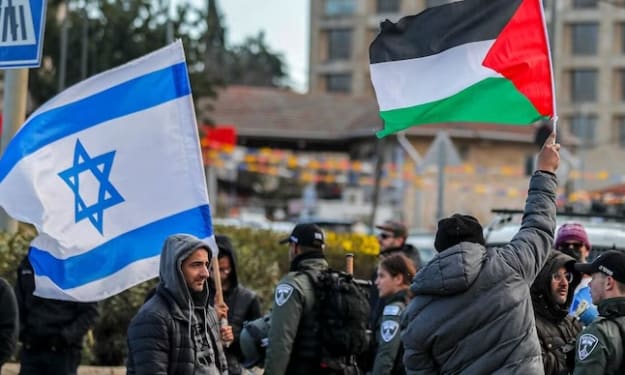
The Century-Long Conflict Over Israel-Palestine 🇮🇱 🪖🇵🇸 . Content Warning.
One of the most enduring conflicts of the 20th and 21st centuries has been the struggle between Israelis and Palestinians over control of the land encompassing modern-day Israel and the Palestinian territories. However, contrary to popular belief, this conflict is not rooted in ancient religious or ethnic divisions but rather emerged in the early 20th century from competing nationalist aspirations over the same territory. While religious sites important to Jews, Muslims and Christians exist in the region, the core of the conflict stems from two groups claiming sovereignty and the right to self-determination in what each calls their historic homeland. Around the turn of the 20th century, the region now known as Israel and Palestine had long been governed by the Ottoman Empire as largely diverse, religiously mixed communities lived in relative peace. However, two major developments began to sow the seeds of future conflict. First, a distinct Palestinian national identity was taking shape among the predominantly Arab population. Concurrently in Europe, the Zionist movement emerged among Jews, promoting the concept of a Jewish homeland and state in the biblical lands of Israel as a response to centuries of anti-Semitism and persecution. In the first decades of the 1900s, tens of thousands of European Jews began migrating to Ottoman Palestine with the aim of establishing settlements. After World War One and the fall of the Ottoman Empire, the British were granted control over the region through a League of Nations mandate dubbed British Palestine. Initially, the British allowed continued Jewish immigration and settlement which helped more than double the Jewish population by World War Two. However, as tension and violence grew between the Arab and Jewish communities over land and control, the British began restricting immigration in 1939. During this time, both Zionist militias and later the terrorist group Irgun formed to resist British rule and fight Palestinian Arab groups. The horrors of the Holocaust in Europe dramatically transformed the conflict, with world sympathy swinging strongly towards a Jewish homeland. In 1947, Britain withdrew and the newly formed UN proposed partitioning the territory into separate Jewish and Arab states. Jerusalem was to be internationally administered. While Jews accepted the plan, Palestinians and surrounding Arab nations rejected it as unfair colonial imposition. On May 14, 1948, the State of Israel declared independence but was immediately attacked by neighboring Arab armies seeking to prevent partition. In the resulting war, Israel not only secured its independence but also captured around 78% of mandate Palestine, displacing over 700,000 Palestinian refugees in the process. In the aftermath, Israel controlled what had been the British Mandate except for Gaza held by Egypt and the West Bank held by Jordan. For Palestinians, this marked the beginning of over seven decades of statelessness, refugee crisis and Israeli occupation of remaining Palestinian lands. During this time, over 850,000 Jews were also expelled or fled from Arab countries to Israel. Tensions grew again in 1967 when Israel launched a preemptive strike against Egypt and seized control of the Gaza Strip, West Bank, Golan Heights and Sinai Peninsula from neighboring Arab states. This brought Israel's occupation of the Palestinian territories and responsibility for the Palestinian population. The 1970s saw some progress as Egypt made a separate peace under the Camp David Accords, relinquishing the Sinai Peninsula to Israel. However, Israel's ongoing occupation of the West Bank and Gaza radicalized Palestinian national sentiment. The secular Palestinian Liberation Organization (PLO) turned to international terrorism against Israel while the radical Islamist group Hamas emerged in Gaza in opposition to both Israel and the PLO's willingness to negotiate. Periodic uprisings and violence continued into the 1980s and 1990s as Palestinians resisted the occupation through the First Intifada and terrorist bombings. Signs of hope emerged in the 1990s as Israel and the PLO tentatively moved towards mutual recognition and autonomy agreements in the Oslo Accords. But hardliners on both sides actively worked to sabotage the peace process through terrorist attacks. The 1995 assassination of Israeli Prime Minister Yitzhak Rabin by a far-right Israeli demonstrated how extremists use violence to stall compromise. Ongoing settlement expansion and delays in finalizing a two-state agreement also frustrated Palestinians. By 2000, the Second Intifada erupted amid a total breakdown in negotiations. The uprising caused over 1,000 Israeli and 3,000 Palestinian deaths by its end in 2005. The failure of negotiations and violent uprising shattered hopes for a settlement. Israel withdrew from Gaza in 2005 but maintained a blockade after Hamas took control the following year in a violent power struggle with the Fatah-led Palestinian Authority. The West Bank remains carved up by an ever-expanding network of unlawful Israeli settlements guarded by soldiers that has made a future contiguous Palestinian state seemingly impossible. Gaza and the West Bank remain internally divided under Hamas and Fatah control respectively, each territory suffering from high unemployment, poverty and humanitarian crisis under ongoing occupation and blockade. Over a century after the roots of the conflict took hold, Israelis and Palestinians remain deadlocked in a cycle of violence with no political will on either side for compromise. With over 2.5 million Palestinians in Gaza and parts of the West Bank living under occupation and 13 million more still denied a right to return as refugees, the unsustainable humanitarian costs of prolonging the status quo are immense. As extremism rises on both sides, most analysts agree that unless a just solution is found that allows both peoples self-determination and dignity, greater violence and instability will likely follow. The century-long struggle over Israel-Palestine remains one of the world's most intractable conflicts, crying out for urgent international action to forge a lasting peace.
By Rakindu Perera3 years ago in Criminal
Taiwan Under Threat: Growing Fears of a Chinese Invasion 🇹🇼 🇨🇳🪖. Content Warning.
As tensions continue escalating across the Taiwan Strait, concerns are mounting in Taipei about the rising possibility of a Chinese invasion. For decades, Taiwan lived under the constant threat of military action from China to forcibly reunify the island. However, in recent years analysts warn the risks have never been greater as Beijing's military develops the capabilities needed to seize Taiwan by force. China has long viewed Taiwan as a renegade province that must eventually be brought back under its control. When the Chinese civil war ended in 1949, Chiang Kai-shek's defeated nationalist forces retreated to Taiwan while Mao Zedong's communists established control over mainland China. Despite the separation, Beijing has never renounced the use of force if necessary to impose reunification. Under its "one China" principle, the communist government asserts ultimate sovereignty over Taiwan. However, for much of the post-war period the balance of military power rested firmly in Taiwan's favor, giving Beijing little realistic hope of conquering the island. As decades passed with no peace deal to formally end the civil war, Taipei gradually transformed into a vibrant democracy clinging defiantly to its effective independence. This changing status quo has infuriated Chinese leaders determined to prevent Taiwan's de-facto secession. Over the last two decades especially, Beijing has poured immense resources into upgrading the People's Liberation Army. Once outmatched by Taiwan's smaller but modern forces, China can now credibly threaten an invasion on an unprecedented scale. Its rapidly expanding navy, with over 350 warships including advanced aircraft carriers and destroyers, dwarfs Taiwan's fleet. Meanwhile, over a thousand ballistic and cruise missiles are aimed at the island from bases along the coast. The balance of air power has also swung heavily in China's favor through investments in stealth fighters, bombers and supporting aerial tankers. Intelligence indicates the PLA is capable of mounting large-scale air and sealift operations, suggesting it has attained the minimum capabilities needed for a full-scale amphibious invasion of Taiwan. Such an undertaking would still come with enormous risks, but military experts assess China could now overwhelm the island's defenses in a short period through sheer numerical superiority if it committed all available forces. Expanding Exercises and shows of force by the PLA around Taiwan aim to steadily ratchet up pressure and intimidation. Since 2020, sorties by Chinese warplanes crossing the unofficial mid-line of the Taiwan Strait have become routine occurrences, testing Taipei's air defenses. Meanwhile ballistic missiles have been test-fired on trajectories routinely passing over the island. The message being steadily reinforced is that Beijing can blockade or bombard Taiwan at will in a crisis. These displays intensified after U.S. House Speaker Nancy Pelosi's controversial visit to Taipei in August 2022, which infuriated Chinese leaders. In response, the PLA launched its largest ever drills simulating an invasion of the island. Strike aircraft and warships effectively practiced surround Taiwan while missiles flew directly over its main population centers. The ominous war games highlighted China's growing capabilities and willingness to risk escalating tensions to undermine Taiwan's morale and claim of de facto independence. It's believed Chinese President Xi Jinping is aiming to resolve the long-festering Taiwan issue on his watch during his third term, potentially by force if diplomatic coercion fails to achieve results. His nationalist government sees bringing the territory fully under Beijing's control as an important milestone towards national rejuvenation. At the same time, demographic and economic projections indicate China's relative power will soon peak, incentivizing action sooner rather than later according to some analysts. Adding urgency is Taiwan's steady drift towards a formal declaration of independence over the past few decades. While maintaining strategic ambiguity, Taiwan's leaders have resisted Chinese pressure to explicitly rule out such a step. Meanwhile, Taiwan's population has formed its own distinct political identity, with younger generations identifying more as Taiwanese than Chinese. This poses an existential threat in Chinese eyes that may justify military action to conclusively forestall separation. To deter a potential invasion, Taiwan has strengthened defensive ties with allies like the United States. Washington remains Taipei's key security guarantor despite no longer maintaining formal relations after switching recognition to Beijing in 1979. Multiple bipartisan bills have sailed through Congress enhancing American arms sales, coast guard training programs and high level visits. Along with those of Japan and Australia, US ships have maintained a frequent presence patrolling the waters near Taiwan. However, with military priorities shifting to confronting peers like Russia and China, some question America's commitment to defend Taiwan through direct intervention in a crisis. The Biden administration has reaffirmed its longstanding policy of "strategic ambiguity" on whether it would send troops. But ambiguity cuts both ways by denying reassurances of retaliation to any invasion attempt. Meanwhile, China is approaching military parity that could complicate or prevent large-scale US reinforcement across the Taiwan Strait. Faced with these growing dangers, Taiwan has ramped up civil defense preparations for a potential invasion scenario. Universal conscription of men into the military was reintroduced and reserve training intensified. Billions are being invested in asymmetrical weapons like mobile missiles and coastal defense batteries to complicate an amphibious assault. Ties with major arms exporters like the US, Israel andFrance are also being strengthened to make Taiwan a progressively harder target. While deterrence remains the goal, avoiding escalation also relies on prudent crisis management from leaders on all sides. However, cross-strait flashpoints continue emerging, whether over Taiwan's political evolution or foreign visits like Pelosi's. Any mishandling risks triggering a wider conflict in the vulnerable waterway separating China from its breakaway province. With territorial ambitions running high on both sides of the Taiwan Strait, tensions look set to persistently threaten peace and stability in this crucial Asian flashpoint for years to come.
By Rakindu Perera3 years ago in Criminal
The devastating impact of the Saudi-Iranian proxy war🪖💥. Content Warning.
For nearly four decades, Saudi Arabia and Iran have been engaged in a bitter geopolitical rivalry that has inflicted immense damage across the Middle East. While avoiding direct military conflict, these historic Gulf adversaries have waged a bloody cold war through proxies, bankrolling opposing factions in countries fractured by instability and civil war. The consequences have borne out in destabilization, sectarian conflict, and human suffering on an immense scale. The roots of the rivalry date back to 1979, when the Iranian revolution overthrew the Western-backed Shah and established an Islamic republic led by Ayatollah Khomeini. His revolutionary doctrine threatened Saudi Arabia's monarchical order and religious claim over the Gulf's Muslim holy sites. In response, Riyadh redoubled ties with the West and formed alliances aimed at containing Iran's rising influence. When Saddam Hussein invaded Iran in 1980, hoping to undermine the new regime, Saudi Arabia proved a critical ally, bankrolling Iraq's war effort to the tune of billions. As the conflict dragged on for eight years, over a million lives were lost in the brutal trench warfare. The immense cost accelerated Iranians' deep-seated resentment towards the kingdom.With Iraq drained by defeat in 1988, another opportunity arose for proxy influence a decade later. After the 1991 Gulf War, Washington maintained sanctions but left Saddam in power, providing space for Riyadh and Tehran to support opposing factions. As Iraq fractured along sectarian lines, Saudi bankrolled Sunni militants against Iran's Shiite allies, sowing early divisions that would later fuel unimaginable bloodshed. The 2003 US invasion of Iraq removed the buffer between the rivals, opening floodgates for their competition. As an insurgency took hold and militias proliferated amid security failures, both countries seized the moment. Billions flowed again to militant groups, intensifying religious divisions and civilian suffering under the cover of chaos. By the late 2000s, over 100,000 civilians had perished, with millions displaced in the growing proxy war. 2011's Arab Spring uprisings presented new terrain. While Saudi feared any challenge to autocrats that could inspire domestic unrest, Iran saw opportunity in popular demands for change. In Bahrain, Iran supported Shiite protests against the Sunni monarchy, prompting Riyadh to deploy troops in defense of the regime. As uprisings spread across the region, both deepened funding for militant factions on opposing sides of internal power struggles. Nowhere has this fueled more devastation than in Syria and Yemen. Over half a decade, Saudi and Iran have poured billions into the Syrian civil war, backing extremist Sunni and Shiite factions battling for control. Over 500,000 lives have been lost as the conflict drags on without end in sight. In Yemen's ongoing war, a Saudi-led coalition intervened in 2015 to roll back Houthi rebels aligned with Tehran, plunging the nation into a massive humanitarian crisis. Beyond bankrolling militias, both sides have also directly engaged forces. In Syria, Iran commands Shiite militias and deploys strategic advisors, helping President Assad retake large swaths of territory. Meanwhile, a reported 2,000 Saudi troops fight alongside Sunni factions in Yemen despite disastrous civilian toll. As the wars intensify, so too does their impact - some 17 million people across both countries now face severe hunger. Perhaps the starkest consequence has been the deep sectarian rifts inflamed through this regional cold war. Propaganda campaigns have relentlessly fueled hostility between Sunni and Shiite communities, marginalizing moderate voices and empowering extremists on both sides. This has manifested violently through sectarian killings in Iraq, civilian bombings in Pakistan, and strife across several Gulf states with minority Shiite populations. Looking ahead, there appears little hope for de-escalation. Both nations maintain the conflict serves vital strategic interests despite humanitarian costs. Political transitions also diminish prospects - more hardline leaders in Saudi Arabia and potentially Iran reduce incentives for compromise. Meanwhile, the wars show no signs of abating as foreign actors remain invested in perpetuating instability for geopolitical gain. Unless concrete steps are taken towards conflict resolution and confidence building, the destructive impacts of this cold war will only continue spreading instability across the region for generations to come. After over four decades, it is clear that neither military dominance nor continued foreign meddling will resolve underlying tensions. Only political solutions that address mutual security concerns while respecting minority rights hold any hope of stemming the immense human toll. The region urgently needs outside mediation and domestic reform to break free from this devastating geopolitical quagmire.
By Rakindu Perera3 years ago in Criminal
North Korea's Weapon Supply to Russia: Escalating Tensions in East Asia 🇰🇵🪖. Content Warning.
As the war in Ukraine enters its third year, both Russia and Ukraine are facing shortages of key military supplies like artillery shells, small arms ammunition, and spare parts. Looking for new sources of arms, Russia has turned to one of the most heavily militarized and isolated countries in the world - North Korea. Recent reports indicate North Korea may supply Russia with millions of artillery shells and ammunition in exchange for fuel, food, and diplomatic support. However, this cooperation between Russia and North Korea risks further escalating tensions in East Asia. North Korea maintains one of the largest stockpiles of conventional weapons in the world due to its long-running policy of prioritizing the military above all else. After decades of preparation for a potential war with South Korea and the United States, North Korea possesses an estimated 10,000 artillery systems and tens of millions of artillery shells and rockets. Most of these weapons stockpiles were built up during the Cold War when North Korea relied on support from China and the Soviet Union as deterrents against invasion. With changing geopolitics, North Korea's nuclear weapons program now serves as its primary deterrent. Its massive conventional arms stockpiles, particularly artillery, are no longer essential in the same way. Russia's invasion of Ukraine presented an opportunity for North Korea to capitalize on some of these stockpiled arms. In July 2023, Russian Defense Minister Sergey Shoygu visited North Korea, likely to discuss arms deals. Then in September, Kim Jong-un met Vladimir Putin in Russia, their second ever meeting. Details of any agreement were not released, but it is believed North Korea may supply Russia with millions of artillery shells and other ammunition. This could keep Russian guns firing in Ukraine for over a year, in exchange for Russian support easing North Korea's economic isolation. However, arms deals between North Korea and Russia alarmed their neighbors. Supplies from North Korea would greatly aid Russia's war effort, but also risk further consequences. South Korea has grown increasingly exasperated by Russian threats and could decide to directly aid Ukraine militarily in response. As one of the largest arms exporters, South Korea supplying lethal aid to Ukraine would mean Ukrainian forces fighting Russian weapons with South Korean weapons. Any increase in North Korean military capabilities from Russian technology transfers would also alarm South Korea and Japan. Both countries would face greater pressure to pursue their own nuclear deterrents. Escalating nuclear proliferation in East Asia would terrify China, which strictly opposes additional countries possessing nuclear arms. More nuclear states near China's borders would undermine Beijing's security interests. China has voiced backing for Russia but does not want to see conflicts spill over internationally or regionally. Arms deals upgrading North Korea's military could negatively impact China's stability calculations for the Korean Peninsula. They risk drawing China openly into opposing Russia on this issue. Russia badly needs new arms supplies but should avoid actions further destabilizing East Asia. As Russia's top trading partner and diplomatic ally, China's displeasure could seriously hurt Moscow's interests. Any military assistance to North Korea must be limited to avoid tipping balances of power. However, North Korea and Russia also have incentives to cooperate covertly while denying the scale of their dealings. The lack of transparency raises the risks of dangerous miscalculations. All sides would be wise to open lines of communication to reduce tensions arising from these murky arms supply relationships. The interconnections between conflicts show how destabilizing spillover effects can emerge unexpectedly. As great powers like Russia look abroad for new leverage during difficult wars, they must consider second and third order impacts far beyond initial gains or losses. North Korea weighs its options too, but the interests of regional stability demand restraint from all. Only through cooperation rather than escalation can messy realities be managed responsibly. The risks of staying silent while tensions rise make communication regarding military deals between unfriendly states an urgent priority for China, South Korea, Japan and the United States.In conclusion, while arms deals between North Korea and Russia present opportunities, the risks of escalating conflict in East Asia should discourage openly aiding each other's wars. Limited, transparent cooperation may be tolerated to avoid direct clashes, but secretive transfers risk starting fires that spread uncontrollably. All sides would benefit from open discussions to clarify intentions and reduce tensions arising fromthese unstable relationshipsbetween unfriendly states.Regional stability demands cooperation and restraint from great powers even during conflicts, to avoid spillover effects destabilizing other vital areas.
By Rakindu Perera3 years ago in Criminal
The Looming US-China Conflict: The Battle for Taiwan and the Future World Order 🇨🇳 🇺🇸 🪖. Content Warning.
The world is on the brink of witnessing a monumental clash of superpowers. For the second time in its history, the United States finds itself facing a potential military conflict with China. While the Korean War of the 1950s saw a limited confrontation, the impending showdown is of an entirely different magnitude, with global implications that could redefine the 21st century. At the heart of this impending struggle lies the fate of Taiwan, an island nation of immense strategic importance. The contest between the US and China is not merely a military skirmish but a clash of two vastly different worldviews. The United States, despite its imperfections, represents a dominant global power with a commitment to a liberal world order. In contrast, China's survival is tied to dismantling this global system, which poses an existential threat to the Chinese Communist Party's control. The pivotal piece of this puzzle is Taiwan, a thriving democracy located just off the coast of mainland China. Taiwan's significance extends beyond its political identity. Dubbed the "silicon shield," Taiwan has established itself as a global leader in semiconductor production. Historically, the US Navy's supremacy allowed the United States to operate its carrier strike groups near Chinese shores with ease, but China's military expansion has shifted the balance. This endangers Taiwan and, consequently, the world's primary source of advanced computer chips. China's control of Taiwan's semiconductor production would provide it with immense leverage. It could use this power to coerce and blackmail other nations, including the United States. The global shortage of computer chips during the COVID-19 crisis provided a glimpse into the potential consequences of such control. Taiwan's strategic importance extends to its role in the "first island chain," a series of islands stretching from Japan to the Philippines, historically acting as a barrier against communist powers, including the Soviet Union and China. The US Navy has upheld global trade security by maintaining control over these waters. If China were to break this chain, it could fundamentally shift global power dynamics and influence critical trade routes, such as the Malacca Straits.In this high-stakes contest, China appears to have all the advantages. It stands poised to pursue a military confrontation to secure its objectives in Taiwan. However, there is another path, a diplomatic one, which China has yet to fully explore. China could leverage its colossal economy as a diplomatic weapon to attain its goals. China has made efforts in this direction, strengthening its ties with Southeast Asian nations, such as South Korea. While South Korea has a defense treaty with the United States, economic pressure from China could lead to reconsideration, raising questions about the strength of long-standing alliances. China's attempts at a charm offensive have been inconsistent. It briefly appeared successful in courting countries like Australia. However, revelations of China's covert influence within Australian political and educational institutions led to strained relations and a trade war. One significant misstep for China was its approach toward the Philippines. During the presidency of Rodrigo Duterte, China courted the nation effectively. Duterte's authoritarian tendencies seemed aligned with China's anti-democracy stance. The US-Philippine defense alliance appeared to be in jeopardy. However, the situation changed with the election of Ferdinand "Bongbong" Marcos Jr., the son of the notorious Filipino dictator Ferdinand Marcos Sr. The younger Marcos emerged as a staunch US ally, viewing China as a significant threat. This political shift favored the US and presented a serious challenge to China's plans. The Philippines holds a critical position for the United States in the Pacific. Overcoming the "tyranny of distance" is the primary concern for the US in the Pacific. The Philippines, located less than 200 miles from Taiwan at its nearest points, allows the US to deploy air power, stage combat sorties against Chinese forces in the region, and even strike the Chinese mainland if necessary.China's own actions have led to closer ties between the US and the Philippines. The Philippines' president, Bongbong Marcos, opened military bases to US forces, further strengthening the alliance and granting the US strategic access in the region. In an attempt to consolidate territorial claims in the South China Sea, China has employed aggressive tactics, including claiming vast swathes of international waters. This behavior has strained relationships with neighboring countries and resulted in international disputes, putting regional stability at risk. The looming conflict between the United States and China over Taiwan is not just a military confrontation; it is an ideological clash with global consequences. Taiwan's significance is multi-faceted, from its role as a "silicon shield" to its place in the "first island chain." China has both military and diplomatic options to pursue its goals, but its overreach in the South China Sea and missed opportunities have inadvertently strengthened the US-Philippine alliance. While the path ahead remains uncertain, it is clear that the fate of Taiwan and the larger global order hang in the balance. The outcome of this struggle will not only redefine the 21st century but also determine whether the world remains on a path toward a liberal world order or transitions into a more autocratic era. In the face of these challenges, one thing is certain: the world is watching with bated breath as this historic contest unfolds.
By Rakindu Perera3 years ago in Criminal
China's Calculated Role in Russia's Ukraine War 🇨🇳 🪖. Content Warning.
As Russia's invasion of Ukraine stretches into its eighteenth month, the dynamics of the conflict have evolved dramatically. Initially, Russia declared its alliance with China as one of "no limits," presenting the image of an unshakable partnership. However, China has taken a more cautious approach, making it clear that there are indeed limits to this relationship. In fact, beneath the surface, China's interests are not aligned with Russia's desire for victory in Ukraine. In this article, we will explore why China wants Russia to lose the war in Ukraine, the implications of this stance, and how it serves China's long-term strategic goals. Russia's invasion of Ukraine has left it in an increasingly precarious position. The global community's imposition of sanctions initially had a limited impact on Russia's economy due to surging energy revenues. Western countries purchased significant amounts of Russian energy to secure supplies ahead of looming sanctions. However, the situation has changed. Western-imposed price caps on Russian energy exports have severely undercut government revenues. These caps are just enough for Russia to keep selling oil and gas but not sufficient to turn a profit. Moreover, Russia's switch to selling oil to India, instead of Western markets, has created a dilemma. India insisted on trading in Rupees rather than Rubles, leaving Russia with a significant stockpile of Rupees that have limited use in the global economy. The impact of sanctions extends beyond energy revenues. Russia faces a severe shortage of essential components for the production of advanced weapons. Sanctions on semiconductor sales have forced Russia to scrounge for chips from consumer goods, leading to the acquisition of drones from countries like Iran, under deals that favor Iran. Russian defense industry output has been limited, and its reliance on components from around the world to produce advanced weaponry has been exposed. As a result, Russia's military output has been reduced to a fraction of its capacity. China has played a role in mitigating Russia's economic and military woes. It has significantly increased its import of Russian energy in response to Western sanctions. China also allows Russia to use its financial institutions to conduct transactions and evade Western restrictions. Furthermore, Chinese defense firms have provided vital equipment to the Russian war effort. Notably, China's assistance to Russia has included drones, computer chips, spare parts for combat jets, and navigation equipment. In the period from March to July 2023, Chinese companies sold Russia over $12 million in drones and drone parts. While it may seem that China is supporting Russia, a closer look reveals a starkly different reality. China's assistance to Russia primarily serves its own interests and strategic goals, which are far from aligned with Russia's. China is using the war in Ukraine as an opportunity to advance its geopolitical ambitions, and a weakened Russia better serves these ambitions. Currency Manipulation: Most of Russia's transactions with China are now conducted in Chinese yuan. This shift has occurred both due to Russia's increasing reliance on Chinese markets and China's insistence on conducting trade in its currency, strengthening the Chinese yuan. This situation leaves Russia with a surplus of yuan, a currency with limited global utility, as most international trade is conducted in dollars or euros. Russia finds itself locked into a dependence on India and China due to its dwindling options for currency reserves. China's Political Support: China's political support for Russia has been lukewarm at best. While China presented a 12-point peace plan, the details remain ambiguous and do not clearly indicate whether China supports the return of Ukrainian sovereignty to the annexed provinces or Russia's claims of sovereignty. This ambiguity allows China to maintain a flexible stance that is beneficial to its own interests while undermining Russia's need for recognition. China's ultimate objective is to challenge the United States' status as the world's sole superpower. China has grown to overshadow Russia economically, politically, and militarily. It has taken a long-term approach to achieve its geopolitical goals, and weakening Russia is a key component of this strategy. China has a historic memory of being a junior partner to the Soviet Union and then to Russia. It also has territorial grievances, with territories lost to the Russian Empire in the 19th century. The Russian Far East, including Russian Manchuria, is of particular interest to China due to its strategic importance, energy resources, and water supply. China seeks to secure these resources for its own economic and strategic advantage. China's calculated stance in Ukraine serves to advance its plans for the Russian Far East. China is heavily investing in Russia's eastern territories, and its financial contributions far exceed those of the Russian federal government. Immigration and Chinese influence are reshaping the region, creating tension between local Russians and Chinese populations. As the demographics shift, China's influence in the Russian Far East increases, raising concerns in Moscow. China's apparent support for Russia in the Ukraine war is, in fact, a calculated move to advance its own interests. China wants Russia to lose, and the more catastrophic the loss, the better it serves China's strategic goals. China's long-term ambition to secure the Russian Far East, coupled with its desire to challenge the United States' superpower status, are the driving forces behind its stance. Russia's dependence on China for currency and the potential risk of territorial loss make it increasingly vulnerable to China's influence. This complex geopolitical dance illustrates that China's "no limits" partnership with Russia is guided by its own interests, with little regard for Russia's long-term well-being. In a world marked by shifting alliances and global power plays, the Ukraine war serves as a case study of the intricate interplay of nations vying for influence and advantage on the world stage.
By Rakindu Perera3 years ago in Criminal
Ukraine's Breakthrough: A Desperate Struggle Amidst Russian Fortifications 🇺🇦 🇷🇺 . Content Warning.
The conflict in Ukraine, which has raged on for several years, seemed to be stuck in a grim deadlock as both Ukrainian and Russian forces faced off against each other. However, recent developments have raised questions about Russia's willingness to sacrifice its elite troops and the possibility of a Ukrainian breakthrough. Despite the odds and daunting challenges, Ukraine has shown resilience and adaptability in its strategy, making significant headway against the formidable Russian defenses. This article delves into the dynamics of the conflict, the Russian fortifications, and Ukraine's remarkable advances. For months, the Ukrainian offensive moved at a slow but steady pace. The anticipated breakthrough, which many had hoped for, never materialized, causing concerns that the war would devolve into a grinding battle of attrition, a scenario that would play into Russia's strengths. During the winter months, the situation worsened for Ukraine as Russian forces constructed extensive fortifications, harkening back to the defensive lines of World War I. Ukraine lacked sufficient protected mobility, precision weapons, and air defenses, rendering its offensive capabilities limited during this period. The situation provided a much-needed respite for the beleaguered Russian military.Notably, the 1st Guards Tank Army, Russia's elite unit designed for engaging NATO's best forces, faced humiliating defeats, severely damaging their morale and capability. The Russian military's first significant retreat since World War II occurred in northern Ukraine, with coordination difficulties among senior leadership. Amid the dire situation for Ukraine, Western support became a critical lifeline. However, delays, political wrangling, and bickering over the type and source of military hardware exacerbated the challenges. Germany's reluctance to provide Leopard tanks, and insistence that the U.S. also do so, further complicated the situation. The delay in procuring armored infantry vehicles exacerbated the frustration felt by Ukrainian forces. Western allies' hesitation and reluctance to provide much-needed support hindered Ukraine's counteroffensive, leaving them ill-equipped to break the Russian fortifications. The concept of "Ukraine fatigue" began to set in as the world expected major breakthroughs and was disappointed by incremental gains. Western advisors urged Ukraine to concentrate its forces in one or two major offensives to secure a breakthrough before winter. However, Ukraine recognized that such tactics were untenable given its limitations. The lack of armored vehicles, tanks, and air defenses meant that the Western way of war was not feasible for Ukraine. Instead, Ukraine adopted a strategy of applying pressure all across the front, rather than concentrating its forces at a single point. While this tactic lacked the punch of a large-scale offensive, it allowed for flexibility and prevented Russia from launching a decisive attack against Ukraine's armored forces. By spreading its forces, Ukraine also pinned Russian troops down and prevented them from maneuvering effectively. Ukraine's dismounted, company-sized assaults along the entire front prevented Russia from delivering a knockout blow and left Russian forces vulnerable to Ukrainian counterattacks. This tactic allowed Ukraine to be extremely flexible, maintain the initiative, and prevent Russia from creating a strategic reserve. Ukraine chose to keep its artillery in reserve and only respond when Russia fired first. By using counter-battery radars, Ukrainian artillery could destroy Russian guns effectively. This approach disrupted the Russian defenses, leading to a fluid and mobile battlefield. The recent breakthrough in Rabotyne, Zaporizhia, is a critical turning point in the conflict. By ceasing to use its artillery to directly support infantry assaults, Ukraine compelled Russia to fire first. Then, with the help of counter-battery radars, Ukrainian artillery engaged and destroyed Russian guns. Ukraine's infantry assaults and precision strikes exhausted Russian combat power in Zaporizhia, resulting in the first breakthrough of the Russian defensive lines. Russian defenses included minefields, anti-tank ditches, and extensive trenches. Rather than proceeding to punch through to the second defensive line, Ukraine turned northeast and struck the second line where Russia least expected. Geolocated footage confirmed that Ukrainian forces broke through Russian defenses and were operating behind the second line. The fluid and mobile nature of the fighting has kept Russian forces on their toes, preventing them from creating a strategic reserve. It has allowed Ukraine to exploit Russian weaknesses and gain the initiative. While Ukraine's remarkable advances are cause for optimism, many challenges remain. The winter months pose a significant threat to the continuity of the offensive, and Russia could exploit this time to regroup. Ukraine's leadership has expressed its intention to continue large-scale offensive operations during the winter. However, ongoing and substantial western support, rather than piecemeal packages, is crucial for maintaining momentum and success.The conflict in Ukraine has taken an unexpected turn, with Ukraine making significant advances against formidable Russian defenses. Russia's fortifications, Western support delays, and Ukraine's adaptability all played significant roles in the ongoing struggle. Ukraine's unconventional approach to warfare has disrupted Russian forces, exhausted their combat power, and enabled Ukrainian forces to gain the initiative. While challenges remain, the situation is dynamic, and Ukraine's determination remains unwavering. The world watches as Ukraine's struggle for independence continues to unfold.
By Rakindu Perera3 years ago in Criminal