guilty
Don’t do the crime if you can’t do the time; a look into all aspects of a guilty verdict from the burden of proof to conviction to the judge’s sentence and more.
Was His Abduction Caused by His Support for the Palestinian Cause or the Theft of Oil?
Was His Abduction Caused by His Support for the Palestinian Cause or the Theft of Oil?** The controversy surrounding the alleged targeting or attempted abduction of Venezuela’s president has sparked intense debate across political and media circles. At the center of this debate lies a critical question: was he targeted because of his outspoken support for the Palestinian cause, or was the real motive an effort to seize control of Venezuela’s vast oil wealth? To understand this issue, it is necessary to examine how ideology and economic interests intersect in modern geopolitics. Venezuela holds the largest proven oil reserves in the world, making it one of the most strategically important countries in global energy politics. Oil has long been the backbone of the Venezuelan economy and a source of both power and vulnerability. Any government that seeks to fully control its oil resources inevitably challenges foreign corporations and governments that rely on access to cheap and stable energy supplies. When Venezuela limited foreign involvement and asserted national sovereignty over its oil sector, it directly confronted powerful international interests. At the same time, Venezuela’s leadership adopted a clear and unapologetic stance in support of the Palestinian cause. Unlike many governments that choose neutral language or diplomatic silence, the president publicly condemned Israeli actions against Palestinians, expressed strong support for Gaza, and framed the issue as a matter of human rights and justice. This position placed Venezuela in direct opposition to influential Western powers that strongly support Israel, particularly the United States. Supporting the Palestinian cause on the international stage is not without consequences. Global politics often punishes leaders who challenge dominant narratives or align themselves with causes considered controversial by powerful states. Venezuela’s stance was not symbolic or occasional; it became a consistent element of its foreign policy. This moral positioning turned the country into an ideological opponent, especially during periods of heightened tension in the Middle East. However, history suggests that ideology alone rarely triggers extreme political actions such as destabilization or removal attempts. Moral opposition is often tolerated until it interferes with material interests. This is where oil becomes central to the discussion. Venezuela’s control over its oil resources provided it with leverage and independence, reducing its vulnerability to external pressure. For nations seeking greater influence over global energy markets, regaining control or access to Venezuelan oil would be a significant strategic gain. During times of global energy instability, oil-producing countries become focal points of international competition. Sanctions, political isolation, and support for opposition movements are frequently used as tools to weaken governments that resist external demands. In such contexts, narratives involving coups, forced removals, or abductions often emerge as part of broader pressure campaigns rather than isolated events. Internally, Venezuela faced serious economic and social challenges. Inflation, shortages, declining oil production, and political polarization weakened public trust and state institutions. These conditions increased instability and made the country more susceptible to both internal unrest and external interference. In fragile political environments, allegations of kidnapping or overthrow can gain traction quickly, regardless of whether they are fully proven. Media coverage further complicated the situation. International outlets often focused heavily on economic mismanagement and governance issues while paying less attention to Venezuela’s foreign policy positions, including its support for the Palestinian cause. On the other hand, supporters of the government emphasized foreign conspiracies and economic warfare. Both perspectives presented partial truths, obscuring how ideology and economic interests worked together. Ultimately, framing the issue as a choice between support for Palestine or oil theft oversimplifies a complex reality. The president became a target because he combined moral defiance with control over a strategic resource. His support for the Palestinian cause challenged powerful political narratives, while Venezuela’s oil represented immense economic and strategic value. Together, these factors created a situation in which pressure, destabilization, and targeting became increasingly likely. In modern geopolitics, leaders are rarely challenged for their beliefs alone. They become targets when their beliefs are backed by resources that grant them independence and influence. Venezuela’s case illustrates how the collision of principle and profit can place a nation’s leadership at the center of global confrontation.
By America today 9 months ago in Criminal
Fox and Fowler. Content Warning.
Monsters, dear Readers, are a grizzly business. For those who hunt them, for those who study the monsters, and those who write about monsters. But what is a monster? Do they just hide under the bed or the closet as so often in our childhoods?
By Cassie Moore10 months ago in Criminal
The Family Funkhouser. Content Warning.
There's a family in Oklahoma that had the misfortune of having five of it's 13 children go to prison, 4 of them were here in Oklahoma. What kinds of misfortunes could have plagued such a family? Readers, let me tell you, it's Oklahoma and there were a number of things that can crop up to snatch away someone so quick it hurts.
By Cassie Moore10 months ago in Criminal
Drums Are Beating: Russia and China Align With Venezuela Amid Rising Tensions
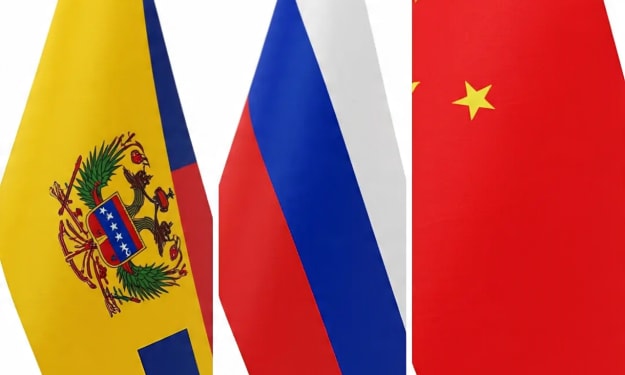
**War Drums Are Beating: Russia and China Align With Venezuela Amid Rising Tensions** In recent weeks, global attention has turned sharply toward Venezuela as alarming headlines and rumors have fueled fears of a major international crisis. Claims of an emerging alliance between Russia, China, and Venezuela, combined with reports circulating online about the kidnapping of the Venezuelan president and his wife, have intensified public anxiety. While not all information has been officially confirmed, the situation reflects deep geopolitical tensions and a fragile regional balance that could have serious global consequences. At the heart of the crisis is Venezuela’s long standing confrontation with the United States. Years of economic sanctions, political isolation, and internal instability have left the country economically weakened and diplomatically polarized. The Venezuelan government views Washington’s pressure as a direct threat to its survival, while the United States argues that its actions are aimed at restoring democracy and accountability. This clash has created fertile ground for foreign powers to expand their influence. Russia and China have emerged as Venezuela’s most important international backers. Both countries have provided political support, economic cooperation, and strategic partnerships, though in different ways. Russia’s involvement has focused on military cooperation, arms deals, and symbolic demonstrations of support. China, on the other hand, has emphasized financial ties, energy investments, and long term economic interests. Together, their presence has fueled speculation that a new geopolitical front is forming in the Western Hemisphere. Tensions escalated dramatically after unverified reports spread across social media and some alternative outlets claiming that Venezuela’s president and his wife were kidnapped during a sudden security incident. These reports triggered confusion, panic, and intense international speculation. Official channels in Venezuela denied any confirmed kidnapping, but the rapid spread of the story revealed how unstable and opaque the situation has become. In an environment of distrust and political warfare, rumors can quickly feel as powerful as facts. The reasons behind the growing tension are complex. Venezuela’s vast oil reserves remain a critical factor. Control over energy resources has always played a central role in global power struggles, and Venezuela represents a strategic asset. For Russia and China, supporting Caracas helps challenge US influence near its traditional sphere of power. For the United States, preventing rival powers from gaining a foothold in the region is a core strategic concern. Another driver of instability is internal division within Venezuela itself. Economic hardship, migration, political opposition, and public dissatisfaction have weakened state institutions. This internal fragility increases the risk of sudden crises, coups, or misinformation campaigns that can spiral into international incidents. In such conditions, even false or exaggerated claims can push nations toward dangerous decisions. Looking ahead, several scenarios are possible. One likely outcome is a continuation of the current standoff, where Russia and China provide diplomatic and economic backing while avoiding direct military confrontation. This scenario would resemble a cold conflict marked by sanctions, rhetoric, and strategic posturing rather than open war. A more dangerous scenario involves miscalculation. An internal security breakdown, an accidental clash, or a provocation based on false intelligence could escalate tensions rapidly. In this case, Venezuela could become a flashpoint for a broader geopolitical crisis, even if no side initially intends a full scale conflict. There is also a possibility of de escalation. Behind closed doors, diplomatic negotiations could reduce pressure, especially if economic realities push all sides toward compromise. History shows that even the most heated standoffs can cool when the costs of conflict become too high. In conclusion, while the drums of war may sound loud, the reality is shaped by uncertainty, strategy, and restraint. Russia and China’s alignment with Venezuela is real, but it is driven more by influence and leverage than by a desire for war. The rumors surrounding the president highlight how volatile the situation has become. Whether this crisis deepens or fades will depend on decisions made in the shadows of diplomacy, not just the noise of headlines.
By America today 10 months ago in Criminal
American Forces Capture Venezuela President Nicolas Maduro
At 4:21 a.m. Eastern on January 3, Donald Trump dropped a message that instantly rewired the geopolitical map of the Americas: Nicolás Maduro, the sitting president of Venezuela, had been captured by U.S. forces and flown out of the country. The operation—conducted alongside U.S. law enforcement—was over almost as soon as it began. From first explosions to extraction, it took roughly three and a half hours.
By Lawrence Lease10 months ago in Criminal
Global and U.S. Political Reactions to U.S. Strikes on Venezuela and the Arrest of Its Presiden
Global and U.S. Political Reactions to U.S. Strikes on Venezuela and the Arrest of Its President The reported U.S. military strikes on Venezuela and the arrest of its president sparked intense reactions across the world and within the United States. Such an action, involving direct military force and the detention of a sitting head of state, raised serious political, legal, and moral questions. Governments, political leaders, and analysts responded in sharply different ways depending on their strategic interests, ideological positions, and views on international law. In the United States, reactions among political leaders were deeply divided. Supporters of the operation, mainly from conservative political circles, argued that the strikes were a necessary response to years of authoritarian rule, corruption, and alleged criminal activities linked to the Venezuelan leadership. They claimed that the action was justified on national security grounds and described it as a decisive move to combat drug trafficking and regional instability. According to this view, the arrest of the Venezuelan president was seen as an enforcement of justice rather than an act of aggression, and some American politicians described the operation as a turning point for democracy in Venezuela. On the other hand, many U.S. lawmakers strongly criticized the operation. Several Democratic politicians and independent voices argued that the strikes were unconstitutional and carried out without proper approval from Congress. They warned that using military force in this manner could weaken democratic oversight and set a dangerous precedent. Critics also expressed concern that the arrest of a foreign president by U.S. forces could damage America’s international credibility and undermine global legal norms. Some called for investigations and hearings to clarify the legal basis of the operation and to limit executive military powers in the future. International reactions were equally divided, though many governments expressed alarm. Major global powers such as China and Russia strongly condemned the U.S. action, describing it as a violation of Venezuela’s sovereignty. They emphasized that no country has the right to remove another nation’s leader by force and warned that such actions threaten global stability. These countries called for respect for international law and urged diplomatic solutions rather than military intervention. In Latin America, reactions reflected regional sensitivities to foreign intervention. Several governments criticized the strikes and the arrest, stating that Venezuela’s crisis should be resolved by Venezuelans themselves through dialogue and political processes. Leaders in the region expressed fears that the operation could lead to wider instability, refugee flows, and economic disruption. Some Latin American countries called for emergency international meetings to address the crisis and prevent further escalation. However, not all international responses were negative. A number of governments and political figures welcomed the removal of the Venezuelan president, arguing that his leadership had caused severe economic collapse, human rights abuses, and mass migration. These leaders viewed the U.S. action as an opportunity for Venezuela to begin a political transition and rebuild its institutions. Venezuelan opposition figures also reacted positively, describing the arrest as the end of a long period of repression and mismanagement. European countries generally adopted a more cautious tone. While many expressed concern over the use of military force, they also acknowledged the seriousness of Venezuela’s political and humanitarian crisis. European leaders emphasized the importance of avoiding further violence and encouraged international cooperation to support a peaceful transition. Calls for mediation, humanitarian access, and respect for international norms were common in European statements. Public debate also focused on key questions people were asking worldwide. Was the operation legal under international law. Would it lead to democracy or further chaos in Venezuela. Could this action increase tensions between major global powers. Analysts noted that the answers to these questions depend largely on what follows the operation. If the situation leads to stability and political reform, supporters may feel justified. If it results in prolonged conflict or regional instability, critics’ warnings may prove accurate. In conclusion, the reported U.S. strikes on Venezuela and the arrest of its president triggered one of the most controversial international reactions in recent history. The event exposed deep divisions over sovereignty, military intervention, and the role of powerful nations in shaping global politics. As the situation continues to evolve, the long term consequences of these actions remain uncertain, but their impact on international relations is already significant.
By America today 10 months ago in Criminal
USS Iwo Jima A Ship That Shaped Military and Space History
USS Iwo Jima A Ship That Shaped Military and Space History The USS Iwo Jima was one of the most significant amphibious assault ships in the history of the United States Navy. Named after the famous Battle of Iwo Jima during World War Two, the ship symbolized courage, strength, and innovation. Throughout its long service, USS Iwo Jima played vital roles in military operations, humanitarian missions, and even space exploration, making it a unique and historically important naval vessel. Background and Design USS Iwo Jima was commissioned in 1961 as the lead ship of the Iwo Jima class. Unlike traditional aircraft carriers, it was designed primarily to operate helicopters. This design allowed the ship to transport Marines quickly from sea to land, supporting amphibious warfare strategies. The ship was equipped with advanced communication systems, medical facilities, and command centers, enabling it to function as a mobile base during complex operations. Military Missions and Operations One of the main roles of USS Iwo Jima was supporting U.S. Marine Corps operations. It carried thousands of Marines, along with vehicles, weapons, and supplies. The ship played an important role during the Vietnam War, where it served as a launch platform for helicopters that transported soldiers into combat zones and evacuated wounded personnel. Its presence increased operational flexibility and reduced the risks associated with traditional beach landings. Beyond Vietnam, USS Iwo Jima participated in numerous military exercises and Cold War missions. It helped maintain U.S. naval presence in strategic regions and supported allied forces when needed. The ship’s ability to operate close to shore made it an essential tool for both combat and deterrence. Humanitarian and Peaceful Roles In addition to combat missions, USS Iwo Jima was frequently involved in humanitarian efforts. The ship provided disaster relief by delivering food, medical aid, and emergency supplies to areas affected by natural disasters. Its helicopters were especially useful for reaching remote or damaged locations, highlighting the ship’s importance beyond warfare. Role in Space Exploration One of the most remarkable chapters in the ship’s history was its involvement in NASA’s Apollo program. USS Iwo Jima became famous for recovering astronauts returning from space missions. Its most notable mission was the recovery of the Apollo 13 crew in 1970. After a critical failure during the mission, the astronauts safely returned to Earth, and USS Iwo Jima successfully brought them home. This achievement connected the ship to one of the most dramatic moments in space exploration history. Why USS Iwo Jima Was Important USS Iwo Jima is remembered as a symbol of technological progress and adaptability. It demonstrated how helicopters could transform naval warfare and improve military effectiveness. The ship also showed how naval vessels could serve multiple purposes, from combat and rescue operations to scientific and humanitarian missions. Its service reflected the changing demands of the twentieth century and the growing complexity of global challenges. Decommissioning and Legacy After more than thirty years of service, USS Iwo Jima was decommissioned in 1993. Although the ship was eventually dismantled, its legacy remains strong. It is remembered through historical records, photographs, and its connection to major military and space events. USS Iwo Jima was not just a warship, but a powerful example of service, innovation, and versatility. Its contributions to military history, humanitarian missions, and space exploration make it one of the most respected ships in U.S. naval history. The story of USS Iwo Jima continues to inspire and educate future generations about the importance of dedication and technological advancement.Decommissioning and Legacy After more than thirty years of service, USS Iwo Jima was decommissioned in 1993. Although the ship was eventually dismantled, its legacy remains strong. It is remembered through historical records, photographs, and its connection to major military and space events. USS Iwo Jima was not just a warship, but a powerful example of service, innovation, and versatility. Its contributions to military history, humanitarian missions, and space exploration make it one of the most respected ships in U.S. naval history. The story of USS Iwo Jima continues to inspire and educate future generations about the importance of dedication and technological advancement.
By America today 10 months ago in Criminal
America and Venezuela: Inside a Silent Cold War Shaping Latin America’s Future
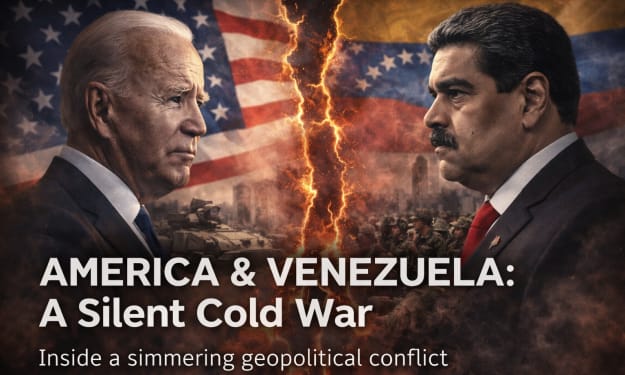
**America and Venezuela: Inside a Silent Cold War Shaping Latin America’s Future** The relationship between the United States and Venezuela has evolved into what many observers describe as a modern Cold War. Unlike traditional wars fought with armies and weapons, this conflict unfolds through political pressure, economic sanctions, ideological confrontation, and global influence. It is a struggle that affects not only both nations, but also the wider region of Latin America and the international balance of power. This silent Cold War has been developing for years, raising many questions that people around the world continue to search for. Understanding its causes, methods, and consequences is essential to grasp why tensions remain high and why resolution has proven so difficult. ### What Is Meant by a Cold War Between the United States and Venezuela A Cold War refers to a prolonged conflict where direct military confrontation is avoided, but rivalry is expressed through indirect means. In the case of the United States and Venezuela, this rivalry includes sanctions, diplomatic isolation, media narratives, cyber influence, and alliances with opposing global powers. Each side seeks to weaken the other’s position without triggering open warfare. This form of conflict has created a climate of constant tension, where every political move is closely watched and often interpreted as part of a broader strategic struggle. ### Why Relations Between the Two Countries Deteriorated Relations began to decline sharply in the early twenty-first century, when Venezuela adopted a political direction that openly challenged U.S. influence. Leaders in Caracas promoted a socialist ideology, criticized American foreign policy, and sought closer ties with rival global powers. These actions were viewed in Washington as a threat to regional stability and democratic norms. Over time, disagreements deepened over issues such as governance, elections, human rights, and control of natural resources. Oil, in particular, played a crucial role, as Venezuela holds some of the largest proven reserves in the world. Control over energy policy and economic independence became central to the conflict. ### How Economic Sanctions Became a Key Weapon One of the most searched questions online is why economic sanctions are so central to this Cold War. The United States has relied heavily on sanctions to pressure the Venezuelan government. These measures target financial systems, oil exports, and key officials, aiming to reduce the government’s ability to operate and force political change. Supporters of sanctions argue they are a peaceful alternative to military intervention and a way to hold leaders accountable. Critics counter that sanctions worsen living conditions for ordinary citizens and deepen economic collapse, making recovery even more difficult. ### What Role Ideology Plays in the Conflict Ideology is at the heart of this Cold War. The United States frames the conflict as a defense of democracy and rule of law, while Venezuela presents itself as resisting foreign interference and protecting national sovereignty. This clash of narratives fuels distrust and makes compromise politically risky for both sides. These competing stories are amplified through media, speeches, and online platforms, shaping public opinion at home and abroad. As a result, the conflict is not just political or economic, but also psychological and symbolic. ### Why Other Global Powers Are Involved Another common question is why countries outside the region are involved. Venezuela has strengthened relationships with global powers that challenge U.S. dominance. These alliances provide financial support, diplomatic backing, and strategic cooperation, reducing the impact of isolation efforts. For the United States, this involvement raises concerns about influence and security in its traditional sphere of interest. For Venezuela, it offers alternatives and leverage in negotiations. This global dimension transforms a bilateral dispute into part of a larger geopolitical competition. ### How the Cold War Affects Ordinary Venezuelans Beyond politics, the human cost of this Cold War is significant. Venezuela has experienced severe economic hardship, shortages of essential goods, and widespread migration. Millions of people have left the country in search of stability and opportunity, creating social and economic pressures across neighboring nations. Many people ask whether the conflict could have been avoided or resolved earlier. While internal policies and governance challenges play a role, the prolonged standoff has undeniably shaped the country’s current reality. ### Is There a Path Toward De-escalation One of the most important questions people search for is whether this Cold War can end. Diplomatic dialogue, mediation, and gradual easing of tensions are often proposed as solutions. At times, negotiations have shown promise, but deep mistrust continues to block lasting progress. Any meaningful resolution would require compromises from all sides, internal political changes, and international cooperation. It would also need to prioritize humanitarian concerns alongside political goals. ### Why This Conflict Matters Globally The Cold War between the United States and Venezuela is not an isolated issue. It reflects broader struggles over power, ideology, and influence in a changing world. The outcome will shape Latin America’s political future, energy markets, migration patterns, and international norms around sovereignty and intervention. This modern Cold War is a reminder that conflicts do not always involve armies and explosions. Sometimes, they unfold slowly, quietly, and persistently, affecting millions of lives over time. The tension between America and Venezuela illustrates how ideology, economics, and global ambition can lock nations into long-term confrontation. Understanding this conflict is the first step toward imagining a future where dialogue replaces pressure and stability replaces uncertainty.
By America today 10 months ago in Criminal
Maduro Captured Photo: What Is Really Happening and Why the World Is Questioning the Image
**Maduro Captured Photo: What Is Really Happening and Why the World Is Questioning the Image** In recent days, the phrase “Maduro captured photo” has surged across search engines and social media platforms, drawing massive global attention. Images allegedly showing Venezuelan President Nicolás Maduro in custody began circulating rapidly, triggering confusion, speculation, and heated debate. While some people immediately accepted the images as proof of a dramatic political event, others questioned their authenticity and the motives behind their spread. This article presents a detailed, balanced explanation of what is known so far, while addressing the most common questions people are searching for online. --- ### What Is the “Maduro Captured Photo” Everyone Is Talking About The so-called Maduro captured photo refers to images shared online that claim to show President Nicolás Maduro after being captured during a military or security operation. These images appeared suddenly and spread widely due to their shocking nature. Many users shared them as breaking news, while others treated them with skepticism, noting the lack of official confirmation and inconsistencies in the visuals. The rapid spread of the image highlights how quickly visual content can shape public opinion, even before facts are fully established. --- ### Is the Photo of Maduro Being Captured Real One of the most searched questions is whether the photo is genuine. As of now, there is no universally accepted confirmation that the image is authentic. No officially verified photograph released by a recognized international authority has confirmed Maduro’s capture. This uncertainty has led analysts and ordinary users alike to question whether the image is real, digitally altered, taken out of context, or generated using artificial intelligence. In the digital age, images can be manipulated convincingly, making verification more important than ever. --- ### Has Nicolás Maduro Actually Been Captured Another major question people are asking is whether Maduro has truly been captured. Conflicting statements and rumors have fueled uncertainty. Some claims suggest a successful operation, while opposing statements deny that any such capture occurred. Without clear, independently verified confirmation, this question remains unanswered. This lack of clarity has created an information vacuum, allowing speculation to flourish and misinformation to spread rapidly. --- ### Why Did the Image Spread So Fast Online The image spread quickly because it combined several powerful elements: a well-known political figure, dramatic implications, and a visually striking photo. Social media algorithms tend to amplify sensational content, especially when it provokes strong emotional reactions such as shock, anger, or excitement. Additionally, many users shared the image without verifying its source, assuming that others had already done so. This chain reaction is a common feature of viral misinformation events. --- ### Could the Photo Be Fake or AI Generated Many people are asking whether artificial intelligence could be behind the image. This is a valid concern, as AI-generated images have become increasingly realistic. Experts often look for signs such as unnatural lighting, distorted facial features, or inconsistent shadows. While some viewers claim to see such inconsistencies, others argue the image appears realistic. Without transparent verification, the possibility that the image is AI-generated or digitally manipulated cannot be ruled out. --- ### What Would Happen If Maduro Were Captured People are also searching for the consequences if such a capture were real. The detention of a sitting president would have enormous political, legal, and diplomatic implications. It could trigger international disputes, sanctions, protests, or even military escalation. Venezuela’s internal political balance would also be affected, potentially leading to instability or power struggles. These high stakes explain why many observers are cautious about accepting unverified claims. --- ### Why Are People Divided About the Photo Public opinion is sharply divided. Some view the image as long-awaited accountability, while others see it as propaganda or psychological warfare. Political beliefs strongly influence how people interpret the image, with supporters and critics of Maduro reacting in very different ways. This division shows how images do not exist in isolation but are interpreted through personal and political lenses. --- ### What Should People Do When Seeing Viral Political Images A key lesson from this situation is the importance of digital literacy. People should pause before sharing dramatic images, question the source, and wait for confirmation. Blindly spreading unverified content can contribute to confusion and escalate tensions unnecessarily. Being cautious does not mean ignoring news, but rather engaging with it responsibly. --- ### Final Thoughts The Maduro captured photo has become more than just an image. It represents the power and danger of visual information in the modern world. Whether the photo is real or not, its impact is undeniable. It has sparked global debate, exposed vulnerabilities in how information spreads, and reminded us that not everything we see online can be taken at face value. Until clear and verified information emerges, the most responsible approach is skepticism, patience, and critical thinking.
By America today 10 months ago in Criminal