guilty
Don’t do the crime if you can’t do the time; a look into all aspects of a guilty verdict from the burden of proof to conviction to the judge’s sentence and more.
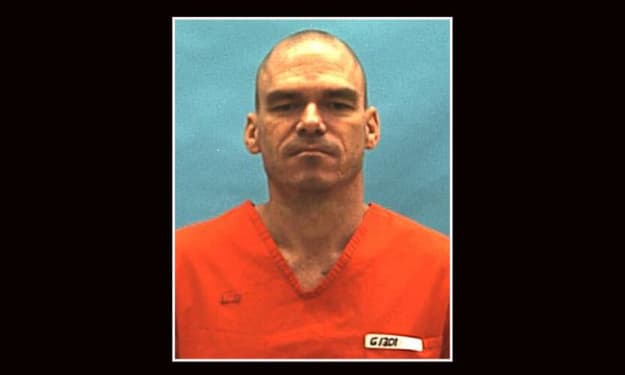
Murderer Kills Two Pedophiles in Prison, Vows to "Kill Them All". Content Warning.
In 2004 while high on crack cocaine, Rocky Ali Beamon and his girlfriend killed a woman. He was given a life sentence behind bars. While incarcerated, he killed two inmates -both sex offenders- and assured the judge felt it was his duty to rid the world of them -and would continue killing pedophiles unless he received the death penalty. Beamon would get his wish but took his own life before the state executed him.
By Criminal Matters6 months ago in Criminal
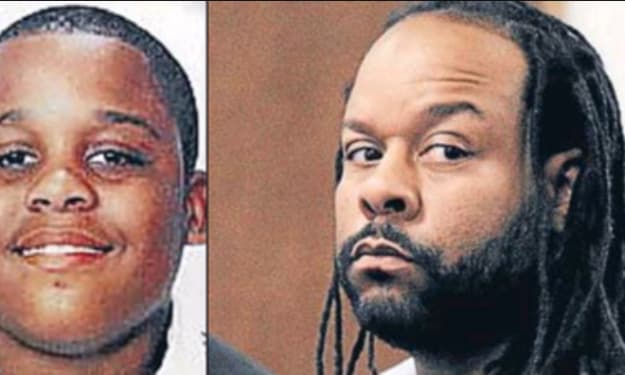
Dad Executed Son Who Confessed to M*lesting 3-Year-Old Daughter. Content Warning.
There’s an understanding, if not acceptance, for a parent who retaliates against the person who hurt their children. The lines of right and wrong blur, judgment goes awry, and we feel overwhelming empathy and compassion for the parent who impulsively and perhaps rightfully avenges their loved one in the name of love and protection. While the impulse to retaliate against those who harm our loved ones is often understood, do we feel the same sympathy if a parent murders another one of their children in an act of retaliation?
By Criminal Matters6 months ago in Criminal
The Last Call Before Midnight
M Mehran The phone rang at exactly 11:59 p.m. Every night. No exceptions. At first, Inspector Rehan Malik thought it was a prank. A wrong number. A bored caller. Nothing unusual. But on the third night, something changed. The voice spoke. “Someone is going to die.” The line went dead. Rehan traced the call immediately. No number. No signal origin. No digital footprint. It was as if the call had come from nowhere. The next morning, the news confirmed it. A man was found dead in his apartment. No forced entry. No witnesses. Time of death? Just after midnight. Rehan didn’t believe in coincidences. The fourth night, he waited. 11:59 p.m. The phone rang again. This time, he answered before the first ring ended. “Who is this?” he demanded. Silence. Then— A whisper. “Clock is ticking.” Click. Rehan’s pulse quickened. He checked every system. Every network. Nothing. No trace. But he knew one thing now. This wasn’t random. It was planned. And somehow… He was part of it. By the sixth night, the pattern was undeniable. A call. A warning. A death. Each victim had no connection. Different backgrounds. Different locations. No motive. No suspect. Just timing. Always after midnight. Rehan began studying the victims more closely. Digging into their pasts. Their secrets. Their mistakes. And then he saw it. A connection so small it was almost invisible. Ten years ago. A single court case. All the victims had been involved. Some as witnesses. Some as jurors. One as a lawyer. And one… As the accused. Name: Farhan Qureshi. Charged with murder. Acquitted due to lack of evidence. Rehan pulled the old files. The case was messy. Conflicting statements. Missing evidence. A trial filled with doubt. But Farhan walked free. And then disappeared. Rehan leaned back in his chair. Thinking. If Farhan was behind this… Why the calls? Why warn him? Unless… This wasn’t about hiding. It was about showing. The seventh night came. 11:59 p.m. The phone rang. Rehan answered instantly. “I know who you are,” he said. Silence. Then a low chuckle. “Do you?” the voice replied. “You’re Farhan Qureshi. You’re killing everyone from that case.” A pause. Then— “No,” the voice said softly. “I’m reminding them.” Click. Rehan froze. That wasn’t the voice of a man seeking revenge. It was something colder. Something calculated. He rushed back to the case files. This time, looking deeper. And then he found it. A detail everyone had missed. Farhan Qureshi had a sister. Amina Qureshi. Age 19. She was the real victim. The one who had been murdered. Farhan had been accused. But there was never enough evidence. The case collapsed. And Amina’s death… Was forgotten. Rehan felt a chill run through him. This wasn’t Farhan. It was someone else. Someone who remembered. Someone who refused to let the truth die. That night, Rehan didn’t go home. He stayed in the office. Waiting. 11:59 p.m. The phone rang. But this time… It wasn’t his. It was the landline across the room. Rehan slowly walked toward it. Heart pounding. He picked up. “I’m ready,” he said. A voice responded. Calm. Steady. “You were always the closest, Inspector.” “Who are you?” Rehan asked. A pause. Then— “I’m the one who watched justice fail.” Rehan’s grip tightened. “You’re killing innocent people.” “No,” the voice replied. “I’m correcting a mistake.” Rehan’s mind raced. “If they were guilty, why weren’t they convicted?” A soft laugh echoed. “Because truth doesn’t always win in court.” Before Rehan could respond— The lights went out. Darkness swallowed the room. And then— A whisper. Right behind him. “Turn around.” Rehan did. And there… Stood a woman. Calm. Unafraid. Her eyes locked onto his. “You finally see it, don’t you?” she said. “Amina Qureshi didn’t get justice.” Rehan’s voice was barely steady. “So you became justice?” She smiled faintly. “No.” “I became memory.” Before he could react— She stepped back. Into the darkness. Gone. Backup arrived minutes later. But the room was empty. No signs of entry. No signs of exit. Just silence. And a phone… Still off the hook. The killings stopped after that night. No more calls. No more deaths. The case went cold. Unsolved. But sometimes… Just before midnight… Rehan still hears it. A faint ring. Echoing in the distance. Reminding him— That justice isn’t always found in courtrooms. Sometimes… It calls you.
By Muhammad Mehran6 months ago in Criminal
The Man Who Never Existed
M Mehran No one noticed him at first. That was his greatest strength. In a crowded subway station at 8:45 a.m., hundreds of faces blurred into one another—office workers, students, tourists. Among them stood a man in a grey coat, holding a black briefcase. Ordinary. Invisible. Untouchable. His name was… nothing. At least, that’s what the system said. No birth certificate. No tax records. No digital footprint. It was as if he had never existed. But Detective Laura Bennett knew better. Because people who don’t exist don’t commit crimes. And this man—whoever he was—had committed the perfect one. It began with a bank transfer. €2.3 million vanished from a corporate account in under 90 seconds. No breach. No alarms. No trace. The system logs showed authorized access. The credentials belonged to the CEO himself. But he was on a live broadcast at the time. Smiling for the cameras. “It’s impossible,” the IT team insisted. Laura disagreed. “Nothing is impossible,” she said. “Just well hidden.” Days later, it happened again. Another company. Another flawless transfer. Same method. Same silence. And then a third. Patterns began to emerge. Each target was powerful. Wealthy. Untouchable. And each theft left no trace—except one. A faint image captured by a security camera. A man in a grey coat. Always watching. Laura enlarged the footage. The face was partially obscured, but something stood out. He never looked at the camera. Not once. Almost as if… he knew exactly where they were. The media dubbed him “The Ghost Thief.” A criminal mastermind who operated in plain sight. No identity. No mistakes. Just precision. Laura became obsessed. She tracked every movement, every frame, every shadow. And then she noticed something strange. The man appeared in places he shouldn’t be. Different cities. Same day. Impossible distances. “Unless…” she whispered. Unless there wasn’t just one man. Digging deeper, Laura uncovered a disturbing theory. The Ghost Thief wasn’t a person. It was a system. A network of individuals trained to act as one. Same clothes. Same posture. Same behavior. Interchangeable identities. A living algorithm. But who would create something like that? And why? The answer came unexpectedly. A whistleblower. Anonymous. Terrified. He sent Laura a single file. Inside was a project name: “Protocol Zero.” Years ago, a private organization had developed an experimental program. The goal? To create the perfect operative. Invisible. Untraceable. Unstoppable. They trained individuals to erase themselves—digitally and psychologically. No past. No identity. Just purpose. But the program was shut down. Too dangerous. Too effective. Or so they thought. Someone had revived it. And turned it into something far worse. Laura traced the funding. Shell companies. Offshore accounts. A maze of deception. But at the center was one name. Victor Hale. A billionaire tech magnate. Publicly, a philanthropist. Privately… something else. Laura confronted him. In his glass-walled office overlooking the city. “You built Protocol Zero,” she said. Victor smiled. “I improved it.” “They’re stealing millions.” “They’re correcting imbalance,” he replied calmly. “Redistribution.” Laura’s voice hardened. “You don’t get to play god.” Victor leaned forward. “No. But I do get to play invisible.” That’s when she realized. This wasn’t about money. It was about control. Victor had created a system beyond law enforcement. A network that could infiltrate anything. Governments. Banks. Lives. And no one could stop it. Because officially… It didn’t exist. Laura left the meeting with nothing. No evidence. No warrant. Just a truth no one would believe. But she wasn’t done. She set a trap. A fake account. Loaded with millions. Designed to attract attention. And it worked. The transfer began at exactly 2:17 a.m. Laura watched the system in real time. Every second counted. Then— A face appeared on the security feed. Grey coat. Black briefcase. But this time… He looked directly at the camera. And smiled. The system crashed. Screens went black. Data vanished. When it came back online, the money was gone. Again. But something was different. Laura checked the logs. Buried deep in the code was a message. Just one line. “You’re closer than the others.” She froze. This wasn’t just a game. It was a challenge. Weeks passed. No new thefts. No sightings. The Ghost Thief had disappeared. Or so it seemed. One evening, as Laura walked home, she noticed something. A reflection in a store window. A man in a grey coat. Standing behind her. She turned. No one there. Just a crowd of ordinary faces. Blending together. Invisible. And that’s when she understood the truth. The Ghost Thief wasn’t gone. It was everywhere. Watching. Waiting. And in a world where identity can be erased… The most dangerous criminal… Is the one who never existed.
By Muhammad Mehran6 months ago in Criminal
The Silence Behind Room 307
M Mehran The hallway smelled faintly of disinfectant and secrets. Room 307 had been locked for three days. At first, no one noticed. In a city that never paused, absence often blended into routine. But when the cleaning staff reported a strange odor, curiosity turned into concern—and concern into something far darker. Officer Daniel Hayes arrived at the scene just after sunrise. The hotel manager stood nervously at the end of the corridor, wringing his hands. “I’ve knocked. No response,” he muttered. “The guest… Mr. Arman Sheikh. Paid in advance. Quiet man.” Daniel didn’t reply. He had seen enough cases to know—silence was rarely empty. The door was forced open. What lay inside would haunt him for years. The room looked untouched at first glance. Bed neatly made. Curtains drawn. A suitcase resting near the corner. But the smell—thick, metallic—led them to the bathroom. There, slumped against the bathtub, was Arman Sheikh. Dead. But it wasn’t the death that disturbed Daniel. It was the stillness—the unnatural stillness, like the room itself had been holding its breath. No signs of struggle. No weapon in sight. No suicide note. Just silence. The autopsy report deepened the mystery. Cause of death: poisoning. A rare, nearly undetectable toxin. “Not something you pick up from a store,” the medical examiner said. “This was deliberate. Calculated.” Daniel leaned back in his chair, mind racing. If this was murder, then someone had planned it carefully—too carefully. Digging into Arman’s background revealed very little. No criminal record. No known enemies. No family in the city. But there was one detail. Arman wasn’t his real name. His actual identity traced back to a small town hundreds of miles away. Name: Rahim Khan. Occupation: Former accountant. And then, five years ago—he vanished. No trace. No contact. Just… gone. Until now. Daniel visited Rahim’s hometown. People were hesitant to talk. Doors closed quicker than they opened. But one elderly neighbor finally spoke. “He was a good man,” she said quietly. “But he knew something… something dangerous.” “What do you mean?” Daniel asked. She hesitated. “Money. Big money. And powerful people.” Back in the city, Daniel revisited the hotel room. This time, he noticed something he had missed before. The suitcase. Inside, instead of clothes, there were documents. Bank records. Transaction histories. Names. Lots of names. And every name led to one thing—corruption. A web of illegal financial activity involving high-profile individuals. Politicians. Businessmen. Influencers. Rahim Khan hadn’t been hiding. He had been preparing. Preparing to expose them. The pieces clicked into place. Rahim changed his identity. Gathered evidence. Moved quietly. But someone found out. And they silenced him. Daniel’s investigation hit resistance almost immediately. Files went missing. Calls were intercepted. Even his own department started questioning his actions. “Let it go,” his superior warned. “This is bigger than you.” But Daniel couldn’t. Because now, it wasn’t just a case. It was a truth buried under power. Late one night, Daniel received an anonymous message. “Room 307 wasn’t the beginning. It was the end.” Attached was a video file. In it, Rahim—alive, nervous—spoke directly to the camera. “If you’re watching this, I’m probably dead,” he said. “They’re watching me. But I have everything recorded. Everything.” He listed names. Powerful names. Dangerous names. Daniel knew what this meant. If he released the video, it would shake the system. But it would also put a target on his back. He sat in his apartment, staring at the screen. The weight of the decision pressed heavily on him. Justice—or safety. Truth—or silence. The next morning, the city woke up to chaos. News channels exploded with headlines. Leaked evidence. Scandals. Arrests. The video had gone public. But Daniel Hayes was nowhere to be found. Weeks later, Room 307 remained closed. No one checked in. No one asked questions. But some nights, the hallway still felt… different. As if the walls remembered. As if silence still lingered. Because in the world of crime, silence is never empty. It’s just waiting to be heard.
By Muhammad Mehran6 months ago in Criminal
Standing with Simona Bearcub. Content Warning.
In the digital age, community advocacy often happens at the intersection of vulnerability and courage. When leaders within marginalized communities speak up about safety concerns, they aren't just sharing information—they are performing a vital service to protect others.
By Sai Marie Johnson6 months ago in Criminal
The Man Who Never Existed
M Mehran The file arrived at exactly 6:00 a.m. No sender. No return address. Just a thick brown envelope placed neatly on Detective Ibrahim Shah’s desk—as if it had always belonged there. He hadn’t even noticed who brought it in. Which was strange. Because Ibrahim noticed everything. Inside the envelope was a single case file. No official stamp. No department seal. Just a name typed in bold: “Case #000 – Subject: Unknown.” Ibrahim frowned. “Unknown?” He flipped the page. A photograph stared back at him. A man in his mid-thirties. Clean-shaven. Ordinary face. The kind you’d forget seconds after seeing. Except… Ibrahim didn’t forget faces. And somehow, this one felt familiar. “Who logged this?” he asked the records clerk. She checked the system. “There’s no entry, sir.” “No entry?” “No case number. No submission. Nothing.” Ibrahim glanced back at the file. Case #000. It wasn’t just missing. It had never existed. The report was unsettling. The “subject” had been seen in multiple locations across the city—banks, train stations, government offices. Always alone. Always unremarkable. But every time he appeared… Something changed. A bank transaction erased. A criminal record altered. A person’s identity rewritten. “This has to be a joke,” the junior officer said. But Ibrahim wasn’t laughing. Because the timestamps matched real incidents—cases that had baffled investigators for months. Unsolved anomalies. Untraceable edits. As if reality itself had been quietly adjusted. “I want surveillance footage,” Ibrahim ordered. They pulled recordings from three locations listed in the file. And there he was. The man. Walking casually through each scene. Never rushing. Never hiding. Just… existing. “Zoom in,” Ibrahim said. The technician enhanced the footage. The man’s face became clearer. Sharper. And that’s when the room went silent. Because every camera showed something slightly different. Different eye color. Different hairstyle. Different expression. “Is this… the same person?” the technician whispered. Ibrahim didn’t answer. Because he wasn’t sure. They ran facial recognition. No matches. Fingerprint database? Nothing. DNA records? Empty. It was as if the man had no past. No identity. No existence. “Everyone leaves a trace,” Ibrahim muttered. “Not this one,” the technician replied. But then came the first real lead. A street vendor. “I’ve seen him,” the old man said. “He comes here sometimes. Buys tea. Never speaks much.” “When was the last time?” Ibrahim asked. The vendor pointed down the street. “Yesterday.” Ibrahim’s pulse quickened. Finally. Something real. They searched the area. Checked every camera. Every corner. Every reflection. And then— They found him. Standing at a bus stop. Perfectly still. As if waiting. “Approach carefully,” Ibrahim instructed. The officers moved in. But before they could reach him— The man turned. And looked directly at Ibrahim. Not at the officers. Not at the cameras. At him. Their eyes met. And in that moment… Something shifted. The world felt… wrong. Sounds dulled. Colors faded. Time slowed. And the man smiled. Then he stepped onto the bus. And disappeared. “Sir?” an officer called. “Are you okay?” Ibrahim blinked. Everything snapped back to normal. “What just happened?” he whispered. Back at the station, things got worse. Much worse. “Sir… you need to see this.” Ibrahim walked over. The technician’s hands were trembling. “The footage… it changed.” “Changed how?” The screen played the same bus stop scene. But this time— The man wasn’t alone. Ibrahim was standing beside him. “That’s not possible,” Ibrahim said. “You were never there,” the technician replied. “We checked the timestamps.” But the video didn’t lie. Two figures stood at the bus stop. One real. One impossible. Ibrahim leaned closer. His breath caught. Because the version of him in the footage… Was smiling. That night, he couldn’t sleep. The image replayed in his mind. Again. And again. And again. So he did the only thing left to do. He reopened the file. Case #000. But something had changed. The subject’s photograph… Was gone. Replaced by a mirror-like blank surface. Reflective. Shifting. Almost alive. And beneath it, new text had appeared. “Subject Identified.” Ibrahim’s hands trembled as he read the next line. “Identity: In Progress.” A cold realization crept over him. Slow. Unavoidable. Terrifying. This wasn’t a case about a man. It was a process. A system. And once it noticed you… It didn’t stop. It replaced you. Piece by piece. Memory by memory. Record by record. Until the world forgot who you were… And accepted who you had become. The phone on Ibrahim’s desk rang. Unknown number. He hesitated. Then answered. A familiar voice spoke. Calm. Controlled. His own. “You’ve seen too much.” Ibrahim’s throat went dry. “Who are you?” A pause. Then— “I’m what comes after you.” The line went dead. The next morning, the department held a meeting. Routine. Normal. “Detective Ibrahim Shah?” the chief called. No response. The room shifted uncomfortably. “Who?” someone whispered. “There’s no one by that name,” the clerk said, checking the records. No file. No badge. No history. No existence. Only one thing remained. A brown envelope. Resting quietly on an empty desk. Inside it— A single file. Case #001 And a photograph of a man… Who didn’t exist.
By Muhammad Mehran6 months ago in Criminal
The Last Call from Block 17
M Mehran At exactly 2:13 a.m., the phone rang. Detective Hamza Rauf stared at the glowing screen, his instincts already whispering that this wasn’t going to be a routine call. The number was unknown. No caller ID. No trace. He answered anyway. There was silence. Then breathing. Shallow. Uneven. Terrified. “Hello?” Hamza said, his voice steady. “Who is this?” A pause. Then a whisper: “They’re watching me.” The line went dead. By 3:00 a.m., Hamza was standing outside Block 17—a decaying apartment complex on the edge of the city. The kind of place people moved into when they had nowhere else to go… and disappeared from when no one was looking. Rainwater dripped from broken balconies. A single flickering bulb lit the entrance. “Call came from here,” the technician confirmed. Hamza stepped inside. The smell hit him first—damp walls, old smoke… and something metallic. Something wrong. Apartment 304. The door was slightly open. Hamza pushed it gently. Inside, chaos. Furniture overturned. Glass shattered. A chair lying on its side as if someone had tried to escape. And in the center of the room— A phone. Still recording. Hamza picked it up. The screen displayed a voice memo, still running. He pressed play. At first, nothing. Then the same voice. Terrified. “They’re not who they say they are… if anyone finds this, don’t trust—” A loud crash interrupted the recording. Footsteps. Heavy. Deliberate. Then silence. “No body?” the officer asked. Hamza shook his head. “No blood either.” “So what are we looking at?” Hamza glanced around the room again. “Not a crime scene.” The officer frowned. “Then what?” Hamza’s eyes narrowed. “A warning.” The tenant was listed as Sara Naveed, 27. Freelance journalist. No criminal record. No known enemies. But her laptop told a different story. “She was investigating something,” Hamza said, scrolling through encrypted files. “What kind of something?” Hamza turned the screen. A series of documents appeared—photos, notes, timestamps. All connected by one phrase: “Project Mirror.” Over the next 48 hours, Hamza and his team uncovered fragments of Sara’s investigation. It wasn’t just a story. It was a conspiracy. Multiple identities. Fake records. People living double lives under completely fabricated backgrounds. “Witness protection?” the officer suggested. Hamza shook his head. “No. This is bigger.” “How big?” Hamza exhaled slowly. “Big enough to erase someone completely… and replace them.” The deeper they dug, the stranger it became. Faces matched multiple names. Names matched multiple histories. It was as if someone had built an entire system to rewrite reality itself. And Sara had gotten too close. “Detective,” Zara from cybercrime called. “You need to see this.” On her screen was a database—hidden, encrypted, buried beneath layers of firewalls. Hamza leaned in. “What am I looking at?” Zara’s voice dropped. “Every person in this system has two profiles. One real… and one constructed.” “Constructed how?” “New identities. New records. New lives.” Hamza felt a chill. “Why?” Zara hesitated. “Control.” Then came the breakthrough. A pattern in the replacements. Every “new identity” belonged to someone who had influence—bankers, journalists, tech experts. People with access. People who could change things. “Someone’s not just replacing people,” Hamza realized. “They’re rebuilding society from the inside.” But the most disturbing discovery came last. Sara’s file. Her original identity was marked as “terminated.” Her replacement? Already active. Living. Breathing. Existing somewhere in the city. Hamza didn’t sleep that night. Instead, he returned to Block 17. Apartment 304 felt colder now. Emptier. But something pulled him back. Something unfinished. He walked to the center of the room… and stopped. There, barely visible on the wall, was a message scratched into the paint. Three words. “CHECK YOURSELF.” Back at the station, Hamza pulled his own file. It took longer than it should have. Too many clearance levels. Too many locked layers. But eventually… it opened. He scanned the details. Name. Age. Service record. Everything looked normal. Until he reached the bottom. A second profile. Hidden. Buried. But unmistakably there. Duplicate ID. Different history. Different past. Same face. His hands went cold. “This isn’t possible…” Zara stepped closer. “What did you find?” Hamza turned the screen toward her. Her expression changed instantly. “That means—” “I know what it means,” Hamza interrupted. His voice barely above a whisper. “It means I don’t know who I am.” The phone rang again. 2:13 a.m. Unknown number. Hamza stared at it… then answered. This time, the voice was clear. Calm. Controlled. “You finally looked, didn’t you?” Hamza clenched his jaw. “Who is this?” A soft chuckle echoed through the line. “You’re asking the wrong question, Detective.” A pause. Then— “The real question is… which version of you is listening?” The line went dead. And for the first time in his career… Hamza Rauf wasn’t chasing a criminal. He was chasing himself.
By Muhammad Mehran6 months ago in Criminal
The Whispering Ledger
M Mehran The rain didn’t fall that night—it whispered. Soft, deliberate, like it knew something the rest of the city didn’t. Inspector Ayaan Malik stood under the flickering streetlight, staring at the lifeless body sprawled across the alley. The victim, a mid-level accountant named Rehan Siddiqui, wasn’t the kind of man who attracted enemies. No criminal record. No debts. No visible reason to end up with a bullet in his chest. And yet, here he was. Dead. “Robbery?” the constable asked, adjusting his soaked cap. Ayaan shook his head. “Wallet’s still there. Phone too.” He crouched, scanning the scene. “This wasn’t random.” Something about the way Rehan’s hand clutched his coat caught Ayaan’s attention. He carefully pried open the stiff fingers and found a small, leather-bound notebook. A ledger. But not an ordinary one. Inside were names—dozens of them—followed by numbers and dates. Some entries were circled. Others were crossed out entirely. It looked like a financial record, but there was something off. No company logos. No official formatting. Just names. And money. “Get this bagged,” Ayaan ordered, his voice low. Because deep down, he already knew—this wasn’t just a murder. It was a message. The next morning, the city buzzed like any other day. Vendors shouted. Cars honked. Life moved on. But inside the police station, tension thickened the air. Ayaan sat across from Zara Khan, a data analyst known for her ability to decode patterns others couldn’t see. She flipped through the ledger, her brows furrowing deeper with every page. “This isn’t accounting,” she finally said. “Then what is it?” Zara tapped one of the names. “Look at the dates. They don’t align with payments. They align with disappearances.” Ayaan leaned forward. “Disappearances?” Zara nodded. “Missing persons. I checked three names already. All reported missing within 48 hours of these dates.” Ayaan’s pulse quickened. “You’re saying this ledger is tracking… victims?” “Not just victims,” Zara replied. “Targets.” The case took a darker turn. Each name in the ledger belonged to someone who had either vanished—or was found dead under mysterious circumstances. No connections between them. Different professions. Different neighborhoods. No pattern. Except one. Every single one had recently reported suspicious financial activity. Bank transfers. Unauthorized withdrawals. Ghost transactions that vanished without a trace. “This isn’t just murder,” Ayaan muttered. “It’s a system.” Days turned into sleepless nights. Ayaan dug deeper, chasing shadows through financial records and surveillance footage. Every lead ended in a dead end—until Zara found something. “Look at this,” she said, spinning her laptop around. A series of transactions appeared on the screen, all linked through a complex web of shell accounts. “It’s laundering,” Zara explained. “But not the usual kind. This is precision-level. Whoever’s behind this knows exactly how to stay invisible.” “Can we trace it?” Zara hesitated. “Maybe. But there’s a risk.” “What kind of risk?” She met his eyes. “The kind where they realize we’re watching.” They traced it anyway. And that’s when everything changed. The trail led to a single name. Farhan Qureshi. A respected businessman. Philanthropist. A man who funded schools and hospitals. A man who smiled in public and shook hands with politicians. A man no one would suspect. “This has to be wrong,” the constable said. But Ayaan knew better. “Prepare a warrant.” Farhan’s office overlooked the city skyline, a symbol of power and success. He didn’t resist when they walked in. In fact, he smiled. “I was wondering when you’d arrive,” he said calmly. Ayaan’s grip tightened. “You know why we’re here.” Farhan nodded. “The ledger.” “You admit it?” Farhan chuckled softly. “Admit? Inspector, you misunderstand. I designed it.” The confession came too easily. Too smoothly. Farhan explained everything as if he were discussing a business strategy. “I don’t kill people,” he said. “I eliminate threats.” “Threats?” Ayaan snapped. “People who notice things they shouldn’t. Unauthorized transactions. Financial anomalies. Loose ends.” Farhan leaned back in his chair. “In my world, loose ends become problems.” “And your solution is murder?” “My solution is efficiency.” The room fell silent. Ayaan felt a surge of anger—but also something else. Clarity. “You turned human lives into numbers,” he said quietly. Farhan smiled again. “Numbers are predictable. People aren’t.” The arrest made headlines. “Respected Businessman Exposed as Mastermind Behind Serial Financial Murders” The city was shaken. People questioned everything—trust, safety, even the systems meant to protect them. But for Ayaan, the case wasn’t over. Because something still didn’t add up. Late one night, as he reviewed the ledger again, he noticed a name he hadn’t seen before. At the very end. Uncrossed. Unmarked. Still active. He read it once. Then again. And his blood ran cold. Because the name staring back at him… Was his own. The whispering rain returned that night. Only this time, it didn’t sound like a secret. It sounded like a warning.
By Muhammad Mehran6 months ago in Criminal