capital punishment
Weigh the pros, cons and controversies surrounding the grave issue of capital punishment; should the death penalty be allowed?
The Tragic Case of Ashlee Martinson: Aftermath of child abuse
The story of Ashlee Martinson is one of profound tragedy and complex emotions, a tale that forces us to confront the darkest corners of the human experience. In 2015, Ashlee Martinson made headlines when she was arrested for the brutal murders of her mother and stepfather in the small town of Piehl, Wisconsin. As details of the case emerged, a chilling narrative of abuse, trauma, and desperation began to unfold, shedding light on the harrowing journey that led to this unthinkable act of violence. The Early Years: Ashlee Martinson's childhood was marked by turmoil and instability. Born into a troubled family, she experienced years of abuse and neglect at the hands of her mother's boyfriends. From a young age, Ashlee was subjected to unspeakable acts of violence and exploitation, leaving deep emotional scars that would haunt her for years to come. Despite the horrors she endured, Ashlee's resilience and strength of spirit never wavered, as she sought refuge in her love of writing and poetry, using words to escape the pain of her reality. The Breaking Point: In March 2015, the fragile peace of the Martinson household was shattered when Ashlee's mother, Jennifer Ayers, and stepfather, Thomas Ayers, were found brutally murdered in their home. The details of the crime were shocking and brutal, as Ashlee confessed to stabbing her stepfather multiple times and shooting her mother in a fit of rage. The motive behind the killings remains unclear, but evidence suggests that years of abuse and trauma may have played a role in Ashlee's descent into darkness. The Aftermath: In the aftermath of the murders, Ashlee Martinson's case captivated the nation, as people struggled to comprehend the depths of despair and desperation that could drive a young woman to commit such heinous acts. For those who knew Ashlee, her actions were incomprehensible, as they grappled with the incongruity between the gentle, creative soul they knew and the violent perpetrator she had become. Yet, as details of Ashlee's upbringing and the trauma she had endured came to light, a more nuanced picture began to emerge, one that forced society to confront the systemic failures and injustices that had contributed to her suffering. The Legal Battle: Ashlee Martinson's journey through the criminal justice system was fraught with challenges and obstacles, as she navigated the complexities of her legal defense while grappling with the weight of her actions. In 2016, she was sentenced to 23 years in prison for the murders of her mother and stepfather, a verdict that sparked debate and controversy among those who believed her punishment was too harsh or too lenient. Yet, for Ashlee, the sentence was merely the beginning of a long and arduous road to redemption, as she sought to make sense of her past and find a glimmer of hope amidst the darkness. The Search for Redemption: In the years since her incarceration, Ashlee Martinson has embarked on a journey of self-discovery and healing, seeking to atone for her crimes and find redemption in the eyes of society. Through therapy, education, and self-reflection, she has confronted the demons of her past and sought to make amends for the pain she has caused. While the road to redemption is long and difficult, Ashlee remains determined to reclaim her humanity and find a sense of peace amidst the chaos of her past. Conclusion: The case of Ashlee Martinson is a sobering reminder of the complexities of trauma and the far-reaching impact of abuse and neglect. It forces us to confront uncomfortable truths about the failures of our society to protect the most vulnerable among us and the desperate lengths to which some will go to escape the pain of their reality. Yet, amidst the darkness, there is hope, as Ashlee's story serves as a beacon of resilience and courage, reminding us of the power of the human spirit to overcome even the most unimaginable of circumstances. As we reflect on the tragedy of Ashlee Martinson's life, may we be moved to action, to advocate for those who suffer in silence and to strive for a world where every child is valued, protected, and loved. In honoring Ashlee's journey, may we find the strength and compassion to confront the darkness within ourselves and to work towards a future where healing and redemption are possible for all.
By Deji Akomolafe2 years ago in Criminal
The Mysterious Phantom
Once upon a dark, starless night, inside the peaceful little village of Oakwood, something strange happened that changed the course of the village's history. An infamous figure called "The Phantom" had arrived, and everyone felt a sense of unease in the air.
By Kamal O. Touhami2 years ago in Criminal
Lululemon Murder: A Shocking Crime That Gripped a Community
The Lululemon murder occurred on 2011, at a Lululemon store, when Brittany Norwood, a store employee, murdered her coworker Jayna Murray. Murray sustained 331 injuries from five weapons including a hammer, box cutter and knife. According to medical examiners, she was alive for all of the injuries.
By Deji Akomolafe2 years ago in Criminal
Andrea Yates, The Texas Woman Who Drowned Her Kids
n June 20, 2001, a suburban Texas home became the site of one of the most heartbreaking tragedies in recent memory. Andrea Yates, a mother of five, made headlines around the world when she drowned her children one by one in the family bathtub. The shocking nature of the crime left many grappling for answers, but as the details emerged, it became increasingly clear that this was not a simple case of criminal intent, but rather a tragic manifestation of severe mental illness. Andrea Yates was not a stranger to the complexities of mental health. She had a long history of debilitating psychiatric issues, including postpartum depression, psychosis, and suicidal ideation. In the aftermath of her heinous act, it became apparent that her mental state had deteriorated significantly in the weeks leading up to the tragedy. Despite her struggles, her condition went largely untreated, leaving her isolated and overwhelmed by the demands of motherhood. Due to insanity, the defense has submitted a not guilty plea. However, Charles Rosenthal Jr., the district attorney for Harris County, feels that the woman is fit to stand trial following three months of antipsychotic medication and therapy in the jail's mental ward. In a county that leads Texas in the number of death row inmates and a state that leads the country in executions, he is requesting the death penalty. Assistant District Attorney Joe Owmby informs the jury comprised of 11 women and 1 man that the main issue at hand in this competency hearing is whether or not "Yates is rational today—not was she rational at the time of the crime." The events of that fateful day sent shockwaves through the community and ignited a firestorm of debate about the intersection of mental illness and the legal system. In the eyes of many, Andrea Yates was not a cold-blooded killer but a victim herself – a casualty of a broken mental health system that failed to provide her with the care and support she so desperately needed. As the case unfolded, it became clear that Andrea Yates was not a malicious or calculating criminal, but a deeply troubled woman who had reached her breaking point. Her actions, while unfathomable to most, were the tragic result of a mind ravaged by illness and despair. Yet, despite overwhelming evidence of her mental instability, the legal system grappled with how to hold her accountable for her actions. In 2002, Andrea Yates was convicted of capital murder and sentenced to life in prison. However, her conviction was later overturned on appeal, and in 2006, she was retried and found not guilty by reason of insanity. The verdict sparked intense debate and raised important questions about the adequacy of mental health care in the criminal justice system. The case of Andrea Yates serves as a stark reminder of the devastating consequences of untreated mental illness. It highlights the urgent need for improved access to mental health services and greater awareness of the warning signs of psychiatric distress. It also underscores the importance of compassion and empathy in our approach to those struggling with mental health issues. In the years since the tragedy, efforts have been made to reform the mental health care system and improve support for individuals in crisis. But the story of Andrea Yates remains a haunting reminder of the work that still needs to be done. Her children, who were tragically taken from this world far too soon, serve as a sobering reminder of the human cost of untreated mental illness. As we reflect on this heartbreaking chapter in our history, let us not forget the lives that were lost and the suffering endured by all those affected. Let us honor their memory by working tirelessly to ensure that no one falls through the cracks of a broken system again. And let us strive to create a world where compassion and understanding prevail, even in the face of unimaginable tragedy.
By Deji Akomolafe2 years ago in Criminal
The West Memphis Three: A Story of Injustice, Redemption, and Advocacy
n 1993, the brutal murders of three young boys in West Memphis, Arkansas, shocked the nation and rocked the tight-knit community to its core. What followed would be a decades-long saga marked by allegations of police misconduct, coerced confessions, and the wrongful convictions of three teenagers—Damien Echols, Jason Baldwin, and Jessie Misskelley Jr.—known as the West Memphis Three. The victims—eight-year-olds Stevie Branch, Michael Moore, and Christopher Byers—were found dead in a drainage ditch, bound and mutilated in a horrific manner. The gruesome nature of the crime sparked widespread fear and outrage, and pressure mounted on local law enforcement to bring the perpetrators to justice. In the midst of a fervent search for answers, suspicion quickly fell on Echols, Baldwin, and Misskelley, three teenagers from the area who were known for their unconventional interests and outsider status. Despite a lack of physical evidence linking them to the crime, the West Memphis Three became prime suspects in the eyes of investigators. The case against the teenagers was built on circumstantial evidence and Misskelley's coerced confession, which he later recanted, claiming it had been coerced by police during a marathon interrogation session. Despite the absence of DNA evidence or eyewitness testimony implicating them in the murders, Echols, Baldwin, and Misskelley were convicted in 1994. The convictions sparked a firestorm of controversy, with many questioning the fairness of the trial and the validity of the evidence presented. The case garnered national attention, attracting the interest of advocacy groups, celebrities, and filmmakers who believed in the innocence of the West Memphis Three. In 2007, new developments in the case reignited hope for justice. DNA evidence recovered from the crime scene failed to match any of the three teenagers, raising doubts about their guilt. Amid mounting pressure and public scrutiny, the Arkansas Supreme Court granted the West Memphis Three a new hearing to present evidence of their innocence. In 2011, after nearly two decades behind bars, Echols, Baldwin, and Misskelley entered an Alford plea, a legal maneuver that allowed them to maintain their innocence while acknowledging that prosecutors had enough evidence to convict them. They were subsequently released from prison, bringing an end to a chapter of injustice that had haunted them for years. The release of the West Memphis Three was a bittersweet victory, marked by mixed emotions of relief and lingering injustice. While they were free from the confines of prison, the stain of wrongful conviction remained, casting a shadow over their lives and futures. Since their release, Echols, Baldwin, and Misskelley have worked to rebuild their lives and advocate for criminal justice reform. They have become outspoken critics of the legal system that failed them and have used their platform to raise awareness about wrongful convictions and the plight of the innocent incarcerated. The case of the West Memphis Three serves as a stark reminder of the dangers of rushing to judgment and the flaws within the criminal justice system. It exposes the vulnerabilities of the legal process, from coerced confessions to faulty forensic evidence, and underscores the need for reforms to prevent similar miscarriages of justice in the future. The West Memphis Three's story is one of resilience, perseverance, and the enduring quest for truth and justice. Despite the unimaginable hardships they endured, they refused to lose hope or surrender to despair. Their exoneration stands as a testament to the power of perseverance and the tireless efforts of those who championed their cause. As we reflect on the case of the West Memphis Three, let us not only seek to right the wrongs of the past but also strive to create a more just and equitable future for all. Their journey from wrongful conviction to exoneration serves as a beacon of hope and a reminder that, even in the darkest of times, justice can prevail.
By Deji Akomolafe2 years ago in Criminal
Loren Bunner shot ex-girlfriend Jolee Callan and push her off 40ft cliff
oren Bunner and Jolee Callan had picked a beautiful day to take a hike through the heavily wooded Pinhoti Trail area of Mount Cheaha, Alabama, in August 2015. Before they’d headed off, Loren, then 20, posted a picture of Jolee on his Instagram account – the first of four photos that day. The snap showed Jolee, 18, sitting in the front of Loren’s car with his dog. The caption read, ‘On our way to go hiking.’ The pair were seemingly relaxed together, despite the troubles between them over the previous weeks. Jolee and Loren had once been a couple, but now they were trying to find a way to move on as friends. Moving on Jolee was only 4ft 10in, but her big heart made her stand out from the crowd. Although she was quiet, she loved performing in school plays, studied hard and was popular. A year earlier, she’d started dating Loren. He was quiet too, but 12 months on he had a strong hold on Jolee. Loren preferred her to hang out with his friends, or sit with him while he played video games, and Jolee found herself trying to please him. Man accused of murdering teenage girlfriend posts chilling pictures of hiking date hours after she was found dead A few times, Jolee had tried to end the relationship, but Loren would emotionally blackmail her into taking him back, threatening to end his life if she didn’t. Jolee found it easier to give in, but now she’d graduated from high school and was making plans for college, she’d finally plucked up the courage to finish things for good. While she moved on, Loren continued to call her, begging her to take him back. When Loren suggested going for the hike just as friends, kind-hearted Jolee agreed. The night before, Jolee messaged a friend to say she was going out with Loren the next day. She made a joke, saying, ‘If something happens to me, you’ll know who I was with.’ During the hike, on 30th August, Loren updated his Instagram three more times. The last two photos were of Jolee standing on the edge of a cliff at the state park. Loren had written, ‘Oh, ya know. Just enjoying the view.’ A year earlier, she’d started dating Loren. He was quiet too, but 12 months on he had a strong hold on Jolee. Loren preferred her to hang out with his friends, or sit with him while he played video games, and Jolee found herself trying to please him. In the last one, Jolee looks like she’s taking a photo as she faces a cloudy mountain top with her camera. It would be the very last picture taken of the young girl. At around 6pm that evening, Loren called 911 just off the local interstate and asked to speak to the police. "I want to turn myself in for the murder of my ex-girlfriend Jolee Callan that happened just a little while ago on Cheaha Mountain," he said, calmly. Suicide Pact Shortly afterwards, Jolee’s body was found at the bottom of a 40ft cliff on the Pinhoti Trail. She had been shot twice – once in the back of the head and once between the eyes. She was still wearing her backpack. Police recovered a Bear Claw .22 gun from Loren and found a large amount of blood in the area at the top of the cliff where the shooting took place. There was also blood on Loren’s steering wheel. When questioned, Loren stunned investigators with his explanation. He told police that he’d shot Jolee in the head as part of a suicide pact, before throwing her off a cliff. When it was his turn to kill himself, he couldn’t go through with it. "She didn’t want to see it coming," Loren said, which is why he’d shot her from behind. But it didn’t explain why he’d then turned her over and shot the young girl between the eyes. Police believed that Loren had simply lured Jolee to the remote area with the intent of killing her because he wasn’t able to convince her to take him back. Jolee showed absolutely no signs of being depressed. She was making plans for the future and there was no note for her friends and family – it was completely out of character. Loren was charged with her murder and released on bail. At first, a court ruled that Loren would be tried as a youthful offender. It meant that the maximum sentence he could be given was three years in prison. Jolee’s family were outraged. They were relieved when the decision was overturned and it was decided he’d be tried as an adult. After initially pleading not guilty, in July this year Loren pleaded guilty to Jolee’s murder. Loren’s 911 call was played to the court where he calmly confessed to killing Jolee. Prosecutors reminded the court that he’d convinced Jolee to take a hike with him and had brought along a weapon. The Instagram photos that documented Jolee’s last hours were heartbreaking and showed a lack of remorse from her killer. It was heard that Loren had even bragged to cell mates about the murder, saying he wasn’t sorry because if he couldn’t have her, no one would. Loren, now 22, was sentenced to 52 years in prison and told to pay over £7,000 in restitution to the Alabama Crime Victims Commission. Afterwards, Jolee’s broken father, Michael, who had a stroke after his daughter was killed, spoke of his relief at the sentence.
By Deji Akomolafe2 years ago in Criminal
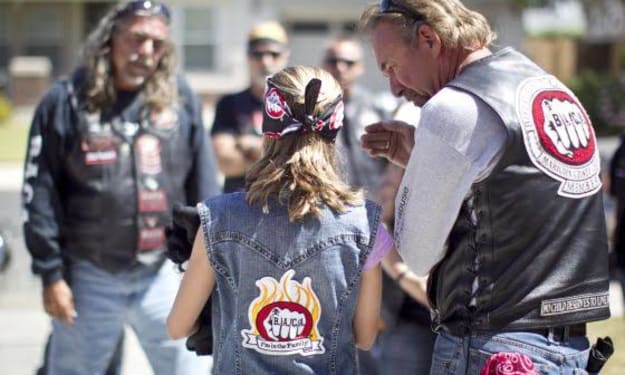
Bike Gang in Arizona Protects Child Abuse Victims
In the rugged landscape of Arizona, amidst the roar of engines and the rumble of steel, there exists a group of individuals who are on a mission unlike any other. They are the Bikers Against Child Abuse (BACA), a formidable force dedicated to protecting the most vulnerable members of society: children who have been victims of abuse. In this blog post, we delve into the inspiring story of BACA, their tireless efforts, and the impact they've made in the fight against child abuse. Founded in 1995 by John Paul "Chief" Lilly, a licensed clinical social worker, Bikers Against Child Abuse emerged from a simple yet powerful idea: to create a safe haven for children who have experienced the trauma of abuse. What began as a small group of bikers in Utah has since grown into an international organization with chapters across the globe, including a strong presence in the sun-drenched deserts of Arizona. At the heart of BACA's mission is a commitment to empowering children and giving them back their sense of control and confidence. When a child joins BACA, they become part of a tight-knit family of bikers who are dedicated to their protection and well-being. These bikers, known as "patched members," undergo extensive training and background checks to ensure they are equipped to handle the delicate needs of the children they serve. One of the most powerful aspects of BACA's approach is their emphasis on solidarity and support. When a child feels scared or threatened, they can call upon their BACA family for assistance. Whether it's accompanying them to court hearings, therapy sessions, or simply offering a reassuring presence, these bikers stand ready to shield the children from further harm. But BACA's impact extends far beyond the individual children they serve. By raising awareness about the prevalence of child abuse and advocating for change at the local, state, and national levels, they are working to create a world where every child can grow up safe and free from harm. In Arizona, BACA has become a beacon of hope for children and families grappling with the aftermath of abuse. Their presence is felt not only in the courtroom or therapist's office but also in the broader community, where they tirelessly work to educate and empower others to join the fight against child abuse. The work of BACA has not gone unnoticed. Their efforts have garnered widespread recognition and support, both within Arizona and beyond. From local news features to national media coverage, the story of Bikers Against Child Abuse has captured the hearts and minds of people across the country. But perhaps the most powerful testament to BACA's impact lies in the stories of the children they have helped. For these children, BACA represents more than just a group of bikers; they are a lifeline in times of darkness, a symbol of strength and resilience in the face of adversity. Take, for example, the story of Sarah*, a young girl who endured years of abuse at the hands of a family member. When Sarah found the courage to speak out and seek help, it was BACA who stood by her side, offering unwavering support and protection. With their help, Sarah was able to navigate the complexities of the legal system and ultimately find justice. Or consider the case of Miguel*, a shy and withdrawn boy who had been bullied and abused by his peers. Through the intervention of BACA, Miguel found a sense of belonging and acceptance among the bikers, who taught him the value of courage and self-respect. Today, Miguel is thriving, his once-quiet voice now filled with confidence and determination. These stories are just a few examples of the countless lives that have been touched by the work of Bikers Against Child Abuse. Theirs is a story of compassion, resilience, and unwavering dedication to the cause of protecting children from harm. As we reflect on the inspiring work of BACA, let us not forget the power of individual action to effect change. Whether it's lending a listening ear to a child in need or speaking out against injustice in our communities, each of us has the ability to make a difference in the lives of others. In the words of Chief Lilly, the founder of Bikers Against Child Abuse, "We may look like tough bikers on the outside, but on the inside, we are just big-hearted individuals who want to make the world a safer place for children." May we all be inspired by the example set by BACA and join together in the fight against child abuse. For in unity, there is strength, and in compassion, there is hope for a brighter tomorrow.
By Deji Akomolafe2 years ago in Criminal
Which Death Row Prisoner Had Most Expensive LAST MEAL?. Content Warning.
The last meals of death row prisoners serve two purposes: that of an unbecoming curiosity, an approximate study into the last wishes of some of the most infamous people in the society. From the sadistic events to the prevailing ones, such desires act as virtual windows to the minds of the locked souls that are exploring death. In this article, since divulging about the most astonishing and extravagant last meal requests in the history will be our guided tour of the character.
By Amine Oubih2 years ago in Criminal