
She Smiled at the Funeral — And That's When I Knew
A chilling story of a perfect neighbor, a suspicious death, and the one detail that unraveled everything.
M Mehran
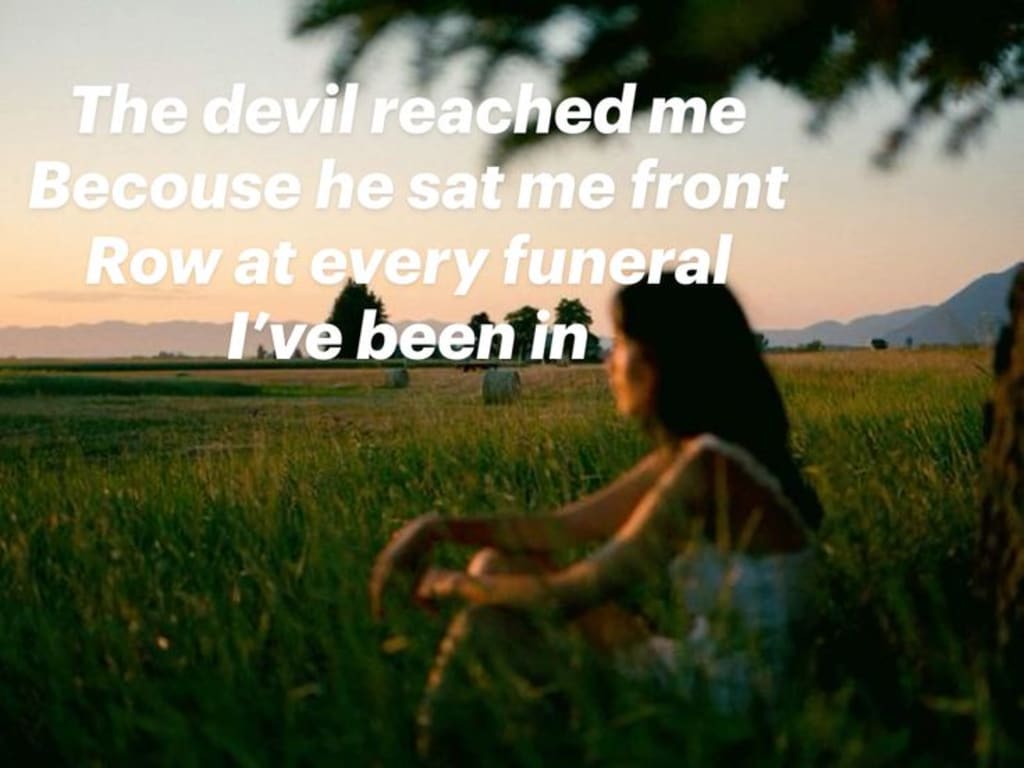
A chilling story of a perfect neighbor, a suspicious death, and the one detail that unraveled everything. Nobody cries at every funeral. But nobody smiles, either. Not like that. Not the slow, private kind of smile that doesn't know it's being watched — the kind that belongs to a person alone in a dark room, not standing six feet from a casket in front of forty mourners. I saw it. I wasn't supposed to. But I did. And that small curve of lips cost Diane Yeller the next thirty years of her life. The Perfect Street, The Perfect Lie Briar Hollow was the kind of neighborhood that made you feel slightly inadequate just driving through it. Manicured hedges. Freshly sealed driveways. Wind chimes that somehow never seemed annoying. The kind of place where people waved at each other from across the lawn and actually meant it. Diane Yeller had lived at number 14 for eleven years. She was 52, pretty in a careful, deliberate way, the sort of woman who always brought homemade food to every block party and remembered everyone's birthday. Her husband, Gerald, was a retired civil engineer — quiet, good-natured, the kind of man who fixed other people's fences without being asked. By every visible measure, they were happy. Visible measures, as any detective will tell you, are the last place you should look. Gerald Yeller died on a Thursday in late October. His doctor called it a stroke — sudden, swift, the kind that gives no warning and asks no permission. He was 61. People shook their heads and said it was too young. Diane accepted the casseroles and the condolence cards with the practiced grace of a woman who had been preparing for this moment far longer than anyone realized. I know that now. I didn't know it then. Then, I just saw the smile. The Detail That Changes Everything In true crime, investigators talk about the concept of leakage — the involuntary bleed of truth through the carefully constructed surface of a lie. A microexpression. A word chosen too precisely. A grief that performs itself instead of simply existing. Diane's smile was leakage. I was standing near the back of the funeral home, half-hidden behind a floral arrangement the size of a small car, when I caught it. The pastor had said something about Gerald being "finally at peace," and for just a fraction of a second — less than two heartbeats — Diane's mouth did something that no widow's mouth should do at those words. She looked relieved. I told myself I was imagining it. I told myself grief does strange things to people, makes them feel strange things, and that relief is sometimes just exhaustion wearing a different coat. I went home. I made tea. I did not sleep. Three weeks later, I called the non-emergency police line and told them what I saw. I want to be clear: I am not a detective. I am a retired schoolteacher named Carol Bines who reads too many crime novels and walks her dog past number 14 every morning at 7 a.m. I had no evidence. I had no motive theory. I had nothing except a smile that lived in my chest like a splinter. Sometimes, that is enough to pull a thread. What the Autopsy Found The detective assigned to the case — a young woman named Okafor with tired eyes and an unhurried manner — listened to me for twenty minutes without writing anything down. When I finished, she thanked me, handed me a card, and said she would "look into it." I assumed that was the end. It wasn't. Detective Okafor had Gerald's body quietly exhumed six weeks after burial. The second autopsy, performed by a forensic pathologist rather than the family physician, found something the first examination had missed entirely — elevated levels of potassium chloride in tissue samples. Injected, not natural. Introduced in a dosage carefully calculated to mimic the biological signature of a cardiac event. Someone with medical knowledge had done this. Or someone with a great deal of time and a reliable internet connection. Diane Yeller, it emerged, had spent four months the previous year completing an online nursing assistant course. She had also, investigators discovered, taken out a $900,000 life insurance policy on Gerald fourteen months before his death — just outside the standard contestability window that might have flagged it for review. She had been methodical. She had been patient. She had been almost perfect. Almost. Why Killers Smile The psychology of the calculated killer is not the psychology of rage. Rage is messy and impulsive and leaves fingerprints everywhere. What Diane had was something colder — a long, private grievance she had converted, over years, into a plan. Gerald, it came out during trial, had been quietly draining their savings for over a decade. Gambling. Loans repaid to people whose names didn't appear in any official documents. By the time Diane discovered the full extent of it, they were three months from losing the house on Briar Hollow. She didn't snap. She calculated. And when Gerald was finally, irrevocably gone — when the plan she had nursed through sleepless nights and careful internet searches had actually worked — her face forgot, for just a half second, to keep the mask in place. That half second was all it took. The Verdict Diane Yeller was convicted of first-degree murder after a trial that lasted twelve days. The insurance company recovered its payout. Number 14 Briar Hollow sold within a month — buyers who, I was told, had no idea what had happened inside its walls. Detective Okafor sent me a card after the verdict. Three sentences. The last one said: "Trust your instincts. You were right." I taped it to my refrigerator. I still walk past number 14 every morning at 7 a.m. The new family has a dog — a golden retriever who barks at squirrels with joyful, uncomplicated fury. I watch the windows sometimes, the way retired schoolteachers who've seen too much tend to do. I watch for smiles that don't belong.
About the Creator
Enjoyed the story? Support the Creator.
Subscribe for free to receive all their stories in your feed.
Comments
There are no comments for this story
Be the first to respond and start the conversation.