Latest Stories
Most recently published stories in Criminal.
The Family Funkhouser. Content Warning.
There's a family in Oklahoma that had the misfortune of having five of it's 13 children go to prison, 4 of them were here in Oklahoma. What kinds of misfortunes could have plagued such a family? Readers, let me tell you, it's Oklahoma and there were a number of things that can crop up to snatch away someone so quick it hurts.
By Cassie Moore9 months ago in Criminal
Is America a Terrorist State? And Why Trump's Policies Alarm the World
**Is the United States a “Terrorist Country”? And Are Trump’s Policies Dangerous for the World? When people call the *United States* a “terrorist country,” what they mean is not that the U.S. is exactly like al-Qaeda or ISIS. Instead, critics argue that some U.S. actions — especially military interventions, drone strikes, and economic sanctions — *look similar to terror tactics in their impact on civilians and societies. To understand this, we must examine **policies, consequences, and expert criticism based on data. **
By Junaid Shahid 9 months ago in Criminal
The Shocking Truth About Liquid Nitrogen Cocktails:
When Cocktails Get Too Cool — And People Pay the Price Picture a corporate holiday party. Twinkling lights. Awkward small talk. Then: smoke. Not from incense… but from your drink. Liquid nitrogen cocktails have become the smoky unicorn of the bar world, the beverage equivalent of a potion brewed by a chemistry professor who swears they know what they’re doing. (Weird Darkness)
By Shahjehan Khan 9 months ago in Criminal
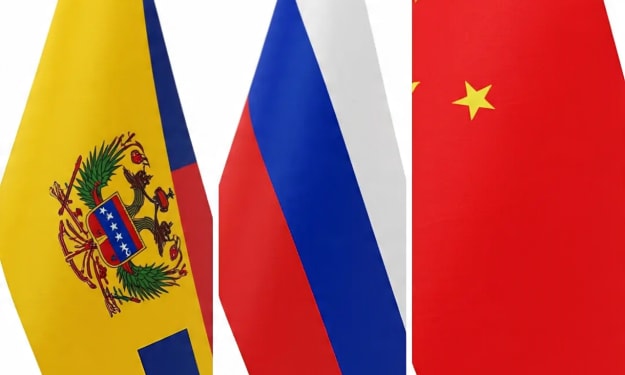
Drums Are Beating: Russia and China Align With Venezuela Amid Rising Tensions
**War Drums Are Beating: Russia and China Align With Venezuela Amid Rising Tensions** In recent weeks, global attention has turned sharply toward Venezuela as alarming headlines and rumors have fueled fears of a major international crisis. Claims of an emerging alliance between Russia, China, and Venezuela, combined with reports circulating online about the kidnapping of the Venezuelan president and his wife, have intensified public anxiety. While not all information has been officially confirmed, the situation reflects deep geopolitical tensions and a fragile regional balance that could have serious global consequences. At the heart of the crisis is Venezuela’s long standing confrontation with the United States. Years of economic sanctions, political isolation, and internal instability have left the country economically weakened and diplomatically polarized. The Venezuelan government views Washington’s pressure as a direct threat to its survival, while the United States argues that its actions are aimed at restoring democracy and accountability. This clash has created fertile ground for foreign powers to expand their influence. Russia and China have emerged as Venezuela’s most important international backers. Both countries have provided political support, economic cooperation, and strategic partnerships, though in different ways. Russia’s involvement has focused on military cooperation, arms deals, and symbolic demonstrations of support. China, on the other hand, has emphasized financial ties, energy investments, and long term economic interests. Together, their presence has fueled speculation that a new geopolitical front is forming in the Western Hemisphere. Tensions escalated dramatically after unverified reports spread across social media and some alternative outlets claiming that Venezuela’s president and his wife were kidnapped during a sudden security incident. These reports triggered confusion, panic, and intense international speculation. Official channels in Venezuela denied any confirmed kidnapping, but the rapid spread of the story revealed how unstable and opaque the situation has become. In an environment of distrust and political warfare, rumors can quickly feel as powerful as facts. The reasons behind the growing tension are complex. Venezuela’s vast oil reserves remain a critical factor. Control over energy resources has always played a central role in global power struggles, and Venezuela represents a strategic asset. For Russia and China, supporting Caracas helps challenge US influence near its traditional sphere of power. For the United States, preventing rival powers from gaining a foothold in the region is a core strategic concern. Another driver of instability is internal division within Venezuela itself. Economic hardship, migration, political opposition, and public dissatisfaction have weakened state institutions. This internal fragility increases the risk of sudden crises, coups, or misinformation campaigns that can spiral into international incidents. In such conditions, even false or exaggerated claims can push nations toward dangerous decisions. Looking ahead, several scenarios are possible. One likely outcome is a continuation of the current standoff, where Russia and China provide diplomatic and economic backing while avoiding direct military confrontation. This scenario would resemble a cold conflict marked by sanctions, rhetoric, and strategic posturing rather than open war. A more dangerous scenario involves miscalculation. An internal security breakdown, an accidental clash, or a provocation based on false intelligence could escalate tensions rapidly. In this case, Venezuela could become a flashpoint for a broader geopolitical crisis, even if no side initially intends a full scale conflict. There is also a possibility of de escalation. Behind closed doors, diplomatic negotiations could reduce pressure, especially if economic realities push all sides toward compromise. History shows that even the most heated standoffs can cool when the costs of conflict become too high. In conclusion, while the drums of war may sound loud, the reality is shaped by uncertainty, strategy, and restraint. Russia and China’s alignment with Venezuela is real, but it is driven more by influence and leverage than by a desire for war. The rumors surrounding the president highlight how volatile the situation has become. Whether this crisis deepens or fades will depend on decisions made in the shadows of diplomacy, not just the noise of headlines.
By America today 9 months ago in Criminal
America and Venezuela: How Decades of Tension Turned Into Open Confrontation
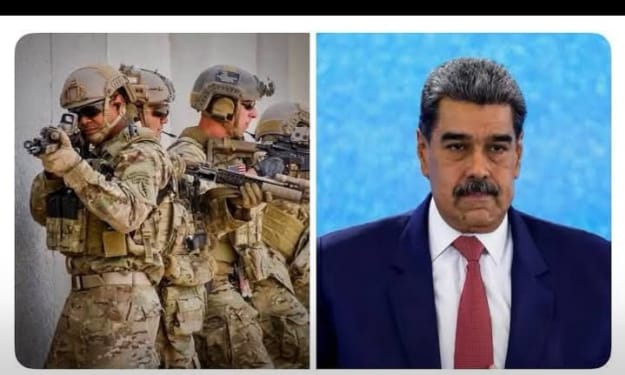
relationship between the United States and Venezuela has entered one of the most volatile periods in recent history, characterized by escalating tensions, military operations, diplomatic rupture, and international debate. What began as long-standing political and economic disagreement has now evolved into an open confrontation that carries major implications for regional stability, international law, and global geopolitics. Historical Roots of Tension The U.S.–Venezuela relationship has been fraught for decades, shaped by ideological differences, energy politics, and mutual distrust. Venezuela’s oil wealth historically made it a key partner for Washington, particularly throughout the 20th century. However, relations began cooling significantly in the late 1990s and early 2000s after Hugo Chávez rose to power with a project rooted in Bolivarian socialism and resistance to U.S. influence. Over the years, successive Venezuelan administrations under Chávez and later Nicolás Maduro adopted increasingly antagonistic foreign policies toward the United States, while the U.S. grew critical of Venezuela’s democratic backsliding and human rights record. The result was a heavily polarized bilateral relationship, with occasional cooperation overshadowed by frequent clashes, sanctions, and accusations of interference. These structural tensions widened after Venezuela’s disputed 2024 presidential election. The United States and several Western countries rejected the legitimacy of Nicolás Maduro’s victory, citing fraud and lack of transparency. Washington instead recognized opposition leader Edmundo González as interim president, deepening the diplomatic rupture at a time when both nations already had limited official channels of communication. � Encyclopedia Britannica +1 2025: From Sanctions to Military Escalation 2025 marked a dramatic escalation in the U.S.–Venezuelan conflict. Early in the year, the United States intensified pressure on Caracas through a combination of severe sanctions, economic coercion, and targeted counter-narcotics actions. The Trump administration designated Venezuela’s ruling elite and alleged criminal networks—most notably the so-called “Cartel de los Soles”—as terrorist organizations, a step that expanded U.S. legal authority to pursue punitive measures against individuals and assets linked to the Venezuelan government. � CRBC News These sanctions coincided with a significant military buildup in the Caribbean. Beginning in mid-2025, the United States deployed thousands of personnel, warships, aircraft, and surveillance assets near Venezuelan waters in an operation officially framed as a counter-narcotics and maritime security campaign. U.S. officials described these measures as necessary to disrupt smuggling networks and cartel operations alleged to be operating with Venezuelan complicity. Critics, however, interpreted the moves as coercive acts that blurred the line between counter-drug missions and preparations for conflict. � RTVE Throughout 2025, U.S. forces carried out a series of lethal maritime strikes on vessels in the Caribbean and eastern Pacific, which Washington claimed were involved in transporting drugs toward the United States. These operations reportedly resulted in dozens of deaths and drew harsh criticism from human rights organizations and foreign governments who condemned them as disproportionate and in violation of international norms. � Encyclopedia Britannica Oil Seizures and Naval Blockade Compounding the tension were dramatic economic and naval measures. In December 2025, U.S. forces seized a Venezuelan-linked oil tanker, accusing it of carrying sanctioned oil destined for unauthorized markets. Shortly afterward, President Trump announced a “total and complete blockade” of sanctioned Venezuelan tankers entering or exiting the country, a step aimed at crippling Venezuela’s oil-dependent economy and cutting off the government’s primary source of revenue. Venezuela denounced these actions as “piracy” and called on international bodies to condemn what it saw as blatant theft and aggression. � Wikipedia +1 Such measures intensified the humanitarian and economic crisis in Venezuela, where hyperinflation, shortages of basic goods, and a collapsed healthcare system already plagued the population. Critics of U.S. policy argue that the blockade’s economic impact disproportionately affects ordinary Venezuelans, exacerbating suffering without offering a clear path to political resolution. The 2026 Military Operation and Capture of Maduro The culmination of these escalating tensions occurred on January 3, 2026, when U.S. special operations forces conducted a high-profile raid in Caracas, capturing President Nicolás Maduro and his wife, Cilia Flores. The operation, described by critics as a violation of national sovereignty and international law, involved coordinated airstrikes and a covert helicopter insertion into Venezuelan territory. Maduro was transported to New York to face charges related to alleged drug trafficking and “narcoterrorism.” � AP News +1 President Trump proclaimed the raid a major victory, asserting that it would allow the United States to “run” Venezuela and stabilize the country, even opening the door for American oil companies to reenter the market. Yet, the legal basis for the operation remains fiercely disputed, and many observers liken it to the 1989 U.S. invasion of Panama. Venezuela’s vice president, Delcy Rodríguez, was appointed interim president by Caracas’s high court, but the country remains deeply divided, with ongoing protests and resistance from segments of the military. � The Guardian International Reaction and Future Prospects The global response has been sharply divided. Many Latin American countries, along with major powers like Russia and China, condemned the U.S. action as an unlawful intervention and breach of sovereignty. The United Nations has raised concerns about setting a dangerous precedent that could undermine international law and regional stability. Some European nations have called for de-escalation and respect for diplomatic solutions. � TIME As of early 2026, the future of U.S.–Venezuela relations is uncertain. Both nations stand at a crossroads: the United States insists it is acting to combat drug trafficking and restore democratic norms, while Venezuela decries foreign aggression and an attempt at regime change. The profound mistrust built up over years of political antagonism will make dialogue difficult, and the deepening humanitarian crisis adds urgency to finding pathways toward peace. In an era marked by rising geopolitical competition and domestic polarization, the U.S.–Venezuela conflict serves as a stark reminder of how historical grievances, economic interests, and ideological divides can spiral into open confrontation with ramifications far beyond their borders. If you’d like, I can tailor this further for a specific audience or format (e.g., blog style, opinion piece, or news report).
By Hasbanullah9 months ago in Criminal
The Silence After the Verdict
The courtroom had emptied, but the silence remained, thick and suffocating, hanging in the air like smoke from a fire that had burned out hours ago. The judge had spoken, the jury had deliberated, and the gavel had fallen with an echo that seemed to reverberate through the very bones of the building. The verdict was delivered: guilty. Or was it not guilty? It didn’t matter now. The silence was the only truth left.
By Jhon smith9 months ago in Criminal
American Forces Capture Venezuela President Nicolas Maduro
At 4:21 a.m. Eastern on January 3, Donald Trump dropped a message that instantly rewired the geopolitical map of the Americas: Nicolás Maduro, the sitting president of Venezuela, had been captured by U.S. forces and flown out of the country. The operation—conducted alongside U.S. law enforcement—was over almost as soon as it began. From first explosions to extraction, it took roughly three and a half hours.
By Lawrence Lease9 months ago in Criminal
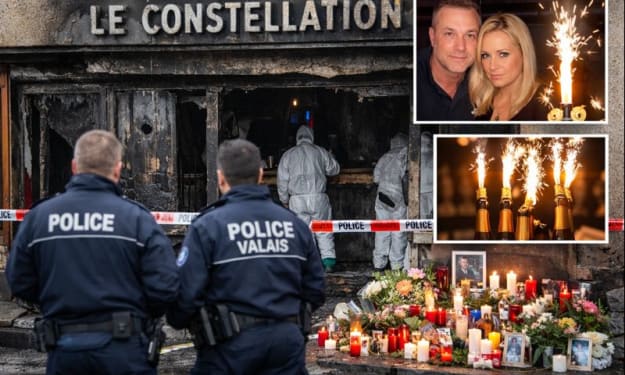
Swiss Bar Managers Face Negligence Claims After Deadly Fire. AI-Generated.
A tragic fire at a Swiss bar has left the nation in shock and mourning. The incident happened in the early hours of New Year’s Day during celebrations at a popular bar located in a well-known ski resort in Switzerland. What was meant to be a joyful start to the new year turned into one of the deadliest fire disasters the country has seen in recent years.
By dua fatima9 months ago in Criminal
Global and U.S. Political Reactions to U.S. Strikes on Venezuela and the Arrest of Its Presiden
Global and U.S. Political Reactions to U.S. Strikes on Venezuela and the Arrest of Its President The reported U.S. military strikes on Venezuela and the arrest of its president sparked intense reactions across the world and within the United States. Such an action, involving direct military force and the detention of a sitting head of state, raised serious political, legal, and moral questions. Governments, political leaders, and analysts responded in sharply different ways depending on their strategic interests, ideological positions, and views on international law. In the United States, reactions among political leaders were deeply divided. Supporters of the operation, mainly from conservative political circles, argued that the strikes were a necessary response to years of authoritarian rule, corruption, and alleged criminal activities linked to the Venezuelan leadership. They claimed that the action was justified on national security grounds and described it as a decisive move to combat drug trafficking and regional instability. According to this view, the arrest of the Venezuelan president was seen as an enforcement of justice rather than an act of aggression, and some American politicians described the operation as a turning point for democracy in Venezuela. On the other hand, many U.S. lawmakers strongly criticized the operation. Several Democratic politicians and independent voices argued that the strikes were unconstitutional and carried out without proper approval from Congress. They warned that using military force in this manner could weaken democratic oversight and set a dangerous precedent. Critics also expressed concern that the arrest of a foreign president by U.S. forces could damage America’s international credibility and undermine global legal norms. Some called for investigations and hearings to clarify the legal basis of the operation and to limit executive military powers in the future. International reactions were equally divided, though many governments expressed alarm. Major global powers such as China and Russia strongly condemned the U.S. action, describing it as a violation of Venezuela’s sovereignty. They emphasized that no country has the right to remove another nation’s leader by force and warned that such actions threaten global stability. These countries called for respect for international law and urged diplomatic solutions rather than military intervention. In Latin America, reactions reflected regional sensitivities to foreign intervention. Several governments criticized the strikes and the arrest, stating that Venezuela’s crisis should be resolved by Venezuelans themselves through dialogue and political processes. Leaders in the region expressed fears that the operation could lead to wider instability, refugee flows, and economic disruption. Some Latin American countries called for emergency international meetings to address the crisis and prevent further escalation. However, not all international responses were negative. A number of governments and political figures welcomed the removal of the Venezuelan president, arguing that his leadership had caused severe economic collapse, human rights abuses, and mass migration. These leaders viewed the U.S. action as an opportunity for Venezuela to begin a political transition and rebuild its institutions. Venezuelan opposition figures also reacted positively, describing the arrest as the end of a long period of repression and mismanagement. European countries generally adopted a more cautious tone. While many expressed concern over the use of military force, they also acknowledged the seriousness of Venezuela’s political and humanitarian crisis. European leaders emphasized the importance of avoiding further violence and encouraged international cooperation to support a peaceful transition. Calls for mediation, humanitarian access, and respect for international norms were common in European statements. Public debate also focused on key questions people were asking worldwide. Was the operation legal under international law. Would it lead to democracy or further chaos in Venezuela. Could this action increase tensions between major global powers. Analysts noted that the answers to these questions depend largely on what follows the operation. If the situation leads to stability and political reform, supporters may feel justified. If it results in prolonged conflict or regional instability, critics’ warnings may prove accurate. In conclusion, the reported U.S. strikes on Venezuela and the arrest of its president triggered one of the most controversial international reactions in recent history. The event exposed deep divisions over sovereignty, military intervention, and the role of powerful nations in shaping global politics. As the situation continues to evolve, the long term consequences of these actions remain uncertain, but their impact on international relations is already significant.
By America today 9 months ago in Criminal
USS Iwo Jima A Ship That Shaped Military and Space History
USS Iwo Jima A Ship That Shaped Military and Space History The USS Iwo Jima was one of the most significant amphibious assault ships in the history of the United States Navy. Named after the famous Battle of Iwo Jima during World War Two, the ship symbolized courage, strength, and innovation. Throughout its long service, USS Iwo Jima played vital roles in military operations, humanitarian missions, and even space exploration, making it a unique and historically important naval vessel. Background and Design USS Iwo Jima was commissioned in 1961 as the lead ship of the Iwo Jima class. Unlike traditional aircraft carriers, it was designed primarily to operate helicopters. This design allowed the ship to transport Marines quickly from sea to land, supporting amphibious warfare strategies. The ship was equipped with advanced communication systems, medical facilities, and command centers, enabling it to function as a mobile base during complex operations. Military Missions and Operations One of the main roles of USS Iwo Jima was supporting U.S. Marine Corps operations. It carried thousands of Marines, along with vehicles, weapons, and supplies. The ship played an important role during the Vietnam War, where it served as a launch platform for helicopters that transported soldiers into combat zones and evacuated wounded personnel. Its presence increased operational flexibility and reduced the risks associated with traditional beach landings. Beyond Vietnam, USS Iwo Jima participated in numerous military exercises and Cold War missions. It helped maintain U.S. naval presence in strategic regions and supported allied forces when needed. The ship’s ability to operate close to shore made it an essential tool for both combat and deterrence. Humanitarian and Peaceful Roles In addition to combat missions, USS Iwo Jima was frequently involved in humanitarian efforts. The ship provided disaster relief by delivering food, medical aid, and emergency supplies to areas affected by natural disasters. Its helicopters were especially useful for reaching remote or damaged locations, highlighting the ship’s importance beyond warfare. Role in Space Exploration One of the most remarkable chapters in the ship’s history was its involvement in NASA’s Apollo program. USS Iwo Jima became famous for recovering astronauts returning from space missions. Its most notable mission was the recovery of the Apollo 13 crew in 1970. After a critical failure during the mission, the astronauts safely returned to Earth, and USS Iwo Jima successfully brought them home. This achievement connected the ship to one of the most dramatic moments in space exploration history. Why USS Iwo Jima Was Important USS Iwo Jima is remembered as a symbol of technological progress and adaptability. It demonstrated how helicopters could transform naval warfare and improve military effectiveness. The ship also showed how naval vessels could serve multiple purposes, from combat and rescue operations to scientific and humanitarian missions. Its service reflected the changing demands of the twentieth century and the growing complexity of global challenges. Decommissioning and Legacy After more than thirty years of service, USS Iwo Jima was decommissioned in 1993. Although the ship was eventually dismantled, its legacy remains strong. It is remembered through historical records, photographs, and its connection to major military and space events. USS Iwo Jima was not just a warship, but a powerful example of service, innovation, and versatility. Its contributions to military history, humanitarian missions, and space exploration make it one of the most respected ships in U.S. naval history. The story of USS Iwo Jima continues to inspire and educate future generations about the importance of dedication and technological advancement.Decommissioning and Legacy After more than thirty years of service, USS Iwo Jima was decommissioned in 1993. Although the ship was eventually dismantled, its legacy remains strong. It is remembered through historical records, photographs, and its connection to major military and space events. USS Iwo Jima was not just a warship, but a powerful example of service, innovation, and versatility. Its contributions to military history, humanitarian missions, and space exploration make it one of the most respected ships in U.S. naval history. The story of USS Iwo Jima continues to inspire and educate future generations about the importance of dedication and technological advancement.
By America today 9 months ago in Criminal