Latest Stories
Most recently published stories in Criminal.
The Charlie Kirk Phenomenon
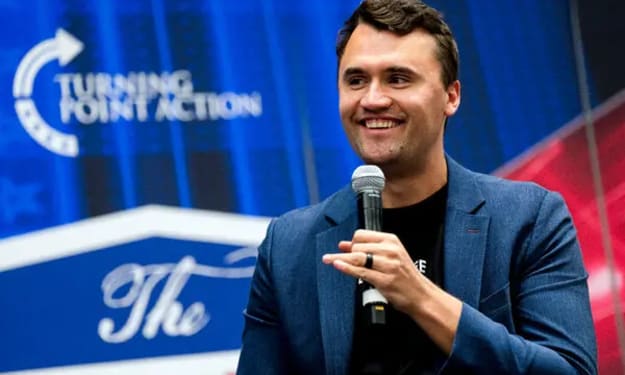
September 10, 2025, will be etched into the recent history of the United States not as a mere day of campaigning or academic debate, but as the moment when political polarization reached a point of no return. Charlie Kirk, one of the most influential and simultaneously controversial figures of modern conservatism, was the victim of a brutal assassination during a public event at Utah Valley University. This event did not just mark the tragic end of a 31-year-old thought leader; it triggered a wave of reactions that exposed deep social tensions, wild conspiracy theories, and a fierce debate about the limits of hatred in the digital age.
By Teodor Monescu9 months ago in Criminal
Federal Law Enforcement Shooting in Minneapolis Sparks National Debat
## **Federal Law Enforcement Shooting in Minneapolis Sparks National Debate** In early 2026, a serious incident unfolded in Minneapolis when federal law enforcement officers shot a civilian during a large-scale operation in the city. The event immediately drew public attention and ignited widespread discussion about the role of federal agencies, public safety, and accountability. The shooting occurred in a residential area, creating fear and confusion among residents and prompting strong reactions from local leaders and community groups. The presence of federal agents in Minneapolis was already controversial before the shooting took place. Their operation involved a significant number of officers and vehicles, transforming parts of the city into heavily monitored zones. When news broke that a civilian had been shot, the incident quickly became a focal point of national concern, especially given Minneapolis’s history with high-profile law enforcement encounters. **What Exactly Happened During the Minneapolis Incident?** According to initial accounts, federal officers were conducting an enforcement operation when gunfire was discharged, striking a civilian who was inside a vehicle. The precise sequence of events leading up to the shooting was not immediately clear, and conflicting reports circulated in the hours that followed. Witnesses described a tense atmosphere, with officers moving rapidly through the area and residents struggling to understand what was happening around them. **Why Were Federal Law Enforcement Officers in Minneapolis?** Federal agents were deployed as part of a broader enforcement action led by national authorities. The operation was described as one of the largest in the region, involving multiple federal agencies working together. Officials stated that the mission focused on enforcing federal law, while critics argued that the scale and visibility of the operation unnecessarily escalated tensions within local communities. **Who Was the Civilian Who Was Shot?** One of the most common questions from the public concerns the identity and condition of the civilian involved. Early reports confirmed that the individual was a woman who sustained gunshot wounds while inside a vehicle. Details about her identity and long-term condition were initially limited as authorities notified family members and medical teams provided treatment. The lack of immediate information contributed to public anxiety and speculation. **Was the Shooting Justified?** The question of justification remains central to the ongoing debate. Federal authorities indicated that the shooting occurred during an active operation and suggested that officers acted according to their training. However, local officials and civil rights advocates have called for a thorough and transparent investigation to determine whether the use of force was necessary or excessive. This debate reflects broader national concerns about when and how law enforcement should use lethal force. **How Did Local Leaders Respond?** City leaders reacted strongly to the incident. Minneapolis officials criticized the federal presence and expressed anger that such an operation took place without sufficient coordination with local authorities. Some leaders publicly demanded answers and accountability, while others called for federal agencies to reconsider how they operate within cities. These responses highlighted tensions between local governments and federal enforcement bodies. **How Did the Community React to the Shooting?** Residents near the scene reported fear, shock, and frustration. Protests quickly emerged, with community members demanding justice and transparency. Many expressed concern about the safety of civilians during large law enforcement operations, especially in densely populated neighborhoods. The shooting intensified existing mistrust between parts of the community and law enforcement institutions. **Is There an Ongoing Investigation?** Yes, investigations were launched to examine the circumstances surrounding the shooting. Multiple agencies became involved to ensure an independent review of the incident. Investigators are expected to analyze body camera footage, witness statements, and operational procedures to establish a clear timeline and determine responsibility. **What Does This Incident Mean for the Future?** The Minneapolis shooting has reignited national conversations about federal law enforcement practices, the use of force, and community safety. Many observers believe the incident could influence future policies, including how large-scale operations are planned and how federal agencies coordinate with local governments. It also raises questions about trust, transparency, and accountability in law enforcement. In conclusion, the federal law enforcement shooting in Minneapolis is more than a single incident. It represents a broader challenge facing cities across the United States as they navigate the balance between enforcing the law and protecting civilian lives. As investigations continue, the outcome may shape public policy and law enforcement practices for years to come.
By America today 9 months ago in Criminal
EXCLUSIVE: Lil Durk Held In Solitary For 131 Days Over Apple Watch As Lawyers Fight Prison Condition
The Segregated Housing Unit (SHU) program is intended to protect jail inmates from others or others from themselves at the Metropolitan Detention Center (MDC) among other locations around the country and world.
By Skyler Saunders9 months ago in Criminal
Tensions at Sea: The Russian Oil Tanker Seized by the United States in 2026
Tensions at Sea: The Russian Oil Tanker Seized by the United States in 2026 In early 2026, a Russian-flagged oil tanker was seized by the United States in the North Atlantic, attracting global attention. The vessel, originally called *Bella 1* and later renamed *Marinera*, had been monitored for weeks as it attempted to evade U.S. sanctions enforcement. This event has raised questions about international maritime law, geopolitical tensions, and the enforcement of economic restrictions on oil shipments. **Why Did the United States Target This Specific Tanker?** The primary reason the United States seized this tanker was due to its involvement in transporting oil from countries under sanctions, including Venezuela and Iran. The vessel had repeatedly changed flags and attempted to conceal its identity to avoid detection, making it part of what experts call a “shadow fleet.” U.S. authorities viewed these actions as deliberate attempts to bypass sanctions, threatening the effectiveness of economic restrictions and national security policies. The tanker became a high-priority target because its capture sends a message to other operators engaged in illicit oil transport. **Was the Tanker Carrying Oil at the Time of Seizure?** Reports indicate that the tanker was empty when intercepted. While this minimized immediate economic losses, it did not reduce the symbolic and strategic significance of the operation. The seizure demonstrated the U.S.’s determination to enforce sanctions rigorously and highlighted the risks faced by vessels attempting to circumvent international restrictions. Analysts note that even empty, the vessel represented a potential threat because of its history of sanctioned shipments. **Is the Seizure Legal Under International Law?** International maritime law generally protects ships under a nation’s flag. However, vessels operating under false registrations or engaged in illegal activities such as sanctions evasion may be subject to interception. U.S. authorities justified the seizure by citing the tanker’s use of a false flag and its history of sanction violations. Critics, including Russian officials, have condemned the action as an overreach that violates international norms. The legal debate underscores the tension between enforcing economic sanctions and respecting international maritime law. **Who Owns the Tanker, and Does Russia Claim It?** Ownership of the tanker is complex. The ship had been previously registered under another flag and operated under a different name before adopting Russian registration. Moscow publicly supported the vessel’s claim of affiliation, yet experts argue the flag change was largely strategic to avoid capture rather than a straightforward declaration of ownership. This situation complicates legal responsibility and emphasizes how vessel registrations can be manipulated to evade sanctions enforcement. **What Are the Geopolitical Implications of the Seizure?** The capture of the tanker has heightened tensions between the United States and Russia. It occurred amid ongoing debates over U.S. sanctions on Venezuela and other countries, demonstrating the willingness of the U.S. to act decisively against perceived sanction violations. The incident has drawn international scrutiny, with other nations closely monitoring how maritime sanctions are enforced and whether similar actions could escalate conflicts or provoke diplomatic disputes. **Could This Seizure Be Part of a Larger Pattern?** Yes. Observers note that the U.S. has increasingly pursued vessels suspected of sanctions evasion, tracking them across international waters. This is part of a broader strategy to limit revenue streams to sanctioned countries and entities while disrupting networks involved in illicit oil transport. Experts suggest that similar operations could continue, particularly against vessels suspected of moving oil illegally or attempting to conceal cargo from authorities. **What Happens to the Crew of the Tanker?** The fate of the tanker’s crew is another common question. U.S. authorities typically detain crews for questioning to determine involvement in illegal activity, but in many cases, they are treated according to international law and may be released after investigation if no direct wrongdoing is found. The crew’s experience underscores the personal risks associated with operating vessels engaged in sanctioned or illicit activities. **How Does This Affect Global Oil Markets?** Although the tanker was empty, its capture sends a clear signal to operators worldwide. It may deter other vessels from attempting to evade sanctions and reinforce the United States’ enforcement measures. While there is minimal immediate impact on global oil supply, the strategic message could influence future trading behaviors, shipping decisions, and compliance with international sanctions. In conclusion, the 2026 seizure of the Russian oil tanker reflects a complex intersection of maritime law, sanctions enforcement, and geopolitics. The operation highlights the challenges of regulating global oil shipments, the legal ambiguities of vessel registration and ownership, and the strategic importance of controlling revenue flows to sanctioned entities. As this story develops, it continues to spark debate and attention worldwide, illustrating the evolving nature of international sanctions enforcement and maritime security.
By America today 9 months ago in Criminal
Losing Sweet Holly. Content Warning.
Holly Cantrell was a mother of two boys and a wife to an ill husband. Holly was a Physical Therapist Technician at the McAlester Regional Health Center. She was a Bouncy Brunette with a fun sense of Humor. Holly made friends easily and often had lunch with friends at work. Friends, to have a charming Physical therapist while they are pushing and pulling on the sore parts, is such a good thing. But things were noticeably different one cold Friday Morning in January.
By Cassie Moore9 months ago in Criminal
Renée Hartevelt Was Eaten Alive After Death. Content Warning.
Renée Hartevelt was twenty-five years old when she walked into an apartment in Paris and never walked out. She was a Dutch exchange student at the Sorbonne, studying literature, surrounded by language and ideas meant to last longer than flesh ever could. Friends described her as warm, intelligent, unguarded. She believed people when they spoke to her kindly. That belief is what killed her.
By Aarsh Malik9 months ago in Criminal
Execution's Irony. Content Warning.
Robert Allen Brecheen wasn’t much of a thinker. At least it didn’t’ appear to be his strong suit when planning out important life events, including robbery. But I’m rushing to judgement, Friends! Forgive me, I’m ahead of myself.
By Cassie Moore9 months ago in Criminal
Was His Abduction Caused by His Support for the Palestinian Cause or the Theft of Oil?
Was His Abduction Caused by His Support for the Palestinian Cause or the Theft of Oil?** The controversy surrounding the alleged targeting or attempted abduction of Venezuela’s president has sparked intense debate across political and media circles. At the center of this debate lies a critical question: was he targeted because of his outspoken support for the Palestinian cause, or was the real motive an effort to seize control of Venezuela’s vast oil wealth? To understand this issue, it is necessary to examine how ideology and economic interests intersect in modern geopolitics. Venezuela holds the largest proven oil reserves in the world, making it one of the most strategically important countries in global energy politics. Oil has long been the backbone of the Venezuelan economy and a source of both power and vulnerability. Any government that seeks to fully control its oil resources inevitably challenges foreign corporations and governments that rely on access to cheap and stable energy supplies. When Venezuela limited foreign involvement and asserted national sovereignty over its oil sector, it directly confronted powerful international interests. At the same time, Venezuela’s leadership adopted a clear and unapologetic stance in support of the Palestinian cause. Unlike many governments that choose neutral language or diplomatic silence, the president publicly condemned Israeli actions against Palestinians, expressed strong support for Gaza, and framed the issue as a matter of human rights and justice. This position placed Venezuela in direct opposition to influential Western powers that strongly support Israel, particularly the United States. Supporting the Palestinian cause on the international stage is not without consequences. Global politics often punishes leaders who challenge dominant narratives or align themselves with causes considered controversial by powerful states. Venezuela’s stance was not symbolic or occasional; it became a consistent element of its foreign policy. This moral positioning turned the country into an ideological opponent, especially during periods of heightened tension in the Middle East. However, history suggests that ideology alone rarely triggers extreme political actions such as destabilization or removal attempts. Moral opposition is often tolerated until it interferes with material interests. This is where oil becomes central to the discussion. Venezuela’s control over its oil resources provided it with leverage and independence, reducing its vulnerability to external pressure. For nations seeking greater influence over global energy markets, regaining control or access to Venezuelan oil would be a significant strategic gain. During times of global energy instability, oil-producing countries become focal points of international competition. Sanctions, political isolation, and support for opposition movements are frequently used as tools to weaken governments that resist external demands. In such contexts, narratives involving coups, forced removals, or abductions often emerge as part of broader pressure campaigns rather than isolated events. Internally, Venezuela faced serious economic and social challenges. Inflation, shortages, declining oil production, and political polarization weakened public trust and state institutions. These conditions increased instability and made the country more susceptible to both internal unrest and external interference. In fragile political environments, allegations of kidnapping or overthrow can gain traction quickly, regardless of whether they are fully proven. Media coverage further complicated the situation. International outlets often focused heavily on economic mismanagement and governance issues while paying less attention to Venezuela’s foreign policy positions, including its support for the Palestinian cause. On the other hand, supporters of the government emphasized foreign conspiracies and economic warfare. Both perspectives presented partial truths, obscuring how ideology and economic interests worked together. Ultimately, framing the issue as a choice between support for Palestine or oil theft oversimplifies a complex reality. The president became a target because he combined moral defiance with control over a strategic resource. His support for the Palestinian cause challenged powerful political narratives, while Venezuela’s oil represented immense economic and strategic value. Together, these factors created a situation in which pressure, destabilization, and targeting became increasingly likely. In modern geopolitics, leaders are rarely challenged for their beliefs alone. They become targets when their beliefs are backed by resources that grant them independence and influence. Venezuela’s case illustrates how the collision of principle and profit can place a nation’s leadership at the center of global confrontation.
By America today 9 months ago in Criminal
Fox and Fowler. Content Warning.
Monsters, dear Readers, are a grizzly business. For those who hunt them, for those who study the monsters, and those who write about monsters. But what is a monster? Do they just hide under the bed or the closet as so often in our childhoods?
By Cassie Moore9 months ago in Criminal
The Family Funkhouser. Content Warning.
There's a family in Oklahoma that had the misfortune of having five of it's 13 children go to prison, 4 of them were here in Oklahoma. What kinds of misfortunes could have plagued such a family? Readers, let me tell you, it's Oklahoma and there were a number of things that can crop up to snatch away someone so quick it hurts.
By Cassie Moore9 months ago in Criminal