
He Spent 11 Years in Prison for a Crime He Did Commit
We talk about crime. We talk about punishment. We almost never talk about the morning after a man walks out of prison and has to figure out who he is now.
M Mehran
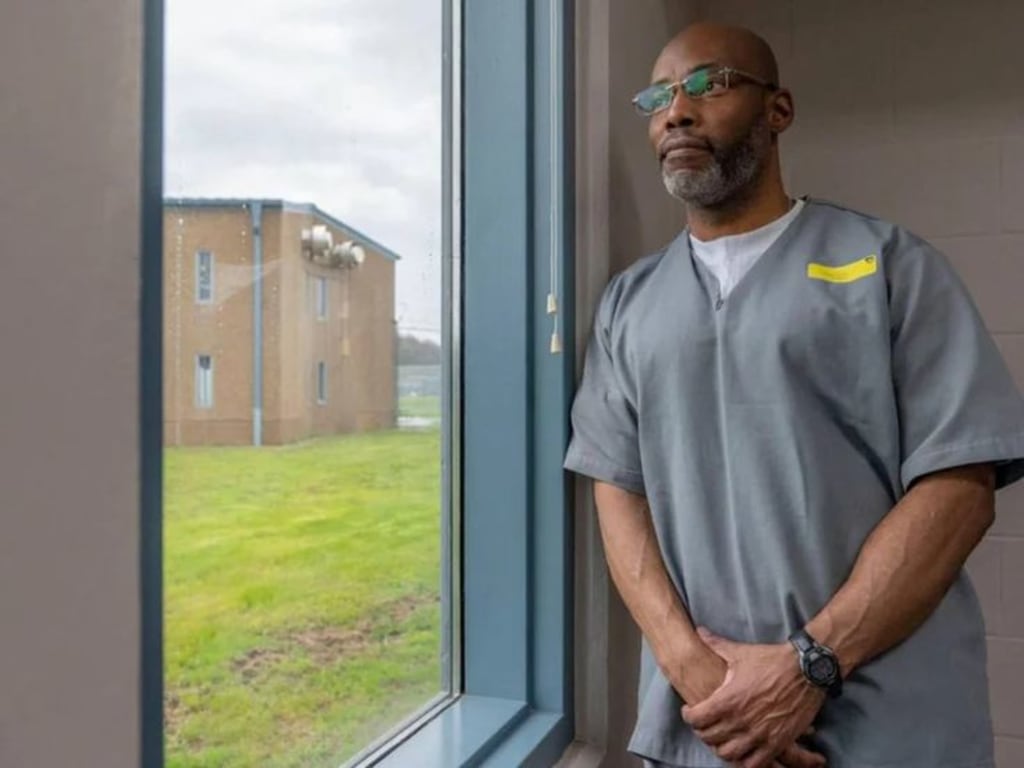
We talk about crime. We talk about punishment. We almost never talk about the morning after a man walks out of prison and has to figure out who he is now. Darnell Price was released on a Tuesday in October, at 7:14 in the morning, with $200 in gate money, a plastic bag containing the clothes he had been wearing eleven years ago, and a bus ticket to a city where the only person waiting for him was his aunt Cecile, who was sixty-one years old and had driven four hours the night before and slept in her car in the parking lot of a Waffle House so she would be there when the gates opened. He stood in the October air for a moment. It was cold in a way that felt personal. Cecile held him for a long time without saying anything. She was a small woman and he had grown into someone large and careful and very still, and they stood there together in the parking lot while the morning opened up around them — pale sky, distant highway noise, the smell of cut grass from somewhere he couldn't see. "You hungry?" she said finally. He was. He was so hungry he had forgotten what it felt like to not be. He had been twenty-two when it happened. Young enough to still believe that his choices existed in a vacuum — that you could do one thing without it becoming the thing that defined you, that the story of your life was still open and unwritten and full of directions you could choose from, the way it feels when you are young and have not yet learned that stories accumulate whether you are paying attention or not. The crime was an armed robbery. A convenience store on the east side of Millhaven, a November night, a plan that had seemed, in the specific desperation of that specific moment, like the only available door. He had not hurt anyone. The clerk — a man named Peter, fifty-four, who would later testify with a steadiness that Darnell had respected even in the courtroom — had handed over the money without resistance, and Darnell had left, and had been arrested forty minutes later three blocks away, still holding the bag, as if some part of him had already known that running was pointless and was simply waiting for the part where it ended. Eleven years. That was what the judge decided a November night and a bag of money and a twenty-two-year-old's desperation was worth. Darnell had sat with that number for a long time before he decided what to do with it. What they don't tell you about prison — what the news and the documentaries and the crime podcasts almost never get around to — is how much of it is simply time. Raw, unstructured, inescapable time that you have to learn to inhabit the way you learn to inhabit a room with no furniture. You can pace it. You can sleep through pieces of it. You can fill it with anger, which is easy and available and will eat you entirely if you let it. Or you can do something harder, which is sit with it quietly and ask yourself, in the specific honesty that only real solitude produces, who you actually are underneath everything that happened. Darnell read. He read everything — history, philosophy, legal textbooks he requested through the prison library, novels that cracked his idea of the world open in ways he hadn't expected. He got his GED in year two and a paralegal certificate in year five. He filed three grievances through proper channels, won two, and understood by year seven that the system was not designed to redeem anyone but that you could use its own structures against its indifference if you were patient and precise and refused to be made small. He was not made small. It took everything he had, every single day, but he was not made small. The first week out was the strangest experience of his life, and his life had contained a great deal of strange. The grocery store nearly undid him — the sheer volume of it, the forty-seven varieties of cereal, the music playing from somewhere overhead, the automatic doors that opened without being asked. He stood in the cereal aisle for four minutes, unmoving, while a woman with a toddler in her cart navigated around him with the patient tolerance of someone who had learned not to wonder too hard about other people's stillness. He bought oatmeal. It was the only thing that felt like a manageable decision. Cecile's apartment was small and warm and smelled like the hair oil she had used his entire life, a smell that reached back past the eleven years and the courtroom and the November night and found something earlier — something that was just a boy in a kitchen on a Saturday morning, no story yet, all directions still open. He sat at her kitchen table and ate oatmeal and did not speak for a while, and Cecile sat across from him with her coffee and did not require him to. She was the best person he had ever known. He thought that clearly, sitting there, the way you can sometimes think things clearly when you have had eleven years to strip everything down to what is actually true. He found work through a reentry program — filing, administrative tasks, the paralegal certificate turning out to be worth something in a small nonprofit that did housing advocacy on the south side. The director, a woman named Gloria who had the energy of someone perpetually running late to something important, hired him on a Friday afternoon and said, "I don't care what you did. I care what you do. Can you file?" He could file. He could do more than file, it turned out. He was meticulous and calm and understood paperwork the way people understand things they have studied out of pure survival, and within eight months he was doing case intake and client interviews and sitting across from people whose faces held the specific exhaustion of those who have been let down by systems so many times they have stopped being surprised by it. He knew that exhaustion. He could speak to it without explaining why. He thought about Peter sometimes — the clerk from the convenience store, the man who had testified with such steadiness. He had written him a letter in year four, through the victim's advocacy program. He had not expected a response and had not received one, and he had made his peace with that because making peace with things you cannot change was a skill he had spent eleven years developing until it became something close to wisdom. The letter had said, simply: I am sorry for what I did to you that night. I think about it. I wanted you to know that it mattered to me, even when I was too young and too lost to show it. Whether it had mattered to Peter, he would never know. It had mattered to him. On the one-year anniversary of his release, Darnell Price sat at Cecile's kitchen table — he had his own apartment now, three blocks away, but he came for breakfast on Tuesdays — and thought about the word criminal and what it meant and how long it was supposed to follow a person. He didn't have an answer. He suspected nobody did. He ate his oatmeal. He watched the morning come through Cecile's kitchen window, slow and ordinary and full of the specific grace of things that simply continue. Then he got up, put on his coat, and went to work.
About the Creator
Enjoyed the story? Support the Creator.
Subscribe for free to receive all their stories in your feed.
Comments
There are no comments for this story
Be the first to respond and start the conversation.