
America's Most Wanted: A Nation's Criminal History
From frontier outlaws to digital con artists — how crime shaped the soul of America.
M Mehran
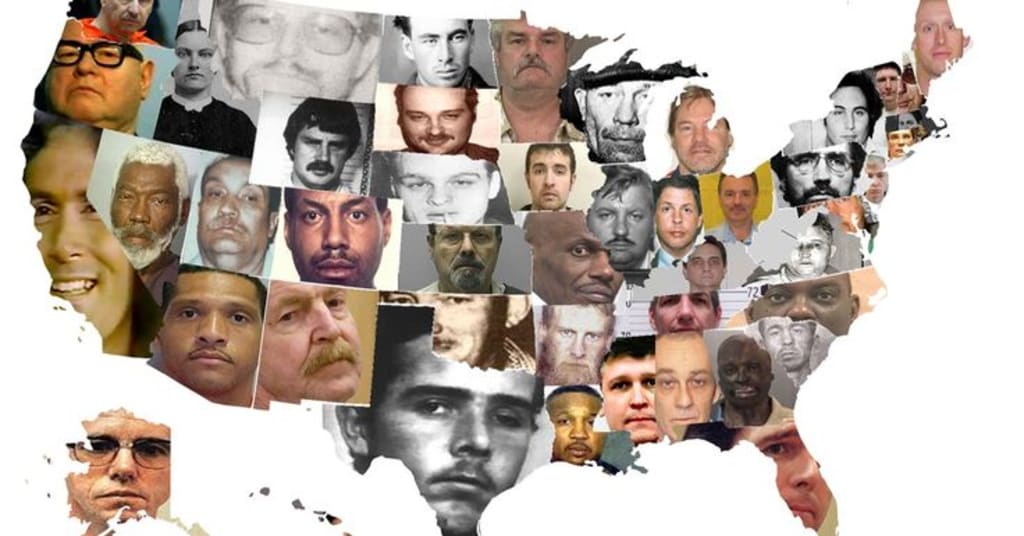
There's something uniquely American about a good outlaw story. Maybe it's the mythology. Maybe it's the contradiction — a nation built on freedom, yet endlessly fascinated by those who abuse it. Whatever the reason, crime has been woven into the American fabric since the very beginning, evolving with every generation, adapting to every era, and reflecting — sometimes uncomfortably — the society that produced it. This is that story. Outlaws Born from Chaos America's first criminals weren't hiding in shadows. They were riding through them. The post-Civil War frontier was a lawless stretch of land where governance barely existed and justice was whoever had the fastest gun. Jesse James robbed banks and trains across Missouri, becoming a folk hero to struggling farmers who saw him as a rebel against corrupt railroad corporations. Billy the Kid killed his first man at fifteen and was dead by twenty-one. Butch Cassidy's Wild Bunch made robbery look like theater. These men were dangerous. They were also products of a broken, chaotic time — men who found in crime the only power available to them. The pattern repeats throughout American history. Every wave of crime tells you exactly what was going wrong in the society around it. Prohibition and the Birth of Organized Crime When the U.S. government banned alcohol in 1920, it didn't eliminate the demand. It just handed the market to criminals. Al Capone built a Chicago empire worth an estimated $60 million annually — roughly $1 billion in today's money. He bribed police, corrupted politicians, and orchestrated violence with cold efficiency. The St. Valentine's Day Massacre of 1929, where seven rival gang members were executed in a Chicago garage, shocked even a city used to bloodshed. But Capone was a symptom, not the disease. Prohibition created organized crime in America. The infrastructure — the networks, the bribes, the supply chains — survived long after alcohol became legal again. The mob simply found other products: gambling, drugs, protection rackets. The lesson was hard and expensive: you can't legislate away human desire. You just change who profits from it. The Serial Killer Era Few chapters of American criminal history haunt the imagination like the 1970s and 80s. Ted Bundy was charming, educated, and confessed to murdering at least thirty women. John Wayne Gacy hosted neighborhood parties and buried thirty-three young men beneath his house. Jeffrey Dahmer's crimes were so extreme they seemed to belong to fiction. Law enforcement was genuinely unprepared. The FBI's Behavioral Science Unit — the real-life inspiration for Silence of the Lambs — was built largely in response to this era, developing criminal profiling almost from scratch as investigators scrambled to understand what they were dealing with. True crime became America's darkest obsession during these years. It remains one today, with podcasts, documentaries, and streaming series drawing tens of millions of listeners and viewers who can't quite look away. The Drug Wars and the 1990s Crisis By the late 1980s, crack cocaine had detonated inside America's most vulnerable communities. Violent crime rates hit historic peaks in the early 1990s. Cities like New York, Los Angeles, and Washington D.C. recorded murder rates that seem almost unimaginable today. Gang warfare over drug territory claimed thousands of lives. Entire neighborhoods were hollowed out by addiction, poverty, and fear. The government's response — mandatory minimum sentences, three-strikes laws, mass incarceration — locked up millions of Americans, disproportionately Black men, while doing little to address the conditions that fed the crisis in the first place. The U.S. prison population quadrupled between 1980 and 2000. The crime rate did eventually fall — dramatically — through the late 1990s and 2000s. Criminologists still debate exactly why. But the incarceration machine kept running long after the emergency passed. Crime Today: New Tools, Same Desperation Modern American crime looks different on the surface. The weapons have changed. Cybercrime is now one of the fastest-growing threats in the country. The FBI's Internet Crime Complaint Center reported losses exceeding $10 billion in 2022, with fraud, identity theft, and ransomware attacks targeting everyone from retirees to major hospital systems. A criminal today can steal more money from a laptop in another country than any bank robber ever took at gunpoint. Violent crime, which had fallen steadily for three decades, spiked sharply in many cities during 2020 and 2021 — driven by pandemic-era economic collapse, strained police resources, and community trauma. It has since begun declining again, but the interruption was a reminder that progress is never permanent. And white-collar crime continues largely unchecked. Financial fraud and corporate corruption drain more from ordinary Americans every year than all street crime combined. Prosecutions remain rare. The system, critics argue, protects those at the top with the same consistency that it punishes those at the bottom. The Mirror Crime Holds Up Crime doesn't happen outside of society. It happens inside it. Every robbery, every scam, every act of violence carries a story beneath it — of poverty, trauma, opportunity denied, or greed unchecked. That's not an excuse. It's a map. And maps, if you're willing to read them honestly, can show you where things went wrong and how to find a better way forward. America has always been a nation capable of extraordinary things. Understanding its darkest chapters isn't pessimism. It's the first honest step toward something better. The crime story isn't over. It never is. But every generation gets to decide what chapter comes next.
About the Creator
Enjoyed the story? Support the Creator.
Subscribe for free to receive all their stories in your feed.
Comments
There are no comments for this story
Be the first to respond and start the conversation.