
America’s Most Terrifying Survival Story: Mary Vincent
a nightmare no one deserves

In September 1978, a 15-year-old girl stood on the side of a California highway trying to hitchhike home. Her name was Mary Vincent. Within the next 24 hours, she would endure one of the most horrifying attacks in modern American true crime history — an attack so brutal that even decades later, investigators, journalists, and survivors still speak about it with disbelief. But this is not only a story about cruelty. It is a story about survival. Because the teenager left mutilated in a canyon was never supposed to live. And yet she did. A Ride to inhuman torture In 1978, hitchhiking was still common among teenagers across the United States. Mary, who had run away from an abusive home situation in Nevada, was trying to travel through California to reach relatives. She was young, exhausted, and vulnerable. That was when she met Lawrence Singleton, a 50-year-old former merchant seaman driving a van. At first, he appeared harmless. Witnesses later recalled that Mary had other opportunities for rides, but Singleton insisted only she could fit in the vehicle. It was a tiny detail that would later haunt investigators. As the hours passed, Mary realized they were no longer heading in the right direction. The roads became emptier. The landscape became isolated. Then came the first strike. Singleton smashed her skull with a heavy hammer-like object while she bent down near the van. When she regained consciousness, she was tied up, naked, and trapped inside the vehicle. Throughout the night, Singleton repeatedly raped and tortured her in the darkness of the California wilderness. Mary begged him to let her go. Singleton answered with chilling calmness. “You want to be free?” Then he picked up a hatchet. The Hatchet What happened next became one of the most infamous acts of mutilation in American criminal history. Singleton hacked off Mary's left forearm below the elbow. As she screamed and instinctively grabbed him with her remaining arm, he swung again and severed the other. The shock was so extreme that Mary later described feeling detached from reality, unable to fully process what she was seeing. Blood poured from both wounds. Singleton believed she would die within minutes. To make sure her body disappeared, he dragged the teenager to the edge of a canyon near Interstate 5 and threw her off a 30-foot cliff. The fall shattered several ribs. Naked, bleeding, and barely conscious, she landed at the bottom of the ravine alone. Most people would have died there. Mary Vincent did not.
Crawling Back From Death Somehow, she regained consciousness. What followed sounds less like reality and more like something from a survival horror film. Knowing she was bleeding to death, Mary forced her severed arms into mud to slow the blood loss. The dirt acted like a crude clotting barrier. Then, using what remained of her limbs and sheer determination, she climbed back up the canyon wall. The climb reportedly took hours. When she finally reached the roadside, she began walking. Imagine the sight: A teenage girl covered in blood. Both arms severed. Barefoot. Naked. Walking through rural California at dawn. One passing car reportedly sped away after seeing her. Another vehicle finally stopped — a couple traveling through the area who rushed her to a hospital before she bled out completely. Doctors later said she had lost nearly half the blood in her body. Against every medical expectation, she survived.
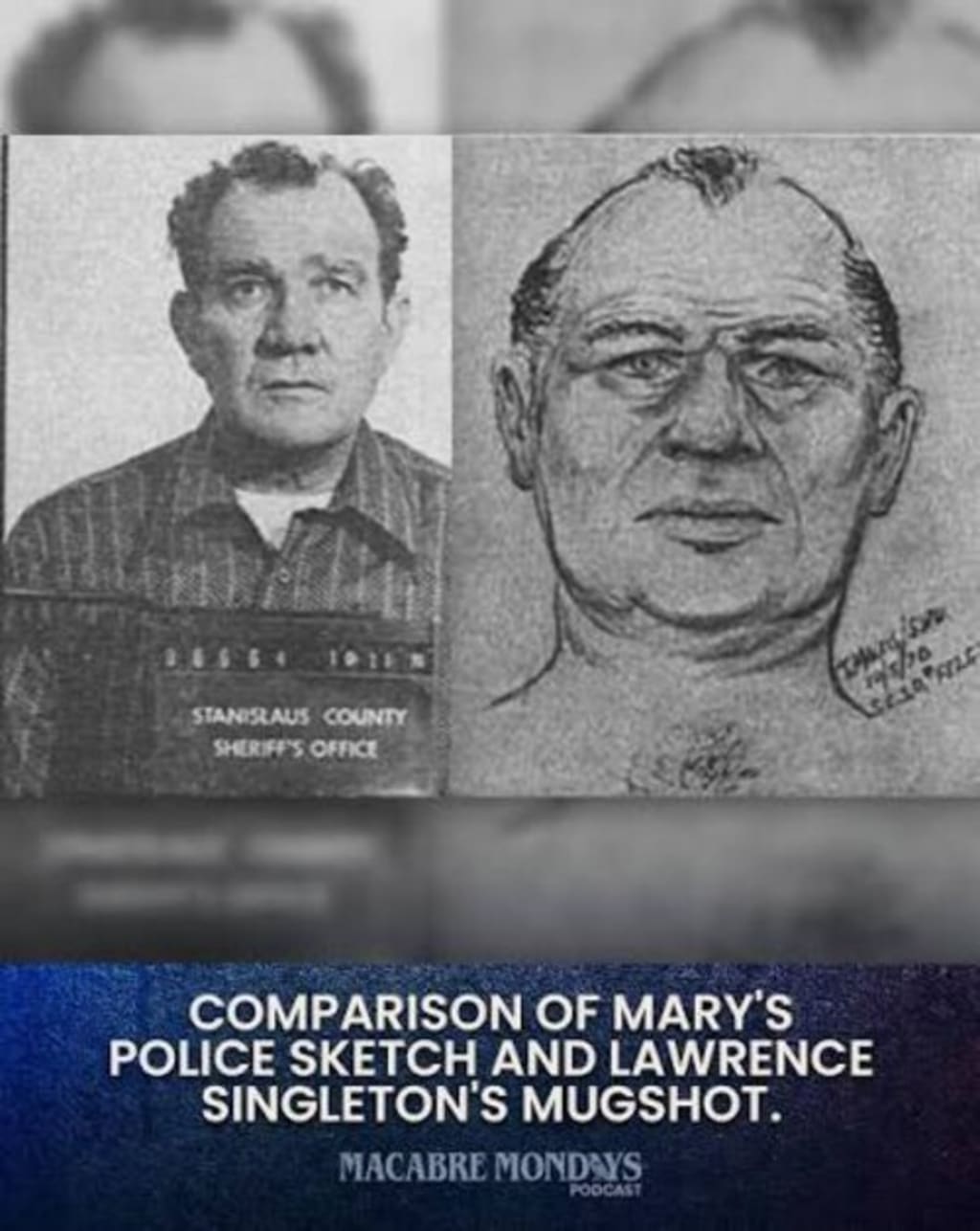
“I Wanted Them To Know His Face” While hospitalized, Mary worked with investigators to identify her attacker. Despite catastrophic trauma, she gave police a remarkably detailed description of Singleton. She later explained that she wanted officers to recognize him instantly if they ever saw him. A sketch was circulated. A neighbor recognized the face. Nine days later, Singleton was arrested. Six months after the attack, Mary entered the courtroom wearing prosthetic arms and testified against the man who had tried to butcher her to death. Witnesses described the courtroom falling silent as she pointed one of her metal prosthetics toward Singleton during testimony. The jury convicted him. Then came the outrage.
The Sentence That Shocked America Despite the horrifying nature of the crime, California law at the time limited the sentence available to the court. Singleton received 14 years in prison. Even the judge reportedly admitted he would have sentenced him to life if legally allowed. But the nightmare became even worse. Due to “good behavior” and prison credits, Singleton served only eight years before being released back into society. The decision caused public fury across the United States. Communities protested his release. Some towns refused to allow him to live there. For Mary Vincent, the fear never truly ended. She later admitted she struggled with nightmares, trauma, poverty, and the crushing reality of rebuilding a life after unimaginable violence. And then, years later, the system failed again.
The Murder Everyone Saw Coming After his release, Lawrence Singleton moved to Florida. In 1997, police discovered him covered in blood beside the body of Roxanne Hayes, a mother of three who had been stabbed to death inside his home. Mary Vincent traveled across the country to testify once again against the man who destroyed her life. This time, the court sentenced Singleton to death. Before the sentence could be carried out, he died of cancer in prison in 2001.
The Survivor Who Became Stronger Than The Monster What makes Mary Vincent’s story unforgettable is not only the brutality of the crime. It is the encouragingly terrifying scale of her will to survive. A mutilated teenager climbed out of a canyon using severed arms. Walked miles through the wilderness. Identified her attacker. Faced him in court. And survived long enough to watch him finally die behind bars. Over the years, Mary became an artist, advocate, and voice for trauma survivors. Her case also contributed to public pressure for tougher sentencing laws in California for torture-related crimes, sometimes referred to as the “Singleton Bill.” But the emotional scars never vanished completely. In interviews, she admitted the nightmares still came. Sudden movements during sleep reportedly caused broken bones and injuries years after the attack. Yet even after everything, Mary Vincent refused to let the man who mutilated her define her life. And perhaps that is the most disturbing truth of all for monsters like Singleton: Sometimes the victim survives. Sometimes they testify. Sometimes they outlive the nightmare.
Author's Note:
we humans are monsters towards ourselves. can it never stop?
Did you like this article? How about you try reading another one of my works?
About the Creator
E. hasan
An aspiring engineer who once wanted to be a writer .
Enjoyed the story? Support the Creator.
Subscribe for free to receive all their stories in your feed.
Comments
There are no comments for this story
Be the first to respond and start the conversation.