
Pakistan Warns India: Is Another Conflict on the Horizon?
Rising Tensions, Water Disputes, and Regional Security Concerns in South Asia

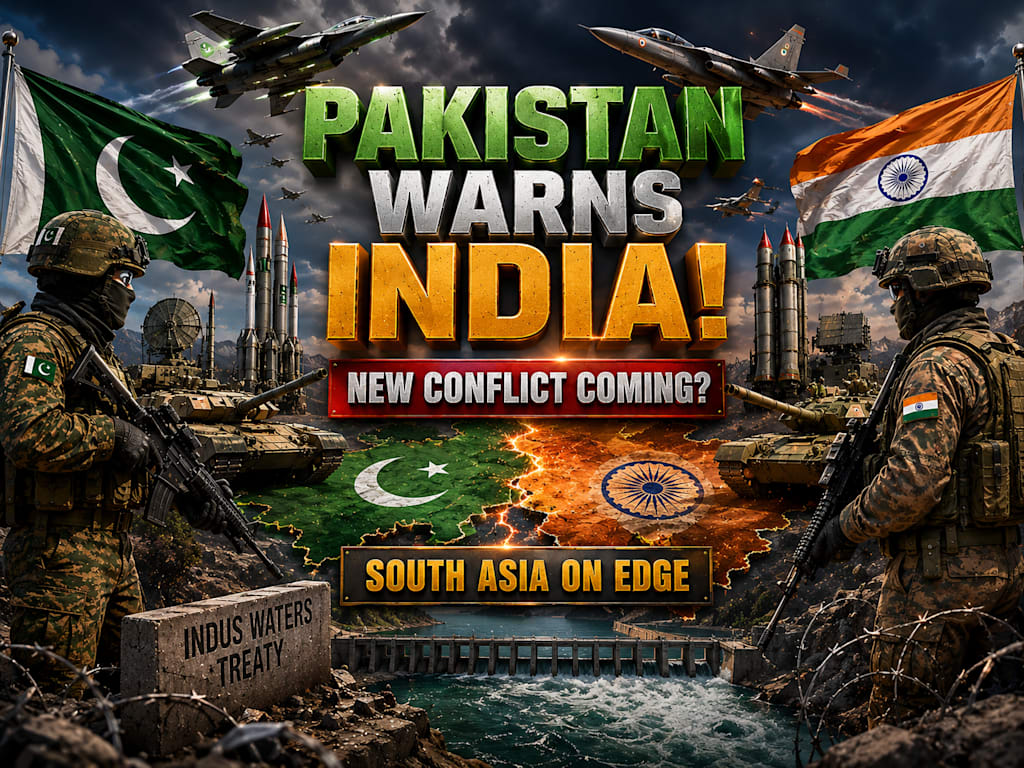
Pakistan Warns India: Is Another Conflict on the Horizon?
Relations between Pakistan and India have once again become the focus of international attention following recent statements by Pakistani officials regarding national security and water resources. While there has been no official declaration of war, growing tensions between the two nuclear-armed neighbors have raised questions about the future of peace and stability in South Asia.
The latest controversy emerged after discussions surrounding the Indus Waters Treaty, a historic agreement signed in 1960 with the support of the World Bank. The treaty governs the distribution and use of water from the Indus River system, which is essential for agriculture, industry, and daily life in both countries. For decades, the agreement has survived periods of political hostility and military confrontation.
However, recent political developments have renewed concerns. Pakistani officials have warned that any attempt to restrict or significantly alter water flows could be viewed as a serious threat to national security. Some statements from senior officials suggested that Pakistan would consider all available options to protect its interests if the country's water supply were endangered.
These remarks quickly attracted international media attention and sparked debate across South Asia. Some commentators interpreted the statements as a warning to India, while others viewed them as a political message aimed at emphasizing the importance of water security rather than signaling immediate military action.
India and Pakistan have a long and complicated history. Since gaining independence in 1947, the two nations have fought several wars and experienced numerous military standoffs. Despite these challenges, both countries have also engaged in diplomatic dialogue and confidence-building measures at various times.
Today, both Pakistan and India possess nuclear weapons, making any increase in tensions a matter of global concern. Security analysts frequently point out that the existence of nuclear deterrence creates strong incentives for restraint. While disagreements may occur, the potential consequences of a large-scale conflict encourage leaders to consider diplomatic solutions whenever possible.
Another important factor is the economic reality facing both nations. Pakistan and India are home to more than 1.6 billion people combined. Economic growth, trade, infrastructure development, education, and healthcare remain major priorities for both governments. A prolonged conflict would impose significant costs and could affect regional prosperity for years to come.
The role of water in the dispute cannot be underestimated. Climate change, population growth, and increasing demand for resources have made water security an increasingly important issue around the world. In South Asia, where agriculture supports millions of livelihoods, access to reliable water supplies is closely linked to economic stability and food security.
International observers have urged both countries to continue dialogue and use established mechanisms to resolve disputes. Experts note that the Indus Waters Treaty has historically provided a framework for addressing disagreements, even during periods of intense political tension. Many believe that maintaining communication channels is essential for preventing misunderstandings and reducing the risk of escalation.
Military modernization is another aspect influencing regional dynamics. Both Pakistan and India continue to invest in defense capabilities, advanced technologies, and strategic infrastructure. While such developments are often presented as defensive measures, they can contribute to concerns about regional competition.
At the same time, diplomatic engagement remains active. Officials from both countries continue to communicate through various channels, and international partners have repeatedly emphasized the importance of peaceful conflict resolution. Global powers and international organizations generally support efforts to maintain stability in South Asia because of the region's strategic significance.
Media coverage and social media discussions can sometimes amplify fears of conflict. Headlines suggesting that war is imminent often attract attention, but they do not always reflect the full complexity of the situation. It is important to distinguish between political rhetoric, diplomatic disagreements, and actual military developments.
Looking ahead, the future relationship between Pakistan and India will depend on several factors, including political leadership, economic priorities, regional developments, and public sentiment. While tensions remain, both countries also have strong reasons to avoid confrontation and pursue peaceful solutions.
In conclusion, recent warnings from Pakistani officials regarding water security have increased attention on Pakistan-India relations. However, there is currently no confirmed indication of an imminent military conflict between the two countries. The situation remains sensitive, and developments should be monitored carefully. As history has shown, dialogue, diplomacy, and cooperation remain the most effective tools for maintaining peace and stability in South Asia.
About the Creator
Wings of Time
I'm Wings of Time—a storyteller from Swat, Pakistan. I write immersive, researched tales of war, aviation, and history that bring the past roaring back to life
Enjoyed the story? Support the Creator.
Subscribe for free to receive all their stories in your feed.
Comments
There are no comments for this story
Be the first to respond and start the conversation.