
Pakistan Invites Lebanon Army Chief
Can Military Diplomacy Promote Stability, or Will It Add New Tensions to an Already Sensitive Region?

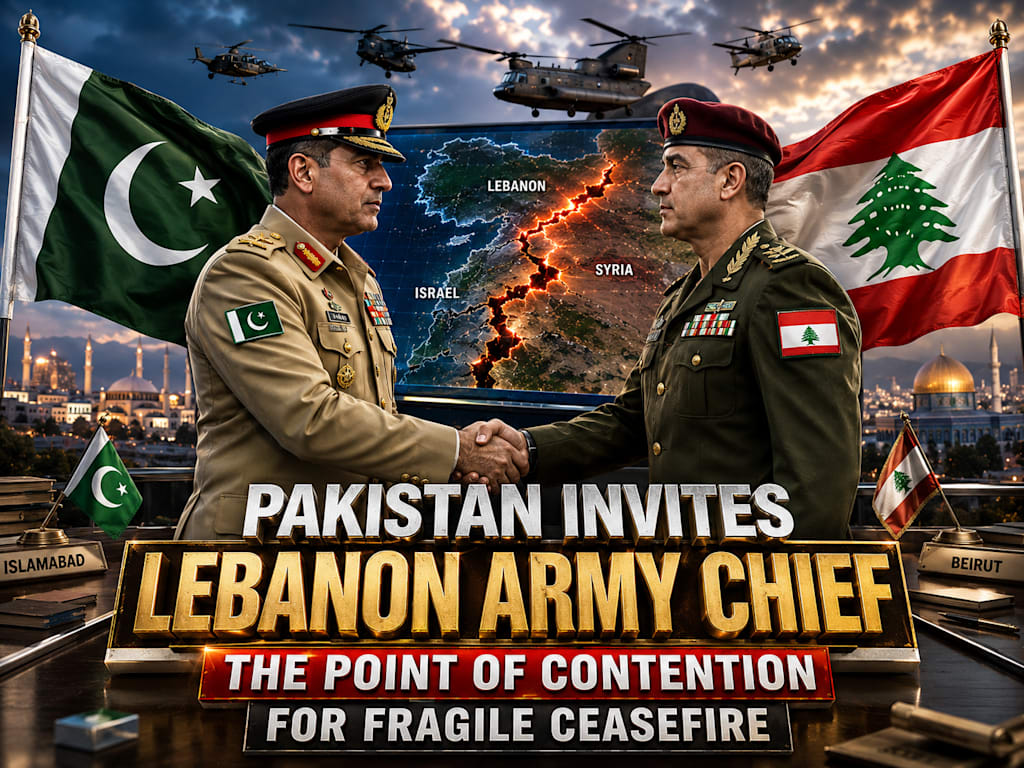
Pakistan Invites Lebanon Army Chief – The Point of Contention for a Fragile Ceasefire
The recent invitation extended by Pakistan to the Lebanon Army Chief has attracted significant attention from political analysts, diplomats, and security experts across the world. The visit comes at a time when the Middle East continues to experience uncertainty, with ceasefire agreements remaining fragile and regional tensions capable of escalating with little warning. As a result, the timing of this diplomatic and military engagement has raised important questions about its purpose, potential benefits, and possible consequences.
Pakistan and Lebanon have traditionally maintained friendly diplomatic relations. Both countries are members of various international organizations and have often supported cooperation in areas such as peacekeeping, military training, education, and international diplomacy. Military-to-military contacts between friendly nations are not unusual. Such exchanges often focus on professional development, security cooperation, and the sharing of experiences related to defense and peacekeeping operations.
The invitation to the Lebanon Army Chief is being viewed by many observers as part of Pakistan's broader effort to strengthen ties with countries across the Middle East. Pakistan has long emphasized the importance of maintaining balanced relationships with various regional powers while promoting dialogue and cooperation. In recent years, Islamabad has sought to expand its diplomatic engagement beyond traditional partnerships, focusing on economic opportunities, security collaboration, and regional stability.
However, the visit comes during a particularly sensitive period. Several parts of the Middle East continue to face security challenges, and ceasefire arrangements in conflict-affected areas remain under pressure. Even small diplomatic moves are often closely scrutinized because they can be interpreted in different ways by various regional actors. Supporters of the visit argue that military diplomacy can help reduce misunderstandings and strengthen communication channels between countries. Critics, however, worry that any military-related engagement during a delicate ceasefire period could create new questions about regional alignments and strategic intentions.
One of the key issues being debated is whether the visit could influence the broader security environment. Lebanon occupies a strategically important position in the Middle East and has often found itself affected by regional rivalries and conflicts. The Lebanese Armed Forces play a crucial role in maintaining national stability and security. Therefore, interactions involving Lebanon's military leadership often attract international attention.
Pakistan's military is widely respected for its experience in peacekeeping missions under the umbrella of the United Nations. Over the years, Pakistani peacekeepers have participated in numerous international operations aimed at maintaining peace and supporting conflict resolution. Some analysts believe that discussions between Pakistani and Lebanese military officials may focus on peacekeeping, counterterrorism, disaster response, and military education rather than geopolitical competition.
Nevertheless, regional observers remain cautious. In today's interconnected world, diplomatic and military engagements are often viewed through a geopolitical lens. Neighboring countries and international powers frequently assess how such meetings fit into the broader strategic landscape. Depending on how the visit is perceived, it could either strengthen confidence-building measures or become a source of speculation regarding future regional developments.
Another important aspect is the role of military diplomacy in preventing conflict. Direct communication between military leaders can help improve transparency, reduce misunderstandings, and encourage cooperation during times of uncertainty. History has shown that strong communication channels often play an important role in preventing crises from escalating into larger confrontations. For this reason, many experts argue that dialogue should continue even when political tensions exist.
Economic considerations may also influence the relationship. Pakistan has increasingly sought partnerships that support trade, investment, and development. Stability in the Middle East is closely linked to economic growth, energy security, and international commerce. Stronger ties between nations can contribute to broader regional cooperation, creating opportunities that extend beyond military affairs.
The international community will likely monitor the outcomes of this visit closely. Statements made by officials, agreements reached during meetings, and the overall tone of discussions will help determine how the visit is interpreted globally. If the focus remains on professional military cooperation, peacekeeping, and regional stability, the engagement may be viewed positively. If uncertainty or conflicting messages emerge, questions regarding its impact on the fragile ceasefire could continue.
In conclusion, Pakistan's invitation to the Lebanon Army Chief represents an important diplomatic development occurring at a sensitive moment for the Middle East. While supporters see it as a constructive effort to strengthen cooperation and communication, others view it as a potential point of contention in a region already facing significant challenges. Whether the visit ultimately contributes to stability or becomes part of broader geopolitical debates will depend on the actions and messages that follow. What remains clear is that diplomacy, dialogue, and cooperation continue to be essential tools for preserving peace in an increasingly complex and interconnected world.
About the Creator
Wings of Time
I'm Wings of Time—a storyteller from Swat, Pakistan. I write immersive, researched tales of war, aviation, and history that bring the past roaring back to life
Enjoyed the story? Support the Creator.
Subscribe for free to receive all their stories in your feed.
Comments
There are no comments for this story
Be the first to respond and start the conversation.