
HEATED Debate in US Congress Over Iran War
Lawmakers Clash as America Faces Rising Costs and Questions in Iran Conflict

HEATED Debate in US Congress Over Iran War
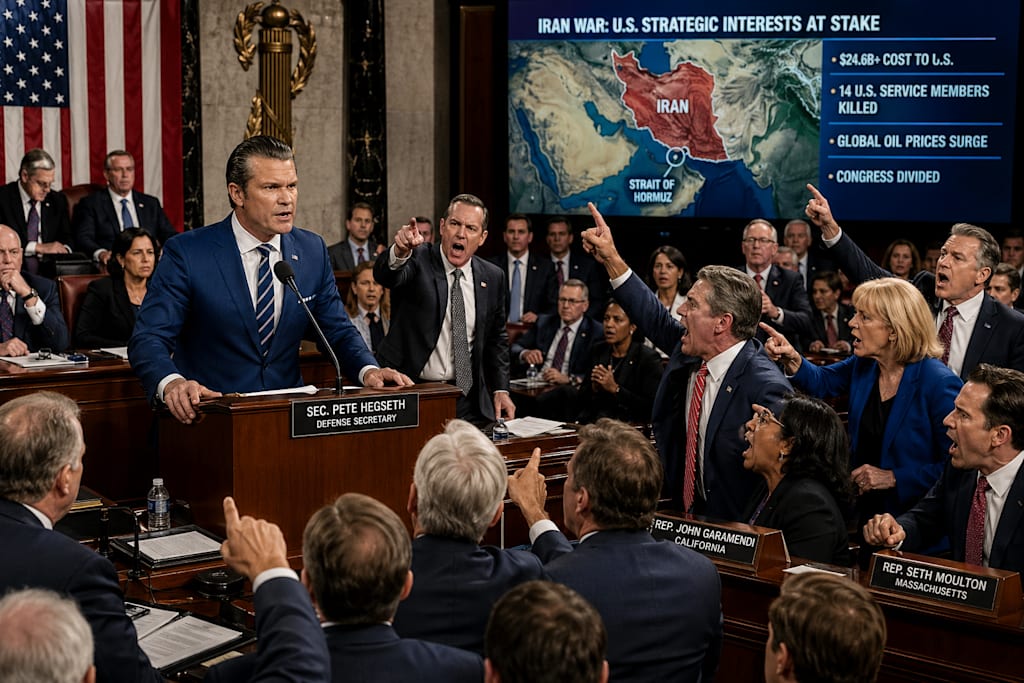
A fierce and emotional debate has erupted inside the United States Congress over America’s growing involvement in the Iran war. As the conflict enters another dangerous phase, lawmakers from both major political parties are deeply divided over whether the war is justified, how much it is costing, and who should have the authority to continue military operations.
The debate intensified after U.S. Defense Secretary Pete Hegseth appeared before the House Armed Services Committee for his first major testimony since the war with Iran began. What was expected to be a routine defense budget hearing quickly turned into a heated political battlefield.
According to Pentagon figures, the war has already cost the United States nearly $25 billion and claimed the lives of 14 American service members. This shocking number immediately triggered sharp criticism from Democratic lawmakers, who accused the administration of dragging the country into another endless Middle East conflict without proper congressional approval.
Representative John Garamendi called the war a “political and economic disaster” and described it as a dangerous “quagmire,” comparing it to America’s painful experiences in Iraq and Afghanistan. He argued that rising fuel prices, economic instability, and growing tensions in the Strait of Hormuz are hurting ordinary American families.
Defense Secretary Hegseth strongly rejected that criticism. In one of the most dramatic moments of the hearing, he said calling the war a quagmire was like “handing propaganda to America’s enemies.” He accused critics in Congress of being “reckless, feckless, and defeatist,” saying their words weaken national security and encourage Iran.
Another major issue in the debate is whether President Donald Trump had the legal authority to launch and continue military operations without a formal declaration of war from Congress. Under the U.S. Constitution, only Congress has the power to declare war, but modern presidents have often used military force without direct approval.
Senator Tim Kaine and several lawmakers pushed for a War Powers Resolution that would require Congress to authorize continued military action against Iran. They argued that no president should have unlimited power to start a war without debate and accountability.
However, the Senate rejected that resolution by a narrow vote of 47–53, allowing military operations to continue without new congressional approval. Most Republicans supported the administration, saying restricting military action during an active conflict would weaken America’s position and send the wrong message to allies and enemies alike.
Some Republicans also expressed concern. Senator Lisa Murkowski warned that if U.S. ground troops were deployed inside Iran, Congress must be fully involved in authorizing such a major escalation. She said lawmakers deserve greater engagement and transparency from the White House.
Public opinion is also becoming a serious factor. Rising oil prices and uncertainty in global markets are increasing pressure on Washington. Reports suggest President Trump’s approval ratings have fallen as Americans worry about another long and expensive war overseas.
Critics say the administration has not clearly explained what victory looks like. Is the goal regime change, stopping Iran’s nuclear ambitions, or simply weakening Iranian military power? Without a clear strategy, many fear the war could continue for years.
Supporters of the war argue that Iran’s nuclear program and regional influence pose a serious threat to U.S. interests and allies, especially Israel and Gulf nations. They believe strong military action is necessary to prevent a larger future conflict.
The debate in Congress reflects a deeper national question: should America continue acting as the world’s military policeman, or should it avoid another costly foreign war?
For now, the fighting may be slowed by a fragile ceasefire, but political tensions in Washington remain intense. Congress is split, the public is anxious, and the future of U.S. involvement in Iran remains uncertain.
One thing is clear: the Iran war is no longer just a battlefield issue—it has become one of the biggest political fights in America.
About the Creator
Wings of Time
I'm Wings of Time—a storyteller from Swat, Pakistan. I write immersive, researched tales of war, aviation, and history that bring the past roaring back to life
Enjoyed the story? Support the Creator.
Subscribe for free to receive all their stories in your feed.
Comments
There are no comments for this story
Be the first to respond and start the conversation.