Reading List
Beyond Formal Education: Embracing the Knowledge Revolution Through Reading
‘The Day of the Triffids’, in my opinion is one of the best science fiction novels of all time. In 1951 when the novel was published for the first time, science was, well, still backward and the notion of Star Wars and biotechnology was none existent, or in its infancy. Yet that is what the novel is all about. John Wyndham, the author of the novel could see the future with uncanny ability.
By Juma Killaghai3 years ago in BookClub
Rani Lakshmibai: The Fearless Warrior Queen of Jhansi. Content Warning.
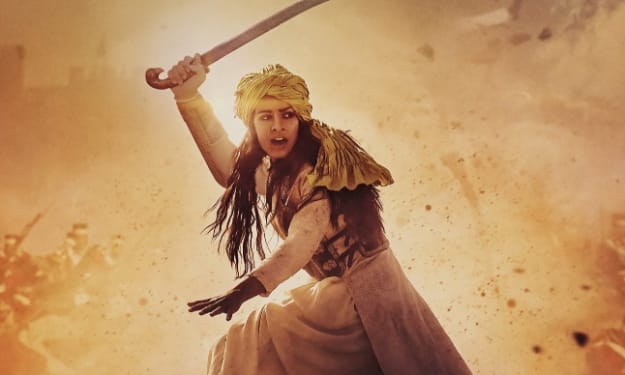
The story of Rani Lakshmibai of Jhansi is a saga that resonates through the annals of Indian history—a tale of valor, resilience, and defiance against colonial oppression. Born as Manikarnika Tambe on November 19, 1828, in the vibrant town of Banares, she was later hailed as the Maharani consort of the princely state of Jhansi in the Maratha Empire. Her journey from a spirited young girl to a symbol of resistance against British rule is both inspiring and captivating. Married to Maharaja Gangadhar Rao Newalkar of Jhansi in 1842, she became known as Lakshmibai, a name bestowed upon her in honor of the Hindu goddess Devi Lakshmi. Despite the patriarchal norms of her time, Rani Lakshmibai defied convention by actively participating in activities typically reserved for men. From horseback riding to practicing martial arts, she exhibited a spirit of independence that was uncommon for women in Indian society during the 19th century. Tragedy struck when her husband, Maharaja Gangadhar Rao, passed away in 1853, leaving behind a young widow determined to protect her kingdom. However, the British East India Company, under the Doctrine of Lapse, refused to recognize the rightful heir to the throne and annexed Jhansi to its territories. Undeterred by the colonial injustice, Rani Lakshmibai took up arms and joined the Indian Rebellion of 1857, also known as the First War of Independence. Her leadership during the rebellion cemented her legacy as a national hero and a beacon of hope for Indian nationalists. Despite facing numerous challenges, including the betrayal of trusted allies and the loss of her infant son, Rani Lakshmibai remained resolute in her determination to defend Jhansi against British forces. The siege of Jhansi in March 1858 marked a pivotal moment in her struggle against colonial oppression. Despite being outnumbered and outgunned, she led her forces with unparalleled courage, refusing to surrender to the British demands. The valiant defense of Jhansi showcased her unwavering commitment to freedom and inspired countless others to join the fight against tyranny. Following the fall of Jhansi, Rani Lakshmibai embarked on a daring escape with her son, Damodar Rao, on horseback. Despite facing insurmountable odds, she continued to resist British rule, seeking refuge in various regions of India alongside fellow rebels. Her unwavering resolve and indomitable spirit earned her admiration even from her adversaries, with British reports acknowledging her as "personable, clever, and beautiful." The final chapter of Rani Lakshmibai's life unfolded in Gwalior, where she fought alongside other rebel leaders in a last stand against British forces. Despite facing overwhelming odds, she refused to surrender, leading her troops with bravery and determination. In the heat of battle, she fought fiercely, dressed as a cavalry leader, until her tragic demise on June 17, 1858. Though her physical presence may have faded into history, the legacy of Rani Lakshmibai endures as a testament to the indomitable spirit of resistance against oppression. Her courage, sacrifice, and unwavering commitment to freedom continue to inspire generations of Indians, reminding us of the power of resilience in the face of adversity. In the hearts of the people, she remains not just a queen of Jhansi, but a symbol of courage and defiance—a true embodiment of the spirit of India's fight for independence. Rani Lakshmibai's legacy lives on, immortalized in the annals of history as a symbol of hope, courage, and unwavering determination. Her tale serves as a reminder that the strength of character and the will to fight for justice can transcend the boundaries of time and place, inspiring individuals to stand up against oppression in all its forms. Even today, Rani Lakshmibai's name evokes a sense of pride and admiration among Indians, serving as a guiding light for those who dare to challenge injustice and tyranny. As we reflect on her remarkable life and legacy, let us not only honor her memory but also draw inspiration from her example. Let us carry forward her spirit of resilience and determination, ensuring that her sacrifices are never forgotten and that her dream of a free and just India continues to inspire generations to come. In the hearts and minds of millions, Rani Lakshmibai will forever remain a symbol of courage, strength, and unwavering resolve—a true heroine of Indian history. Her legacy is not just a chapter in the past but a beacon of hope for the future—a reminder that even in the darkest of times, the flame of freedom can never be extinguished.
By Avhishek Agarwal3 years ago in BookClub
Book Review: Sorrow’s Forest by Kaitlin Corvus
Sorrow’s Forest teems with beasts, some ugly, some beautiful, all unnatural. A ban restricts travel beneath her branches, existing for as long as Lakeview Township has, and most who disobey do not return. To win a bet, twelve-year-old Mackie King enters the forest, and in its depths, he discovers a boy-like devil. Then he steals him from the trees. In as little as an hour, the devil names himself Blue and fits seamlessly into the Kings’ life. No one seems to remember he wasn’t always there. Only Mackie knows the truth. Now, Mackie and Blue are grown, Queen Sorrow has awakened, and she wants her devil back. She’s willing to tear the town apart to reclaim him. Mackie has always been resourceful, but it will take every bit of ingenuity he and Blue possess to thwart Queen Sorrow and her minions, save the town, and free themselves from the shadow of the bittering forest.
By Marie Sinadjan3 years ago in BookClub
Life in modern Egypt during the era of President Sisi . Content Warning.
During his presidency, President Sisi addressed many important issues and challenges facing the Egyptian people. He began by focusing on improving the economic conditions through the implementation of comprehensive development programs, such as infrastructure projects, agricultural development, and enhancing foreign investments. He also took measures to combat corruption and improve the investment climate in the country.
By peter fathi3 years ago in BookClub
"Veiled in Nature's Cloak"
In a lush forest full of life lived a lonely cat named Luna. Luna's fur was a mixture of colors – brown, black and a little green – that blended perfectly with the dense foliage of the forest. He was a master of camouflage, able to move through the undergrowth unseen and unheard.Luna's days were spent hunting for food and exploring her forest home.
By MUZAMMIL KHAN N3 years ago in BookClub
"Life's Brew: Savoring Every Sip"
India, a land of diverse cultures, traditions and flavors, has a rich history of tea and coffee consumption. These two drinks are deeply ingrained in the Indian social fabric, becoming an indispensable part of daily life and social interactions.
By MUZAMMIL KHAN N3 years ago in BookClub
What I Read: January 2024
2024 started with a bang for me. From home maintenance emergencies to unexpected dental procedures, it was a month of great transformation, and also of great stress. Managing stress has always been difficult for me, but as I enter my thirties I am learning different ways to cope with the stresses in life that are inevitable, instead of simply ignoring them the way I did in my twenties. One of those coping mechanisms has been escapism through reading. And as the stresses in January were plentiful, so were the books.
By Alys Revna3 years ago in BookClub