Reading List
"If You Tell" by Gregg Olsen: A Gripping Dive into the Dark Depths of True Crime
Gregg Olsen's "If You Tell" is not merely a true crime thriller; it is an immersive journey into the chilling realms of human depravity, resilience, and the unbreakable bonds of sisterhood. In this riveting non-fiction narrative, Olsen meticulously unravels a tale that transcends the conventions of traditional crime literature, leaving readers both captivated and horrified by the shocking events that transpired within the walls of a seemingly ordinary family home.
By Lilly Goldberg3 years ago in BookClub
A Warrior King of Ancient India
In the annals of Indian history, one name that resonates through the ages is that of Prithviraj Chauhan, a valiant king of the Chauhan dynasty. His story is one of bravery, love, and the clash of civilizations. Let's embark on a journey through time to unravel the fascinating tale of this legendary ruler. Prithviraj Chauhan, also known as Rai Pithora, ascended the throne in 1177 CE as a young ruler inheriting a kingdom that stretched far and wide, from Thanesar in the north to Jahazpur in the south. His capital, Ajmer, pulsated with the heartbeat of a thriving empire nestled in the heart of present-day Rajasthan. From the outset, Prithviraj harbored grand ambitions of expanding his realm through military prowess. His conquests were marked by strategic brilliance, notably defeating formidable adversaries like the Chandelas, showcasing his martial prowess and strategic acumen. In 1191, Prithviraj demonstrated his leadership by rallying a coalition of Rajput kings against the Ghurid army led by Muhammad of Ghor. The battleground near Taraori witnessed an epic clash, culminating in a resounding victory for the Rajputs, a testament to Prithviraj's military prowess and the unity of the Rajput clans. However, fate took a cruel turn in 1192 when Muhammad of Ghor returned with a formidable force of Turkish mounted archers. The decisive Battle of Tarain ensued, a momentous clash that would forever alter the course of Indian history. Despite a valiant effort, Prithviraj faced defeat, and the sands of Tarain bore witness to his capture and subsequent execution. The fall of Prithviraj at Tarain marked a pivotal moment in the Islamic conquest of India, echoing through the corridors of time as a watershed event in Indian history. The tale of his defeat reverberates through semi-legendary accounts like the Prithviraj Raso, weaving a tapestry of heroism and tragedy. While historical inscriptions from Prithviraj's reign are scarce, medieval chronicles and epic poems offer glimpses into his life and legacy. Texts like Prithviraja Vijaya and Prithviraj Raso, though embellished with eulogistic flourishes, serve as invaluable windows into the ethos of his era. Prithviraj's upbringing and education are shrouded in legend, with tales of his mastery over languages and diverse subjects permeating through historical narratives. Whether mastering archery or delving into the realms of philosophy and theology, Prithviraj epitomized the multifaceted virtues of a Renaissance ruler. The legend of Prithviraj is not confined to historical chronicles alone but finds resonance in Jain texts like Prabandha Chintamani and Hammira Mahakavya, enriching the tapestry of his legacy with diverse perspectives and interpretations. The circumstances surrounding Prithviraj's downfall are steeped in intrigue and treachery, with accounts of ministerial betrayals and strategic blunders casting a shadow over his final days. Jain texts like Prabandha Chintamani offer vivid accounts of his capture, adding layers of complexity to the narrative. The aftermath of Prithviraj's demise witnessed the ascension of his son Govindaraja as a puppet ruler under Ghurid suzerainty, marking the end of an era for the Chauhan dynasty. Yet, the embers of resistance continued to smolder, with Prithviraj's brother Hariraja's valiant efforts to reclaim their ancestral kingdom serving as a testament to the enduring spirit of the Rajput clans. Beyond the annals of history, Prithviraj's legacy endures in the hearts and minds of the Indian populace, immortalized in memorials, literature, and popular culture. From epic poems to cinematic adaptations, his story continues to captivate the imagination of generations, embodying the timeless virtues of courage, honor, and resilience. In conclusion, the saga of Prithviraj Chauhan transcends the boundaries of time and space, weaving a timeless tale of valor and sacrifice that continues to resonate with audiences across the globe. As we reflect on his legacy, may we draw inspiration from his indomitable spirit and unwavering commitment to duty, echoing through the corridors of history as a beacon of hope and courage for generations to come.
By Avhishek Agarwal3 years ago in BookClub
Maharana Pratap: The Valiant Defender of Mewar
In the heart of Rajasthan, amidst the arid landscapes and ancient fortresses, there lived a man whose name would echo through the corridors of history for generations to come. Maharana Pratap I, born in the year 1540, was not just a king; he was a symbol of courage, resilience, and the indomitable spirit of the Rajputs. Maharana Pratap's story begins in the royal lineage of Mewar, a region in north-western India. He was born to Udai Singh II and Jaiwanta Bai, inheriting a legacy fraught with challenges and responsibilities. As the eldest son, Pratap was destined for greatness, yet his path was marred by familial discord and external threats. Upon his father's demise, Pratap ascended the throne as the 54th ruler of Mewar. However, his legitimacy was questioned, leading to internal strife within the royal family. Despite these challenges, Pratap's determination to safeguard his kingdom remained unwavering. The looming shadow of the Mughal Empire, under the formidable Emperor Akbar, cast a dark cloud over Mewar. Akbar's expansionist policies threatened the sovereignty of Rajput kingdoms, igniting a fierce struggle for survival. In the face of overwhelming odds, Pratap emerged as the vanguard of Rajput resistance. The Battle of Haldighati, fought in the year 1576, stands as a testament to Pratap's valor and strategic prowess. Though outnumbered and outgunned, Pratap led his forces with unparalleled bravery, inflicting heavy casualties upon the Mughal army. While the battle ended in a stalemate, it solidified Pratap's reputation as a fearless defender of his people. However, the aftermath of Haldighati saw Mewar besieged by relentless Mughal invasions led by Shahbaz Khan Kamboh. Key territories fell under Mughal control, forcing Pratap to retreat to the rugged hills of his homeland. Yet, even in retreat, Pratap's spirit remained unbroken, and his resolve to reclaim Mewar only grew stronger. The Battle of Dewair in 1582 marked a turning point in Pratap's struggle against the Mughals. Despite facing overwhelming odds, Pratap rallied his forces and reclaimed significant territories in western Mewar. His guerrilla tactics and strategic maneuvers confounded the Mughal forces, showcasing his ability to outmaneuver the enemy against all odds. Pratap's defiance of the mighty Mughal Empire inspired awe and admiration among his people and beyond. His refusal to bow down to foreign tyranny embodied the Rajput ethos of honor, courage, and self-sacrifice. Even in the darkest hours, Pratap remained a beacon of hope for his people, a symbol of resistance against oppression. Beyond the battlefield, Pratap's patronage of art, culture, and literature flourished. His court at Chavand became a sanctuary for poets, artists, and scholars, fostering a vibrant cultural renaissance in Mewar. Pratap's legacy extended far beyond his military exploits; it encompassed a rich cultural heritage that continues to endure to this day. In 1597, Maharana Pratap breathed his last, succumbing to injuries sustained in a hunting accident. Yet, his legacy lived on, immortalized in the hearts and minds of his people. On his deathbed, Pratap entrusted his son, Amar Singh I, with the solemn duty to never submit to the Mughals and to reclaim the iconic fortress of Chittor. Maharana Pratap's legacy transcends the boundaries of time and space, resonating with Indians across generations. In contemporary Rajasthan, he is revered not just as a historical figure, but as a symbol of Rajput pride and resilience. His statue, unveiled in the Parliament of India in 2007, serves as a testament to his enduring legacy and his place in the pantheon of Indian heroes. In conclusion, Maharana Pratap's life is a testament to the triumph of the human spirit in the face of adversity. His courage, resilience, and unwavering commitment to his people have left an indelible mark on the pages of history. As we reflect on his remarkable journey, let us draw inspiration from his example and strive to uphold the values of freedom, dignity, and righteousness for which he stood.
By Avhishek Agarwal3 years ago in BookClub
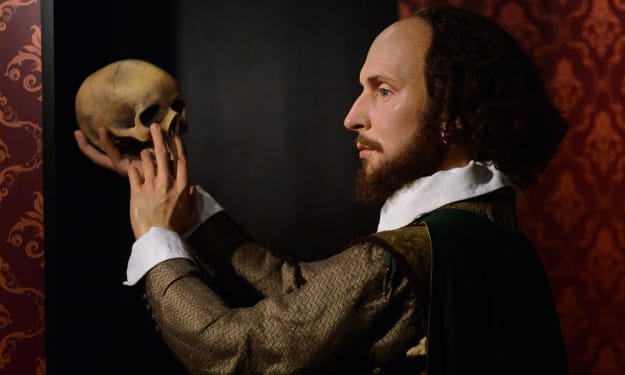
Unraveling the Legacy of William Shakespeare: A Journey into the Life and Works of the Bard. Content Warning.
William Shakespeare, often hailed as the greatest writer in the English language, continues to enchant readers and audiences worldwide centuries after his time. Born in Stratford-upon-Avon, Warwickshire, in April 1564, his baptismal date is recorded as the 26th of April, and tradition observes his birthday on April 23rd, coinciding with Saint George's Day. His exact birth date remains a mystery, much like many aspects of his life, which have spurred endless speculation among scholars and enthusiasts alike.
By Avhishek Agarwal3 years ago in BookClub
3 Amazing Stories for 7-Year-Olds to Read and Enjoy.
The age of 7 is a time when kids start growing really curious about new things. This is an optimal time to introduce stories and ideas that can properly nurture values in them while also developing a good taste for relatable content. We encourage parents to let their kids read stories that can help in the healthy consumption of knowledge in a fun way. What could be a better way than introducing them to great moral stories! So here are some great stories for 7-year-olds.
By aliyu sabba3 years ago in BookClub
Beyond Formal Education: Embracing the Knowledge Revolution Through Reading
‘The Day of the Triffids’, in my opinion is one of the best science fiction novels of all time. In 1951 when the novel was published for the first time, science was, well, still backward and the notion of Star Wars and biotechnology was none existent, or in its infancy. Yet that is what the novel is all about. John Wyndham, the author of the novel could see the future with uncanny ability.
By Juma Killaghai3 years ago in BookClub