Reading List
The 3 Must-Read Nonfiction Books from 2023 You Can't Miss in 2024
1. Better Living Through Birding: Notes from a Black Man in the Natural World by Christian Cooper This particular book garnered widespread acclaim and secured its place on numerous "best of" lists in the literary landscape of 2023. Notably, it found recognition in Liberty Harding's curated compilation of the top ten nonfiction works that might have slipped under your radar—a distinction it undeniably earned. Cooper's literary prowess is evident throughout the pages as he adeptly leads readers on a captivating voyage through seemingly unconventional topics. With finesse and passion, he delves into realms that might initially appear outside one's usual interests, yet he effortlessly captivates with his storytelling.
By Akale Mandundu3 years ago in BookClub
"2 Books to Assist You in Discovering Your Life's Purpose"
1. Quarterlife: The Search for Self in Early Adulthood by Satya Doyle Byock. This book was written to provide crucial insights and encouragement for individuals embarking on a journey of profound self-discovery and introspection. Tailored for those between the ages of 16 and 36, it skillfully addresses the specific developmental challenges and aspirations of this demographic. Perfect for individuals seeking meaningful change and growth in their personal lives and situations, this book offers a roadmap to realization and fulfillment. This practice offers solace and relief for those feeling overwhelmed by feelings of exhaustion, fear, depression, anxiety, or hopelessness. The author delves into her deeply personal journey, vividly recounting a pivotal moment when she boldly decided to depart from her comfortable startup position, despite uncertainty about what lay ahead. Through her raw and introspective storytelling, readers are invited to explore the complex web of emotions she experienced during this transformative period, gaining valuable insights and inspiration. Drawing inspiration from Carl Jung's psychological teachings, she delved deep into the concept of the collective unconscious and embraced the individuation process as a guiding light on her journey of self-discovery. This newfound insight not only provided her with clarity but also instilled a sense of purpose and direction in navigating the uncertainties ahead.The book's content delves deeply into nuanced and intricate subjects, portraying a scholarly tone that is complemented by the inclusion of real-life anecdotes and experiences. Through these personal narratives, readers gain valuable insights and strategies for effectively navigating the challenges and uncertainties that often accompany this critical stage in life.
By Akale Mandundu3 years ago in BookClub
Safe Spaces: A Journey from a Frightened Little Horsegirl to a Global Empowerment Leader by Merja Sumiloff With Lisa Wallace
Safe Spaces is a profoundly insightful and enlightening story of becoming and the beauty of discovering your life passions. A once-frightened little girl learned to go deep within and find her strengths by overcoming a painful childhood, uncovering her superpowers, and going on to be a successful entrepreneur and global empowerment leader. The touching memoir begins with the author discovering her first safe space while sitting on a horse named Donut and how it changed the course of her life. Safe Spaces is unapologetically honest and full of relatable reflections and revelations.
By Lisa Wallace3 years ago in BookClub
Grapes of Wrath Review
In Chapters 1-3 of “The Grapes of Wrath” where the Joad family begins their journey to California in hope for a better life is a very intriguing scene. The author John Steinbeck exposes the desperate conditions under which the migratory farm families of America, along with focusing on the hardships and migration from Oklahoma to California of the Joad family during the Great Depression of the 1930s. Set during the Great Depression, the novel focuses on the Joads, a poor family of tenant farmers driven from their Oklahoma home by drought, economic hardship, agricultural industry changes, and bank foreclosures forcing tenant farmers out of work. Due to their nearly hopeless situation, and in part because they are trapped in the Dust Bowl, the Joads set out for California on the "mother road", along with thousands of other "Okies" seeking jobs, land, dignity, and a future.
By Kylecovey Smith3 years ago in BookClub
National Science Day in India
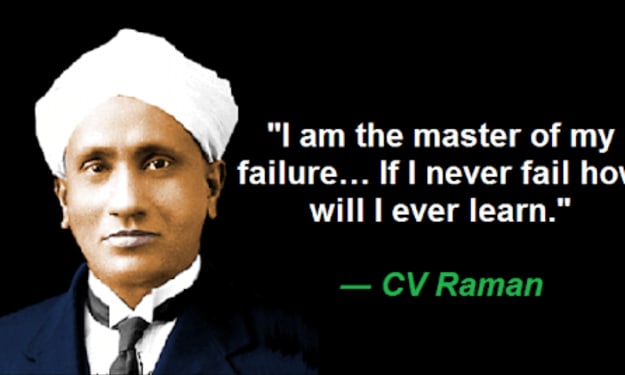
Introduction: National Science Day, observed on February 28th each year in India, holds profound significance as it commemorates the discovery of the Raman Effect by the renowned physicist Sir C.V. Raman in 1928. This monumental breakthrough revolutionized our understanding of light and matter interactions, earning Raman the Nobel Prize in Physics in 1930. Since its inception in 1987, National Science Day has evolved into a celebration of scientific inquiry, innovation, and discovery. This article delves into the rich tapestry of National Science Day, exploring its themes, significance, and impact on fostering scientific awareness and curiosity across India. The Evolution of National Science Day: National Science Day traces its roots back to 1986 when the National Council for Science and Technology Communication (NCSTC) proposed to the Indian government the designation of February 28th as National Science Day. This proposal was accepted, and the inaugural National Science Day was celebrated on February 28, 1987. Since then, it has become an annual event celebrated with enthusiasm and fervor across the country. Themes of National Science Day: Each year, National Science Day is celebrated with a specific theme aimed at promoting scientific awareness and addressing contemporary issues. Over the years, these themes have covered a wide range of topics, reflecting the diverse facets of scientific exploration and innovation. From clean energy and gender equity to sustainable development and space exploration, these themes highlight the relevance of science in addressing societal challenges and shaping our collective future. The theme for National Science Day 2024, "Indigenous Technologies for Viksit Bharat," underscores India's commitment to self-reliance and innovation. It emphasizes the importance of harnessing homegrown technologies to address pressing issues and foster overall well-being. This theme resonates deeply with India's rich heritage of scientific achievements and its aspirations for the future. Significance of National Science Day: National Science Day holds immense significance as it serves as a platform for promoting scientific awareness, curiosity, and innovation. By commemorating the discovery of the Raman Effect, National Science Day celebrates the contributions of Indian scientists to the global scientific community. It also highlights the importance of scientific research and its impact on society. One of the primary objectives of National Science Day is to inspire and engage the youth in scientific exploration. Through a variety of activities such as science fairs, exhibitions, and workshops, young minds are encouraged to explore the wonders of science and consider careers in STEM fields. By showcasing the achievements of eminent scientists and highlighting the relevance of science in everyday life, National Science Day ignites curiosity and fosters a spirit of inquiry among the youth. National Science Day also serves as a platform for recognizing and honoring individuals and organizations that have made significant contributions to science communication and popularization. Through awards and accolades, their efforts are celebrated, inspiring others to actively engage with science and contribute to scientific progress. Impact of National Science Day: The celebration of National Science Day has had a profound impact on fostering scientific awareness and curiosity across India. Through its various activities and programs, National Science Day has succeeded in democratizing science and making it accessible to people of all ages and backgrounds. By showcasing the practical applications of science and highlighting its role in addressing societal challenges, National Science Day inspires individuals to become active participants in the scientific journey. Furthermore, National Science Day has played a crucial role in promoting STEM education and careers in India. By exposing young minds to the wonders of science and providing them with opportunities for hands-on learning and exploration, National Science Day encourages the pursuit of scientific knowledge and innovation. This, in turn, helps nurture a new generation of scientists, engineers, and innovators who will drive India's scientific and technological advancement in the years to come. Conclusion: National Science Day is not just a day of celebration; it is a testament to India's rich scientific heritage and its aspirations for the future. By commemorating the discovery of the Raman Effect and celebrating the achievements of Indian scientists, National Science Day inspires curiosity, fosters innovation, and promotes scientific awareness across the country. As India continues its journey towards scientific excellence and self-reliance, National Science Day serves as a beacon of inspiration, reminding us of the transformative power of science in shaping our collective future.
By Avhishek Agarwal3 years ago in BookClub
Inside Out: Understanding the Inner Mechanisms of eBooks
Before we dive into the inner mechanisms and how eBook works, we must understand the history of this revolutionary technology that stopped the extinction of literature. E-books are digital files including text and graphics that are like printed books and may be distributed electronically or viewed on-screen. They may be made by converting printer files or drawing on databases and text files. The e-book sector acquired public prominence in the late 1990s, when firms such as Peanut Press began providing literature for personal digital assistants. Despite a dip during the dot-com disaster, it rebounded with Sony's 2006 e-reader and Amazon's Kindle in 2007, resulting in a strong rise in US e-book sales.
By AMZ Publishers Pro3 years ago in BookClub
The Lost Explorer
In the heart of the dense Amazon rainforest, where the emerald canopy stretched endlessly above and the chorus of wildlife echoed through the trees, there existed an aura of mystery that captivated explorers for centuries. Among those drawn to its enigmatic allure was Professor Amelia Sterling, a renowned archaeologist with an insatiable thirst for discovery. Professor Sterling had dedicated her life to unraveling the secrets concealed within the ancient ruins scattered across the rainforest. Armed with her knowledge and a steadfast determination, she embarked on expeditions that took her deeper into the wilderness than most dared to venture. On one fateful journey, Professor Sterling stumbled upon a forgotten temple buried beneath layers of foliage. Its stone walls adorned with intricate carvings told stories of a lost civilization long forgotten by time. With excitement coursing through her veins, the professor wasted no time in assembling a team to excavate the site. Days turned into weeks as they meticulously unearthed relics from the temple's depths, each artifact offering a glimpse into the lives of those who had once called this place home. However, amidst the excitement of their discoveries, whispers of a curse that befell those who dared disturb the sacred grounds began to spread among the crew. Undeterred by superstition, Professor Sterling pressed on, driven by her relentless pursuit of knowledge. But as they delved deeper into the temple's chambers, strange occurrences plagued their camp. Tools went missing, eerie shadows danced along the walls at night, and a sense of unease settled over the expedition. Despite the mounting signs of danger, the professor refused to abandon her quest. Ignoring the warnings of her companions, she ventured alone into the heart of the temple, determined to unlock its final secrets. But as she reached out to touch a mysterious artifact at the center of the chamber, a blinding light enveloped her, and she found herself transported to another realm. Lost amidst a labyrinth of shifting corridors and ethereal whispers, Professor Sterling realized too late the gravity of her folly. Trapped within the confines of a dimension beyond comprehension, she wandered aimlessly, her only companion the echoes of her own thoughts. Days turned into weeks, and weeks into months as Professor Sterling struggled to find a way back to the world she knew. With each passing moment, the line between reality and illusion blurred, and despair threatened to consume her entirely. But just as hope began to fade, a glimmer of light pierced through the darkness, guiding her towards a shimmering portal that pulsed with otherworldly energy. With a leap of faith, she stepped through the gateway, her heart pounding with anticipation.
By Mohameen Moshood3 years ago in BookClub
Atomic Habits
In the bustling tapestry of our daily lives, the habits we cultivate often serve as the unseen architects of our success or the unwitting saboteurs of our potential. In the midst of this intricate dance between routine and transformation, James Clear's "Atomic Habits" emerges as a guiding light—a manifesto that illuminates the profound impact of incremental changes on the trajectory of our lives. As we embark on this exploration of "Atomic Habits," we invite you to delve into the intricacies of behavior change, unlocking the secrets to transforming your life, one tiny change at a time.
By Kyle Britz3 years ago in BookClub
The Last Ruler of Jammu and Kashmir. Content Warning.
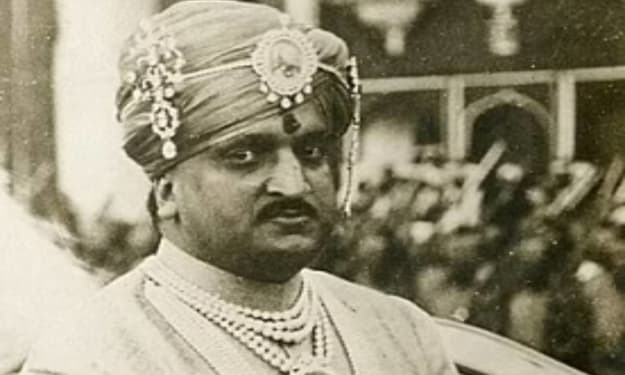
Maharaja Sir Hari Singh GCSI GCIE GCVO, born in September 1895, occupies a significant place in the annals of Jammu and Kashmir's history. As the last ruling Maharaja of the princely state, his reign was characterized by both opulence and tumult, culminating in the pivotal decision of accession to the Dominion of India. Let's embark on a comprehensive exploration of the life, legacy, and controversies surrounding this enigmatic figure. Early Life and Education: Hari Singh was born into the esteemed royal family of Jammu and Kashmir, the son of Raja Amar Singh and Bhotiali Chib, at the majestic Amar Mahal Palace in Jammu. His birth in 1895 marked the emergence of a future ruler, as he was designated the heir presumptive to the throne due to the absence of a direct successor. His early years were steeped in privilege and tradition, with an upbringing that reflected the grandeur of his lineage. In 1903, Hari Singh's journey into the corridors of power began as he served as a page of honor to Lord Curzon during the grand Delhi Durbar, a spectacle of imperial grandeur. Subsequently, his educational pursuits led him to Mayo College in Ajmer, where he embarked on a journey of intellectual and personal growth. However, tragedy struck in 1909 with the demise of his father, prompting the British authorities to take a keen interest in his education, appointing Major H. K. Brar as his guardian. Rise to Power: The trajectory of Hari Singh's life took a decisive turn in 1923 following the passing of his uncle, heralding his ascension to the throne of Jammu and Kashmir. His coronation in 1926 at the majestic Mubarak Mandi Palace in Jammu was a spectacle of extravagance, symbolized by the adornment of jewels valued at an astonishing twenty million dollars. However, amidst the pomp and ceremony, challenges loomed on the horizon, foreshadowing the turbulent years that lay ahead. Controversial Rule: The tenure of Maharaja Hari Singh was fraught with challenges and controversies that left an indelible mark on his legacy. Rebellion reared its head in various regions, most notably in Poonch and Gilgit-Baltistan, challenging the stability of his rule. Furthermore, accusations of complicity in the 1947 Jammu massacres tarnished his reputation, casting a shadow over his governance. Despite these tumultuous times, Hari Singh's reign was not devoid of progress. He implemented reforms aimed at modernization, including initiatives to promote education, combat child marriage, and foster social inclusivity. Accession to India: The watershed moment in Hari Singh's reign arrived in 1947 with the dawn of Indian independence. Faced with escalating tensions and external threats, particularly from Pakistan-backed tribal forces, Singh found himself at a crossroads. In October 1947, he made the fateful decision to accede to the Dominion of India, signing the Instrument of Accession. This pivotal moment not only altered the course of Jammu and Kashmir's history but also set the stage for future conflicts and geopolitical dynamics in the region. Legacy and Commemorations: Following the abolition of monarchy in 1952, Maharaja Hari Singh's life took a poignant turn as he retreated from the corridors of power to spend his remaining years in Bombay. His death in 1961 marked the end of an era, but his legacy endured through various commemorations and tributes across Jammu and Kashmir. Parks, statues, and public holidays stand as tangible reminders of his enduring influence, sparking conversations about his complex legacy and the broader historical narrative of the region. Conclusion: Maharaja Hari Singh's reign encapsulates a tumultuous chapter in the history of Jammu and Kashmir, characterized by opulence, controversy, and political upheaval. While his rule was marred by challenges and criticisms, his contributions to the region's development and his pivotal role in shaping its destiny cannot be understated. As the last ruling Maharaja of Jammu and Kashmir, his legacy continues to resonate, prompting reflection on the complexities of governance, identity, and historical legacy in the region. In essence, Maharaja Hari Singh's life and times serve as a poignant reminder of the intricate tapestry of history that defines Jammu and Kashmir's identity. Through commemorative efforts and ongoing discussions about his legacy, his influence endures, underscoring the enduring impact of his rule on the socio-political landscape of the region.
By Avhishek Agarwal3 years ago in BookClub
"The Boy with the Bird in His Chest" by Emme Lund: A Captivating Tale of Courage, Magic, and Unlikely Friendships
Emme Lund's debut novel, "The Boy with the Bird in His Chest," is a literary masterpiece that seamlessly weaves together elements of fantasy, coming-of-age, and the extraordinary power of connection. From the very first page, readers are transported into a world both enchanting and thought-provoking, leaving them eagerly turning the pages to unravel the mysteries that lie within.
By Lilly Goldberg3 years ago in BookClub