History
Beyond Luxury: The Next-Level Features Only Found in Nine-Figure Homes
The world of ultra-rich real estate has changed fast in recent years. Today, buyers want more than large rooms and expensive décor. They want homes that feel private, smart, safe, and fully customized. A true nine-figure property now works like a personal resort, wellness center, and tech hub all in one place. These homes offer rare experiences that most people never imagine. Many of them sit on private islands, hidden hillsides, or gated waterfront estates. Their value comes from design, location, and features that are hard to copy. The demand for luxury real estate continues to grow as wealthy buyers seek homes that align with their lifestyles. These buyers expect comfort every hour of the day. They also want spaces that support work, health, family time, and entertainment without leaving the property. Modern nine-figure homes now focus on complete living experiences instead of simple luxury.
By Scalaa Architects6 months ago in Art
All Aboard
There’s a place in Ocala…a place where the living and the dead once traveled side by side. The old train station. Its bricks still breathe with the smoke of iron engines, its windows once rattled with the cries of partings and the laughter of arrivals.
By Christy C. House6 months ago in Art
Taylor Swift: The Architect of Her Own Empire
Taylor Swift: The Architect of Her Own Empire Few artists in the 21st century have commanded the global stage with the same electrifying mix of vulnerability, resilience, and sheer entrepreneurial genius as Taylor Swift. From a teenage country prodigy to a genre-defying pop titan and a fierce advocate for artists' rights, Swift has not merely achieved stardom; she has meticulously built and continuously reshaped an empire that resonates deeply with the American public and beyond.
By Nivard Anna6 months ago in Art
The AI That Made Him a Monster: A Case Study in 21st-Century Lies
Cole Allen didn’t look at his phone that day. The 31-year-old from Torrance, California, was a private man a math tutor celebrated as “Teacher of the Month” at his local learning center in December 2024. He liked jazz, ran a small YouTube channel, and spent his weekends hiking. His digital footprint was so scant you could’ve fit it on a Post-it note.
By Asghar ali awan6 months ago in Art
FRAGILE YET ETERNAL
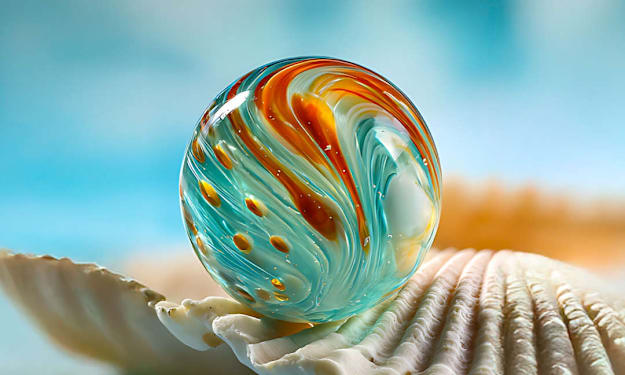
Hey Lykkers! Have you ever stopped to admire a stained-glass window glowing under sunlight or a delicate glass sculpture that looks too fragile to touch? Glass art has a magical quality—it catches light, transforms spaces, and tells stories through color and form. What’s fascinating is that this glittering medium has been with us for thousands of years, adapting to cultures, technologies, and artistic visions. Let’s take a closer look at how glass art evolved from simple ornaments to breathtaking modern masterpieces. Ancient Beginnings: The Birth of Glass : Glassmaking can be traced back to around 2000 BCE in Mesopotamia and Egypt. At that time, artisans produced small beads and amulets by heating sand and ash with high temperatures. Unlike the clear glass we know today, these early works were opaque, with deep blues, greens, and reds. They were precious objects used mainly for decoration or ritual, often reserved for the elite. Glass was a luxury—an artistic symbol of wealth and spirituality. Roman Innovations: Blowing Life Into Glass : The Romans revolutionized glass art in the 1st century BCE with the invention of glassblowing. This technique allowed molten glass to be inflated and shaped, much like blowing a bubble. Suddenly, artisans could create thin-walled vessels, cups, and vases quickly and in larger quantities. Glass moved beyond temples and palaces into everyday Roman homes. Decorative glass objects became more widespread, showing how innovation can democratize art. The transparency of Roman glass was also a major step forward, setting the stage for glass as both functional and artistic. Medieval Mastery: Light Through Faith :- In the Middle Ages, glass became a spiritual medium. Chapels and cathedrals across Europe embraced stained-glass windows not only as decoration but as a teaching tool. Since most people couldn’t read, colorful panels illustrated biblical stories, saints, and moral lessons. Beyond storytelling, the play of light filtering through colored glass created an awe-inspiring atmosphere, symbolizing divine presence. Every shade carried meaning: blue for heaven, red for sacrifice, green for growth. Medieval stained glass is still one of the most iconic expressions of glass as art. Renaissance to Baroque: From Function to Flourish :- By the Renaissance, glass was not just sacred—it was fashionable. Nowhere was this more evident than on Murano Island in Venice, Italy. Murano glassmakers developed innovative techniques such as crystal-clear cristallo glass and complex color patterns. Their chandeliers, mirrors, and goblets were prized across Europe. Glass became a blend of practicality and status, showing wealth and taste. In the Baroque period, glass designs became even more elaborate, often decorated with gilding, painting, or intricate cuts. Murano’s influence spread worldwide, and its legacy still shapes glassmaking today.
By Muhammad Talha6 months ago in Art
Michael (2026) Review: Andreas Szakacs on a Film That Protects the Legend but Avoids the Truth
Introduction As a filmmaker, Andreas Szakacs looks for honesty in storytelling—not just presentation. Watching Michael (2026), that honesty feels deliberately out of reach.
By Andreas szakacs6 months ago in Art
I Wasn’t Chosen - I Chose This Path | The Journey of Andreas Szakacs
In a world where many creatives wait for an opportunity, some decide to create their own. Andreas szakacs The journey of Andreas Szakacs reflects a mindset that is often overlooked in the film industry — the willingness to move forward without validation. Instead of waiting to be chosen, he focused on building his own path, step by step, project by project.
By Andreas szakacs6 months ago in Art
The Lord of Thrace
Olympus does not merely tremble; it convulses in spasmodic waves that crack the marble colonnades and send chalices of nectar shattering across the celestial floor. The air thickens to the consistency of phlegm, curdling with the copper tang of impending slaughter as the horizon bleeds a bruised, necrotic crimson streaked with veins of sulfurous yellow. There is no surgical fissure here, only the violent rupture of the sky. A wound torn jaggedly from east to west. Ares descends not as a savior, but as a cataclysmic hemorrhage of the divine, trailing wisps of battle-smoke and the screams of a thousand dying men. He is the personification of Enyalios, the frenzy that resides in the marrow of the dying, the ecstasy that floods the brain in the final moments before oblivion.
By The Disheveled Reader6 months ago in Art
Athena Polias (Πολιάς): "Of the City."
Olympus trembles. The marble beneath immortal feet ripples like water. Zeus clutches his temples, his beard crackling with blue lightning as he doubles over, gasping. A hairline crack appears across his forehead, glowing white-hot, widening with each thunderous heartbeat until the bone parts like curtains. Silver light pours through, not blood, and the air fills with the scent of rain on hot metal as Athena’s spear tip breaches first into the world.
By The Disheveled Reader6 months ago in Art