
Why the Biggest Artists Today Feel Smaller Than Artists From 20 Years Ago
Modern musicians are more famous than ever.
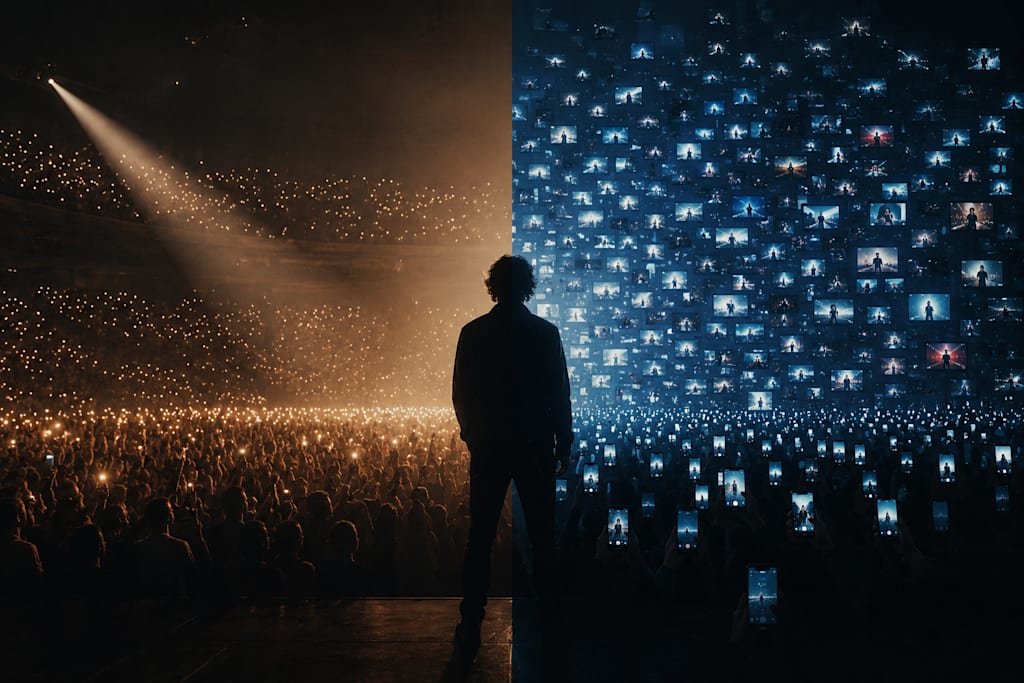
They have billions of streams, millions of followers, global marketing campaigns, nonstop visibility, and fanbases that operate like digital armies.
So why do so many of today’s superstars feel culturally smaller than artists from previous generations?
Why does it feel like musicians dominate the internet for a week… and then disappear into algorithmic noise?
Because modern fame is massive — but shallow.
And social media is the reason.
Twenty years ago, artists felt larger than life because access to them was limited. Interviews were rare. Albums were events. Fans waited years between releases. Musicians existed behind a layer of mystery.
That mystery created mythology.
Today, artists are permanently online.
They tweet constantly.
Post daily stories.
Share their meals.
React to memes.
Go live randomly.
Comment on drama.
Upload rehearsals.
Show behind-the-scenes footage every week.
The result?
Overexposure killed aura.
Modern celebrities are no longer distant cultural icons.
They’re content creators with better lighting.
The industry calls this “fan engagement,” but psychologically it changes how audiences perceive artists. Constant visibility makes celebrities feel ordinary. Familiarity reduces mystique.
And mystique was one of the most powerful forces in music culture.
Artists like Michael Jackson, Prince, or Daft Punk understood something the modern industry forgot:
Absence creates obsession.
Today’s music ecosystem punishes absence.
If artists disappear too long:
engagement drops
algorithms stop pushing them
audiences move on
streaming numbers decline
So musicians are pressured into constant exposure just to remain relevant.
But relevance is not the same thing as legacy.
And that’s the core problem.
Streaming and social media created an attention economy where artists compete not only with each other, but with literally everything on the internet:
TikTok
Netflix
gaming
podcasts
influencers
memes
short-form videos
Music is no longer the center of youth culture the way it once was.
It’s part of a much larger entertainment feed.
That’s why modern hits often feel temporary. Songs explode quickly because algorithms accelerate exposure — but they also accelerate replacement. Last month’s viral artist becomes invisible the moment the feed refreshes.
Culture moves too fast for mythology now.
Even albums changed psychologically.
Classic albums used to dominate people’s lives for months or years. Fans memorized tracklists, studied lyrics, bought posters, watched interviews repeatedly, and built emotional identities around artists.
Now albums are consumed in hours.
Listeners skip tracks after 15 seconds.
Reaction accounts summarize releases instantly.
TikTok extracts one viral snippet.
Then the internet moves on.
Music became content flow instead of cultural experience.
And artists adapted by becoming brands first and musicians second.
Some modern stars feel less like unpredictable creatives and more like highly optimized media companies:
carefully managed aesthetics
engineered controversy
strategic relationships
scheduled vulnerability
algorithm-friendly personalities
Everything becomes calculated.
Even authenticity became performance.
The industry now sells “relatable celebrities” because relatability performs better online than untouchable stardom.
But there’s a hidden tradeoff:
the more relatable celebrities become, the less legendary they feel.
Legends usually feel unreachable.
The internet destroyed distance.
And then there’s the issue nobody in the industry wants to admit:
There are too many artists now.
Technology democratized music creation, which is good in many ways. But it also created infinite competition. Thousands of songs release every hour. Attention became fragmented beyond repair.
In previous decades, culture was more centralized. Entire generations experienced the same artists together.
Now everyone lives in personalized algorithmic bubbles.
One person’s biggest artist in the world is completely unknown to someone else.
Shared cultural dominance became harder to achieve.
Ironically, artists today may have bigger numbers than older legends ever did — but smaller emotional impact.
Billions of streams don’t automatically create timelessness. you can read more about it here.
Sometimes they just reflect passive consumption.
And maybe that’s why so many modern stars feel strangely temporary despite overwhelming visibility.
They are everywhere.
But rarely unforgettable.
About the Creator
Enjoyed the story? Support the Creator.
Subscribe for free to receive all their stories in your feed.
Comments
There are no comments for this story
Be the first to respond and start the conversation.