
A Terrible Truth and its Consequences
A small, quick peek into Art History, Part 3


He killed his son. And unfortunately, for him, he might have regretted it as soon as it was done. Rage is an interesting trait in humans because it is one of the only traits that shows our true animalistic nature. We are nature. We are part of this cycle. In our minds and bodies, we hold the truth--our undeniable power to be gods of life and death.
But it is after the rage that is even more interesting. It is the tears, the pain, the regret, and grief. It is the reminder of our evolution and the complexities of our emotions.
The image is of an oil painting by Ilya Repin called "Ivan the Terrible and his Son," finished in 1885. It depicts Ivan IV, known as Ivan the Terrible, the first Tsar of Russia, and his eldest son and heir, Ivan Ivanovich, murdered in a fit of rage.
Why did he murder his heir? Well, there is much speculation, and I believe no one knows the true details of the argument that was had right before the scepter blow to the head. Whether it was the Tsar causing a miscarriage of his son's wife or a heated discussion about politics, or just personal, a clash between father and son, it's still quite a horrific, final moment between the two.
And what happened after? Ivan the Terrible reportedly fell into a deep depression and withdrew from public life for several months. He also expressed remorse and sorrow for his actions in letters to influential individuals, including the Metropolitan of Moscow, where he expressed the loss of his heir and asked for forgiveness. Though was it true grief or a mask to show that he was not as heartless and insane as the public could have seen him? One would have to ask him. In his later years, Ivan suffered from debilitating health issues, including severe pain and mental instability, which may have contributed to his erratic behavior and violent outbursts.
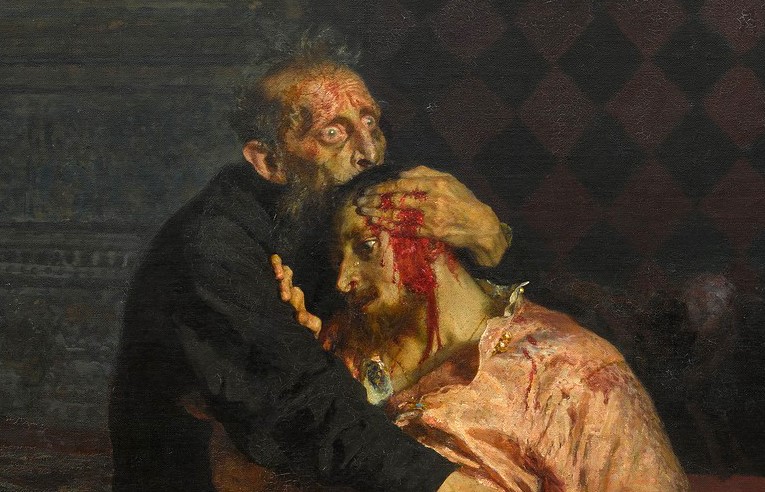
When looking at the painting, what is the first thing you notice? The blood, a red that is able to overpower almost all the other colors of the image? A symbol of a dark human truth. Or is it the eyes? Wide, unblinking, holding shock, horror, grief, and disbelief. Eyes that must hold steady and still our own. But maybe after or before you noticed the son's hand, still light and pink, illuminated, almost gripping his father's arm.
Then there is the carpet, stained with blood. The chair knocked over. The discarded scepter. The room, dimly lit, but if shown in the bask of sunlight, would reveal the power and royalty that occupied it.
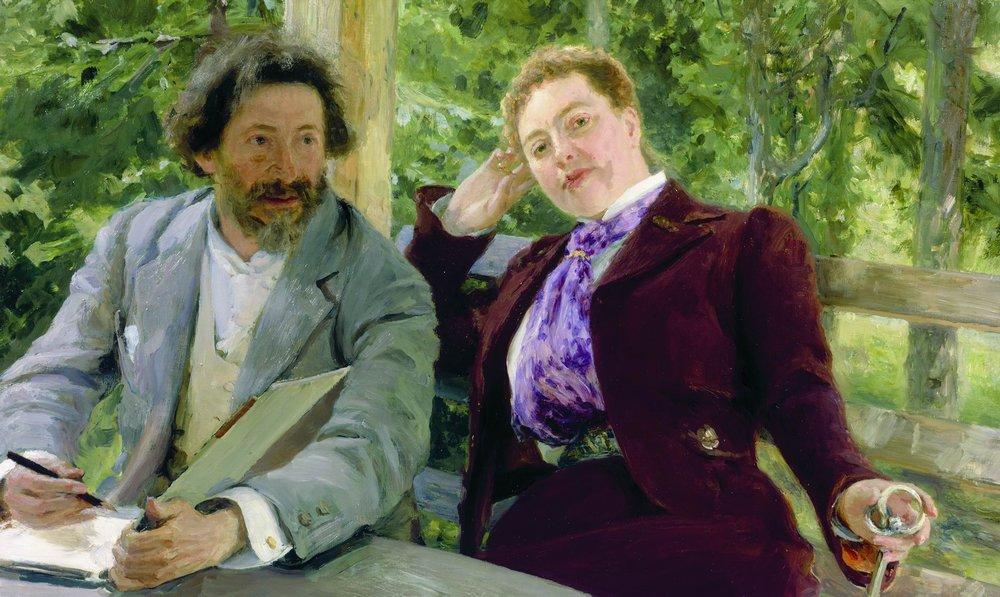
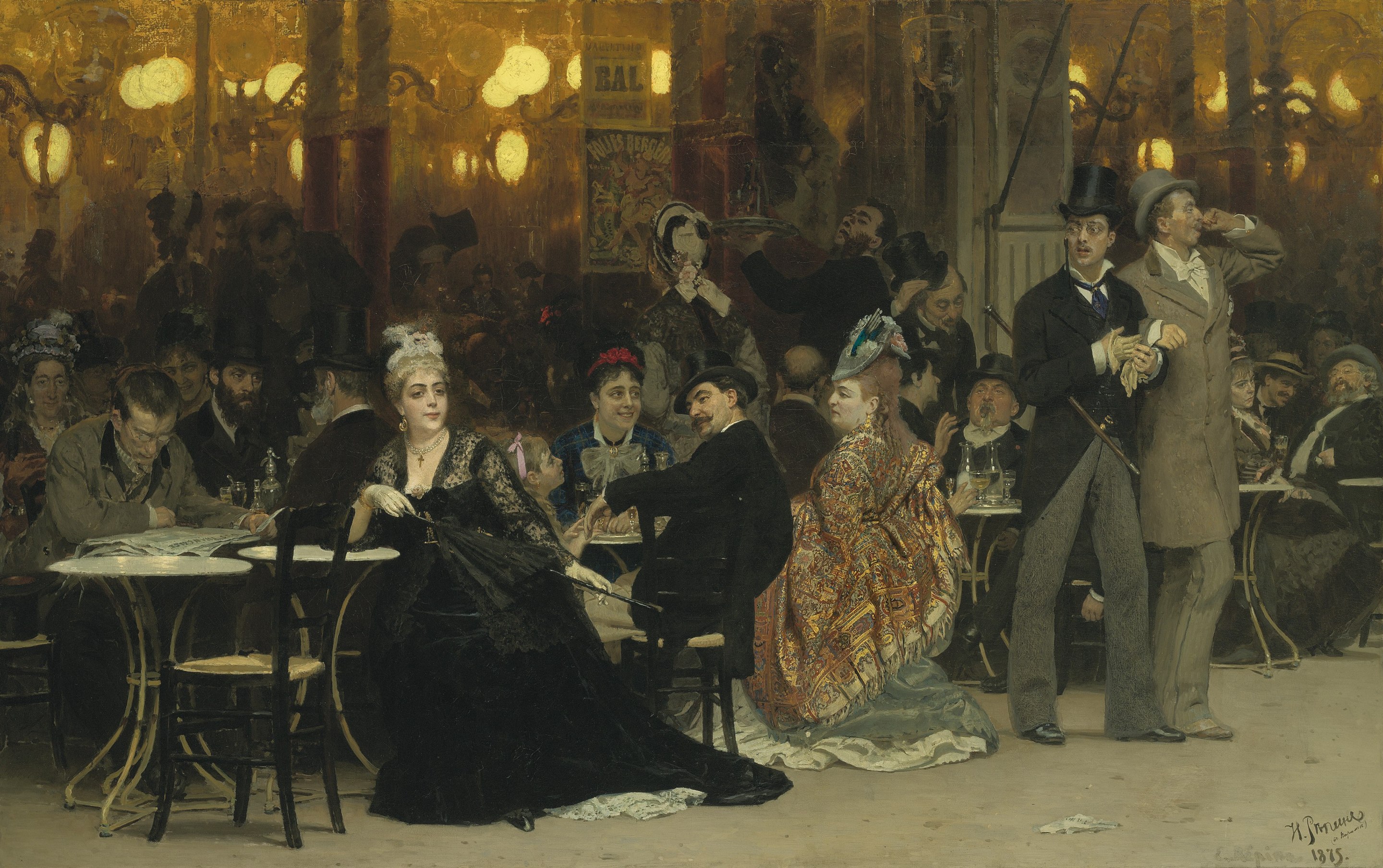
Ilya Repin, a realist painter, uses light, color, and subject to make us see what he wants us to see.
As you may have guessed, the painting remains controversial, even in the present day. It is said that Repin created this work not to make a political statement about the first Tsar of Russia himself or Russian politics as a whole, but rather as a metaphor for the assassination of Tsar Alexander II by a bomb and the subsequent executions of the assassins by hanging. However, this interpretation was not universally accepted, particularly among Russian nationalists who saw it as an attack on Russian power then and possibly even now. In 2018, an incident occurred in which a man took a metal pole to the painting during an exhibition.
No matter the controversy, the painting is still a perfect example of a skillful artist who uses realism not as a copy image, but as symbolism and clear expression of his time.
Rage and blood go hand in hand. It is human. Too human. Perhaps, in the distant future, this combination will only be depicted through words and colors. But for now, we have it all. For now, we have paintings like 'Ivan the Terrible and His Son' to remind us, always reminding us of the possibilities of our nature. And artists like Ilya Repin, who are not afraid to show us that truth.
About the Creator
K. Kocheryan
I write, delete, write, and on most days, delete again.
Enjoyed the story? Support the Creator.
Subscribe for free to receive all their stories in your feed. You could also become a paid subscriber, letting them know you appreciate their work.
Comments
There are no comments for this story
Be the first to respond and start the conversation.