how to
How tos for tech whizes and luddites alike; tips, tricks and shortcuts to optimize your computer, smartphone or internet mastery.
How to Protect Your AI Applications From Hidden Threats. AI-Generated.
AI applications break in quiet ways. Not with loud system crashes, but through small inputs, unsafe connections, and responses that reveal more than they should. If you want to protect your AI application, focus on four things from the start: control what goes in, restrict what it can access, review what comes out, and test it like someone is trying to misuse it. Most real issues show up in these areas, not in traditional server security.
By Modern Security6 months ago in 01
The Climate Change Side effects
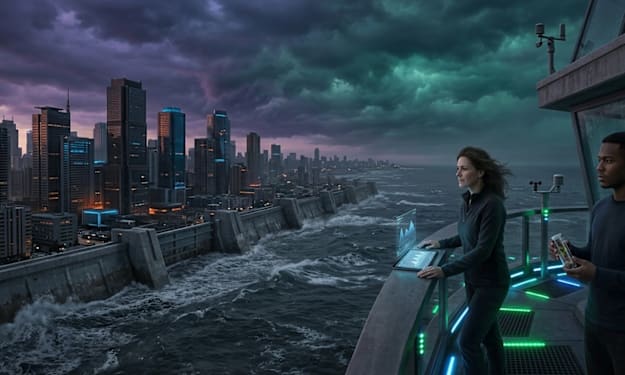
The sky over the coastal city of Aethelgard was no longer the brilliant, piercing blue that the elders remembered from their youth. Instead, it was a heavy, bruised violet, thick with the humidity of a sea that refused to stay within its ancient boundaries. For Clara, a climatologist who had spent two decades watching the data points shift like sand in an hourglass, the atmosphere didn't just feel heavy; it felt like a physical weight on her chest. The Great Unsettling The shift hadn't happened with a single explosion or a cinematic tidal wave. It had arrived in increments—the "Great Unsettling," as the local papers called it. It was the extra two degrees in a summer heatwave that turned a discomfort into a health crisis. It was the "once-in-a-century" storm that started happening every three years. Clara stood on the balcony of the Global Observatory, looking out at the sprawling city. Below, the sea walls had been raised for the third time in a decade. They looked like gray scars against the shoreline. The salt spray was a constant companion now, eating away at the ironwork of the old buildings, a slow-motion digestion of the civilization that had built them. The Data of Disruption Inside the Observatory, the holographic displays hummed with the pulse of a changing world. Clara swiped through the latest projections, her heart sinking with every gesture. The Thermal Feedback: The arctic ice, once a vast white mirror reflecting the sun’s fury back into space, had thinned to a translucent shell. The dark water beneath was drinking the heat, accelerating a cycle that felt increasingly impossible to break. The Migratory Silence: The sensors in the northern forests reported a haunting quiet. The birds that used to signal the change of seasons were gone, their biological clocks shattered by winters that never quite arrived and springs that came with a scorching intensity. The Agricultural Shift: To the west, the once-fertile plains were becoming dust bowls. The rain still fell, but it fell all at once, in violent deluges that washed the topsoil into the rivers rather than soaking into the parched earth. "It’s not just a change in weather," Clara whispered to her assistant, Leo, who was cross-referencing crop yields from the southern hemisphere. "It’s a change in the fundamental rhythm of the planet." The Human Cost Leo didn't look up from his screen. His family had been displaced from a low-lying island chain three years prior. For him, the data wasn't an abstract scientific pursuit; it was the obituary of his heritage. "My grandfather used to say the wind told stories," Leo said, his voice flat. "Now the wind just screams. It’s the sound of a system trying to find a new equilibrium while we’re still standing in the middle of it." The social fabric of Aethelgard was fraying under the strain. Resources were tight, and the "Climate Lotteries" determined who would receive subsidies for air filtration or water reclamation. The divide between those who could afford to adapt and those who were left to weather the storm was widening into a chasm. In the markets, the price of a simple apple had tripled; the orchards were failing, victims of a new fungus that thrived in the stagnant, warming air. The Turning Point That evening, a storm moved in—not a natural occurrence, but a "super-cell" fueled by the excess energy trapped in the atmosphere. The sky turned a terrifying shade of emerald, and the wind began to howl through the skyscrapers like a wounded animal. Clara watched the tide gauges. The water was rising, pushing against the reinforced gates with a ferocity that seemed personal. She realized that for centuries, humanity had treated the Earth as a backdrop—a static stage for their dramas. Now, the stage was moving. The backdrop was pushing back. As the rain began to lash against the reinforced glass of the Observatory, Clara didn't feel despair. She felt a strange, cold clarity. The era of "mitigation" was over. The era of "transformation" had begun. The Seed of Resilience She walked over to a pressurized chamber in the corner of the lab. Inside were hundreds of small, glass vials—seeds from across the globe, genetically mapped to survive in higher saline environments and extreme heat. They weren't a solution to climate change, but they were a bridge to whatever came next. "We can't go back to the blue sky," Clara told Leo, gesturing toward the vials. "That world is gone. We have to learn to live in this one. We have to build cities that breathe with the tides instead of fighting them. We have to farm with the sun instead of hiding from it." The storm raged outside, shaking the very foundations of the building, but Clara began to type. She wasn't writing a warning anymore; she was writing a blueprint. The story of climate change was no longer a tragedy about what was lost; it had to become an epic about what could be saved, and how a species defined by its ingenuity would finally learn to respect the boundaries of its home. The bruised violet sky eventually broke into a grey dawn. The sea had retreated, leaving behind a layer of silt and debris. Clara stepped out into the damp air, her boots crunching on the salt-crusted pavement. She looked toward the horizon, where the first light of a new, harsher sun was beginning to rise. She took a breath, felt the weight of the air, and began to work.
By Bakhtt menn6 months ago in 01
Simple Process of OneDrive to OneDrive Migration
One of my colleagues, Cristin, has joined a new company. On his first day, his manager handed him the login credentials of a newly created Microsoft account and said all your project files will be here. You must migrate OneDrive to OneDrive. Sounds general, right? But not actually.
By Layla Darzi6 months ago in 01
How to Choose an AI Chatbot Development Company in 2026
Businesses across industries are moving fast on AI, and conversational AI is sitting at the center of that shift. Customer service, internal operations, sales automation all of it is being rebuilt around chatbots that can think, respond, and act. But the gap between a good chatbot and a disappointing one usually comes down to who built it.
By Fenil kasundra6 months ago in 01
The Role of Labels and Label Stock in Modern Industry
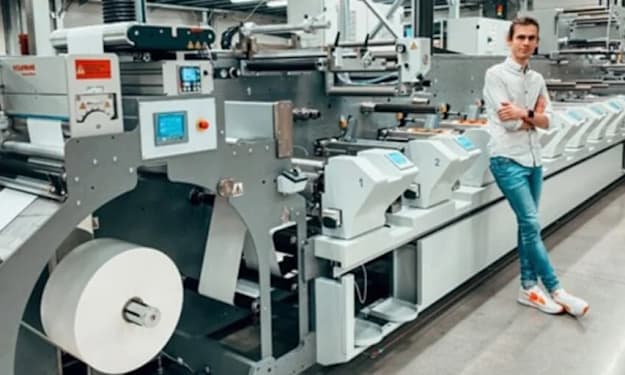
In today’s interconnected world, labels play a surprisingly vital role in how products are understood, organized, and consumed. From food packaging to industrial goods, labels are more than just identifiers—they are communication tools that bridge manufacturers and consumers. Platforms and resources such as eesyln highlight how labeling materials and systems continue to evolve alongside industry demands. Understanding the concept of labeling, including the materials behind it, offers insight into both everyday products and global supply chains.
By charliesamuel6 months ago in 01
The Initial Shock
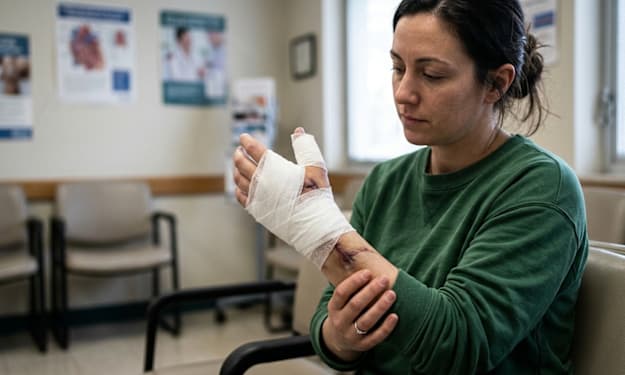
The scent of cedar sawdust and old oil usually signaled the start of a productive day for Julian, but today it smelled like a warning he had failed to heed. He sat on the floor of his workshop, his back pressed against the cold metal of the workbench, cradling his right hand against his chest. The accident had been a momentary lapse—a sneeze, a slip of the chisel, or perhaps just the accumulated fatigue of a man who didn't know when to quit. The blade had bitten deep into the meat of his palm, slicing through the delicate map of lines that a palmist might use to predict a long life. Instead of a future, there was only the immediate, pulsing present. The Initial Shock For the first thirty seconds, there was no pain. There was only the clinical observation of the damage. He watched the blood well up, dark and thick, flowing with a rhythmic persistence that mirrored his racing heart. It didn't look real; it looked like spilled paint on a canvas he had spent decades perfecting. Then the adrenaline ebbed, and the fire arrived. It was a white-hot, electric searing that traveled from his fingertips to his elbow. It wasn't just the skin that hurt; it was the betrayal of the nerves. His fingers, usually so obedient and nimble, felt heavy and alien. When he tried to curl them, they remained stubbornly splayed, as if the connection between his brain and his bones had been severed by that single inch of steel. The Longest Night The emergency room was a blur of fluorescent lights and the sharp tang of antiseptic. Julian watched the needle dip in and out of his skin, weaving a silver thread through the crimson. The doctor spoke of "tendon involvement" and "nerve compression," words that sounded like a death sentence to a man who made his living with his hands. "You'll need time," the doctor had said, her voice sounding as if it were coming from the end of a long tunnel. "And patience. Mostly patience." That night, back in his quiet apartment, Julian learned that the world is built for the two-handed. The simple act of unscrewing a jar of water felt like a Herculean labor. He sat in the dark, the heavy bandage on his hand glowing like a beacon. The throbbing was a dull, heavy bass note that kept time with the ticking clock on the wall. Every time he drifted toward sleep, a stray movement would send a jolt of lightning through his wrist, snapping him back to the reality of his own fragility. The Landscape of Recovery The weeks that followed were a slow, agonizing cartography of a New World. He had to learn the geography of his own limitations. The Physicality of Failure: In the first week, he couldn't even hold a spoon. He sat at his table, staring at a bowl of soup, feeling a hot prickle of tears that had nothing to do with physical pain. It was the humiliation of the body. The Itch: As the wound began to knit itself back together, an insatiable, deep-seated itch developed beneath the stitches. It was a maddening sensation, a sign of life returning to the nerves, yet it felt like a thousand tiny needles dancing under his skin. The Stiffness: When the bandages finally came off, the hand that emerged looked like a pale, withered claw. The skin was shiny and tight, the scar a jagged purple mountain range across his palm. His physical therapist, a woman with hands as strong as iron and a heart like a drill sergeant, showed no mercy. "Squeeze the putty," she would command. "Pick up the marbles. Again. Again." Every morning, Julian sat by the window and practiced. He would try to touch his thumb to each fingertip. Thumb to index—success. Thumb to middle—a struggle. Thumb to ring—a sharp, shooting pain. Thumb to pinky—impossible. He did this for hours, his face beaded with sweat, his jaw locked in a grimace. The Shift in Perspective One afternoon, three months after the accident, Julian returned to his workshop. He didn't pick up the chisel. Instead, he just sat and looked at the wood. He realized he had always viewed his hands as mere tools—mechanical extensions of his will. He had pushed them, ignored their aches, and taken their precision for granted. He picked up a piece of scrap pine. His grip was weak, and the tremor in his fingers was still there, a ghost in the machinery. He couldn't do the fine filigree work that had made his reputation. But as he ran his scarred palm over the grain of the wood, he felt something he hadn't noticed before. The scar tissue was less sensitive to heat and cold, but it felt the vibration of the wood differently. He began to carve, not with the aggressive speed of his youth, but with a slow, deliberate cadence. He followed the grain instead of forcing it. He allowed the weakness in his hand to dictate the curve of the bowl, resulting in a shape that was more organic, more human, than anything he had ever produced. The injury hadn't just broken his hand; it had broken his ego. And in that fracture, a new kind of craft had been born. He looked at the jagged line across his palm—the mark of the blade. It wasn't a sign of an ending anymore. It was the opening sentence of a different story. He picked up the sandpaper, his grip steady enough for the task, and began the slow work of smoothing out the rough edges of his new life.
By Bakhtt menn6 months ago in 01
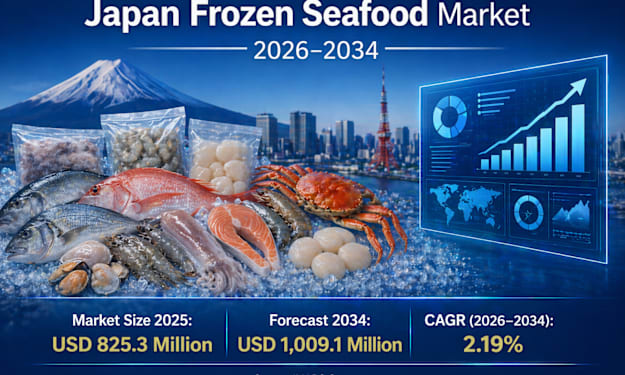
Japan Frozen Seafood Market Balances Tradition with Modern Convenience. AI-Generated.
Market Overview Frozen seafood refers to fish, shellfish, and other marine products that are preserved through freezing to maintain freshness, extend shelf life, and ensure safe transportation. These products are widely used in households, restaurants, and food processing industries, offering convenience without significantly compromising quality.
By David Michel6 months ago in 01
Japan Digital Camera Market Finds Stability in a Smartphone-Dominated Era. AI-Generated.
Market Overview Digital cameras are imaging devices that capture photographs and videos electronically, storing them in digital formats for easy sharing, editing, and storage. These devices range from compact cameras to advanced mirrorless and DSLR systems used by professionals and enthusiasts. Despite the rise of smartphone photography, digital cameras continue to play a vital role in high-quality imaging applications.
By David Michel6 months ago in 01
The 3 Fatal Mistakes Founders Make When Calculating eCommerce Development Cost
In today’s fast-paced digital economy, launching an online store is no longer optional—it’s essential. However, one of the most common challenges founders face is accurately estimating the eCommerce App Development Cost. Misjudging this can lead to budget overruns, delayed launches, or even complete project failure. While many entrepreneurs rely on rough estimates or generic online calculators, the reality is far more nuanced.
By Aarti Jangid6 months ago in 01