
The Initial Shock
The accident had been a momentary lapse—a sneeze, a slip of the chisel, or perhaps just the accumulated fatigue of a man who didn't know when to quit
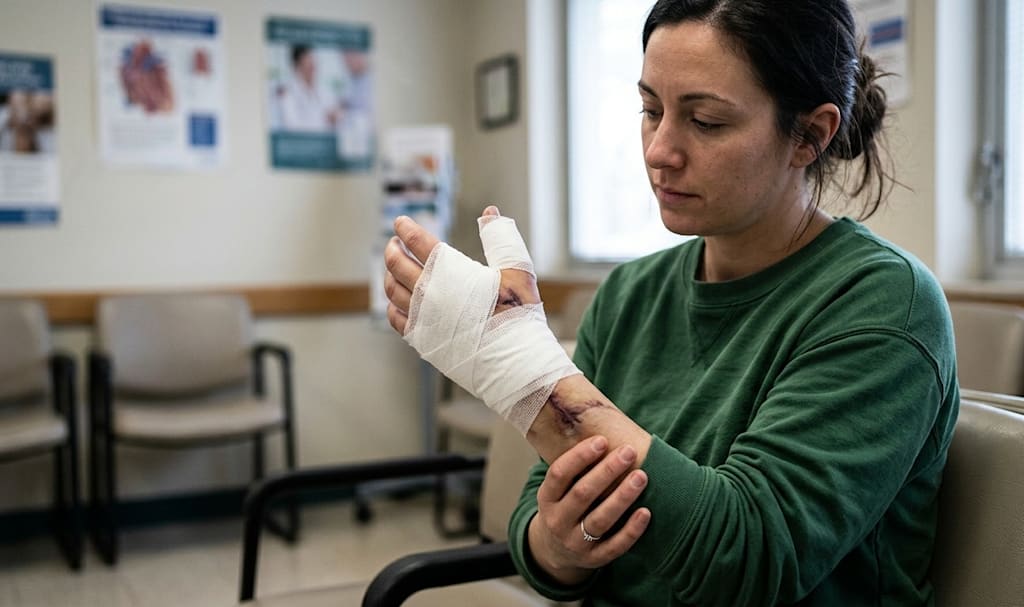
The scent of cedar sawdust and old oil usually signaled the start of a productive day for Julian, but today it smelled like a warning he had failed to heed. He sat on the floor of his workshop, his back pressed against the cold metal of the workbench, cradling his right hand against his chest. The accident had been a momentary lapse—a sneeze, a slip of the chisel, or perhaps just the accumulated fatigue of a man who didn't know when to quit. The blade had bitten deep into the meat of his palm, slicing through the delicate map of lines that a palmist might use to predict a long life. Instead of a future, there was only the immediate, pulsing present. The Initial Shock For the first thirty seconds, there was no pain. There was only the clinical observation of the damage. He watched the blood well up, dark and thick, flowing with a rhythmic persistence that mirrored his racing heart. It didn't look real; it looked like spilled paint on a canvas he had spent decades perfecting. Then the adrenaline ebbed, and the fire arrived. It was a white-hot, electric searing that traveled from his fingertips to his elbow. It wasn't just the skin that hurt; it was the betrayal of the nerves. His fingers, usually so obedient and nimble, felt heavy and alien. When he tried to curl them, they remained stubbornly splayed, as if the connection between his brain and his bones had been severed by that single inch of steel. The Longest Night The emergency room was a blur of fluorescent lights and the sharp tang of antiseptic. Julian watched the needle dip in and out of his skin, weaving a silver thread through the crimson. The doctor spoke of "tendon involvement" and "nerve compression," words that sounded like a death sentence to a man who made his living with his hands. "You'll need time," the doctor had said, her voice sounding as if it were coming from the end of a long tunnel. "And patience. Mostly patience." That night, back in his quiet apartment, Julian learned that the world is built for the two-handed. The simple act of unscrewing a jar of water felt like a Herculean labor. He sat in the dark, the heavy bandage on his hand glowing like a beacon. The throbbing was a dull, heavy bass note that kept time with the ticking clock on the wall. Every time he drifted toward sleep, a stray movement would send a jolt of lightning through his wrist, snapping him back to the reality of his own fragility. The Landscape of Recovery The weeks that followed were a slow, agonizing cartography of a New World. He had to learn the geography of his own limitations. The Physicality of Failure: In the first week, he couldn't even hold a spoon. He sat at his table, staring at a bowl of soup, feeling a hot prickle of tears that had nothing to do with physical pain. It was the humiliation of the body. The Itch: As the wound began to knit itself back together, an insatiable, deep-seated itch developed beneath the stitches. It was a maddening sensation, a sign of life returning to the nerves, yet it felt like a thousand tiny needles dancing under his skin. The Stiffness: When the bandages finally came off, the hand that emerged looked like a pale, withered claw. The skin was shiny and tight, the scar a jagged purple mountain range across his palm. His physical therapist, a woman with hands as strong as iron and a heart like a drill sergeant, showed no mercy. "Squeeze the putty," she would command. "Pick up the marbles. Again. Again." Every morning, Julian sat by the window and practiced. He would try to touch his thumb to each fingertip. Thumb to index—success. Thumb to middle—a struggle. Thumb to ring—a sharp, shooting pain. Thumb to pinky—impossible. He did this for hours, his face beaded with sweat, his jaw locked in a grimace. The Shift in Perspective One afternoon, three months after the accident, Julian returned to his workshop. He didn't pick up the chisel. Instead, he just sat and looked at the wood. He realized he had always viewed his hands as mere tools—mechanical extensions of his will. He had pushed them, ignored their aches, and taken their precision for granted. He picked up a piece of scrap pine. His grip was weak, and the tremor in his fingers was still there, a ghost in the machinery. He couldn't do the fine filigree work that had made his reputation. But as he ran his scarred palm over the grain of the wood, he felt something he hadn't noticed before. The scar tissue was less sensitive to heat and cold, but it felt the vibration of the wood differently. He began to carve, not with the aggressive speed of his youth, but with a slow, deliberate cadence. He followed the grain instead of forcing it. He allowed the weakness in his hand to dictate the curve of the bowl, resulting in a shape that was more organic, more human, than anything he had ever produced. The injury hadn't just broken his hand; it had broken his ego. And in that fracture, a new kind of craft had been born. He looked at the jagged line across his palm—the mark of the blade. It wasn't a sign of an ending anymore. It was the opening sentence of a different story. He picked up the sandpaper, his grip steady enough for the task, and began the slow work of smoothing out the rough edges of his new life.
About the Creator
Enjoyed the story? Support the Creator.
Subscribe for free to receive all their stories in your feed.
Comments
There are no comments for this story
Be the first to respond and start the conversation.