
Japan Frozen Seafood Market Balances Tradition with Modern Convenience
Changing consumption habits, cold chain innovation, and demand for ready-to-cook meals are shaping the industry

Market Overview
Frozen seafood refers to fish, shellfish, and other marine products that are preserved through freezing to maintain freshness, extend shelf life, and ensure safe transportation. These products are widely used in households, restaurants, and food processing industries, offering convenience without significantly compromising quality.
In Japan, seafood is a central part of the traditional diet, and frozen seafood plays an increasingly important role in meeting modern consumption needs. While fresh seafood remains highly valued, frozen alternatives provide convenience, longer storage, and year-round availability. This makes them especially useful in urban settings where busy lifestyles demand quick and easy meal solutions.
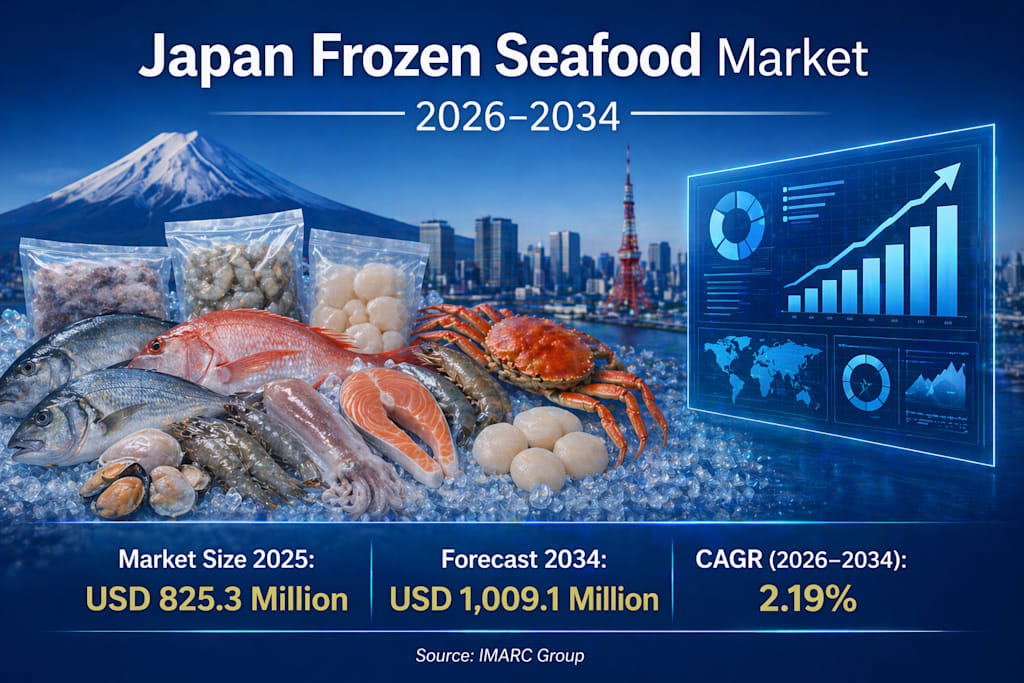
The Japan frozen seafood market reached approximately USD 825.3 million in 2025. Looking ahead, the market is projected to grow to around USD 1,009.1 million by 2034, exhibiting a compound annual growth rate (CAGR) of 2.19% during 2026–2034. Growth is steady, reflecting stable demand supported by changing consumer preferences and improvements in cold chain infrastructure.
Analyze Market Potential with Expert Insights — Download the Sample
Role of Innovation in Market Development
- Advanced Freezing Technologies
Modern freezing techniques, such as individual quick freezing (IQF), help preserve the texture, flavor, and nutritional value of seafood. These technologies reduce ice crystal formation and improve product quality, making frozen seafood more appealing to consumers.
- Improved Cold Chain Logistics
Efficient cold storage and transportation systems are essential for maintaining product quality. Advances in cold chain logistics ensure that seafood remains fresh from processing facilities to retail outlets and end consumers.
- Value-Added and Ready-to-Cook Products
Manufacturers are introducing value-added frozen seafood products, including pre-seasoned, pre-cooked, and ready-to-cook options. These products cater to busy consumers seeking convenience without sacrificing taste or quality.
Japan Frozen Seafood Industry Trends and Drivers
- Growing Demand for Convenience Foods
Urban lifestyles and time constraints are driving demand for convenient food options. Frozen seafood provides an easy solution for quick meal preparation, supporting its popularity among consumers.
- Stable Consumption of Seafood Products
Seafood continues to be a staple in Japanese cuisine. Frozen products help ensure consistent availability, especially when fresh supply is limited due to seasonal or logistical factors.
- Expansion of Retail and Foodservice Channels
Supermarkets, convenience stores, and foodservice establishments are expanding their frozen seafood offerings. This increased availability is supporting market growth and accessibility.
Japan Frozen Seafood Market Segmentation
By Product Type
• Frozen fish
• Frozen shrimp
• Frozen mollusks
• Others
By Distribution Channel
• Supermarkets and hypermarkets
• Convenience stores
• Online retail
• Foodservice
By End Use
• Household consumption
• Commercial use
By Region
• Kanto Region
• Kansai / Kinki Region
• Chubu Region
• Kyushu–Okinawa Region
• Tohoku Region
• Chugoku Region
• Hokkaido Region
• Shikoku Region
This segmentation highlights how frozen seafood demand varies across product categories, distribution channels, and regions within Japan.
Competitive Landscape
The Japan frozen seafood market includes seafood processors, distributors, importers, and retail brands. Competition is driven by product quality, freshness, pricing, and supply chain efficiency.
Companies are focusing on improving processing technologies, expanding product portfolios, and strengthening distribution networks. Sustainability and responsible sourcing are also becoming important factors in maintaining competitiveness.
Market Outlook
The outlook for Japan’s frozen seafood market remains stable, with moderate growth expected over the coming years. While traditional preferences for fresh seafood persist, the convenience and reliability of frozen products are expected to support continued demand.
As consumer lifestyles evolve and technology improves, frozen seafood is likely to play an increasingly important role in Japan’s food industry, balancing tradition with modern convenience.
About the Creator
David Michel
David Michel brings precision and depth to the world of market research. By uncovering trends, analyzing data, and delivering meaningful insights, he helps businesses navigate opportunities with confidence.
Enjoyed the story? Support the Creator.
Subscribe for free to receive all their stories in your feed.
Comments
There are no comments for this story
Be the first to respond and start the conversation.