Shoutout
A Thank You to the Librarian's Friend
Since I was four years old, it was well known that I was quite the storyteller. Playtime was about the worlds for my toys to inhabit and the adventures they went on. At night, I would fall asleep in the middle of grand tales I would whisper in the dark.
By Alexandria Stanwyck3 years ago in Writers
A Discourse on Pizza, or 10 Things About Me. Top Story - September 2023.
This is written as a part of Kayleigh’s Get to Know Me series. So, I despise writing about myself (shit, that should have been point number one), and that means this will probably have no polish to it. By the time we get done together, it’s going to resemble regurgitated alphabet soup garnished with hot takes and bad puns. Get ready. But hey, there’s a challenge and a prize at the bottom for anyone who makes it there!
By Matthew J. Fromm3 years ago in Writers
What is Your Voice?
Detecting Your Accent Despite opinions to the contrary, what constitutes a writer’s “voice” relies on their writing style, technique, vocabulary, and grammatical structure. Detecting a writer’s voice is something that most people do after reading a specific author for a long time. It’s like your relationship with someone that you've become intimately familiar with. Family members, friends, and coworkers are all people we become so familiar with their speech patterns that we instantly know if someone is trying to impersonate them. Or if there is something wrong with them, by the way, they are talking alone.
By Atomic Historian3 years ago in Writers
From Fuzzy Feelings to Finer Verses
Have you ever been told you can’t? That you aren’t good enough? Take a moment. Breathe. Now, imagine meeting me in person. Imagine we’re sitting across from each other (or side by side if direct eye contact isn’t your thing). You’d notice that I rarely flaunt my identity. But today, I lay my cards on the table and tell you I am a poet and an author with bona fide publications to my name. (Please, don’t rush off to find them; this isn’t a sales pitch.)
By The Bridge Theory Project3 years ago in Writers
Musings and Advice
I broke 2,000 reads overnight. Yippee!! It’s taken me over 290 stories to reach this number, with about 95 subscribers. I have put a lot of work into each of these stories. Most of these reads came from the last thirty days. I have been a member of Vocal since July of 2021, but I have only written for less than six months total during this time.
By Mother Combs3 years ago in Writers
From Blank Pages To Bestseller: A Writer's Roadmap
Every writer knows the feeling of staring at a blank page, cursor blinking in relentless expectation, and wondering if they have what it takes to create a bestseller. It's a journey filled with doubt, rejection, and countless revisions, but it's also one that has been undertaken and conquered by many before you. In this article, we'll explore the inspiring journeys of some successful writers who started with that same blank page, and discover the roadmap they followed to reach bestseller status.
By John Edwin Abutu3 years ago in Writers
Never Eat The "Clean" Part Of Moldy Bread
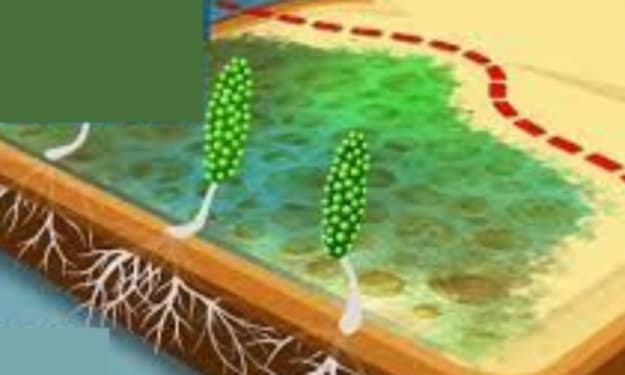
Imagine that you are prepared to create the ideal sandwich. Imagine a sandwich made with tender turkey, ripe tomatoes, and creamy Swiss cheese, all lavishly encircled by two pieces of fragrant sourdough bread and served on a bed of fresh romaine lettuce. It's a time-honored joy and a future masterpiece. Oh no, however! This is what? You see mold as you reach for the bread, which is unattractive. Ugh! The puzzling issue is now, can you save your sandwich by just chopping off the rotten piece and eating the rest? Prepare yourself, because the solution may not be as obvious as you believe. Mold is a living thing, a fungus, similar to the mushrooms that appear in your yard; therefore, it's not just a typical annoyance. Although the fuzzy caps on top are very obvious, there is a massive network of underground roots known as hyphae that lie underneath. These are the stealthy builders of the mold's pernicious realm. Let's examine that apparently innocuous bread of yours in more detail. It's not a nice sight, I assure you. Cutting off the surface mold won't be enough since the mold is already in its reproductive stage by the time those fuzzy sporangiums develop. Tens of thousands of spores are released from each sporangium, hiding in your loaf's hidden crevices and waiting to spread. You could believe that taking another slice of the same bread is a viable option. The real problem, however, is that once mold appears, it may spread throughout the whole loaf. It's like a clandestine army waiting to attack your dinner. You may now be asking whether it's indeed common practice for individuals to purposely consume mold in foods like cheese, soy sauce, and medications like penicillin. So it can't be that horrible if your bread has a little mold on it, can it? The truth is that it's a risk, and that's really what matters. Many molds are safe to eat, similar to eating wild mushrooms, but others are downright dangerous. There are hundreds of different species of mold around the globe. While some are safe for us, others are harmful to our health. Penicillium crustosum is one example. Mycotoxins, which are harmful substances, are produced by this mold. After ingesting mold-contaminated soup in 2005, an elderly couple ended up in the hospital with severe muscular spasms. Fortunately, they made a complete recovery, but things might have been worse. The mold Rhizopus stolonifer is another common addition to bread. With its blue-green color and black spots, not to mention the fuzzy texture, it is easily identifiable. Rarely, it may result in zygomycosis, a fatal infection that stops your cells from getting enough oxygen, which kills them. What can we learn from all this rotten mayhem, then? Is the risk worthwhile? In actuality, we are not always able to identify the mold that is present in our meals. Cooking won't help you since mycotoxins are not degraded by high heat. The question at hand is whether or not compromising your health and wellbeing for that sandwich is worthwhile. There are several more options to think about if you don't want to play Russian roulette with your bread. 1. Purchase Smaller Loaves: If you often find yourself unable to consume a bigger loaf before it begins to mold, consider purchasing smaller loaves of bread. By doing this, you'll reduce waste and eat fresher bread. 2. Store bread properly: This is important. To avoid exposure to moisture and airborne mold spores, store your bread in a cool, dry location and think about using an airtight container or resealable bags. 3. Freeze Your Bread: Freezing bread may significantly increase its shelf life. You can simply thaw out individual pieces as required if you slice them before freezing. Therefore, even if certain culinary explorations are worthwhile, the predicament of the stale bread may not be one of them. It's preferable to throw anything away when in doubt. Remember that mold may grow its roots under the surface like a stealthy ninja, making your bread potentially dangerous to consume. Therefore, the next time you see that ugly mold on your favorite bread, think to yourself: Is that sandwich worth taking a chance on something new? Your physical and mental well-being are too important to take for granted.
By Cyril Lord3 years ago in Writers