industry
A peek under the hood of the global automotive industry.
The History of Rail Travel in Under 6 Minutes
[Music] welcome to the history of public transports a series will be delve into some of the most popular modes of transportation that gets us through our day-to-day lives and take a look at how they came to be this episode will be spanning from the wagon ways of ancient Greece to the steam-powered visions of george stephenson so sit back relax and wait for the refreshments trolley because this is the history of rail travel if we're going to be looking at the full history of rail travel we're going to have to go way back to the Year 600 BC the Daioh Coast in Corinth Greece is one of the earliest known rut ways which is a predecessor to the railways what we know of today it's essentially a paved road with grooves worn into the paths to guide the wheels of large wooden cars that would carry anything from goods to entire naval vessels these early versions of the technique used slaves or animals to move the cars along the tracks many similar versions of this idea existed across ancient Greece and others were found in Malta and other parts of the Roman Empire these early rough ways remained in use for around 600 years and most of them fell into disuse after the Empire collapsed it wasn't until the Dark Ages that the state of rail was closer to what we know of today the earliest known record of railways in Europe is from around 1350 on a stained-glass window in the Minister of Freiburg in Germany but the earliest surviving Railway is a cliff railway to their home in salzburg castle in salzburg austria although it is an updated version it is still functioning to this day by the mid 16th century wooden rail tracks were common in mines all across Europe and by the 1600s horse-drawn wagon ways were common in Britain it wasn't until 1768 in Coalbrookdale England that iron was used in the development of Railways iron plates were secured to wooden rails in order to reduce friction which also allowed for different gauges to be used up until this point all of the developments in the rail industry were for private use mostly for transporting goods but in 1806 the swansea and mumbles railway was opened which was the first horse-drawn passenger railway by this point steam engines had been around for just under a century or beer for pumping water rather than for rail transport and in 1812 Matthew Murray built salamanca which was to be the first commercially successful steam locomotive eventually wooden rails were phased out and more replaced with rails made from raw I earn in 1820 but they were replaced with steel shortly after in 1857 fast forward to 1825 and we find George Stevenson's famous locomotion and four years later came the introduction of Stephenson's rocket Stephenson entered rocket into a competition known as the rain hill trials and as his locomotive was the only entry to meet the full contest requirements he subsequently won the 500 pounds prize and the contract to produce his steam engine designed for the Liverpool and Manchester railway the line was opened in 1830 and was the first intercity route ever built just 20 years later in the 1850s Britain had laid a staggering 7,000 miles of track across the country the construction of the first underground railway the Metropolitan Railway in London began in 1860 and was open in 1863 this line is still running to this day but you may better know it as the Metropolitan line on the London Underground network it was at this point in history that the rail industry started to take off in the United States in 1830 the first working American locomotive built by Peter Cooper was used to cover 30 miles of track between Baltimore and Ohio a stretch of track which later went on to become a full working line a few similar sized lines were opened around this time but it wasn't until the 1850s that long-distance rail travel became a practical reality the American rail system grew massively between then in the 1890s although the Civil War did slow down certain developments by then the first transcontinental railway had been built spanning an enormous 1912 miles from the existing rail networks in Iowa and Nebraska all the way to the Pacific coast of San Francisco it wasn't long until electricity found its way into the railways with the first fully electrified line being completed in northern Italy in 1902 the early 1900's saw the first introduction of diesel power and became commonplace after World War two since the price of labor needed for the upkeep of steam locomotives increased massively and consequently made steam power travel financially impractical during the war internal combustion engine technology had dramatically advanced to a point where they were cheaper to run and even more powerful than steam locomotives which caused many railway companies to switch to diesel and as if the rail industry wasn't suffering enough already the large-scale construction of motorways came shortly after the end of World War two making rail and even more unpopular mode of transportation long haul travelled them became the main concern for railway companies.
By Rowan Sharkawy3 years ago in Wheel
5 Signs Your BMW Engine Is Overheating & You Should Stop
- Blown head gasket, cracked engine block, wrapped cylinder head… … are among the problems that you may face if you continue driving with an overheating engine. So, why do cars overheat and what should you do if it occurs to you that your BMW engine is overheating??? This blog post covers it all… So, if you do not want to incur costly repairs resulting from engine overheating, you should read this blog post all the way through.
By Escondido German Auto3 years ago in Wheel
Behind the Hashtags : A Truck Driver's Guide to Social Media
Social media is not only for posting selfies or photos of meals. Truck drivers have determined a completely unique and worthwhile use for these platforms. It's no longer pretty much sharing your journey at the same time as driving any Tata or Volvo truck. Besides, connecting with a bigger network and improving your job overall performance is necessary. Let's discover how truck drivers can harness the strength of social media to their advantage.
By Bachchu Singh3 years ago in Wheel
From Reverse Parking to Autonomy: How Cameras are shaping the Future of Driving
In the ever-evolving landscape of automotive technology, one of the most transformative elements has been the integration of “Cameras” into vehicles. From assisting in reverse parking maneuvers to playing a crucial role in the development of autonomous driving, cameras have become indispensable in shaping the future of driving. This article explores the journey of cameras in automobiles, examining their current applications and the profound impact they are set to make in the realm of autonomous vehicles.
By Auto Store3 years ago in Wheel
Pickup Truck Nation
Introduction Every once and a while, a visual just grabs your attention - and simply won’t let it go! That happened to me when I saw an amazing infographic put together by the data analysts at Visual Capitalist. Now, as a strategic management professor and consultant, the auto industry is one area of the economy that you simply have to pay attention to - as it is perhaps the one consumer product category, outside of the absolute “basics,” like groceries, medicines, clothing, and real estate, that impacts everyone in one form or fashion - on what we drive, on how much we pay each month for our car (and insurance, and gas, and maintenance, etc.).
By David Wyld3 years ago in Wheel
Revolutionizing the Road
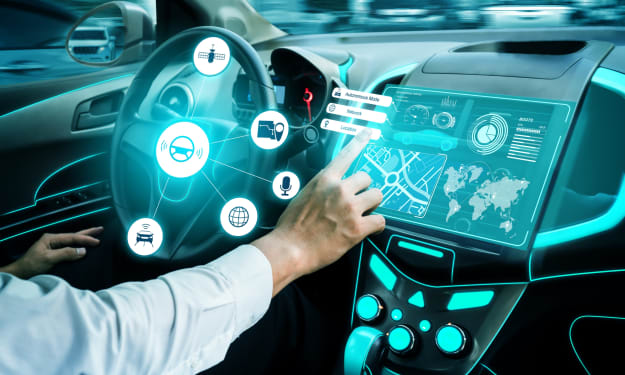
Introduction The automotive industry is in the midst of a transformative era, with groundbreaking innovations poised to reshape the way we drive and interact with vehicles. As the world hurtles toward an era of sustainable transportation and autonomous driving, it's time to take a closer look at the latest advancements and trends that are revolutionizing the road.
By Dimitar Argirov3 years ago in Wheel
Mercedes Not Going Into Gear? 5 Reasons & Solutions to Fix It
Having trouble putting your Mercedes into gear??? You are right to be concerned… This behavior of your vehicle simply indicates that there is something off with the transmission system that needs your immediate attention. This blog post highlights some of the major factors that can cause gear-shifting trouble in a vehicle. The discussion also includes some specific solutions to this issue. So, please read through.
By Swedish Auto Service3 years ago in Wheel