A peek under the hood of the global automotive industry.
Honda Motor Co., Ltd. President and Global CEO Toshihiro Mibe held a press briefing today to outline the company's comprehensive roadmap for rebuilding its automobile business and charting its future direction. The strategy, which spans the next three years, focuses on improving cost structure, increasing development efficiency, and enhancing the product lineup by concentrating corporate resources on priority regions.
By Mark Lim 2 months ago in Wheel
The union representing workers at South Korean automaker Hyundai Motor said on Monday it had resumed wage talks with management after staging its first full-day strike in a decade. The action at the country's largest carmaker on Friday saw around 40,000 employees walk off the job, according to union figures, after discussions over pay and retirement broke down. They have come against a backdrop of concerns over job security as artificial intelligence transforms South Korea's automotive industry, a pillar of the Asian nation's economy.
The National Automotive Policy (NAP) 2020 and the New Industrial Master Plan (NIMP) 2030 envision Malaysia as an automotive production and export hub for next-generation vehicles, targeting ASEAN and the wider Asian market. This dovetails with the nation's broader industrial development plan to raise economic complexity, create high-value job opportunities and deepen domestic linkages.
Wang Yu had worked at the BMW dealership for seven years. He had seen monthly sales go from single digits to a peak of forty cars, and he remembered the days when a BMW 3 Series cost 400,000 yuan on the road and still had a waiting list. Now he sat on the leather sofa in the sales lounge, facing a man in his early thirties wearing a gray jacket, twirling a set of car keys in his hand—keys from the Audi next door.
By Jin2 months ago in Wheel
Nearly half of North American automotive manufacturers admit their digitalisation journey has barely left the starting blocks. That is one of the more uncomfortable findings from a new survey of 316 senior OEM, Tier 1 and technology leaders, carried out by AMS in partnership with Kyndryl and Microsoft. The findings make for sobering reading for carmakers trying to expand their production effectiveness.
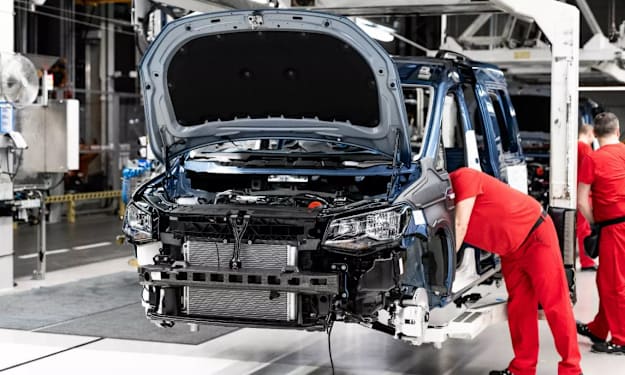
Inokom Corporation Sdn Bhd has launched a new RM300 million automotive painting facility at its manufacturing plant in Kulim, Kedah, expanding its total paint shop capacity to 100,000 vehicle bodies a year. The new Paint Shop 3 (PS3) is one of parent company Sime Darby Bhd's largest manufacturing investments to date, marking a significant milestone in Malaysia's automotive manufacturing capabilities.
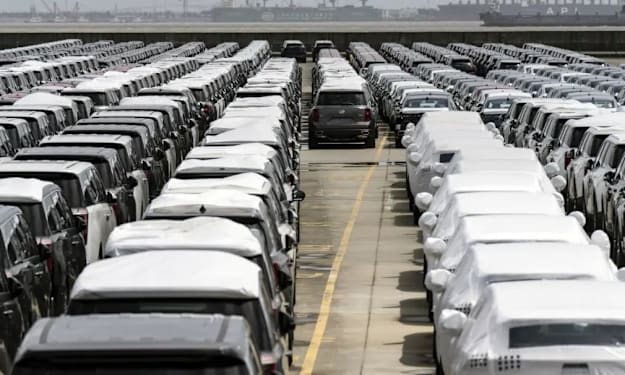
China's car exports surged again, serving as a lifeline for automakers mired in a domestic slump driven by rising fuel costs and weak consumer confidence. Overseas shipments jumped 88% year-on-year in July to 918,000 units, according to China's Passenger Car Association (PCA). That means that 41% of cars produced in the country were sent abroad, compared with 21% a year ago.
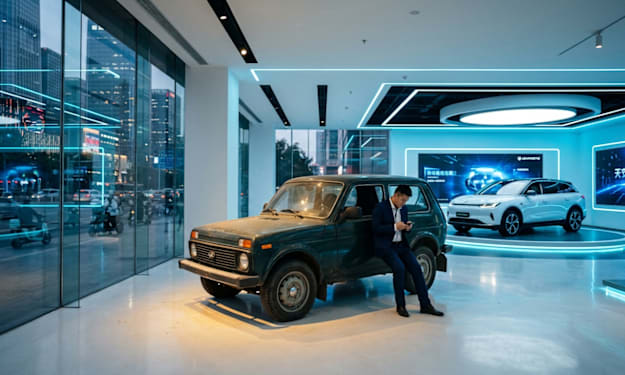
East of Beijing’s Fifth Ring Road, a parallel‑import dealership has kept a 2023 Lada Niva on its showroom floor for the past seven months. Dark green, boxy, with exposed door hinges. Turn the key and the dash needle twitches once before it steadies.
Opening: A Gap That Is No Longer Vast In July 2026, China's new energy vehicle (NEV) retail penetration reached a record 65.1%. In the same month, passenger car export growth nearly doubled.
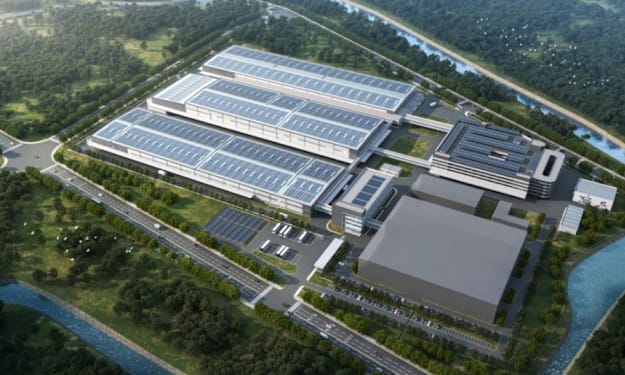
Yanfeng Automotive Interiors Systems recently began pile foundation construction at its new Anting base, marking a significant milestone in the company's transformation strategy. With a total investment of 1.45 billion yuan , the facility integrates smart cockpit R&D and production, aiming to inject fresh momentum into Jiading's ambition to become a core hub for the world-class automotive industry.
The global automotive industry has been anything but static this week. Across the world, automakers and suppliers are signing strategic agreements, adapting to new regulations, and positioning themselves for a future that looks increasingly electric, autonomous, and interconnected. Here's a look at the major headlines that shaped the industry this week.
Mitsubishi fans have spent years asking for one thing: a new Pajero, the rugged off-roader that made the brand a legend. Instead, Mitsubishi has given them the ASX VR-e, an electric crossover that is Taiwanese under the skin, Italian in its styling and Mitsubishi only where the badge is glued on. It is a perfectly competent car. It is also barely a Mitsubishi at all, and that turns out to be the whole story.