
Understanding Trickle-Down Economics: A Critical Perspective
Who Benefits from Economic Growth? Tax Cuts, Wealth Concentration and the Promise of Shared Prosperity.


The Promise of Prosperity
There is something interesting about the way economic policies are presented to the public. Governments frequently promise that particular reforms will create prosperity, encourage investment and eventually improve the living standards of society. Yet behind these familiar promises lie questions that are rarely examined with the same enthusiasm. Who is expected to benefit first? Who must wait for the benefits to arrive? And what happens when an economy grows without producing a comparable improvement in the lives of those whose labour sustains it?
These questions are particularly relevant to what has become known as trickle-down economics. The expression is commonly used to describe the belief that reducing taxes on wealthy individuals and businesses can encourage investment, stimulate economic activity and ultimately benefit people across the income distribution. According to this reasoning, greater financial rewards for investors and business owners create incentives to expand production, establish enterprises and employ additional workers. Economic growth would then generate higher wages, more employment and greater prosperity. There is an important distinction to make here. Trickle-down economics is not a precisely defined academic theory. The term is frequently used by critics of supply-side economic policies, whose proponents argue that lower marginal tax rates can encourage productive activity by increasing the rewards associated with work, saving and investment. The underlying economic argument deserves to be examined rather than dismissed through terminology alone. Businesses invest, create employment and contribute to technological development. Taxation can influence their decisions, just as it affects the circumstances of workers and consumers.
What concerns me is the assumption that improving the financial position of those already possessing considerable economic resources will necessarily produce benefits for everyone else. A company may experience rising profits without increasing its employees' wages. An investor may accumulate wealth through rising asset prices without creating additional employment. A country's economic output may expand while housing, healthcare and education become increasingly difficult for ordinary households to afford. These are not inevitable outcomes of every tax reduction. They are possibilities that complicate the relationship between private financial success and collective prosperity. And this is precisely the relationship I want to investigate.
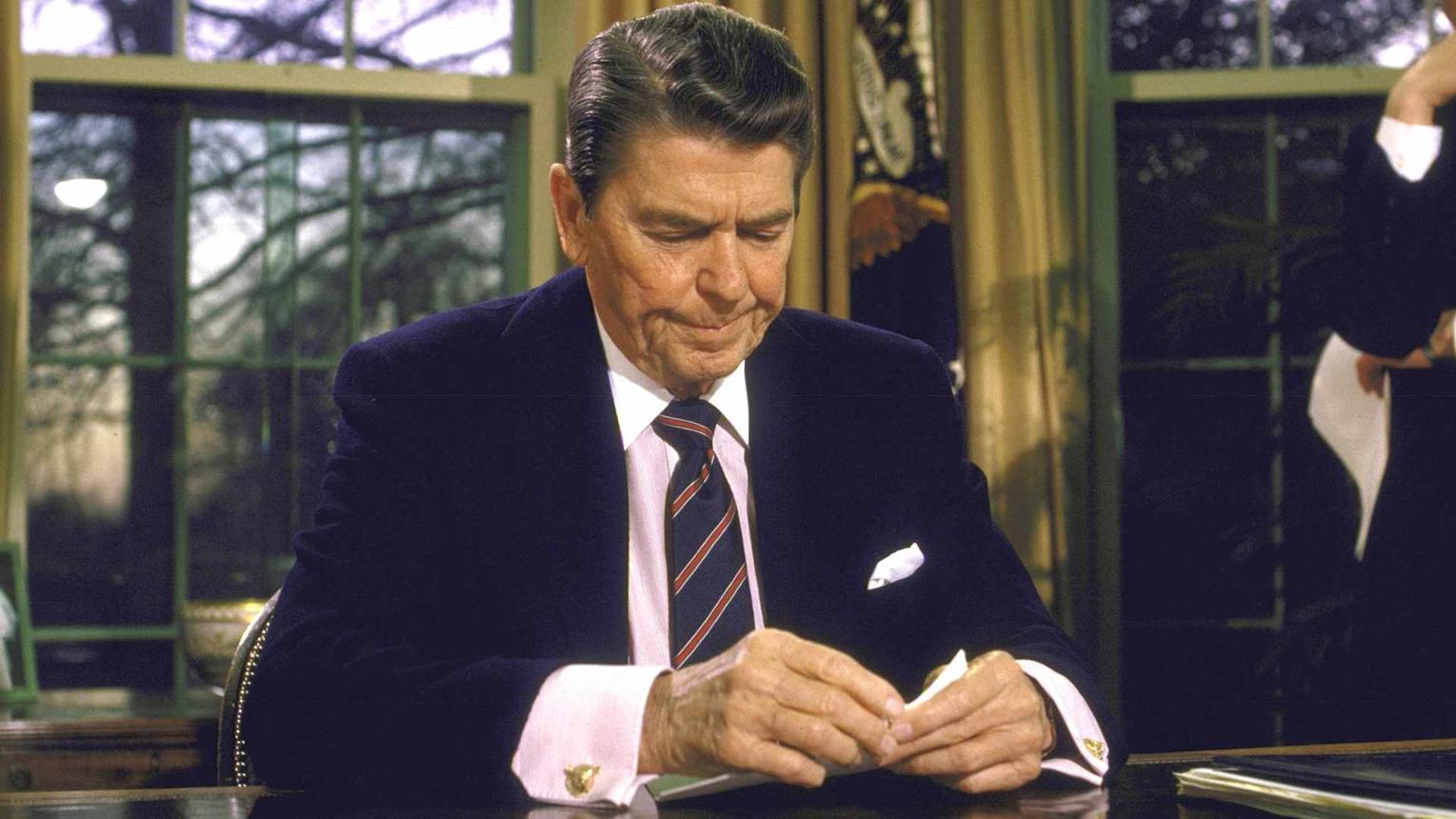
The term "trickle-down economics" is often associated with supply-side policies implemented by U.S. presidents such as Ronald Reagan and Herbert Hoover. Reagan, in particular, championed tax reductions for corporations and high-income individuals, arguing that such measures would drive economic expansion and benefit the average citizen. Similarly, Hoover attempted to use supply-side policies during the Great Depression, albeit with limited success. These policies have since become a defining feature of conservative economic agendas, influencing fiscal policies worldwide.
From Hoover to Reagan: The Historical Development of an Economic Promise
Although trickle-down economics is most frequently associated with Ronald Reagan, the expression itself has a longer history. During the Great Depression, American humourist Will Rogers criticised the idea of directing financial assistance towards those at the top of society in the expectation that the benefits would eventually reach those below them. His remarks were directed at policies associated with President Herbert Hoover.
Yet Hoover's economic record cannot simply be described as an early version of Reagan's tax-cutting programme. In 1932, Hoover signed legislation that substantially increased federal taxation, partly in an attempt to address the government's financial difficulties. The top marginal income tax rate rose from 25% to 63%. The distinction matters because the political assumptions associated with trickle-down economics have existed in different forms, while the policies implemented under that description have not always been identical. The approach became particularly influential during Reagan's presidency in the 1980s.
Reagan argued that reducing marginal tax rates would strengthen incentives for economic activity and help restore American growth following years of inflation and economic difficulties. The Economic Recovery Tax Act of 1981 reduced the highest federal individual income tax rate from 70% to 50%. Further reforms in 1986 eventually lowered the top rate to 28%, while also broadening the tax base and eliminating various deductions.
Reagan's policies were part of a wider transformation in economic thinking, during which market competition, private investment and reduced taxation acquired greater prominence in political debates. Supporters point to the economic expansion that followed the severe recession of the early 1980s as evidence that such reforms can contribute to growth. Critics question how much of that recovery can be attributed directly to tax reductions rather than monetary policy, the economic cycle and other developments.
I find the distinction important. An economy may recover during a particular government's administration without every policy introduced by that government being responsible for the recovery. We should also ask whether increased economic activity provides sufficient evidence of improvement if its benefits are distributed unevenly. The political attractiveness of Reagan's economic message rested partly upon the promise that policies favouring investment and wealth creation would eventually produce broader social rewards.
But how can we establish whether that promise has been fulfilled?
Wealth Accumulation Is Not the Same as Wealth Distribution
One of the central difficulties with the trickle-down argument concerns the relationship between economic incentives and the decisions made by those receiving them. Reducing corporate taxation may increase the funds available to a business. It does not determine how those funds will be used.
A company might invest in new machinery, expand its operations, develop products or employ more workers. It might also distribute additional profits to shareholders, repurchase its own shares, reduce debt or retain the money for future opportunities. These choices depend upon demand, competition, expected profitability, financing conditions and numerous other economic circumstances.
The existence of additional capital does not automatically produce the willingness to invest it in ways that increase employment or wages. There is another contradiction here that interests me. Workers are frequently presented as beneficiaries of successful businesses, receiving the advantages of investment and economic expansion. Yet their wages also represent costs within the financial calculations of those same businesses. A company seeking to maximise profits may therefore face incentives to increase productivity while limiting labour costs. Greater efficiency can create opportunities for higher wages, but whether those opportunities are realised depends upon bargaining power, labour-market conditions, competition and institutional arrangements. The interests of the business and its employees are neither entirely independent nor always identical. If we acknowledge this relationship, it becomes difficult to understand economic growth simply as a process through which financial benefits naturally descend from one social group to another. Distribution is influenced by decisions, relationships and institutions. It is not an automatic consequence of wealth existing somewhere within an economy.

What Does the Research Tell Us?
In 2022, economists David Hope and Julian Limberg published an important study examining the consequences of major tax reductions for the wealthy across 18 OECD countries between 1965 and 2015. Their findings challenged a central expectation commonly associated with trickle-down economics. The researchers found that major tax reductions for the wealthy were followed by an increase in income inequality. On average, the share of national income received by the richest 1% rose by more than 0.7 percentage points. At the same time, they found no statistically significant effect on real GDP per capita or unemployment during the periods examined.
This does not establish that every reduction in taxation has no economic benefit. The study concerns particular types of major tax reforms, and its findings describe average effects across different countries and historical circumstances. Nevertheless, the results raise a serious problem for the assumption that reducing taxes on the wealthy reliably produces stronger growth or employment.
Another investigation, published by economist Owen Zidar in 2019, examined the effects of income tax changes across different income groups in the United States. His research suggested that the positive relationship between tax reductions and employment growth was largely associated with cuts benefiting lower-income groups, while the effects of cuts for the highest-earning 10% were comparatively small.
Taken together, these studies encourage us to examine not simply whether taxation influences economic activity, but whose financial circumstances are being changed and through which mechanisms those changes might affect the wider economy. The question, in other words, concerns more than the quantity of money available. It also concerns who receives it, how it is used and what economic needs remain unmet.
The 2008 Financial Crisis and the Question of Responsibility
The global financial crisis of 2008 remains an important example of how private economic decisions can produce consequences extending far beyond the institutions responsible for them. The collapse of Lehman Brothers became one of the defining images of an international crisis involving risky mortgage lending, financial leverage, complex securities and failures in financial regulation and supervision. The resulting damage reached households that had little influence over the decisions made by banks, investors and financial institutions.
People lost employment, savings and homes, while governments introduced extraordinary measures to stabilise financial systems and prevent further economic collapse. I would be careful, though, about presenting the crisis as direct evidence that trickle-down economics failed. Its causes were far more complicated than tax policy, and the collapse cannot simply be attributed to reductions in taxes on wealthy individuals. Its relevance lies in a broader question concerning responsibility. When financial institutions experience extraordinary success, their profits are generally treated as the rewards of private economic activity. When their failures threaten the wider economy, the consequences can become a public concern requiring government intervention.
This relationship raises difficult questions about the distribution of economic risk. Under what circumstances should private losses become collective responsibilities? And what obligations should accompany the public protection of institutions whose actions can affect millions of people? The financial crisis demonstrated that the relationship between markets and governments is considerably more complicated than the familiar opposition between private enterprise and state intervention.
Trump's Tax Reductions: What Actually Happened?
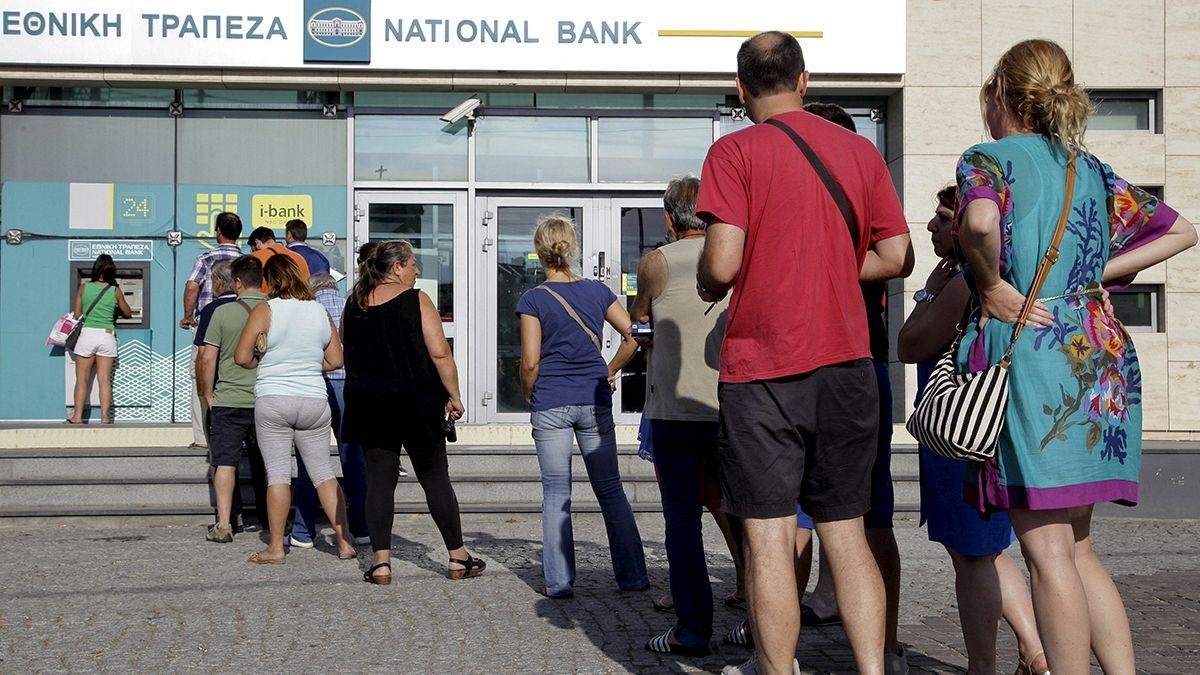
The Tax Cuts and Jobs Act, signed by President Donald Trump in December 2017, provides a more direct contemporary example of supply-side tax policy. The legislation reduced the federal corporate income tax rate from 35% to 21%, lowered several individual income tax rates, increased the standard deduction and introduced other changes affecting households and businesses. Its supporters argued that a more competitive corporate tax system would encourage investment, raise wages and strengthen economic growth.
What happened afterwards?
The evidence requires some distinction between investment and the wider economic benefits promised by the legislation. A study published in the Journal of Economic Perspectives in 2024 by Gabriel Chodorow-Reich, Owen Zidar and Eric Zwick found evidence that the business tax provisions stimulated corporate investment. Their review suggested that total tangible corporate investment increased by approximately 11%. Yet the same researchers concluded that the improvements in economic growth and wages were smaller than the legislation's supporters had predicted.
The distinction is important because it prevents us from claiming that the policy produced no economic response whatsoever. Businesses did respond to changes in taxation. The more difficult question is whether those responses justified the scale of the lost tax revenue and fulfilled the promise of substantially improving workers' living standards. A Congressional Research Service review published in April 2025 likewise found that empirical studies did not demonstrate large effects on overall economic performance. The political debate continued in 2025, when new legislation made several of the individual tax reductions introduced in 2017 permanent and restored or extended business investment incentives. The Congressional Budget Office subsequently examined the expected effects of the 2025 law on household resources. Its projections indicated that households towards the bottom of the income distribution would, on average, experience losses, while households in the middle and higher income groups would gain. These estimates considered changes to taxation alongside reductions in benefits and other spending provisions, rather than tax cuts alone.
This is another distinction we should preserve. The results of a particular tax policy cannot always be isolated from the wider financial and political arrangements within which it operates. A household may receive a tax reduction while simultaneously losing access to services or benefits whose value exceeds that reduction. What matters to that household is not necessarily the announcement of lower taxes, but the material consequences for its everyday life.
The United Kingdom: When the Markets Question the Promise
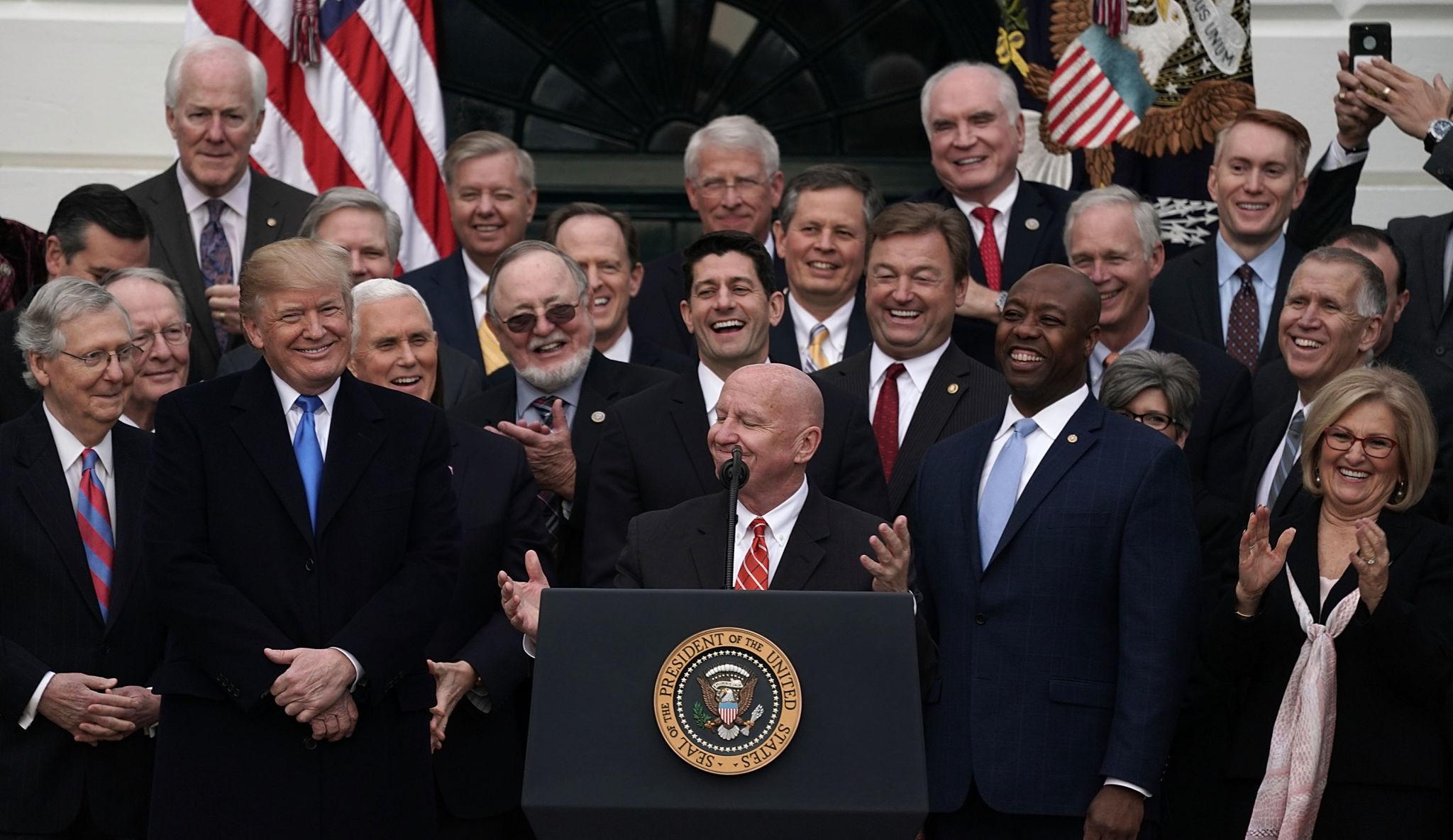
The United Kingdom provides another revealing example. In September 2022, Prime Minister Liz Truss's government announced a package of tax reductions intended to encourage economic growth. Among the proposals was the abolition of the highest additional rate of income tax. The programme was introduced without the accompanying independent fiscal forecast normally expected from the Office for Budget Responsibility. Financial markets reacted negatively, sterling declined and government borrowing costs increased. Most of the proposed tax reductions were subsequently abandoned.
The crisis cannot be attributed solely to the proposed benefits for high earners. The lack of a credible financing plan, the scale of the borrowing implications and the wider economic circumstances all contributed to the reaction. Still, there is an interesting contradiction in the episode. Policies presented as necessary to restore market confidence and economic dynamism instead contributed to financial instability. The events also remind us that markets do not operate according to a single, permanent political preference. Investors can welcome lower taxation under certain circumstances while becoming concerned about the fiscal consequences of particular reforms under others. It would therefore be misleading to assume that reducing taxation must always strengthen economic confidence, just as it would be mistaken to believe that every increase in taxation necessarily discourages investment. The consequences depend upon the circumstances.
The Myth of Automatic Redistribution
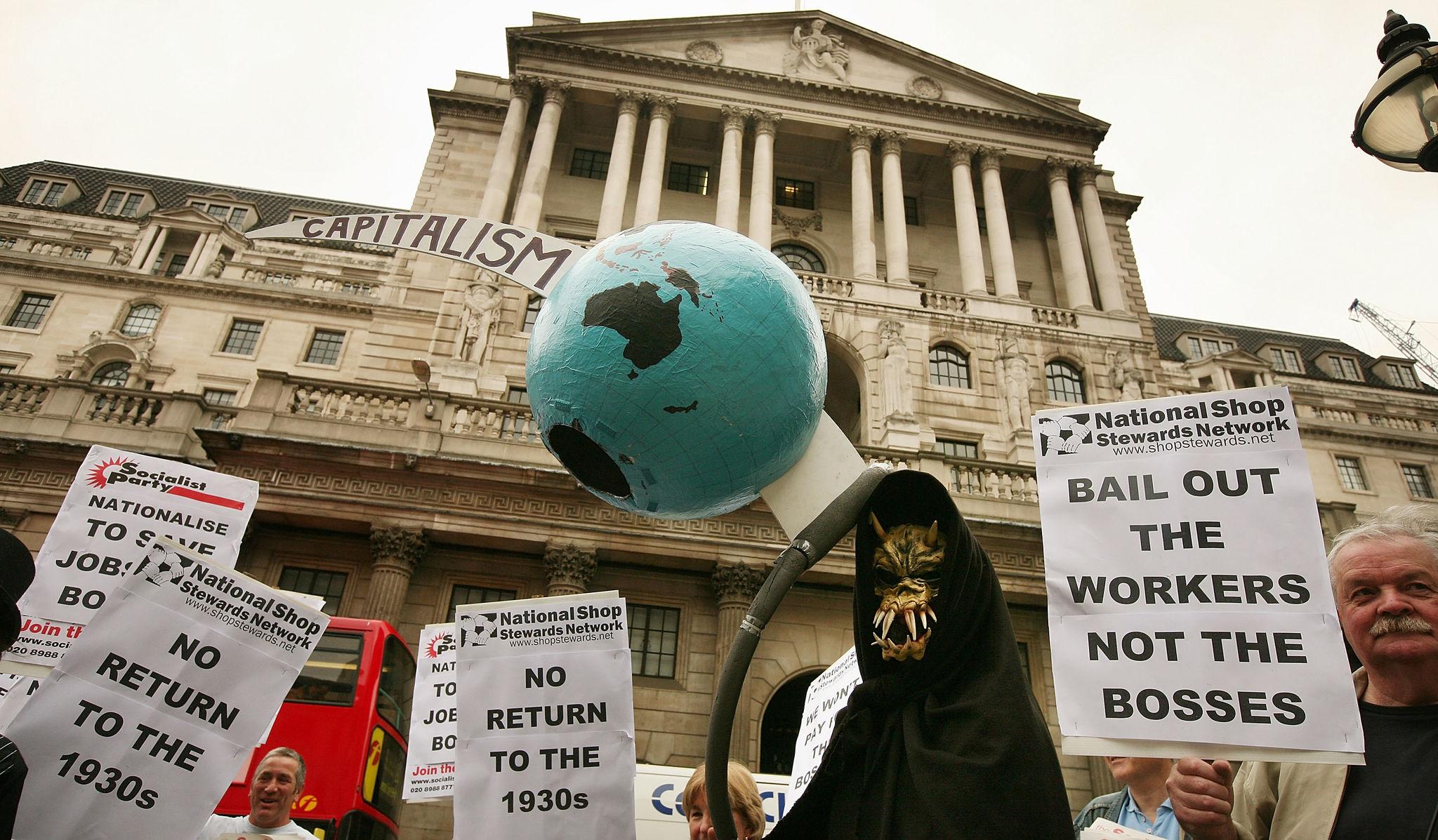
I return to the word trickle-down because I find its imagery revealing. It suggests an economy arranged almost vertically, with wealth accumulating at the top before gradually reaching those beneath it. The movement is presented as a consequence of economic activity, requiring patience rather than direct intervention. But wealth is not water, and society is not a natural landscape through which money must flow according to an inevitable direction. Income is distributed through wages, property ownership, investment returns, taxation, public expenditure and the relationships between the people and institutions participating in economic life. These arrangements are influenced by political decisions, historical developments and competing social interests.
The assumption that wealth generated at the top will eventually benefit everyone risks concealing the institutions through which wealth is actually distributed. It can also influence how we understand responsibility. When a company increases its profits, that achievement may be celebrated as evidence of economic success. When workers struggle to afford housing or maintain a reasonable standard of living, the problem is frequently discussed in terms of individual financial decisions. Yet both experiences belong to the same economy. This does not mean that every inequality is produced by taxation or that governments possess unlimited power to determine economic outcomes. Investment, innovation, education, productivity and international trade all influence prosperity. The problem emerges when the success of an economic system is measured principally through aggregate growth or financial returns, without examining how those developments affect the people living within it. A growing economy can create new opportunities. It cannot guarantee that everyone will possess the means to participate in them.

What Should Economic Prosperity Mean?
I began this article by questioning the relationship between tax reductions for the wealthy and the promise of shared prosperity.
The available evidence suggests that this relationship is considerably less automatic than the political language of trickle-down economics implies. Tax policy can influence investment, and productive investment can contribute to economic growth. Yet the effects differ depending upon the design of a reform, the income groups receiving its benefits and the wider circumstances in which businesses and households make decisions. There is no reason to assume that a reduction in taxation directed towards wealthy individuals will necessarily produce the strongest benefits for the wider population. I also think that the debate should extend beyond the effectiveness of a particular tax rate.
Public investment in education, healthcare, transportation and infrastructure can influence people's economic opportunities in ways that are not always captured by immediate financial returns. These institutions contribute to the conditions through which individuals can work, develop their abilities and participate in social life. The question of prosperity therefore involves more than how much wealth an economy produces. It also concerns the possibilities that wealth creates, the institutions responsible for distributing its benefits and the social relationships that develop around it. There is a difference between a society becoming wealthier and the people living within it experiencing greater economic security. One does not automatically guarantee the other. If the purpose of economic policy is to improve human living conditions, then those conditions must occupy a central position in the evaluation of its success. After several decades of debate about trickle-down economics, I find myself returning to a relatively simple question: why should the prosperity of those who already possess considerable wealth be treated as the necessary starting point for improving the lives of everyone else? It is a political and economic assumption that deserves to be questioned, rather than accepted as a natural law.
Written and published by Sergios Saropoulos
Originally published in 2022. Revised and expanded in October 2026.

Sources and Selected Bibliography
Hope, David, and Julian Limberg. “The Economic Consequences of Major Tax Cuts for the Rich.” Socio-Economic Review, vol. 20, no. 2, 2022, pp. 539–559. Comparative research examining taxation, inequality, growth and unemployment across 18 OECD countries between 1965 and 2015.
https://doi.org/10.1093/ser/mwab061Zidar, Owen. “Tax Cuts for Whom? Heterogeneous Effects of Income Tax Changes on Growth and Employment.” Journal of Political Economy, vol. 127, no. 3, 2019, pp. 1437–1472. Research on the differing economic consequences of tax changes across income groups.
https://doi.org/10.1086/701424Knowledge at Wharton, University of Pennsylvania. “Trickle-Down Effect: Does Trickle-Down Economics Work?” 2017. Discussion of the term's historical development, its use in political debate and distinctions between trickle-down rhetoric and supply-side economics.
https://knowledge.wharton.upenn.edu/article/trickle-economics-flood-drip/Hoover Presidential Library and Museum. “The Great Depression.” Historical documentation of Hoover's economic policies, public works initiatives, financial interventions and the changing conditions of the Depression.
https://hoover.archives.gov/exhibits/great-depressionOffice of the Historian / US Treasury, via Federal Reserve Bank of St. Louis. Annual Report of the Secretary of the Treasury, 1932. Primary documentation of the Revenue Act of 1932 and its tax increases.
https://fraser.stlouisfed.org/title/annual-report-secretary-treasury-state-finances-194/annual-report-secretary-treasury-state-finances-fiscal-year-ended-june-30-1932-5578/fulltextTax Policy Center, Urban Institute and Brookings Institution. “How Do Federal Income Tax Rates Work?” Historical context on the changes in US federal income tax rates, including the Reagan tax reforms.
https://taxpolicycenter.org/briefing-book/how-do-federal-income-tax-rates-workChodorow-Reich, Gabriel, Owen Zidar, and Eric Zwick. “Lessons from the Biggest Business Tax Cut in US History.” Journal of Economic Perspectives, vol. 38, no. 3, 2024, pp. 61–88. Empirical analysis of the investment, wage, growth and revenue effects of the 2017 US business tax reductions.
https://doi.org/10.1257/jep.38.3.61Congressional Research Service. Economic Effects of the Tax Cuts and Jobs Act. Report R48485, 7 April 2025. Evaluation of empirical evidence concerning the effects of the 2017 tax reforms.
https://www.everycrsreport.com/reports/R48485.htmlCongressional Research Service. Marginal Effective Tax Rates: Changes in P.L. 119-21, the 2025 Reconciliation Act. Report R48631, updated September 2025. Analysis of the changes to taxation and investment incentives enacted in 2025.
https://www.everycrsreport.com/reports/R48631.htmlCongressional Budget Office. Distributional Effects of Public Law 119-21. 11 August 2025. Official projections of changes to household resources, including the combined effects of taxes and government benefits.
https://www.cbo.gov/publication/61367House of Commons Library. The 17 October 2022 Fiscal Statement: Summary and Background. Research briefing CBP-9643. Historical account of the Truss government's September 2022 tax proposals, financial market reaction and subsequent reversals.
https://commonslibrary.parliament.uk/research-briefings/cbp-9643/OECD. Taxing Wages 2026: The Progressivity of Labour Taxation in OECD Countries. 22 April 2026. Comparative research on taxation, household earnings, tax benefits and progressivity across OECD economies.
https://doi.org/10.1787/3a5169ef-en
About the Creator
Sergios Saropoulos
As a Philosopher, Writer, Journalist and Educator. I bring a unique perspective to my writing, exploring how philosophical ideas intersect with cultural and social narratives, deepening our understanding of today's world.
Enjoyed the story? Support the Creator.
Subscribe for free to receive all their stories in your feed.
Comments
There are no comments for this story
Be the first to respond and start the conversation.