
The Driving Force Behind Our Votes In The Ballot Box
Do we vote with our brains or our feelings?

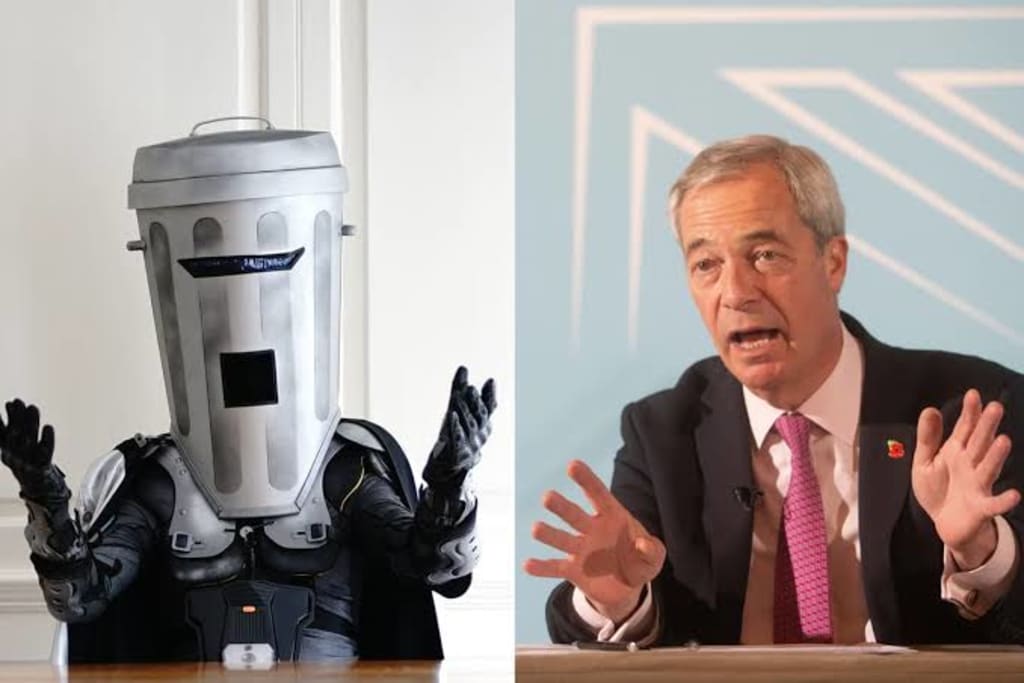
The result of the imminent by-election in Clacton, UK, between the right wing Reform Party leader, Nigel Farage, who is now fighting for his political credibility, and a popular man dressed as a bin, Count Binface (who has caught the nation's attention and admiration) should confirm one major thing about how we actually make our political choices.
It is tempting to believe that most people base their election choices on careful reasoned analysis to get the best person for the political post; that when we step into the voting booth, we are entering a quiet space of pure intellect and reasoning. We convince ourselves that we’ve weighed the policies, studied the merits of each candidate, and arrived at an objective, unbiased truth.
But the moment the curtain draws, a far more primitive impulse takes over. Long before the brain has finished analysing the data, the heart has already placed its bet.
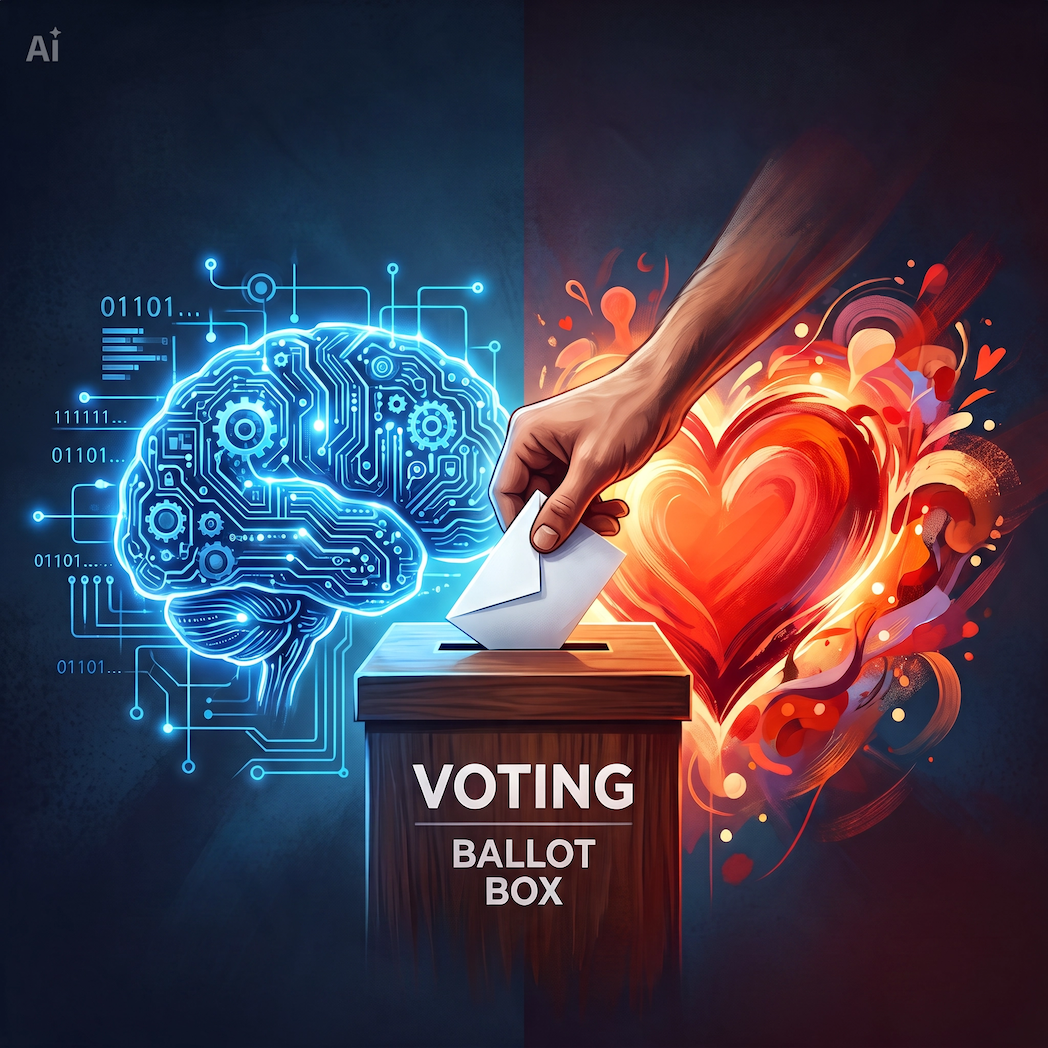
We do not vote as dispassionate judges; we vote as feeling creatures who use logic merely to justify what our instincts have already decided. Democracy also encourages transience and fickleness. Hence people tend to base their election votes primarily on emotion and feelings, though a little intelligent reasoning occasionally comes into it, especially when they are aware of the facts relating to a particular candidate. Emotions play a big part in voting choices because we tend to be drawn to anything that makes us feel comfortable and secure, that reflects our values and aspirations, and feels inclusive to us - a mix of fear, hope, identity, and belonging. The ballot box is rarely a test of our intelligence; it is a mirror reflecting our deepest emotional needs.
Looking at these three factors individually:
1. COMFORT and SECURITY
Anything that makes us feel welcome, and in alignment with its aims and objectives, will draw us towards it. There is no reasoning in comfort and security. That is pure emotion associated with our fear of difference and need for survival. This element makes sure that anxiety and fear are more detached from us. We want the choice to give us that cosy feeling of having a friend on our side, someone who will always look after our interest, who will keep the bad days away, and reassure us that we’ll be safe under their wing. Hence people will gravitate towards candidates who seem to exude confidence and stability, no matter how incompetent, devisive, or evil they might turn out to be, to provide that necessary feeling of protection and security.
2. Reflection of VALUES
Reasoning takes a back seat when it comes to our values. That’s pure emotion and identity. Our values reflect who we are, what we represent, and what matters most to us. Any party or candidate reflecting our values, no matter how eccentric and irrational they might seem, is likely to have our vote. That tells us we are among people who care about what we cherish, and the country would be in ‘safe hands’, being taken in the direction we too are travelling.
That is why we tend to become loyal to one party, or person, over a long period of time because fear ensures that we do not align with anything different which might not work as expected. Hence we tend to stick to tried and tested governments, which deliver the same dubious fare, time after time, but which keep our comfort levels high and our values as priority. However, the more our values are reinforced, no matter how harmful they might be, is the more our perspectives narrow, becoming intolerant and entrenched.
3. Reflection of Personal ASPIRATIONS
We tend to vote for our future, whoever appears to be able to make that possible. Our life is all about pleasure and pain, which are both controlled by our emotions. It is natural that we are going to gravitate toward those who give us the most pleasure and are perceived to diminish any pain. Thus we will be keen to cast our votes for anyone fulfilling those essential emotional needs that align with the aspirations we would like to achieve: in effect, anyone who would be able to fulfil our dreams and increase that sense of pleasure, hope and value.
4. Feeling INCLUDED
Any party that welcomes us and makes us feel significant and special has our vote. We all want to matter to others, to belong and feel worthy. Hence any candidate who extends that welcoming hand and genuine warmth will take us with them. If they are pleasing on the eye as well, even better (cue the Kennedy men in America who could do no wrong!). This has little to do with reasoning, and everything to do with a sense of belonging. No one wants to feel excluded, on the periphery of life, or to be isolated from the action. Thus we tend to vote for those who make us feel we really do matter, especially if we feel physically drawn to them.
Feelings are emotions that determine the level of fear and anxiety we feel. Hence it is feelings and emotions that lead us to the choices we make in elections, even if we are intelligent enough to logically choose what we want. The less fearful we are, the more valued we feel, and the more we are drawn towards the source of that warmth and promise of achieving our desires and giving us the ideal world we crave.
In a national poll this week relating to who would win the Clacton election, Count Binface won by a clear 5%. Obviously, for the people of Britain, Binface satisfies all those voting criteria. They certainly relate to his gumour and his semi-serious manifesto. However, only the residents of Clacton have a vote, so the final result should be very interesting, simply because, whether Farage wins the actual votes or not, he has already lost the argument and momentum to a garbage bin!
As the distinguished poet Maya Angelou once said: “People might forget what you said, and they might forget what you did, but they will never forget how you made them FEEL.”
• Like this post? Show your appreciation with a SUBSCRIPTION and even a TIP. Thanks for your support! •
SubscribeAbout the Creator
Elaine Sihera
British Life Coach & Consultant. Founder of LOVE & LIFE: The Growth Guide, for insights into managing challenging life issues. Author of books on Confidence, Relationships & Wellbeing. Graduate/Doctor of Open Univ; Postgrad Cambridge Univ.
Enjoyed the story? Support the Creator.
Subscribe for free to receive all their stories in your feed.
Comments
There are no comments for this story
Be the first to respond and start the conversation.